 Vietnamnet.vn

 Podcast



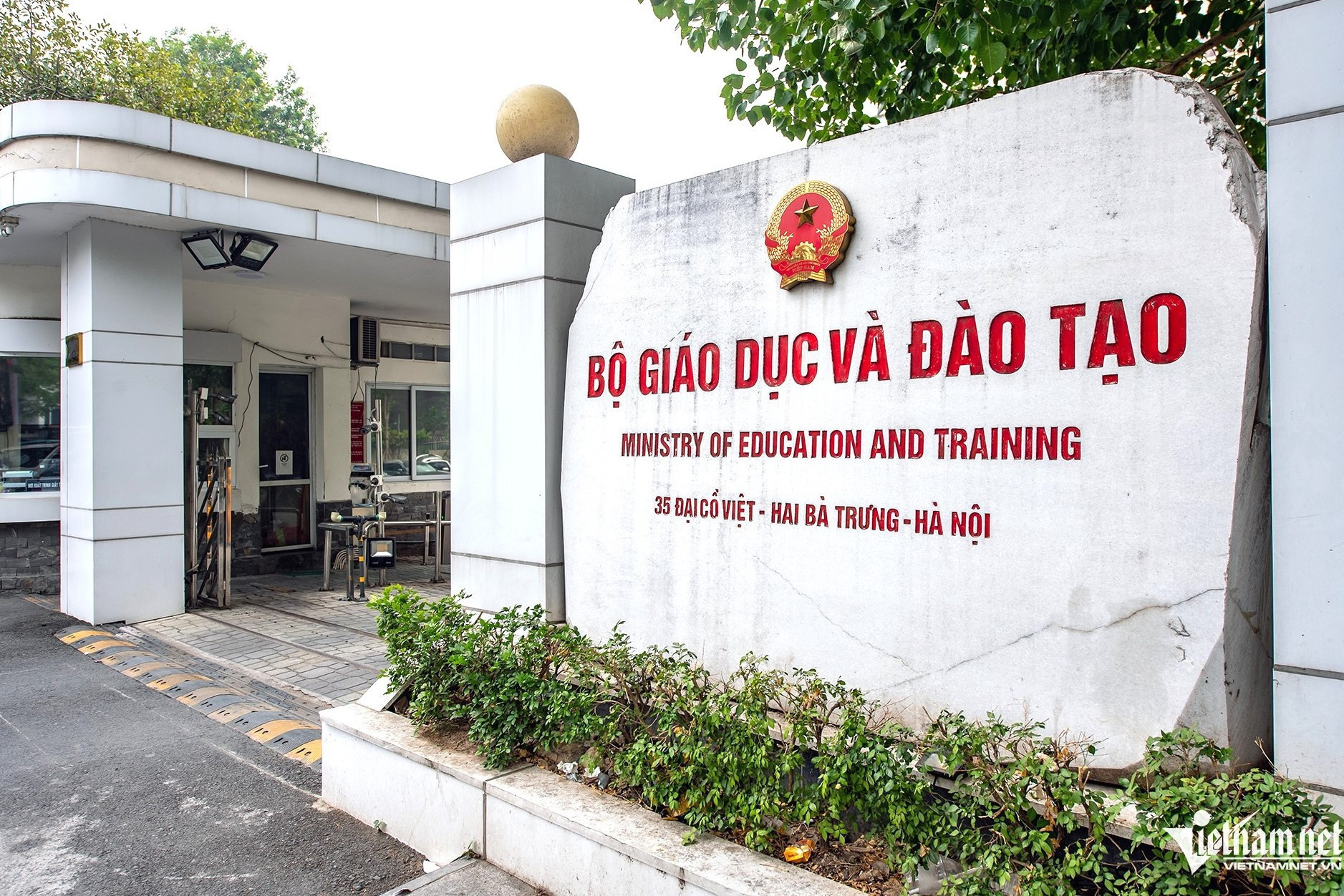
The Vietnamese government has issued Decree No. 279/2026, defining the functions, responsibilities, powers and organizational structure of the Ministry of Education and Training (MOET).
Under the decree, the ministry consists of 16 units: the Department of Preschool Education; Department of General Education; Department of Higher Education; Department of National Defense and Security Education; Department of Pupils and Students; Department of Legal Affairs; Department of Organization and Personnel; Department of Planning and Finance; the Ministry Office; Authority of Teachers and Educational Administrators; Authority of Quality Management; Authority of Science, Technology and Information; Authority of International Cooperation; Authority of Vocational Education and Continuing Education; Education and Times newspaper, a public service unit; and the Institute of Educational Strategy and Policy, also a public service unit.
As part of the restructuring, the ministry has reduced its number of public service units by one, with the removal of Education Magazine.
The Ministry of Education and Training will continue to perform its duties and exercise its powers under the Law on Government Organization, relevant government regulations governing ministries and ministry-level agencies, as well as other responsibilities prescribed by law.
Regarding its functions and responsibilities, the ministry is tasked with submitting draft laws, National Assembly resolutions, draft ordinances and resolutions of the National Assembly Standing Committee, draft government decrees and resolutions, as well as draft decisions of the Prime Minister covering areas within its jurisdiction under the government's annual legislative program and other approved policy initiatives.
The ministry is also responsible for submitting to the government and the Prime Minister, or issuing under its own authority, long-, medium- and short-term development strategies, planning documents, national target programs, national action programs and proposals for major national projects.
In terms of educational objectives, curricula and content, the ministry will submit or issue regulations and implementation guidelines to ensure the unified management of educational objectives, curricula and content throughout Vietnam's national education system. It is also responsible for setting standards and procedures for drafting, revising and evaluating textbooks, teaching materials and other educational resources.
The ministry is additionally authorized to submit proposals to the government on providing free textbooks for students, approving a single nationwide set of general education textbooks, regulating national defense and security education programs for learners from upper secondary school through university and vocational education, establishing environmental education and human resource development programs related to environmental protection, and issuing or proposing policies that promote an open education system, a learning society and lifelong learning.
In the areas of examinations, assessment, admissions, training, recognition of academic achievements, diplomas and certificates, the ministry will issue or propose regulations to ensure consistent implementation across the national education system.
Regarding teachers, education administrators and personnel, the ministry will issue or propose regulations governing recruitment, employment, job positions, professional titles, occupational standards, professional conduct, working conditions, codes of ethics, codes of conduct, and the rights and obligations of teachers and educational administrators.
The ministry will also advise the government on salary policies and remuneration for teachers, education administrators, school leaders, educational support staff and other personnel working within Vietnam's national education system in accordance with existing laws.
In terms of learner management and support, the ministry is responsible for issuing or proposing regulations governing student management, student policies and systems for rewards and disciplinary measures throughout the national education system.
The decree also expands the ministry's responsibilities to include the management of science, technology, innovation and digital transformation, aligning its functions with Resolution 57 of the Communist Party of Vietnam's Politburo.
Earlier, the government also issued Decree No. 276/2026, defining the functions, responsibilities, powers and organizational structure of the Ministry of Home Affairs.
Under the decree, the Ministry of Home Affairs consists of 21 units. Seventeen administrative units assist the minister in carrying out state management responsibilities, including departments responsible for organizational structure and staffing, local government, civil servants and public employees, non-governmental organizations, administrative reform, youth affairs and gender equality, international cooperation, personnel, legal affairs, planning and finance, the ministry office, the State Records and Archives Authority, the Authority of Salaries and Social Insurance, the Employment Authority, the Overseas Labour Management Authority, the Authority for People with Meritorious Service, and the Central Emulation and Commendation Board.
The ministry also includes four public service units supporting its state management functions: the Information Technology Center, the Institute of State Organization and Labour Science, the State Organization and Labour Review, and Dan Tri newspaper.
Tran Thuong
.svg)
