 Vietnamnet.vn

 Podcast



Clinging to those slender trunks are hundreds of clusters of rare medicinal plants - a quiet yet striking transformation that reflects years of persistence and insight.
Few would guess that this thriving model grew out of hardship. For many years, Dung made a living collecting medicinal herbs and trading areca nuts. Seeing stable demand and rising prices, he made a bold decision in 2006: clearing more than one hectare of fruit trees to plant areca instead.
“I started small, with just over 1,200 trees,” he recalled. “By 2011, the garden began yielding results, and I knew I had made the right choice.”
That decision has since expanded into more than 5 hectares of areca, generating annual income in the billions of VND (approximately hundreds of thousands of US dollars). Beyond selling fruit, Dung also earns from areca spathes and seedlings, turning his farm into one of the most successful economic models in the area.
Yet the true turning point came from an entirely different source: a rare medicinal plant known as cot toai bo.
A plant at risk, a farmer’s resolve
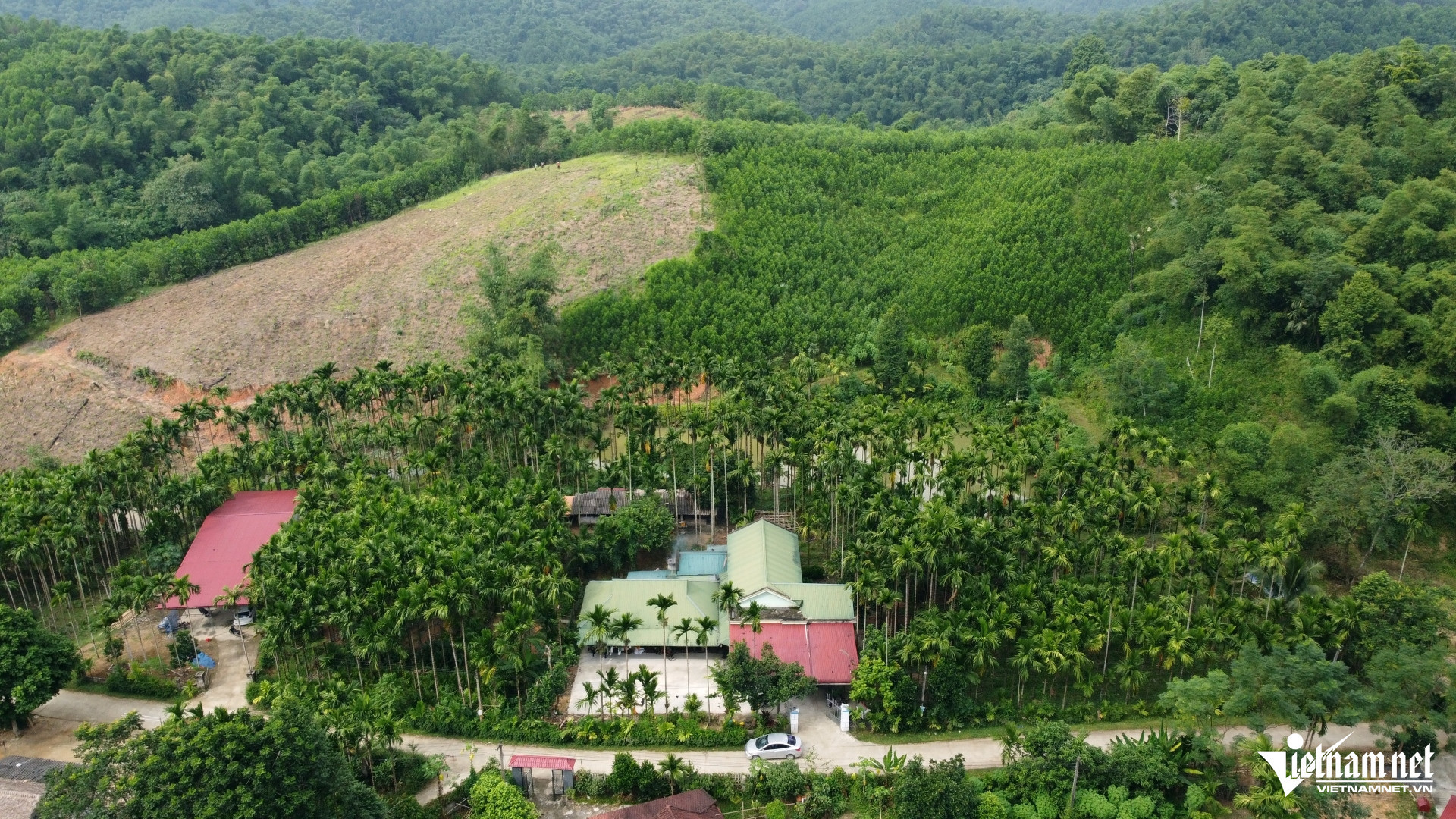
During his trips into the forest, Dung noticed that cot toai bo - a valuable medicinal herb - was becoming increasingly scarce due to overharvesting. The realization stayed with him.
“If we don’t find a way to preserve it, this plant could disappear,” he said.
The idea came naturally. Since cot toai bo grows as an epiphyte, clinging to rocks or tree trunks, he wondered whether the smooth, upright bodies of areca trees could serve as a substitute.
In 2010, he brought back a few clusters from the mountains and began experimenting, attaching them to the trunks in his garden.
The early days were far from easy. Without prior experience, failures were inevitable. But through careful observation and persistence, he gradually learned how to create the right conditions for the plants to survive.
After five years, the first harvestable roots appeared.
From a handful of plants to a thriving system
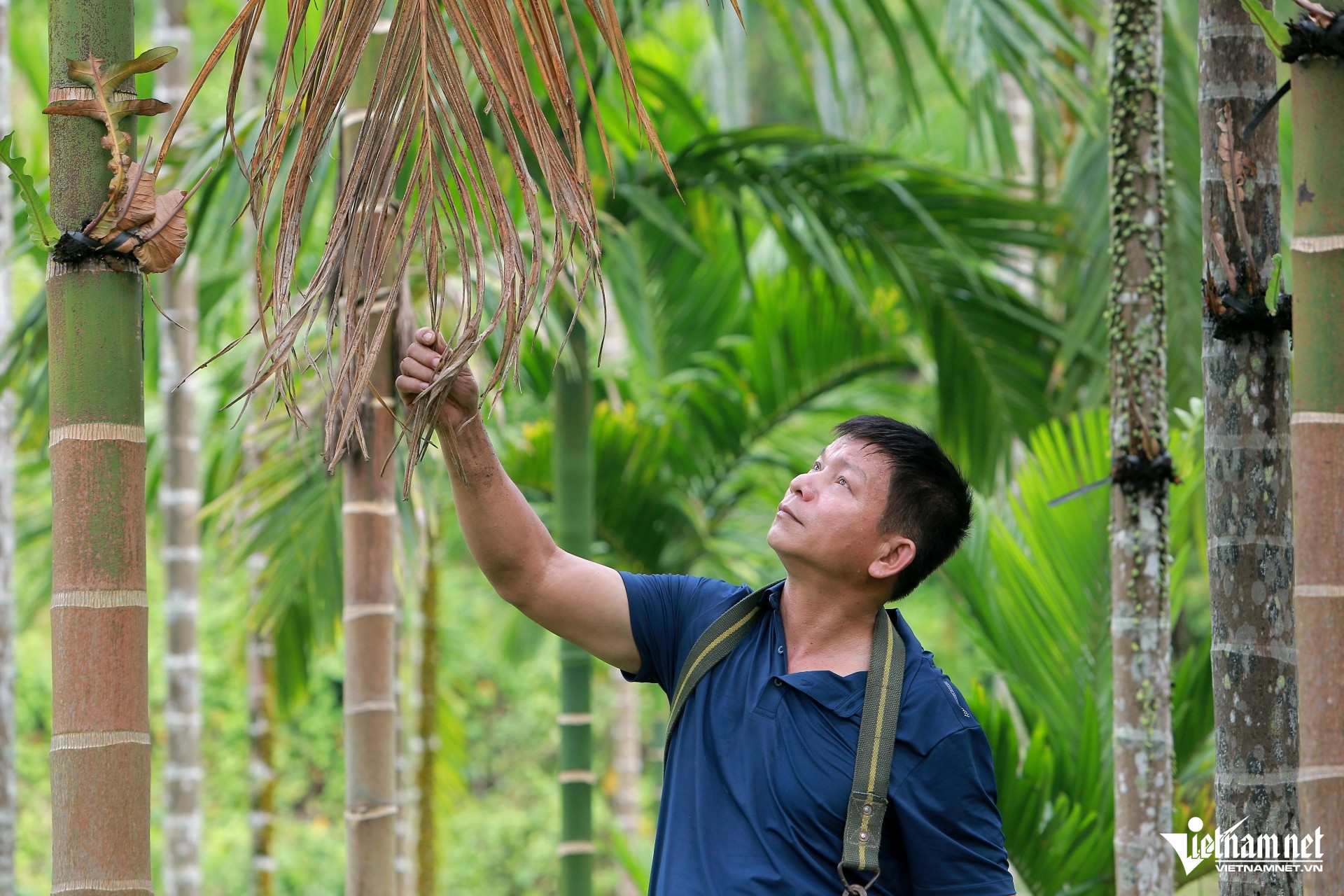
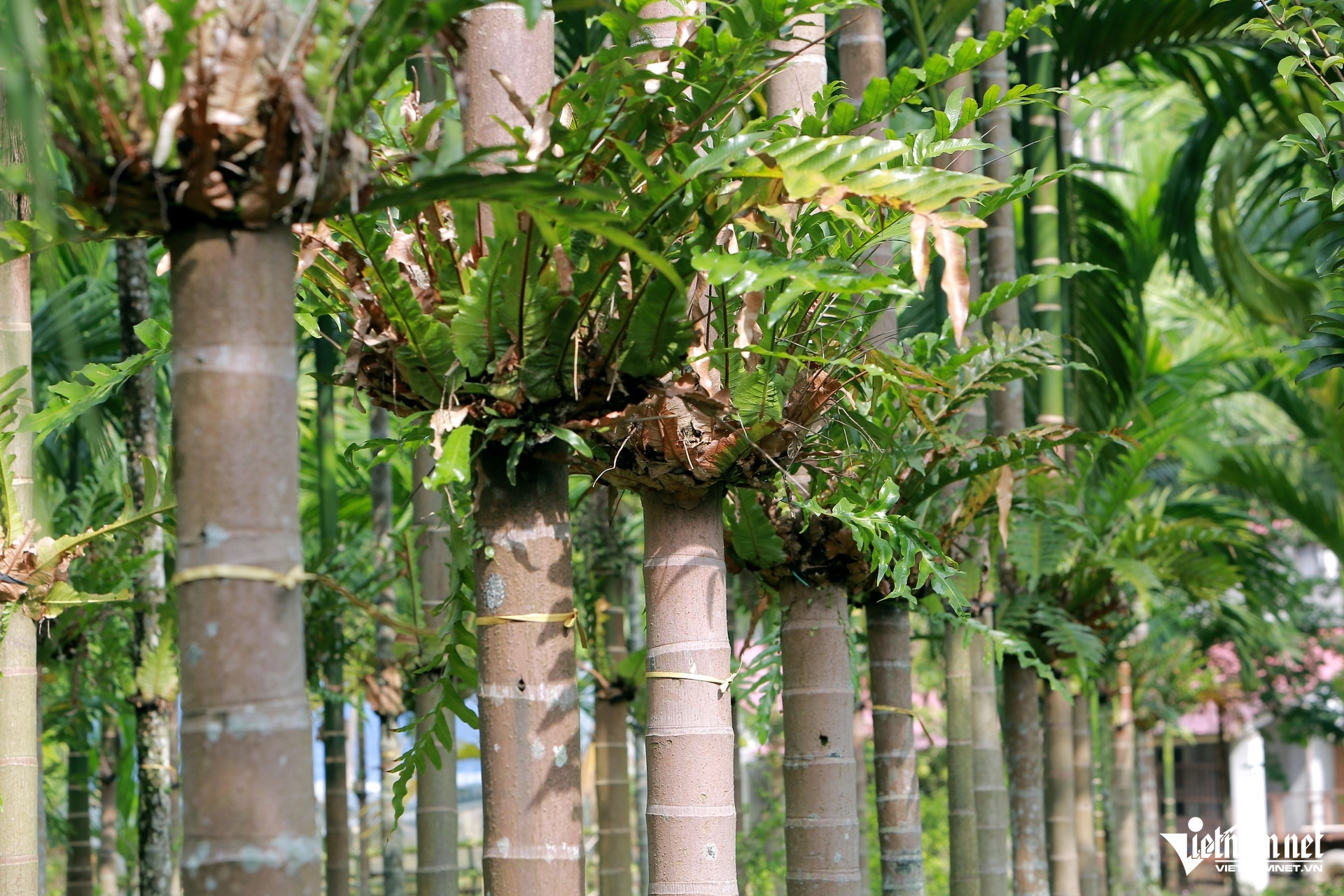
Instead of selling immediately, Dung chose to preserve and multiply the species. From just a few initial clusters, he has now cultivated nearly 1,000 plants spread across his areca garden.
Cot toai bo is a herbaceous plant, typically 20 to 40 centimeters tall, thriving in humid environments with moss. Its rhizome - thick, flattened and covered in light brown scales - is the part used in traditional medicine.
It is valued for its ability to strengthen bones, support kidney function and treat conditions such as toothache and loose teeth. As a result, demand remains strong.
“Many traditional medicine practitioners have offered between VND35,000 and VND50,000 per kilogram (US$1.4 to US$2), but I haven’t sold,” Dung said. “I want to expand first, to preserve the species before it becomes rare again.”
By his estimates, if commercialized, the herbal garden alone could generate around VND200 million annually (US$8,000). But for him, the greater value lies in maintaining a sustainable source of native medicinal plants.
A model of efficiency and sustainability
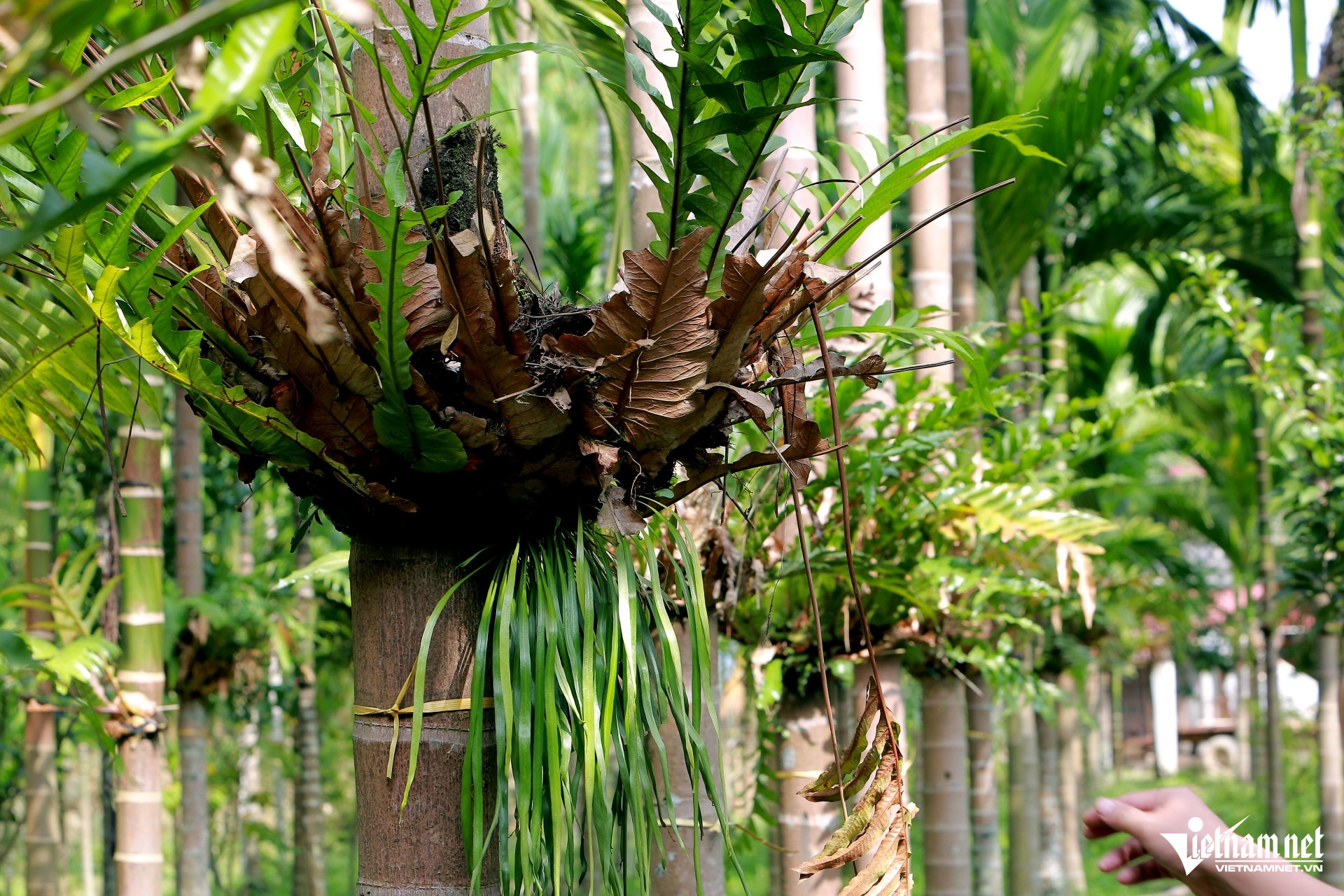
Local authorities in Giao An commune view Dung’s “areca - medicinal plant” model as a creative and efficient use of existing resources.
Areca trunks, once serving only as structural support, have become living platforms for cultivation - saving land, reducing costs and increasing overall productivity.
More importantly, the model helps ease pressure on wild harvesting, contributing to the conservation of native medicinal species.
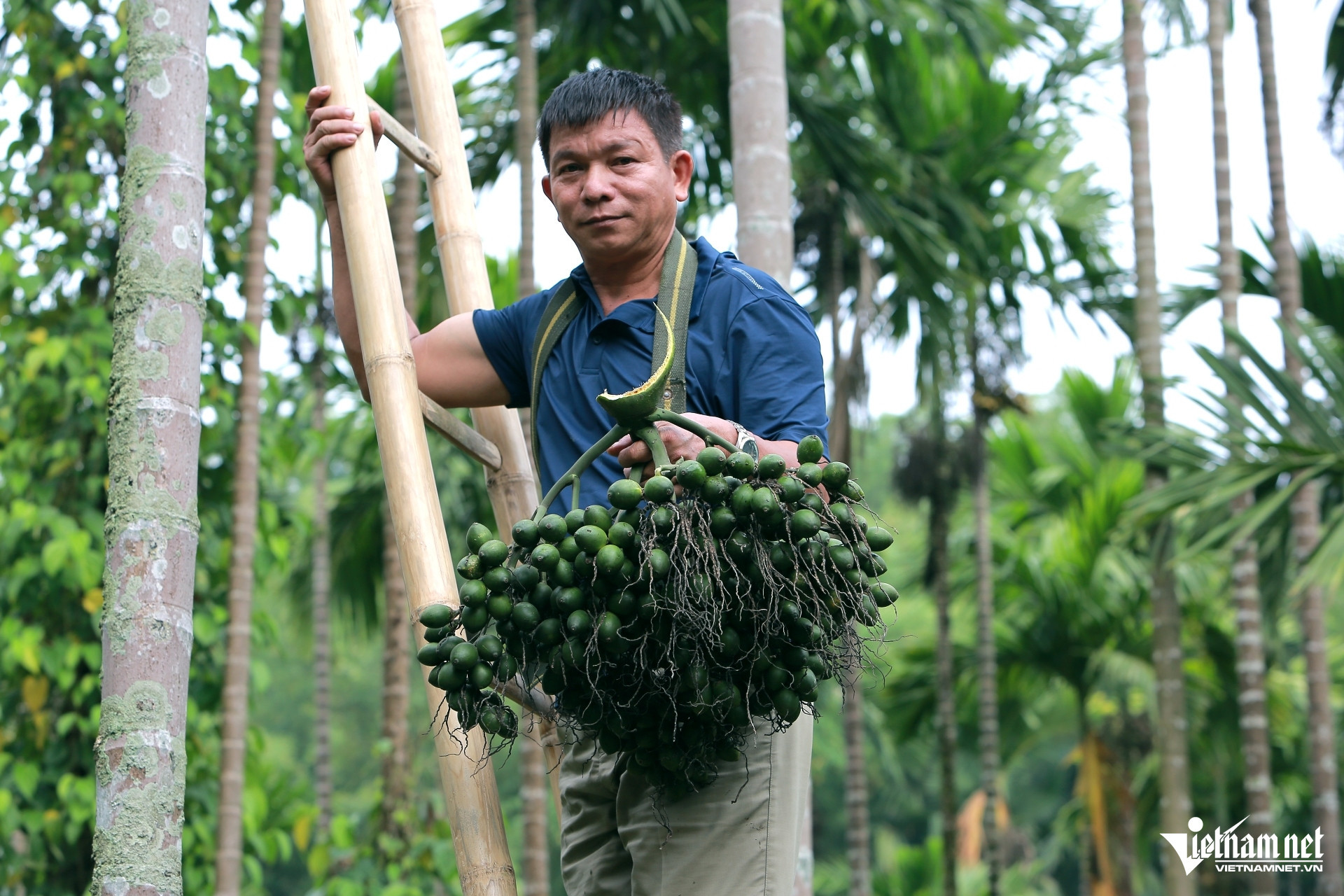
“This is a model we hope others can replicate,” a local official noted. “It not only improves livelihoods but also protects valuable herbal resources for the future.”
Looking ahead, Dung plans to expand further and share his experience with other farmers in the region.
In the quiet hills of Thanh Hoa, his garden tells a larger story - one where traditional knowledge, patience and innovation come together to shape a more sustainable path forward.
Le Duong
.svg)
