 Vietnamnet.vn

 Podcast



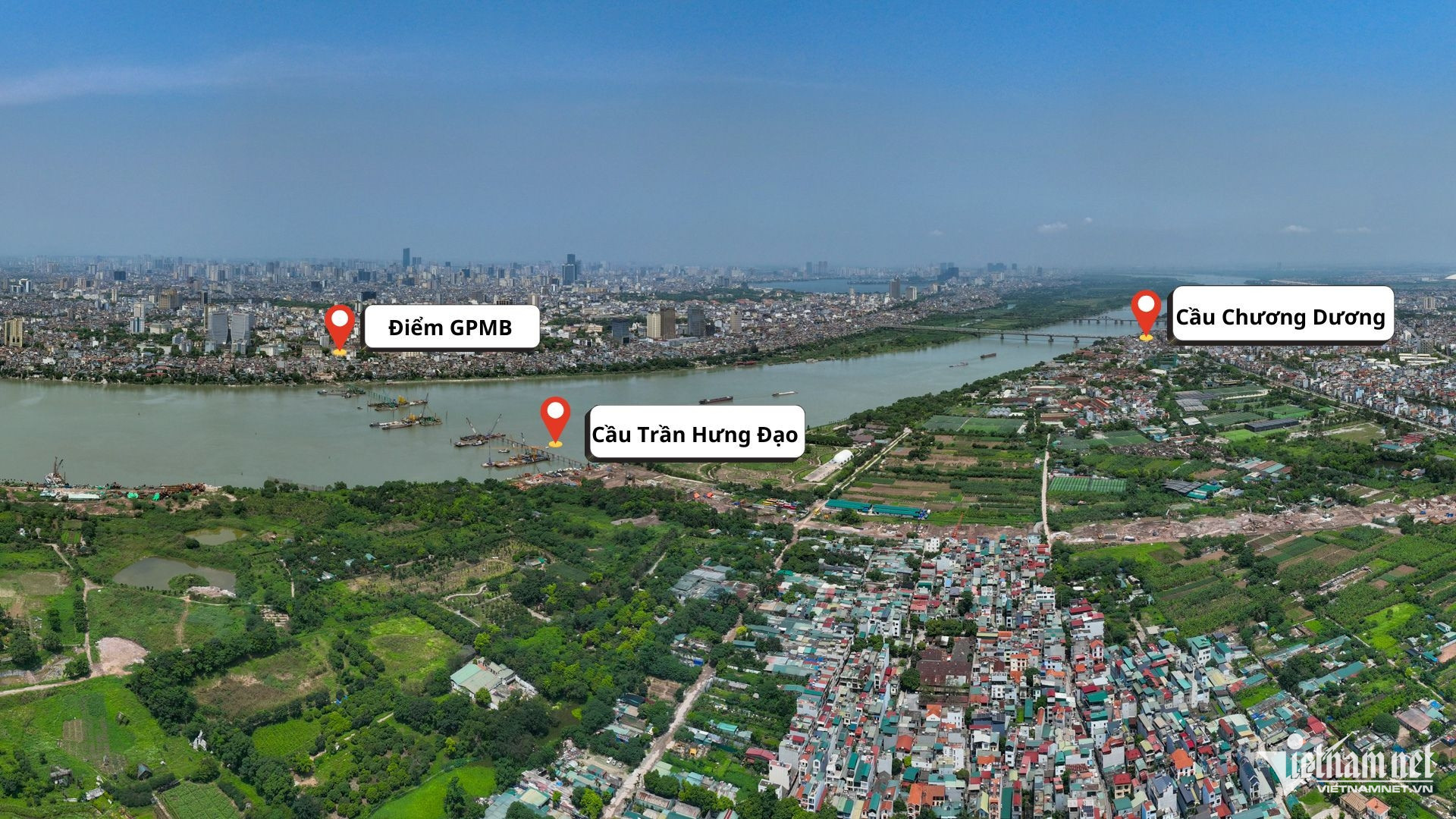
At the city’s regular May meeting held on the morning of May 5, Nguyen Ngoc Tu, Director of the Hanoi Department of Finance, presented a report on the socio-economic situation for April and the first four months of 2026.
According to the report, projects along Ring Roads 2.5 and 3.5, as well as National Highway 6, are gradually receiving cleared land for construction.
Notably, the seven Red River bridge projects are being fast-tracked to meet the 2027 deadline.
The Tran Hung Dao bridge project, with a total investment of more than VND16 trillion (US$650 million), was launched in October 2025.
For the Ring Road 4 project in the Capital Region, site clearance is largely complete, with all 13 resettlement areas already built. The parallel road section has reached about 35 out of 50.8 km, equivalent to 85% of the planned workload.
Authorities said compensation work has now moved to the stage of direct land handover, enabling contractors to accelerate construction across the entire route.
In the coming period, Hanoi will prioritize maximum resources to expand strategic infrastructure, including Red River bridges, economic ring roads and key national highways.
The city has also begun applying a KPI-based system to monitor progress in site clearance and public investment. Land handover progress is now quantified and linked directly to disbursement plans.
For major projects such as Ring Roads 1, 2.5, 3.5 and 4; Red River bridges; National Highways 6 and 21B; and urgent flood control works, Hanoi requires the immediate establishment or activation of inter-agency task forces led directly by city and departmental leaders.
Clear timelines are being assigned for each stage, especially land clearance, compensation approval, resettlement arrangements, construction acceptance and capital disbursement.
Strengthening price control for materials and goods
Alongside accelerating project timelines, Hanoi aims to stabilize the market for essential goods.
The city has directed agencies to ensure sufficient supply of essential items while controlling prices of construction materials to limit cost fluctuations and support both production and construction activities.
In the near future, Hanoi plans to organize a series of cultural, tourism and trade events in areas such as Hoan Kiem Lake, West Lake, Ba Vi and Son Tay.
These activities are tied to the development of the night-time economy, helping to boost domestic consumption and expand public spaces for leisure and entertainment.
Nguyen Ngoc Tu said that in the long term, the city will focus on improving institutions and effectively implementing the revised Capital Law, while promoting decentralization linked with digital transformation and building a modern, data-driven governance model.
Hanoi is also prioritizing more efficient public investment, preventing waste through flexible compensation and resettlement mechanisms, updating material prices in line with the market, and applying KPI-based disbursement tied to officials’ responsibilities.
Thanh Hue
.svg)
