 Vietnamnet.vn

 Podcast



Editor's note: As Vietnam implements Politburo Resolution No. 80-NQ/TW on cultural development, Hanoi is seeking to turn its rich heritage into a powerful resource for the creative economy.
This series explores the capital's evolving cultural industries, from artistic experiences combining heritage with modern technology to expert perspectives on policies, investment mechanisms and the creative workforce needed to support sustainable growth.
Resolution No. 80 calls for research and development of models that apply advanced technologies throughout the cultural industry's value chain, from creation and production to distribution, consumption and copyright protection.
It also emphasizes the development of infrastructure, key markets, cultural and creative clusters, districts and complexes, as well as marketplaces for cultural and artistic products, particularly digital assets.
The broader goal is to ensure that cultural products can reach audiences, generate revenue and create financial resources that can be reinvested in artistic creation.
One of Hanoi's greatest strengths in developing its cultural industries is its rich and diverse heritage.
This year, the city's cultural sector continues to prioritize the restoration and conservation of major historical sites, World Heritage properties and special national monuments, while preparing documentation for the recognition of additional significant heritage assets.
Linking heritage preservation with sustainable tourism, cultural education and the development of distinctive cultural products is seen as a long-term strategy, one that protects historical values while generating revenue for further conservation.
Through cooperation between the Hanoi Department of Culture, Sports and Tourism, arts organizations and creative professionals, centuries-old heritage sites are finding new expression through contemporary art.
A growing number of distinctive artistic productions are emerging, reinforcing Hanoi's position as a UNESCO Creative City in a new era.
Nighttime heritage experiences and a new approach to festivals and craft villages
Hanoi's major historical sites are moving beyond conventional sightseeing as nighttime cultural and artistic experiences attract growing audiences.
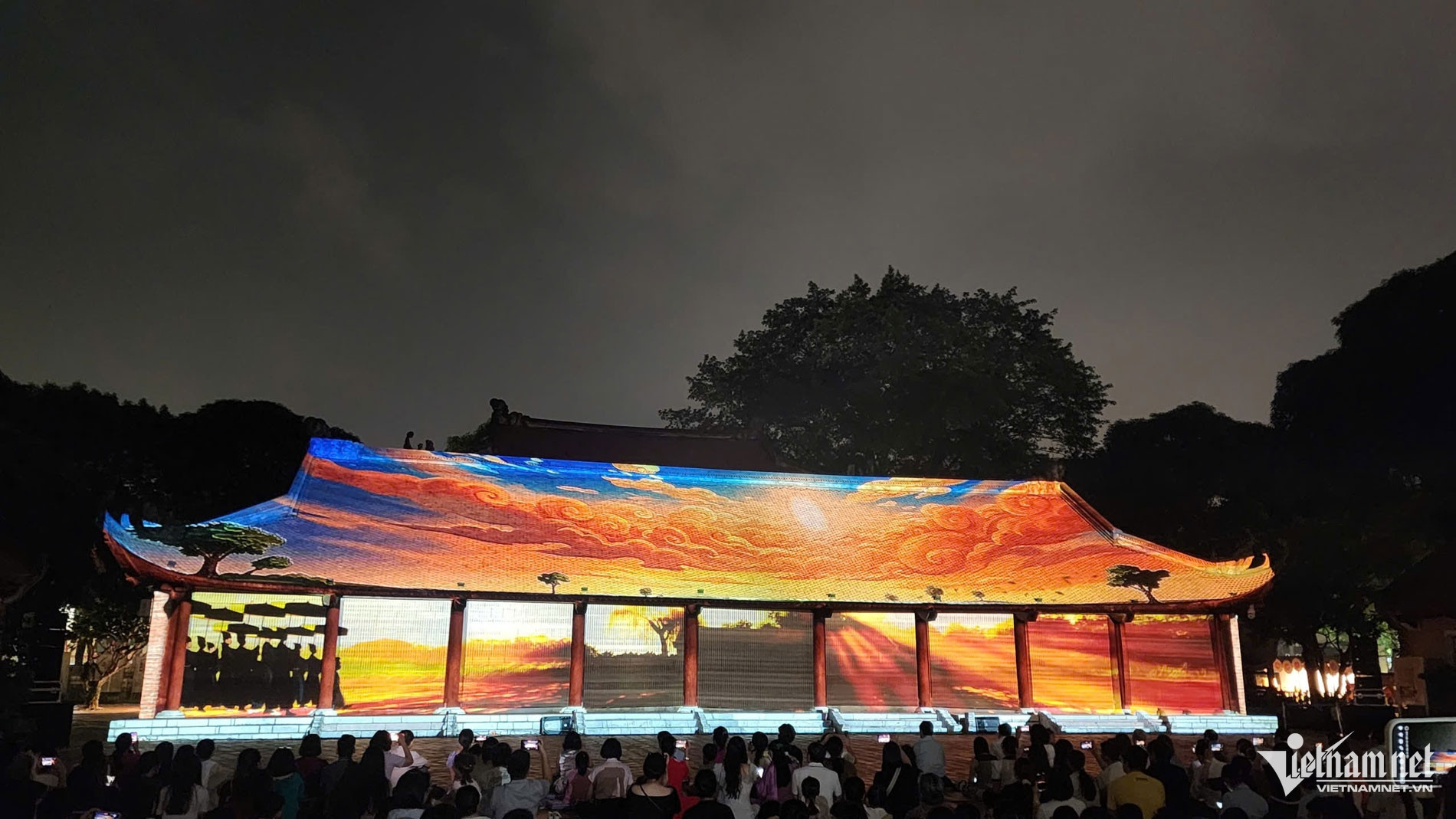
At the Temple of Literature - Quoc Tu Giam, Vietnam's historic center of Confucian learning and education, performances combining traditional music with 3D projection mapping have drawn thousands of visitors each week.
History is no longer confined to ancient stone steles. It is being brought to life through sound, light and contemporary theatrical performances.
Le Xuan Kieu, director of the Temple of Literature's Center for Cultural and Scientific Activities, told VietNamNet that the aim is not to change the nature of the heritage itself.
"We are not renewing heritage by altering its essence. Instead, we use contemporary art and digital technology to translate its thousand-year-old language into something that speaks to today's audiences," he said.
Other established nighttime attractions, including the Decoding Thang Long Imperial Citadel tour and the Sacred Night experience at the historic Hoa Lo Prison site, are also continually refining their scripts and introducing more multisensory interactions.
Cooperation between heritage management bodies, young directors and theater artists has transformed historic settings into open-air performance spaces.
These experiences encourage visitors to stay longer and spend more, creating additional economic value from cultural heritage.
Another notable development in Hanoi's cultural industries this year is the increasingly professional approach to organizing traditional festivals and developing craft villages as cultural attractions.
The Thang Long - Hanoi Festival continues to demonstrate the potential of cooperation among government agencies, arts organizations, media companies and tourism businesses.
At major traditional celebrations such as the Giong Festival and festivals associated with Co Loa Temple, as well as in the craft villages of Bat Trang and Van Phuc, folk performances are being organized into scheduled programs and combined with ticketed heritage experiences.
Traditional artisans are also moving beyond simply producing handicrafts.
They are collaborating with designers associated with the UNESCO Creative Cities Network to develop culturally inspired gifts with greater artistic value for domestic and export markets.
Turning cultural heritage into a resource for the creative economy
For years, efforts to preserve traditional Vietnamese performing arts such as cheo folk opera, tuong classical theater and puppetry have faced two recurring questions: Who will come to watch, and where will the money for future productions come from?
An answer is beginning to emerge as Hanoi's artists and cultural managers increasingly view heritage not only as a treasure from the past that must be protected, but also as a creative resource capable of generating new artistic and economic value.
One example is Net duyen cheo Ha thanh, a stage production celebrating the charm of Hanoi's traditional cheo opera.
Rather than presenting a series of disconnected excerpts, the production weaves well-known scenes from classical cheo into a continuous theatrical narrative.
The result moves beyond conventional performances, which often require considerable familiarity with traditional Vietnamese theater to appreciate fully.
By combining the finest elements of classical cheo with modern stage direction, the program creates a more accessible experience for contemporary audiences.
Its smooth transitions between tragedy and comedy, lyrical passages and lively scenes turn the stage into a multilayered portrait of Vietnamese life and emotions.
This approach allows younger audiences to connect more naturally with an art form deeply rooted in Vietnam's cultural history.
"This is a new direction for us as the development of cultural industries gains momentum," People's Artist Thu Huyen said.
"Cultural industries are not simply about creating entertainment products that generate revenue. They are also about making creative use of cultural resources and transforming heritage into products with artistic, educational, promotional and economic value."
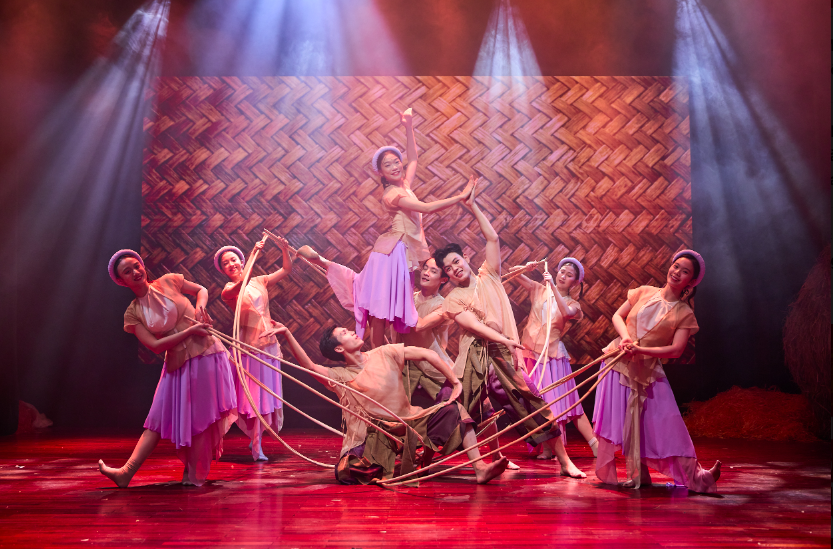
Alongside traditional cheo, the contemporary dance production Nhung lop phu sa explores the cultural identity of northern Vietnam through expressive movement and modern theatrical techniques.
Across five emotionally charged acts, the production traces a symbolic journey from the earliest origins of life to the flourishing of love, labor and sacred beliefs.
It also reflects the creative team's approach to traditional cultural material: rather than merely reproducing inherited values, artists seek new possibilities for artistic expression within them.
Through contemporary folk dance, layers of cultural memory return to the stage in a new form that speaks more closely to the artistic sensibilities of modern audiences.
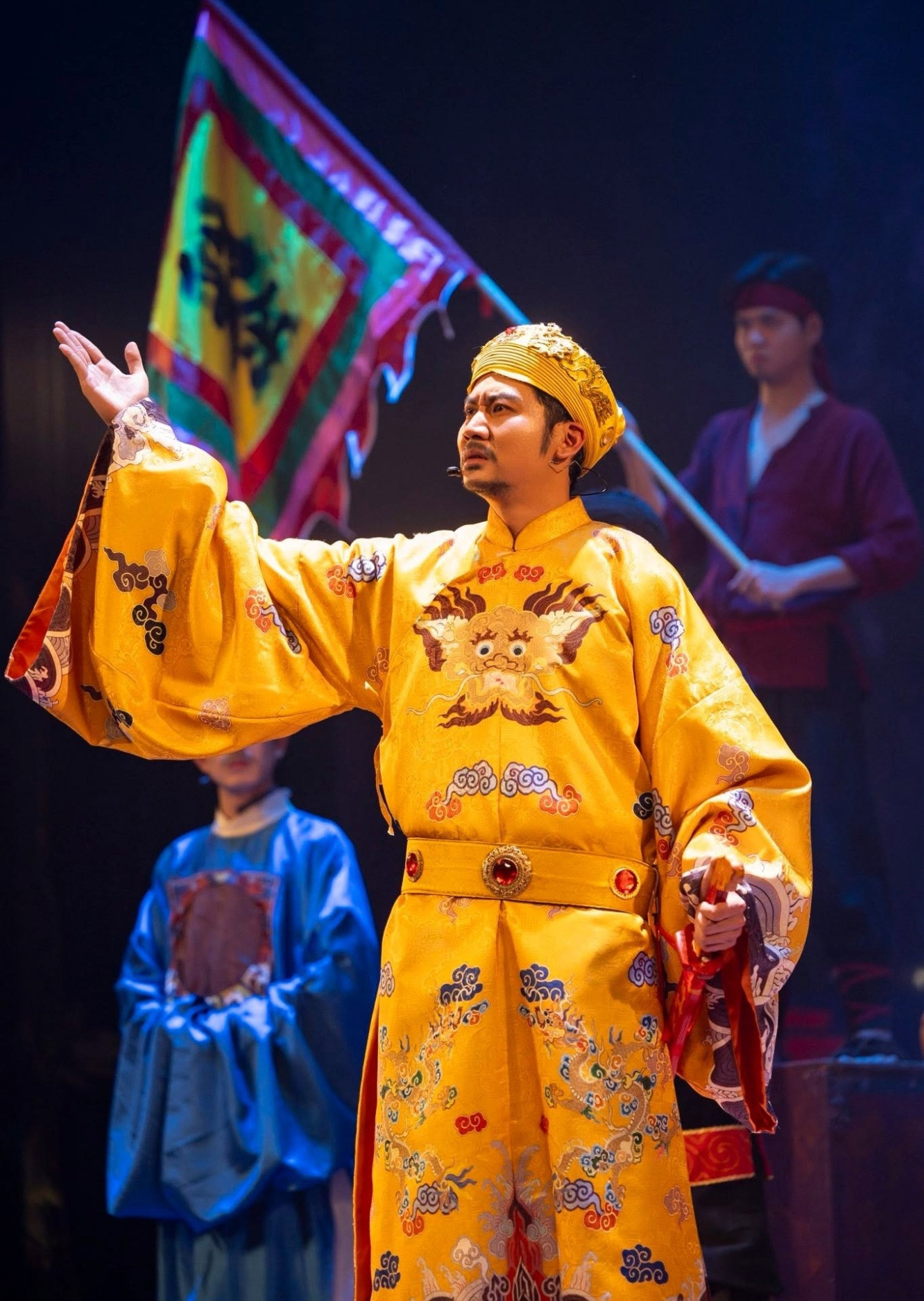
On October 8, the Hanoi Drama Theater staged Huyen tich Ho Guom, a highlight of the cultural industry event series Thoi khac.
The play portrays national hero Le Loi and scholar Nguyen Trai, along with major milestones of the Lam Son uprising from 1418 to 1427.
It also retells the legend of Le Loi returning a magical sword to a golden turtle, the story behind the name of Hanoi's Hoan Kiem Lake, also known as Sword Lake.
Through the performance, audiences, particularly younger generations, are introduced to the lake's legendary origins and the historical and cultural values associated with it.
As part of the same Thoi khac series, the theater presented another immersive artistic experience on October 9.
The program was divided into three acts, Luu, Khac and Vang, bringing together historical and cultural themes with theatrical performance and modern technology.
People's Artist Trung Hieu, director of the Hanoi Drama Theater and general director of Thoi khac, said the event was conceived as a meeting point for history, culture, theatrical arts and technology.
The aim was to take audiences on an engaging journey through exhibitions, interactive activities and emotionally resonant performances.
Another recent example is the inaugural Hanoi Jazztival 2026, which has just concluded.
Although the festival lasted only a few days, its first edition offered a glimpse of what a sustained international music event could contribute to the capital.
Given time and continued investment, such a festival could build a loyal audience, nurture new generations of musicians, attract tourists and create cultural memories closely associated with Hanoi.
Hanoi Jazztival 2026 is intended to develop into an annual event, aligned with the capital's cultural industry strategy and its commitments as a member of the UNESCO Creative Cities Network.
Tinh Le
.svg)
