 Vietnamnet.vn

 Podcast


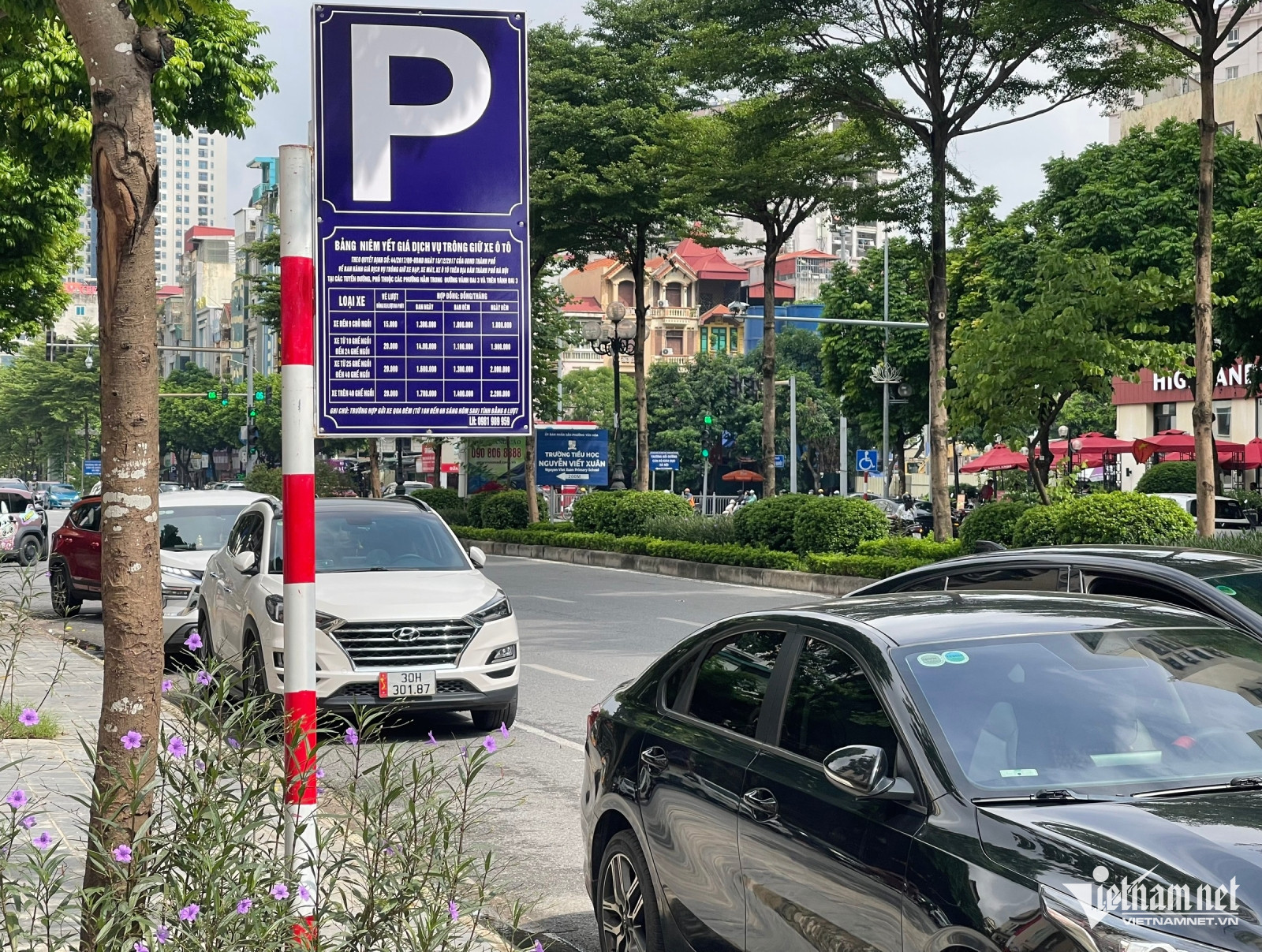
Every trip into the city brings additional parking expenses
Since October 15, Hanoi has introduced new parking fees at designated roadside and sidewalk parking areas developed with state budget funding.
Under Decision No. 5794/QD-UBND, hourly car parking fees on certain streets in the city's central urban area have increased from VND 30,000 to VND 50,000 (approximately US$1.90) per 60 minutes.
Monthly parking charges have also been adjusted upward, with some contracts covering both daytime and overnight parking reaching VND 6 million (US$228).
The changes have quickly attracted attention among Hanoi's car-owning community.
On online forums, many drivers say parking expenses are becoming a substantial financial burden, particularly for those who frequently travel within the inner city.
Speaking to VietNamNet, Pham Thanh Luan, a car owner living in Ngoc Ha ward, said he already pays approximately VND 2.5 million (US$95) a month to park his vehicle near his home.
However, that is only a fixed expense. He also pays around VND 1.5 million (US$57) monthly for parking at his workplace.
Additional costs arise whenever he meets business partners, goes out for meals or coffee, or visits friends living in apartment buildings.
Finding free or reasonably priced parking in such situations is not always easy.
"I remember one day when I drove to the Hoan Kiem Lake area to visit a partner company. As soon as I parked, someone collected VND 100,000 for two hours, even though I only stayed for about 30-40 minutes," Luan recalled.
"At lunchtime, I spent another VND 50,000 on parking. Then I went to a coffee shop and was charged through VETC. Later that afternoon, I visited an acquaintance's apartment building for dinner and ended up paying more than VND 200,000 because the building switched to a different parking rate after 8 p.m. Including my fixed parking expenses, I spent no less than VND 500,000 that day just to park my car," he said.
Another driver, Nguyen Van Cuong from Hung Yen province, shared a similar experience.
Last week, he drove a family member to a hospital in Hanoi's Hoan Kiem area and paid more than VND 300,000 (US$11.40) for nearly a full day of parking.
The total included fees for parking inside the hospital and at roadside parking areas using electronic payment systems.
"I came to Hanoi from the countryside and never imagined parking would be so expensive. When you add fuel, tolls and parking fees, taking a taxi would actually be cheaper," Cuong said.
The experiences of Luan and Cuong reflect their individual driving patterns rather than typical parking expenses for all Hanoi car owners.
Nevertheless, they illustrate the growing financial pressure on people who frequently travel within the city center.
A major concern is that parking expenses are not limited to a single location.
Drivers may pay to park at home, at work and at several destinations throughout the day, even when each stop lasts only one or two hours.
For those who regularly travel into central Hanoi, these additional expenses can become substantial compared with their fixed monthly parking costs.
Higher parking fees may discourage driving, but public transport must improve
Some drivers point out that car buyers typically calculate fuel, maintenance, insurance and residential parking expenses before purchasing a vehicle.
However, the cost of parking at other destinations is much harder to predict because it depends on daily schedules, working hours and travel locations.
As parking charges increase, using a private car for routine activities requires more careful financial consideration.
Beyond the financial burden, drivers are also questioning whether higher parking fees alone can change private vehicle use in central Hanoi when public transport infrastructure does not yet fully meet commuting needs.
"If authorities really want people to switch to buses or urban rail, these services must be convenient in terms of pickup and drop-off points, connectivity, travel times and compatibility with people's daily schedules," wrote an Otofun forum user named Mai Si Thanh.
Another user, Dinh Sang, highlighted the difficulties faced by drivers with complex daily routines.
"For people who need to take their children to school, carry belongings, visit multiple locations throughout the day or regularly meet clients, giving up their cars is not simply a matter of higher parking fees," he commented. "If bus routes do not match their journeys or metro stations are far from their starting points and destinations, public transport can mean additional travel time, transfer costs and other inconveniences."
From this perspective, some car owners believe traffic management should not rely solely on higher parking charges while parking facilities and alternative transport options remain inadequate.
They argue that residents need practical travel alternatives before they can significantly reduce their dependence on private cars.
On the other hand, using roadsides and sidewalks for vehicle parking also involves management costs, traffic organization requirements and competition for limited urban space.
Higher parking fees could encourage drivers to reconsider whether they need to park in congested areas while helping regulate demand for public space.
The issue, therefore, extends beyond whether parking charges are expensive or affordable.
It involves balancing congestion reduction, urban space management and residents' legitimate transportation needs.
Alongside pricing policies, Hanoi needs to continue developing suitable parking facilities, improving public transport connections and providing clear information about parking fees in different areas.
Hoang Hiep

