 Vietnamnet.vn

 Podcast



In the ancient village of Duong Lam (Son Tay, Hanoi), a remarkable local specialty is still crafted by hand using a method passed down for over a thousand years. Its crispy skin becomes crunchier as it cools, giving each bite a texture unlike anything else.
Duong Lam is already known for its centuries-old houses and rich history, but its culinary heritage is just as captivating. Recognized as one of only two Vietnamese entries honored at the ASEAN Sustainable Tourism Awards 2024, the village’s food-tourism experience showcases traditional northern dishes like chicken steamed with Mia sugarcane, fish braised in fermented soybean paste, Bần soy sauce, peanut and black sesame candies, glutinous rice cakes, and one of the most distinctive dishes: thịt quay đòn - or pork roast on a bamboo spit.
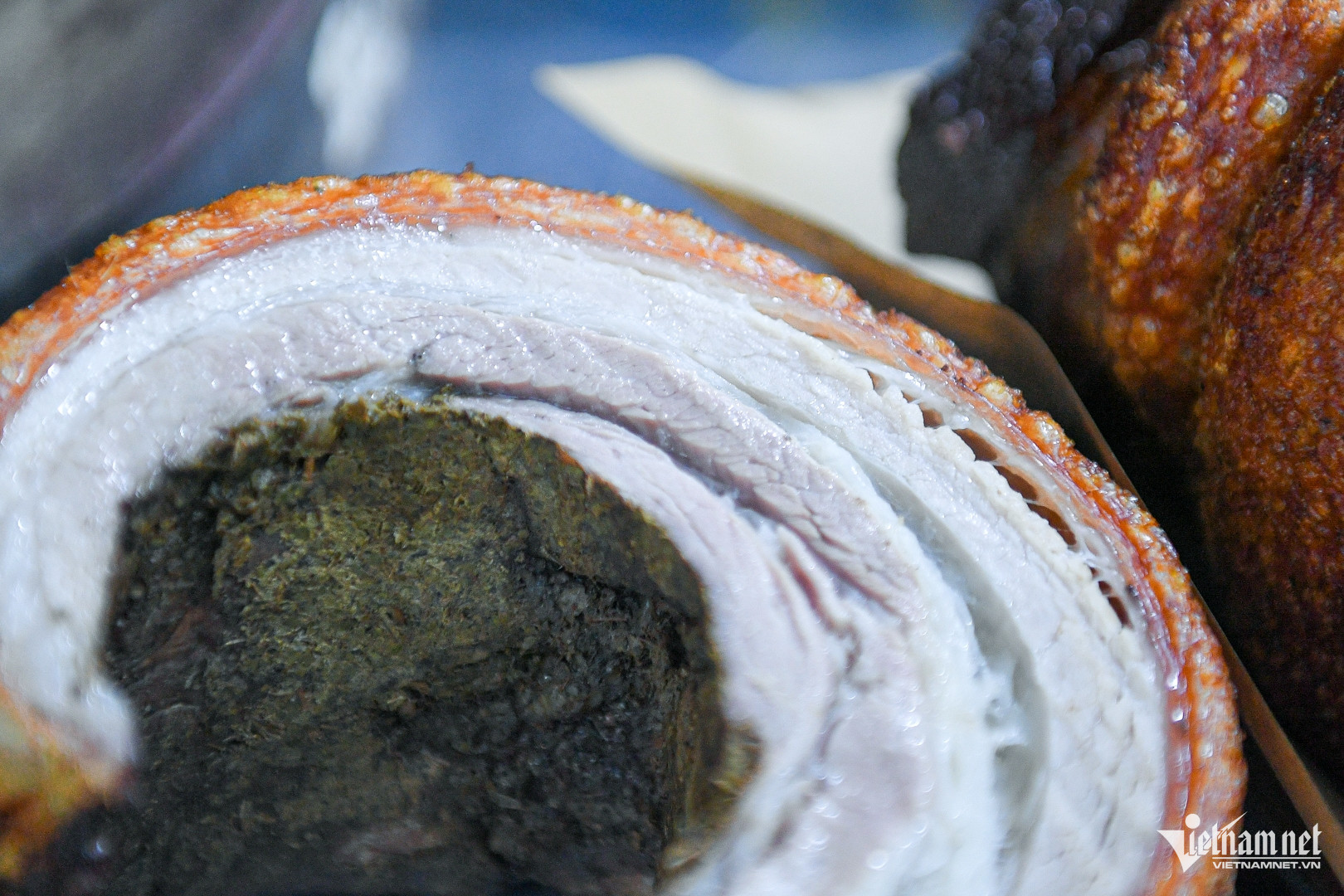
This dish is unlike any other roasted pork found elsewhere in Vietnam. Its unique recipe, said to date back more than a millennium, creates an interior that is savory and fragrant with guava leaves, while the skin cools to an airy crispness, snapping like a piece of toasted rice paper.
Legend holds that after his historic victory on the Bach Dang River in 938, King Ngo Quyen served this pork roast to his troops. Ever since, Duong Lam villagers have proudly prepared thịt quay đòn for festive feasts, weddings, ancestral rites, and visiting guests.
“The flavor is unlike any pork I’ve ever had,” said Pham Thi Hien, a visitor from Hanoi. “The meat is tender and rich, but the skin is what surprises you - it crackles in your mouth like a rice cracker.”
A dying tradition kept alive by one family
The dish takes five to six hours to make. Because the process is so time-consuming, only one family in Duong Lam still prepares it regularly: the household of Pham Thi Huong, known locally as Luong Huong, age 59.
Huong married into the village nearly 40 years ago and learned the craft from her husband’s family. Over a decade ago, she and her husband turned it into a business. Except during the three days of Tet, her home kitchen stays busy every night, glowing with fire and smoke.
At 1 a.m., she heads to the slaughterhouse to handpick fresh pork belly - thick and even cuts are essential. Back home, her son and the assistants prepare the marinade, the tools, and fire up the coal hearth.
The marinade is ground from a blend of wild guava leaves, shallots, pepper, MSG, fish sauce, salt, and five-spice powder. The guava leaves are key. They must be picked from naturally growing trees in the fields, where the leaves are smaller, more aromatic, and have a creamy texture. Guava trees cultivated for fruit are unsuitable - their leaves are too fibrous and lack fragrance.
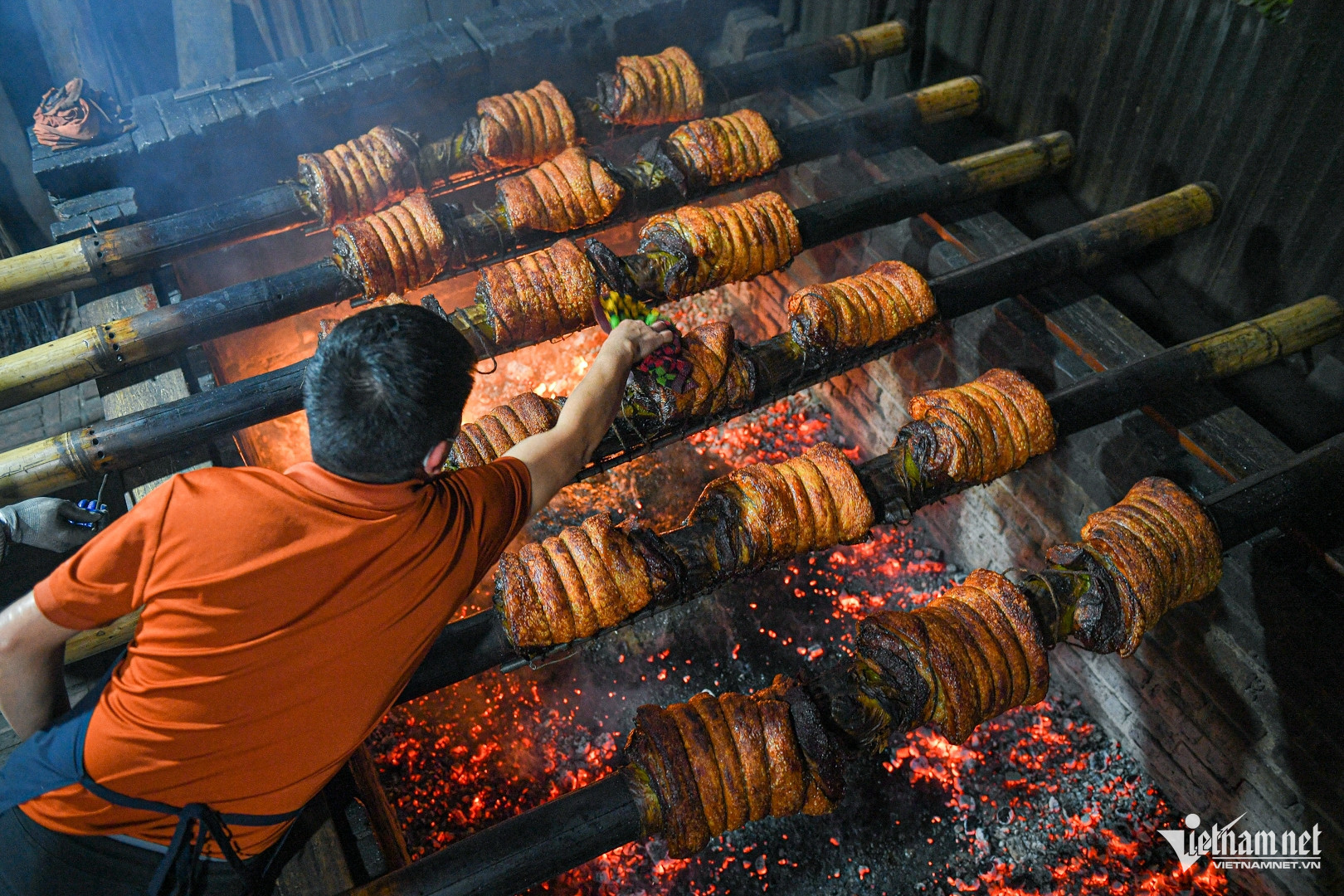
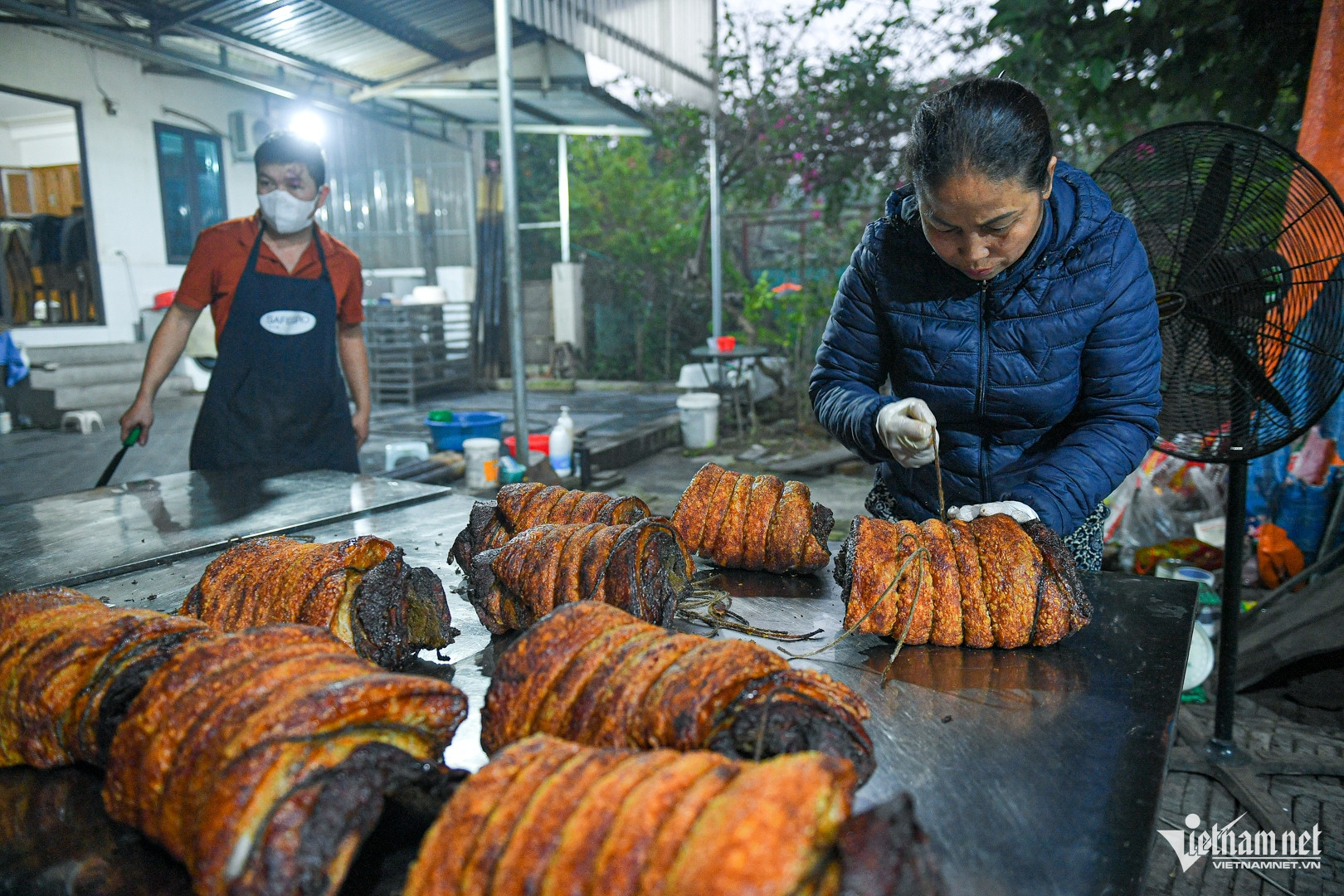
The pork is washed with a solution of lemon or vinegar and salt, then divided into 5–7 kg slabs. After a brief marinade, it’s wrapped in banana leaves and tied tightly to thick bamboo spits using stainless steel clamps and jute twine. Each spit holds several slabs.
Every day, Huong’s family prepares 50–70 kg of pork. During Tet, they process several hundred kilograms per day.
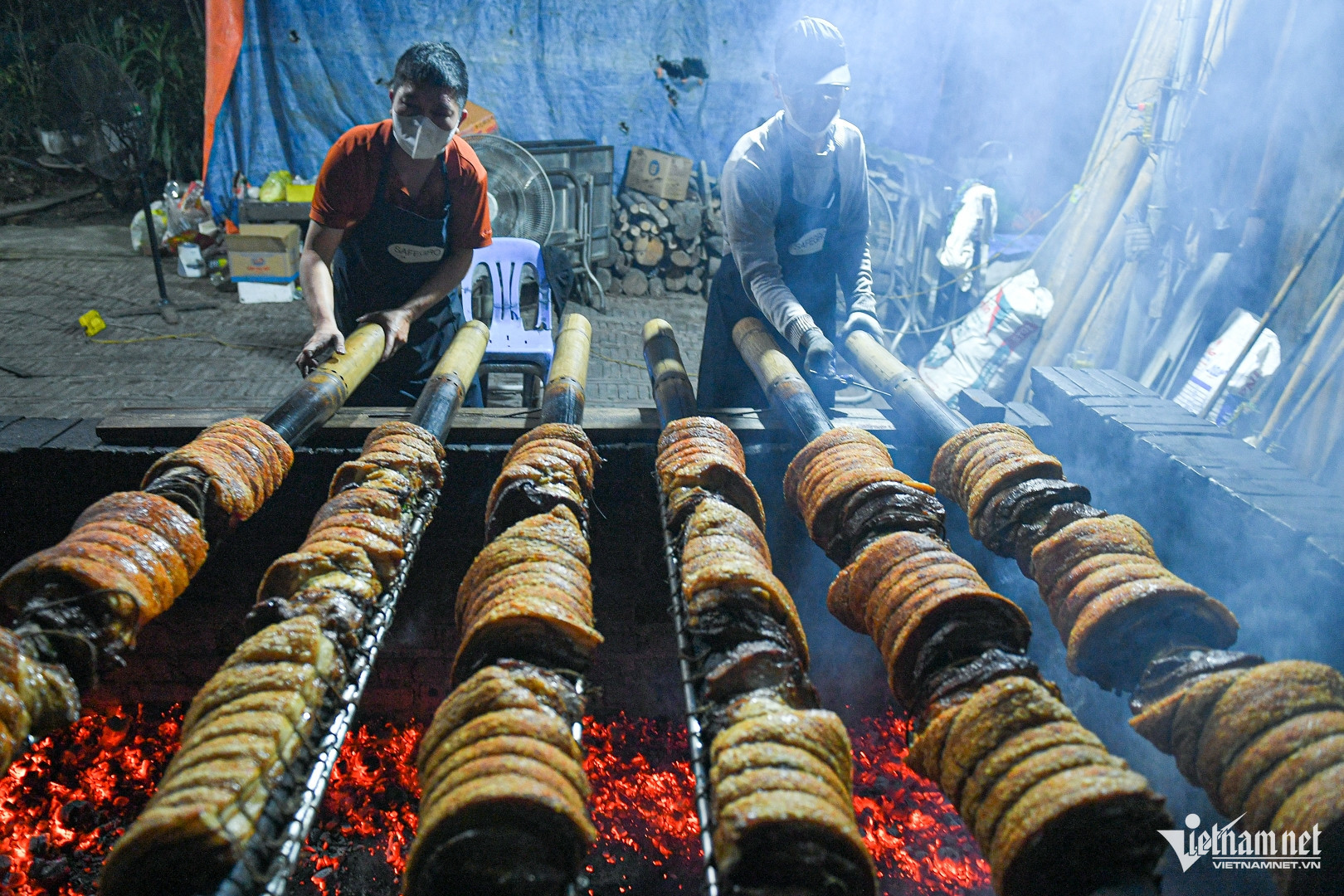
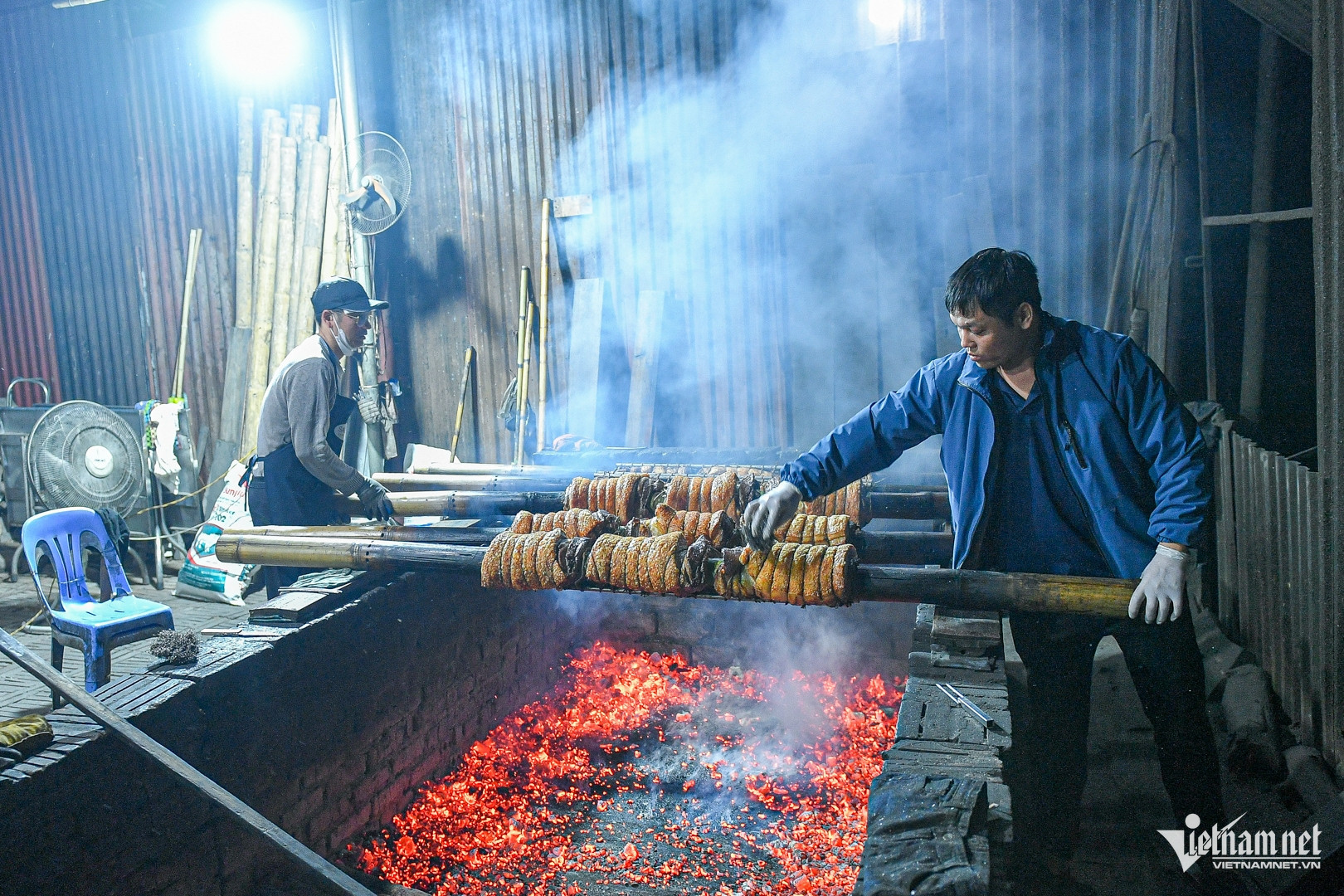
The bamboo rods are thick and aged, about 10 cm in diameter, and need two people to hoist them onto the brick fire pits about a meter high.
Turning fire into flavor
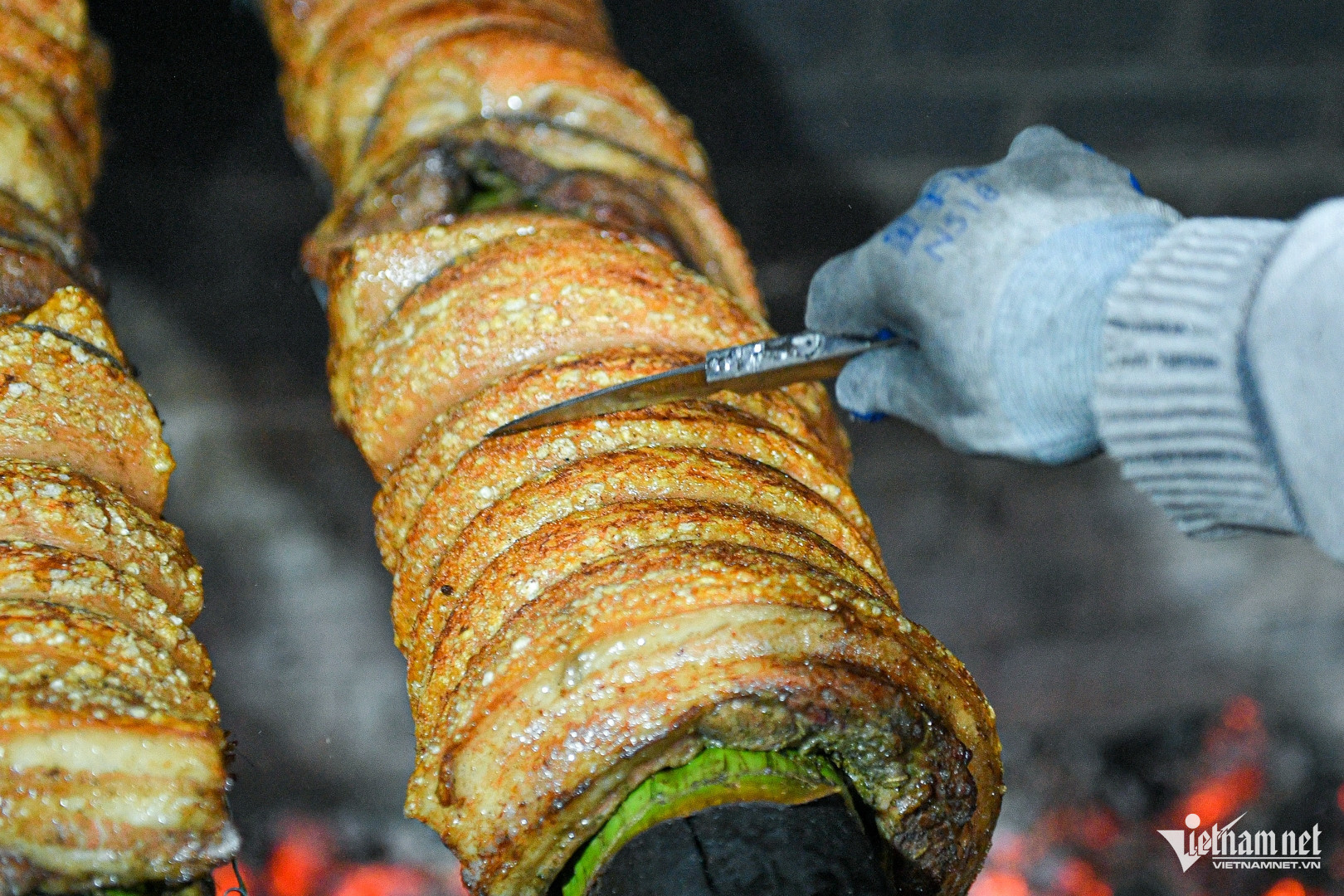
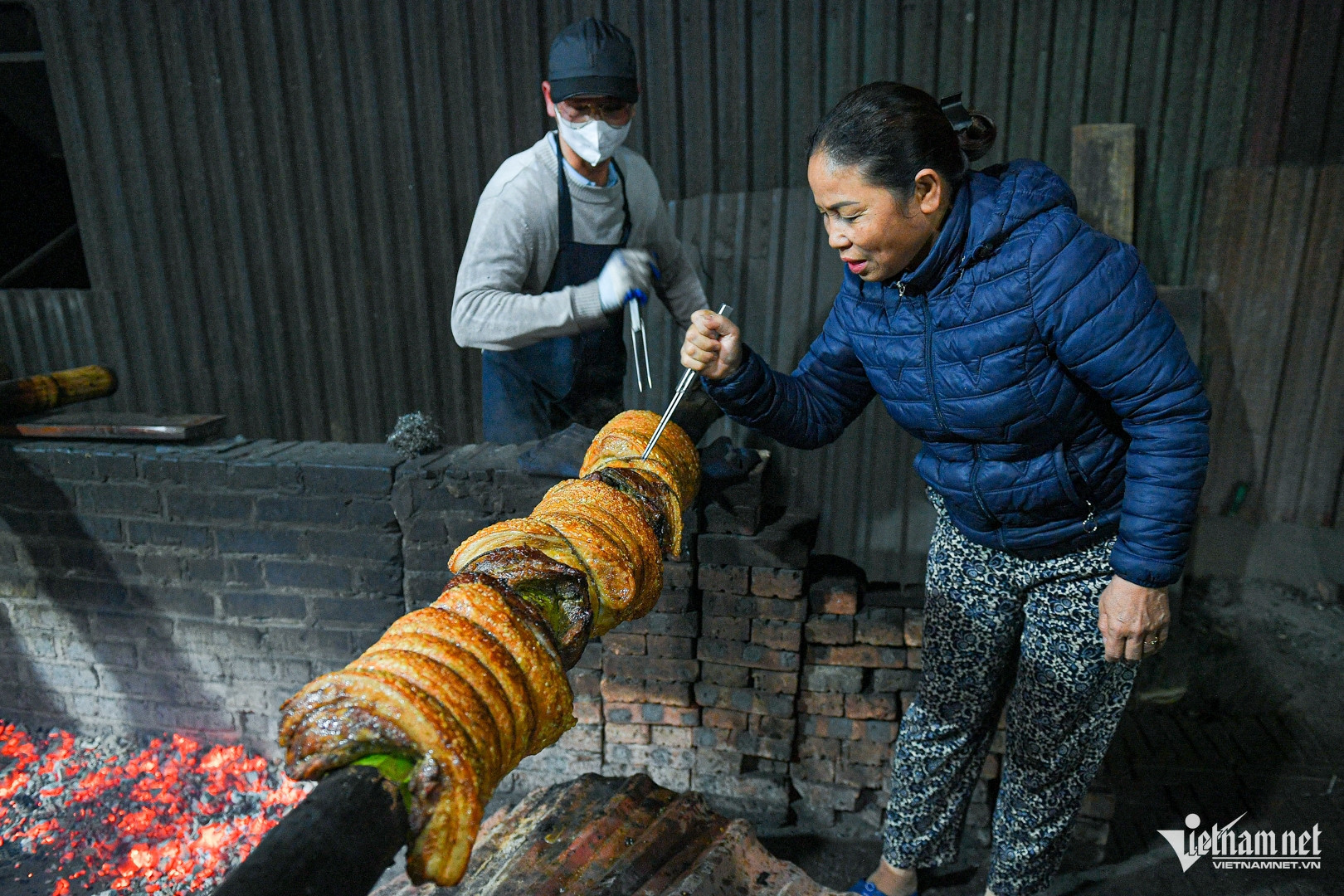
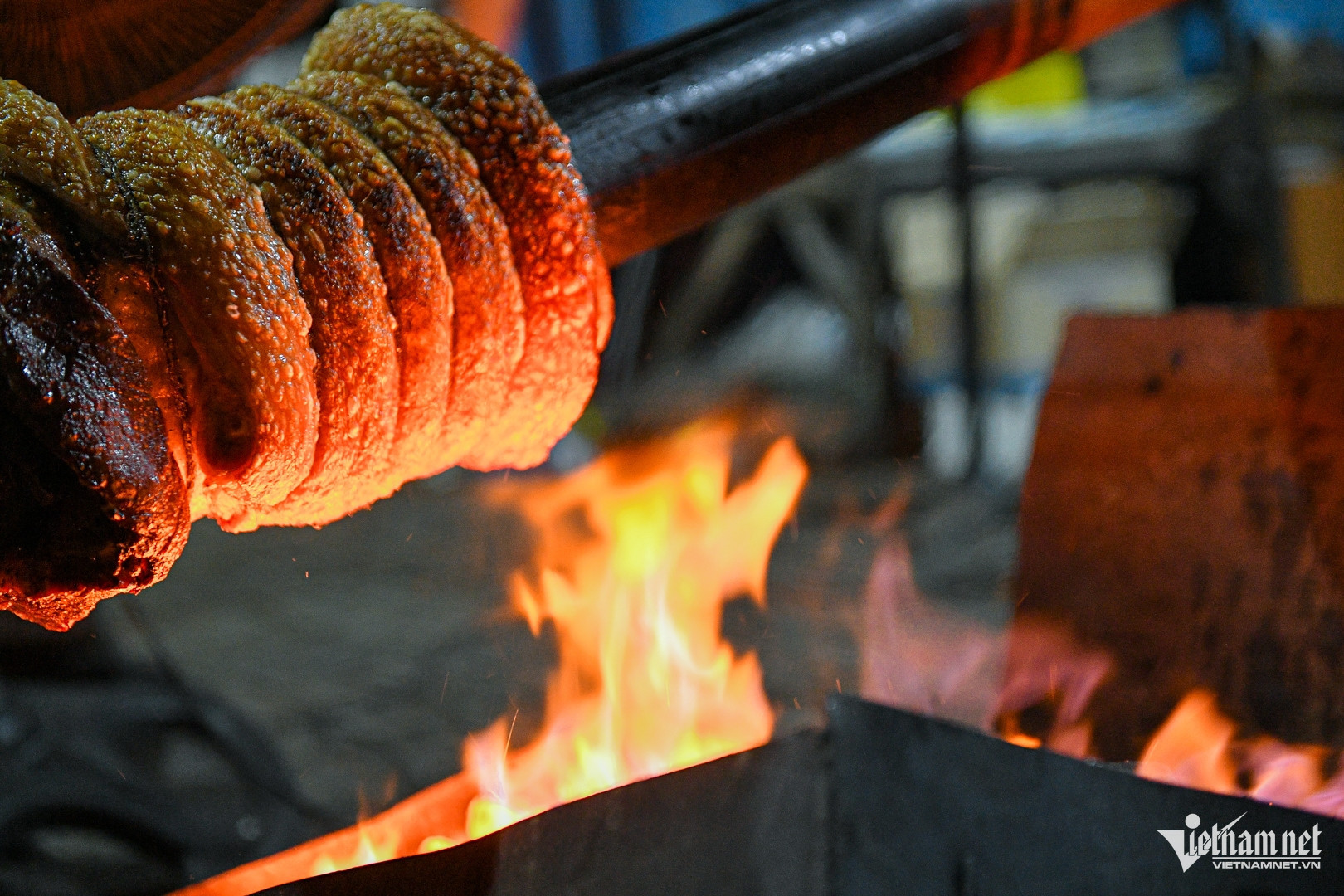
During the first round of roasting, the pork is rotated constantly to cook evenly without charring. Once the skin softens and the meat is half-cooked, it’s taken down for a rinse with lemon or vinegar water. At this stage, the skin is pierced to release excess fat - crucial for achieving that signature crackle.
The entire process takes around five hours. According to Huong, no machine can replace human labor here. Industrial ovens or metal spits might cook faster, but they won’t deliver the right texture or the subtle aroma imparted by bamboo.
Throughout the roasting, workers carefully brush off ash to keep the skin visually appealing. They must also monitor the heat constantly - too strong, and the skin burns; too weak, and it never crisps.
“The work is grueling,” Huong said. “In summer, it’s a wall of heat and sweat. In winter, it’s freezing. Standing at the fire for hours cracks the skin on your hands and face.”
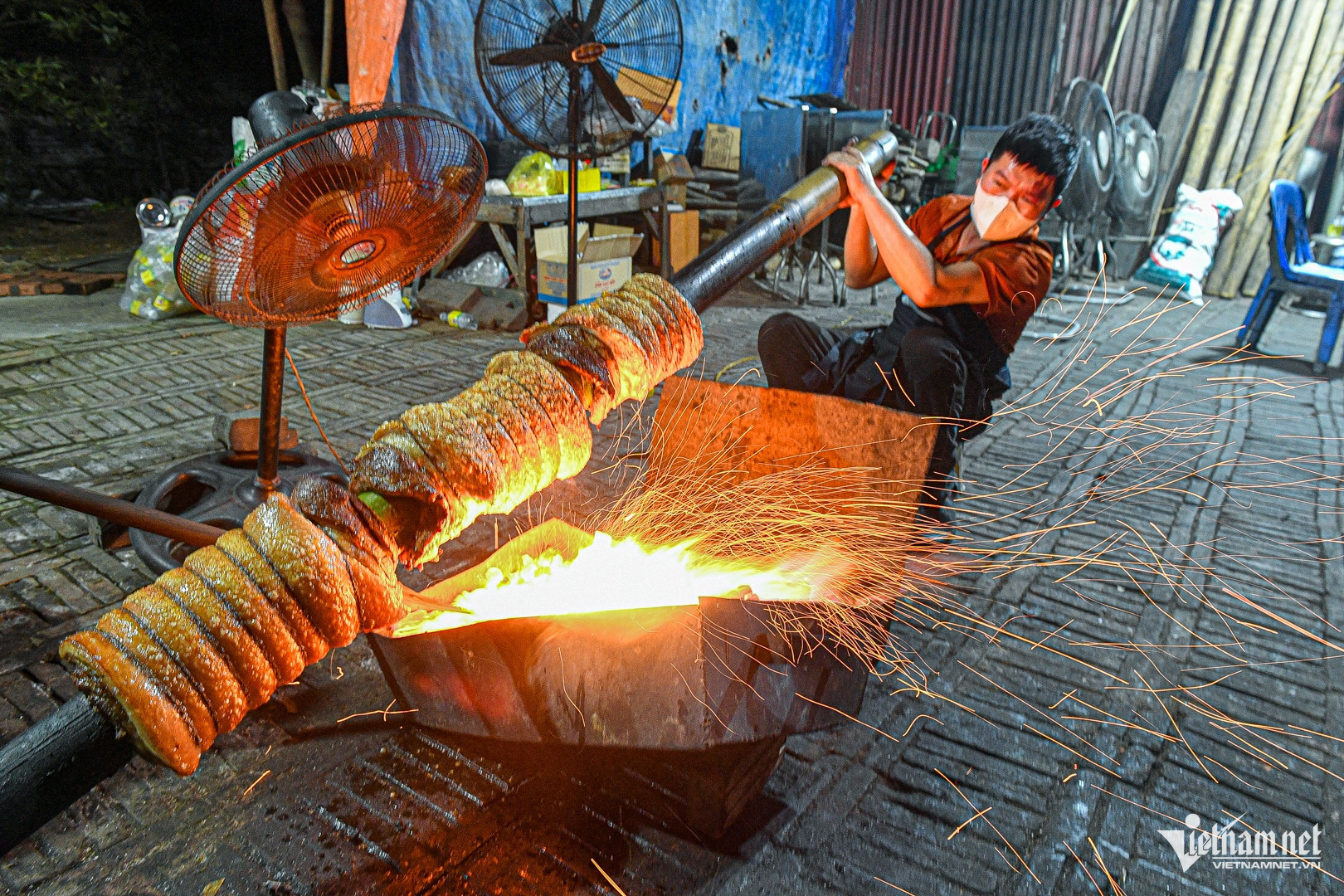
After three hours, when the meat is about 80% cooked, it is moved to a hotter flame with fans blowing air to induce the skin to blister. The fat sizzles and drips, and the skin begins to pop.
By 4:30 a.m., the final crisping begins. The pork is roasted for another hour or more until the skin turns golden and shatters to the touch.
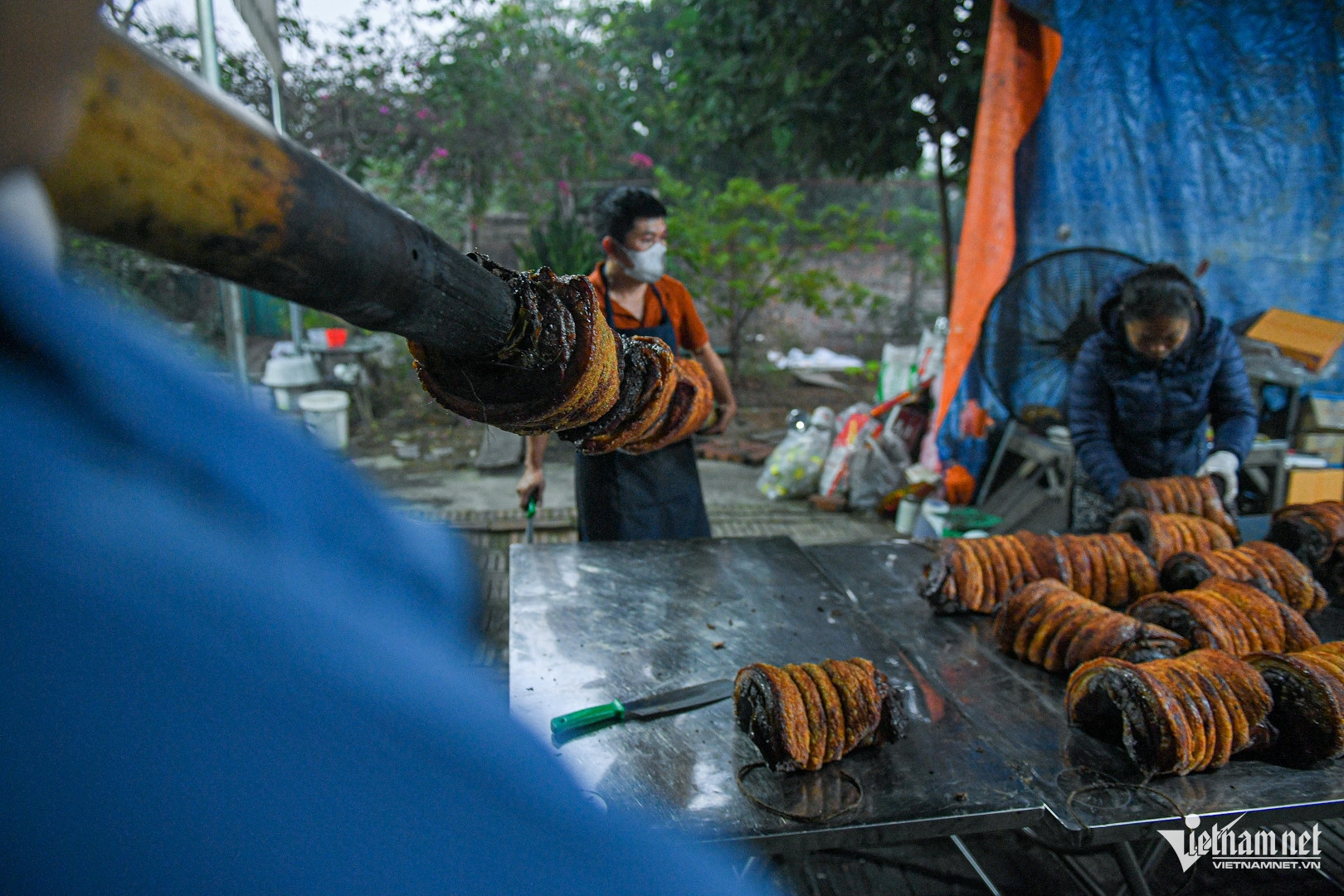
By 6 a.m., the finished rods of meat are taken off the fire, cooled with fans, and prepared for delivery. From 1 kg of raw pork, only about 580–600 grams of roast meat remains. Tap the skin, and it rings like sandstone; bite into it, and it crackles like a cracker.
Removing the twine requires care - apply too much pressure, and the delicate skin will crumble.
Gone in under an hour
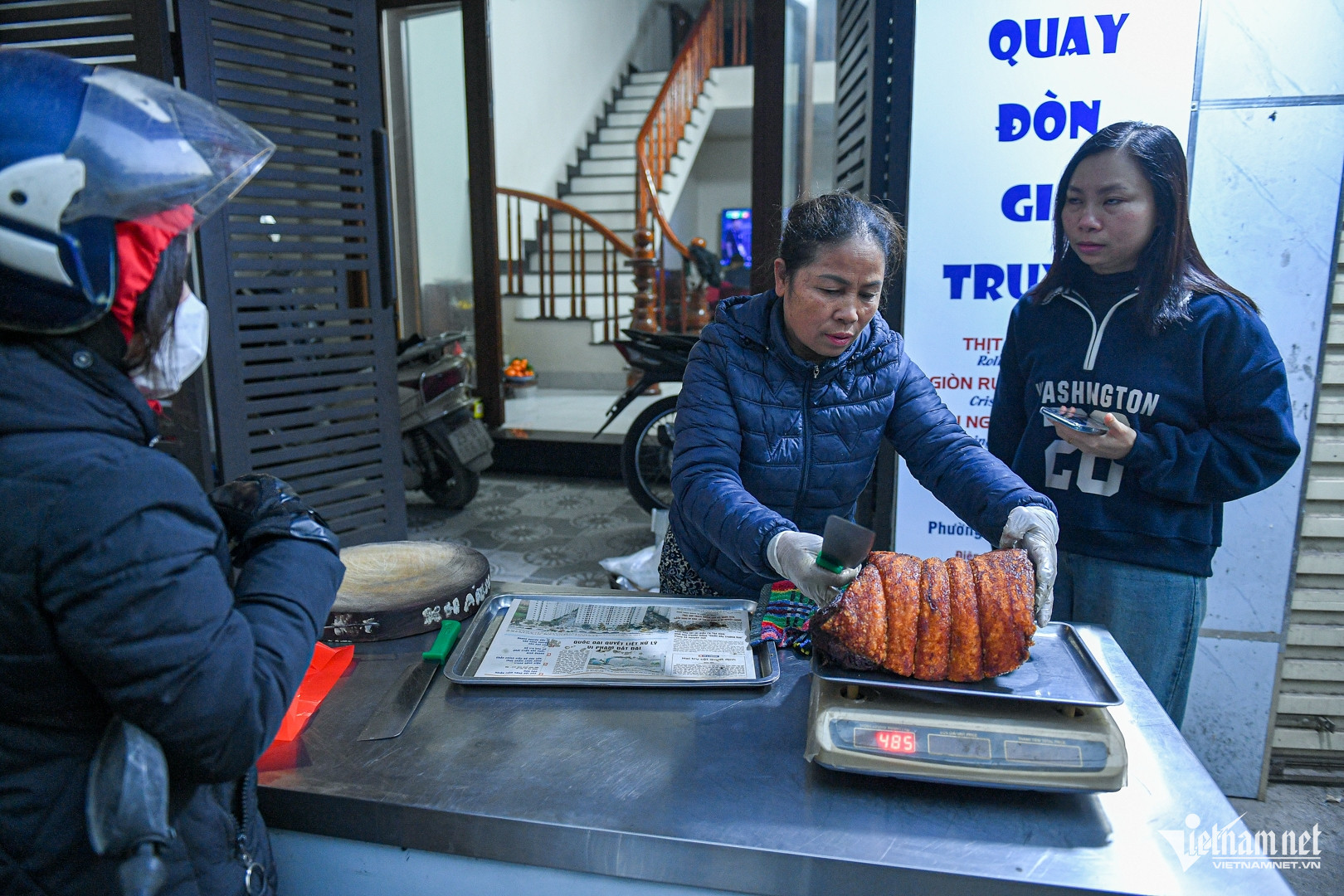
By 6 a.m., regular customers are already waiting outside, bundled against the cold - temperatures sometimes drop to 12–13°C. On weekends, the entire day’s batch often sells out within just 60–90 minutes.
“Huong’s pork roast is exactly how it’s meant to be - traditional, aromatic, and made with care,” said Ha Huu The, 73, owner of the historic The Tien house in the village. “I often order it for lunch when I host guests, and everyone always compliments it.”
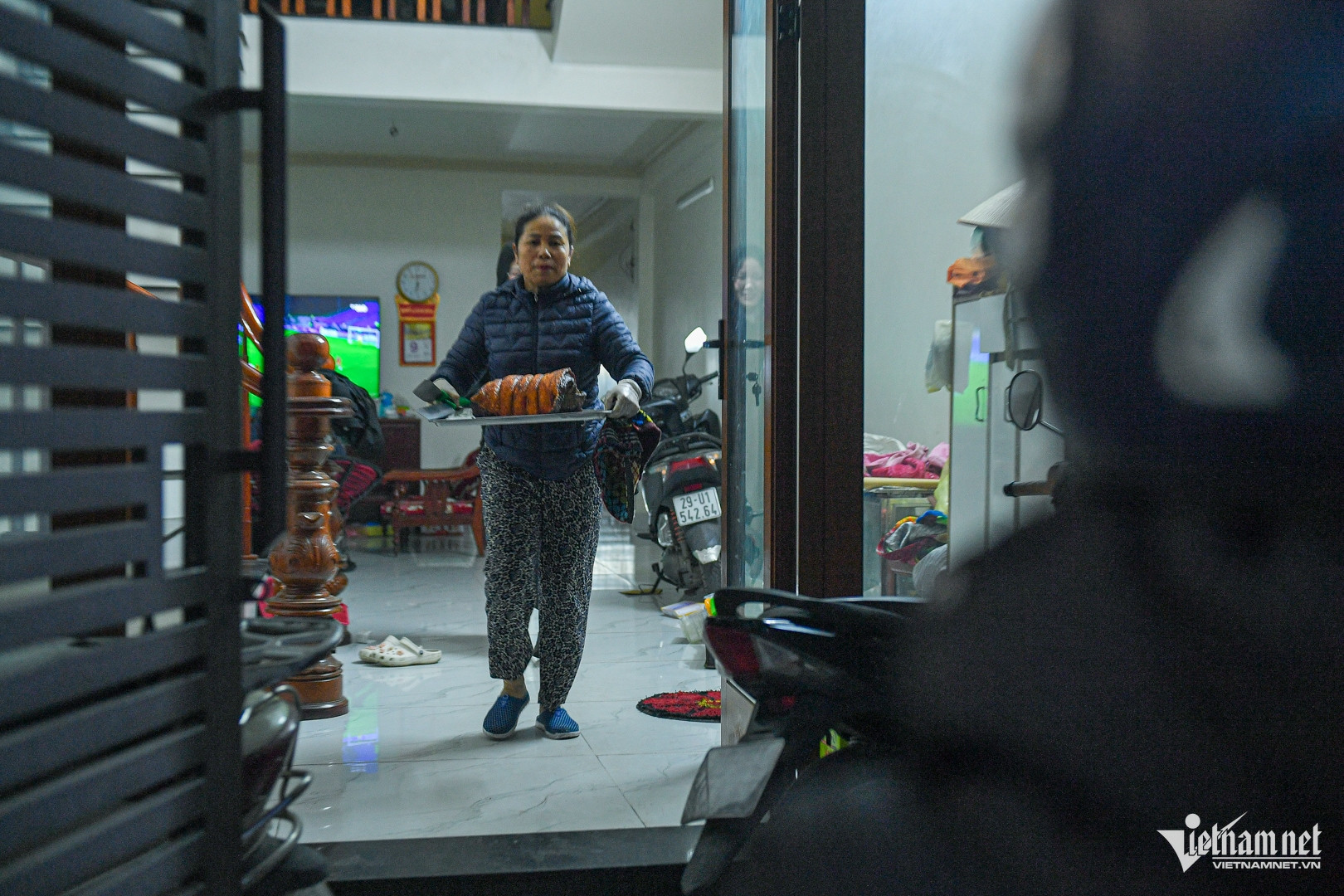
The roast sells for about $14 per kilogram. Half the daily batch is delivered to customers in central Hanoi, while the rest goes to local families and homestay owners serving tourists.
Some customers even ship the roast all the way to southern Vietnam as gifts for friends and relatives.
Linh Trang
.svg)
