 Vietnamnet.vn

 Podcast



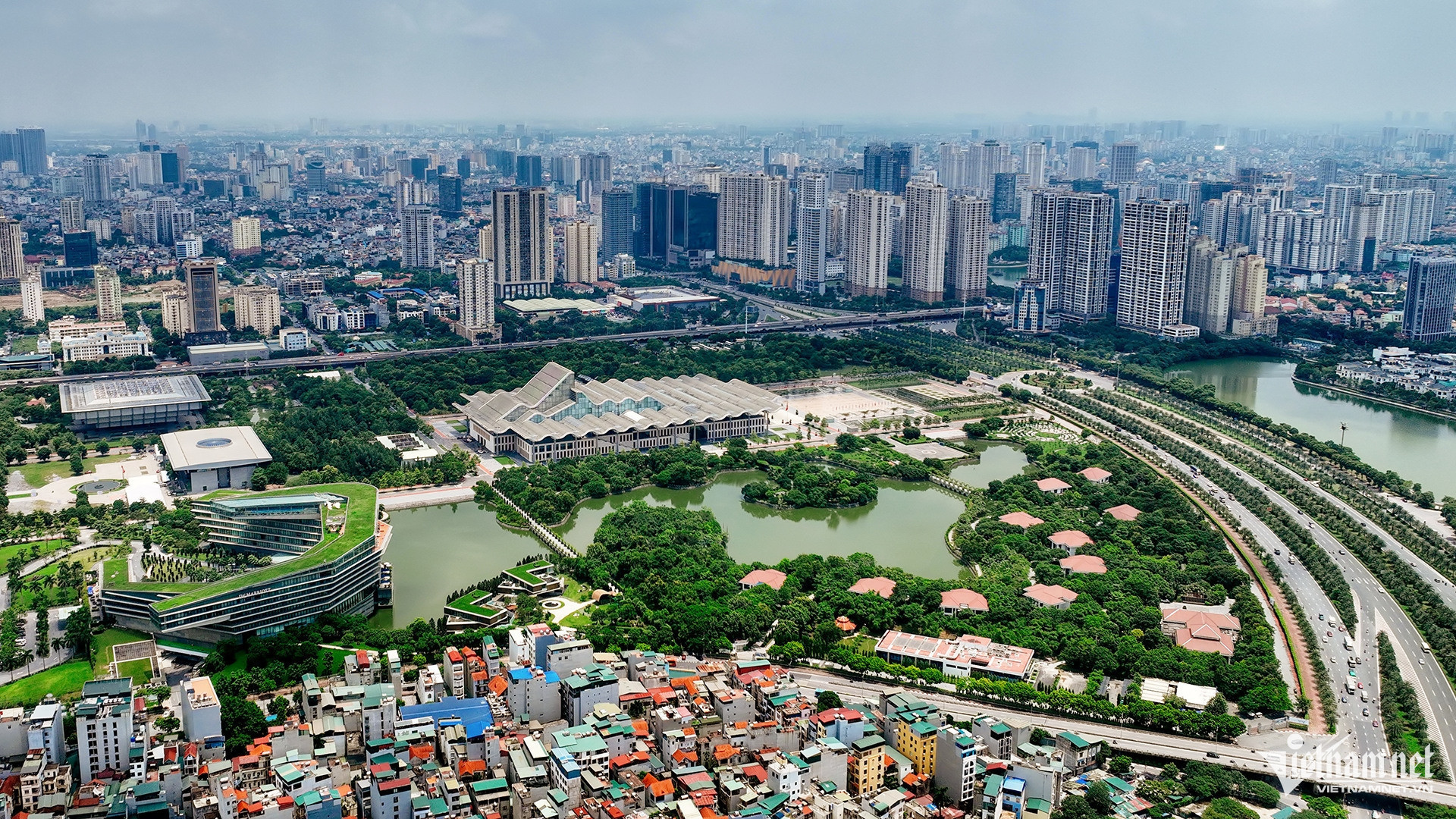
Hanoi aims to eliminate urban flooding by developing a system of regulating lakes and underground rainwater storage reservoirs while separating wastewater and ensuring it is thoroughly treated.
The measures are set out in Plan No. 331/KH-UBND on implementing Hanoi's 100-year Capital Master Plan, signed by Chairman of the Hanoi People's Committee Vu Dai Thang on August 24.
Environmental protection and flood management are among 10 groups of key tasks identified by the city in the plan. Hanoi intends to fundamentally address water, air and waste pollution through modern technologies, revive its rivers and accelerate green development.
To eliminate flooding, the city plans to develop a network of regulating lakes and underground reservoirs for storing rainwater. Wastewater will be separated and comprehensively treated.
These measures will be incorporated into Hanoi's urban, rural and technical infrastructure planning system.
The city plans to prepare 81 planning schemes, including five covering underground space and specialised technical infrastructure, 63 urban zoning plans and 13 functional-area zoning plans.
Of the 81 schemes, 47, or more than 58%, will continue on the basis of previous plans while incorporating further development. The remaining 34 will be newly prepared in line with the capital's development direction.
Hanoi will prioritise the completion of around 22 urban zoning plans, including those required for investor selection through bidding, areas west of Ring Road 4, several northwestern areas, and newly planned corridors and zones previously designated as ecological buffers.
Underground-space planning and specialised technical infrastructure plans will also be prioritised. Hanoi aims to approve all the planned schemes during 2026.
Long-standing congestion points targeted for 2030
In the central core, the historic inner city and its expanded historic area, Hanoi plans to restructure urban development around a compact-green model, make greater use of underground space, promote transit-oriented development (TOD) and preserve heritage.
Areas along both sides of Ring Road 4 will be developed through the C1, C2, C3, C4, C5, SN, XN, D1 and D2 zoning plans, with the goal of creating a modern new urban corridor and a buffer capable of easing population pressure on the inner city.
A planned sports city is envisioned as a national and international-scale sports complex combined with an ecological TOD urban area. The concept will be detailed through the Sports City zoning plan, known as TT-E.
The Red River development zone, meanwhile, will be covered by the SH-1 to SH-4 zoning plans and is intended to become a major landscape axis incorporating ecological parks and landmark cultural and service centres for the capital.
Alongside flood prevention, Hanoi aims to essentially resolve long-standing traffic congestion points by 2030.
The city plans to prioritise diverting traffic away from the inner city, accelerate road projects, river-crossing bridges and urban railways, and combine these investments with the redevelopment of older urban blocks.
To manage the development process, Hanoi will create a 4D model of the capital, upgrade its planning information system, and digitise and standardise GIS data.
Information on underground space, technical infrastructure and low- and high-altitude space will also be integrated into the system, which will be linked to investment phases and used to monitor the progress of priority projects.
Plan No. 331 is intended to establish a specific roadmap for implementing programmes, schemes, projects and planning at different levels while ensuring consistency, coordination and feasibility.
It also defines key tasks and assigns primary and coordinating responsibilities to individual agencies, units and local authorities.
The plan will provide the basis for municipal departments, agencies and commune- and ward-level People's Committees to develop their own programmes and action plans within their respective areas of responsibility.
Hanoi will monitor, inspect and evaluate implementation at each stage while reviewing and adjusting measures where necessary to resolve difficulties and ensure that the planning objectives remain on schedule.
Thanh Hue
.svg)
