 Vietnamnet.vn

 Podcast



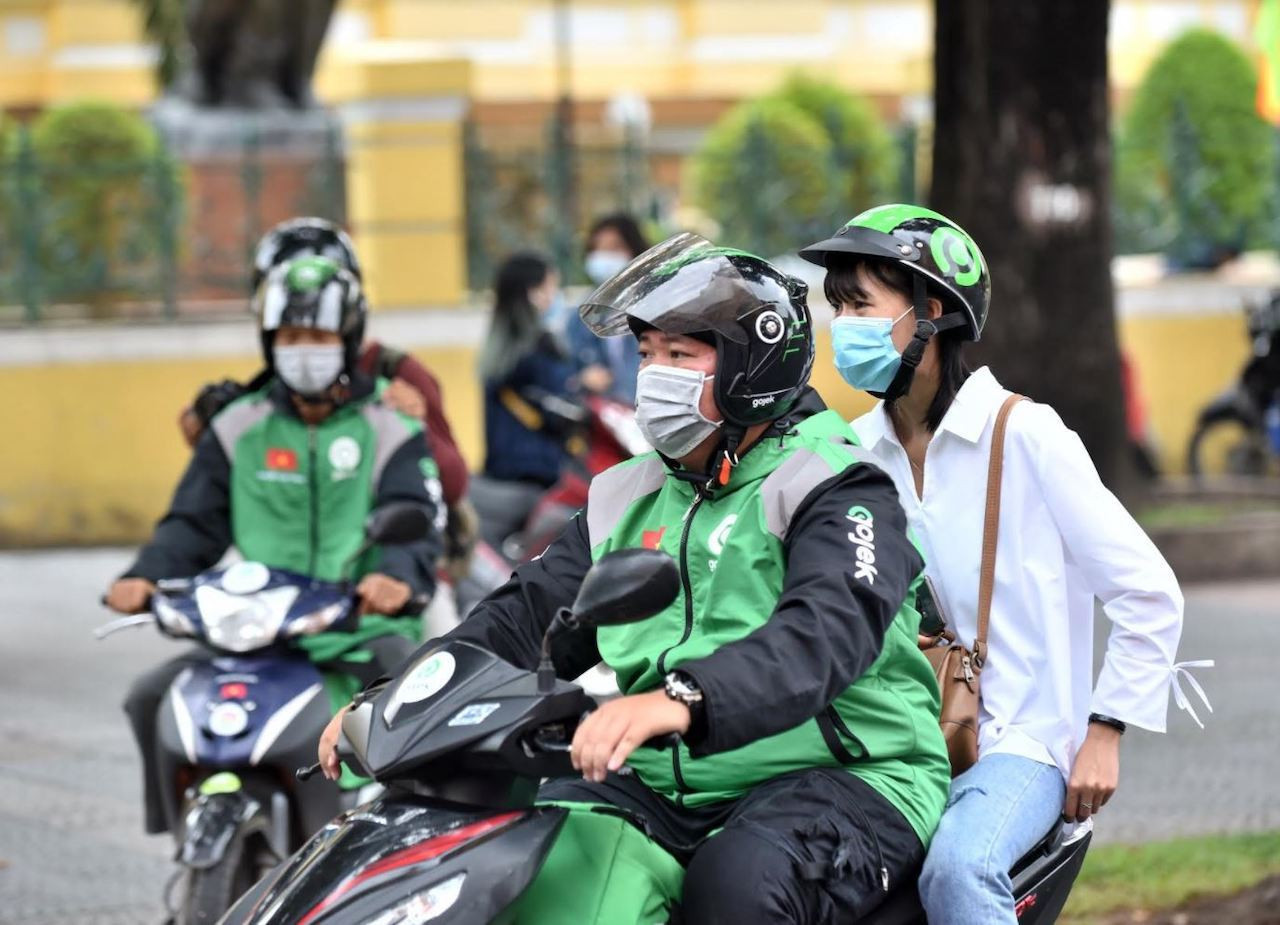
Hanoi will encourage restrictions on gasoline-powered ride-hailing motorbikes within low-emission zones from July 1 through the end of 2026 and is expected to introduce a full ban from January 1, 2027, following a transition period.
Vice Chairman of the Hanoi People's Committee Bui Duy Cuong has signed a supplementary proposal submitted to the city People's Council seeking approval for a resolution on the Low-Emission Zone Project within Ring Road 1.
The proposal has been presented to the Hanoi People's Council during its two most recent sessions but has not yet been approved.
Under the revised submission, Hanoi plans to implement the project in three phases. The first phase will begin on July 1 and run through the end of 2026 in Hoan Kiem Ward. The program will expand to Cua Nam Ward in 2027 and cover the entire Ring Road 1 area from 2028 onward.
Older, more polluting motorbikes to be restricted from Ring Road 1 from 2028
Ring Road 1 includes nine wards: Hoan Kiem, Cua Nam, Ba Dinh, Giang Vo, Ngoc Ha, Hai Ba Trung, O Cho Dua, Tay Ho and Van Mieu - Quoc Tu Giam.
Notably, ride-hailing motorbikes operating on digital platforms and using fossil fuels will be among the first vehicles affected.
During the initial phase, the city will only encourage restrictions on these vehicles and require digital platforms to guide drivers away from low-emission zones through their software systems.
From January 1, 2027, gasoline-powered ride-hailing motorbikes are expected to be prohibited from operating within low-emission zones. The restriction will remain in force as the program expands throughout Ring Road 1.
For privately owned motorbikes that are not used for commercial purposes, the city will encourage reduced use of motorcycles manufactured before 2008 and those produced before 2016 between 2026 and the end of 2027.
Residents will be encouraged to use public transportation and switch to environmentally friendly vehicles.
Beginning January 1, 2028, motorcycles that fail to meet Level 3 emissions standards under national regulations are expected to be barred from entering low-emission zones.
Unlike motorcycles, Hanoi does not propose restricting cars based on fuel type. Instead, regulations will be based on emissions standards.
According to the appendix attached to the proposal, from 2027 passenger vehicles, cars with fewer than 16 seats, pickup trucks, school transport vehicles and worker shuttle vehicles that fail to meet Level 4 emissions standards will not be permitted to operate within low-emission zones.
The same requirements will apply when the policy expands throughout Ring Road 1 in 2028.
For buses and passenger vehicles with 16 seats or more, operators must continue to comply with existing regulations limiting operations during peak hours. Vehicles entering low-emission zones during peak periods would require approval from relevant authorities.
Cargo vehicles will face the strictest controls. Trucks weighing less than two tonnes may continue operating, primarily outside peak hours, but must comply with Level 4 emissions standards from 2027.
Trucks weighing between two and 3.5 tonnes will only be allowed to operate between 9 p.m. and 6 a.m. the following day. Operations outside those hours would require approval from competent authorities. From 2027, vehicles that fail to meet Level 4 emissions standards will be prohibited.
Trucks weighing more than 3.5 tonnes will be restricted to nighttime operations during the pilot phase and are expected to be completely banned from Hanoi's low-emission zones from 2027.
Emergency and priority vehicles defined by law will continue to operate around the clock. Vehicles granted special authorization by competent authorities may also enter restricted areas, provided they comply with applicable emissions standards.
The Hanoi People's Committee explained that the decision not to immediately ban gasoline-powered ride-hailing motorbikes during the pilot period from July 1 to December 31, 2026, is intended to create a transition period for businesses, workers and residents before stricter regulations are fully enforced.
According to the city government, the period will focus on public awareness campaigns, vehicle data reviews, coordination with technology platforms to redirect vehicles, promotion of cleaner transport alternatives and preparation of monitoring and enforcement systems.
Hanoi also said it had incorporated feedback from business associations and companies to ensure the policy remains practical while minimizing sudden impacts on transport services, workers' livelihoods and residents' travel needs.
More than USD40 million proposed to support transition from gasoline to electric vehicles
According to the supplementary proposal submitted to the Hanoi People's Council, the city plans to allocate approximately VND1.045 trillion (USD40.1 million) between 2026 and 2030 to support the transition from gasoline-powered vehicles to electric alternatives and encourage greater use of public transportation.
Of the total funding, around VND140 billion (USD5.37 million) would be used to directly support low-income households switching from motorcycles; approximately VND764 billion (USD29.3 million) would be allocated for interest-rate support on loans; and about VND141 billion (USD5.4 million) would fund incentives for public passenger transportation. These measures are among the most significant additions compared with the supplementary proposal submitted on May 27.
In addition to supporting residents, Hanoi plans to invest approximately VND434.2 billion (USD16.65 million) to accelerate the conversion of the city's bus fleet to electric and green-energy vehicles.
The city aims to complete the transition of 100 percent of gasoline- and diesel-powered buses to electric or other environmentally friendly energy sources by 2030.
Thanh Hue
.svg)
