 Vietnamnet.vn

 Podcast



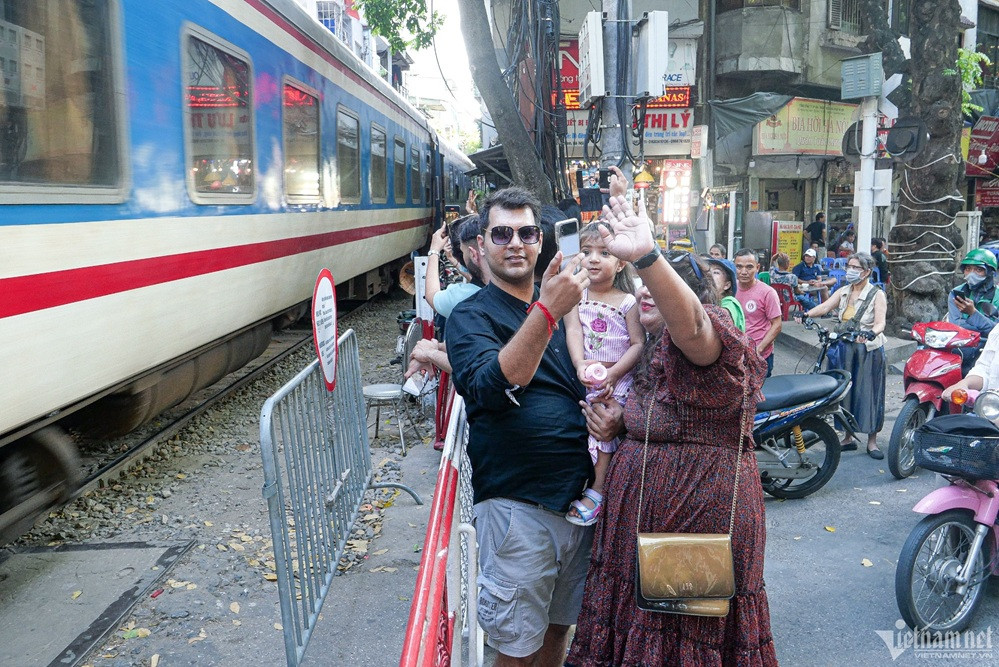
This proposal was submitted to the Ministry of Construction, with a request for the Vietnam Railways Corporation to adjust its operational plans accordingly.
Passenger transfers between Hanoi Station and Gia Lam Station would be organized under the direction of the Hanoi Department of Construction, in collaboration with relevant departments and agencies.
If approved, this rerouting would end passenger train traffic along the stretch of railway between Hanoi Station and Long Bien Station-directly affecting the area known as "railway café street," a popular destination among international tourists in recent years.
Alongside this change, the city also requested that the Ministry of Construction hand over control of the railway infrastructure between Gia Lam and Hanoi stations to the local government by the second quarter of 2026.
Once transferred, Hanoi plans to renovate and beautify the historic and cultural spaces in the western Old Quarter and the eastern area of the Thang Long Imperial Citadel. The city also intends to study an architectural plan for Urban Railway Line 1 that passes through both the old and ancient quarters-aiming to minimize impact on the spatial and heritage landscape of the area.
According to the Hanoi People’s Committee, the goal is to preserve and promote the historical value of Long Bien Bridge while developing a cultural, service, and tourism space along the 131 stone arch spans of the railway between Hanoi and Long Bien stations.
Turning Long Bien Bridge into a 'living museum' of Hanoi
The city has partnered with the Economic Department of the French Embassy in Vietnam to conduct a technical assistance project titled “Study on the renovation of Long Bien Bridge.” The project includes comprehensive surveys and assessments of the bridge’s current state, proposing renovation measures to ensure traffic safety and explore options for revitalizing the 120-year-old structure as a heritage asset.
Hanoi has also tasked its departments with drafting plans to preserve and develop the historical value of Long Bien Bridge, in tandem with building a cultural and tourism space beneath the 131 stone arches that run along Phung Hung, Gam Cau, and Long Bien streets.
This area is expected to evolve as part of an integrated cultural-architectural heritage space, linking the western Old Quarter with the eastern section of the Imperial Citadel. The Long Bien Bridge-an enduring symbol of Hanoi’s history, culture, and architecture-is envisioned as a “living museum” embedded in the city’s collective memory.
Since 2018, a surge of cafés sprung up alongside the railway tracks running through Le Duan, Kham Thien, Tran Phu, and Phung Hung streets-between Hanoi and Long Bien stations-drawing large numbers of local and foreign tourists eager to sip coffee while watching trains pass by just meters away.
Despite official bans and physical barriers at the entrance to Tran Phu Street, thousands of visitors continue to flock to the area each day in search of the adrenaline-inducing experience of watching trains rush past at close range.
The Vietnam Railways Corporation has repeatedly petitioned the Hanoi People’s Committee to resolve ongoing violations of railway safety corridors. However, no permanent solution has been implemented thus far.
Vu Diep
.svg)
