 Vietnamnet.vn

 Podcast



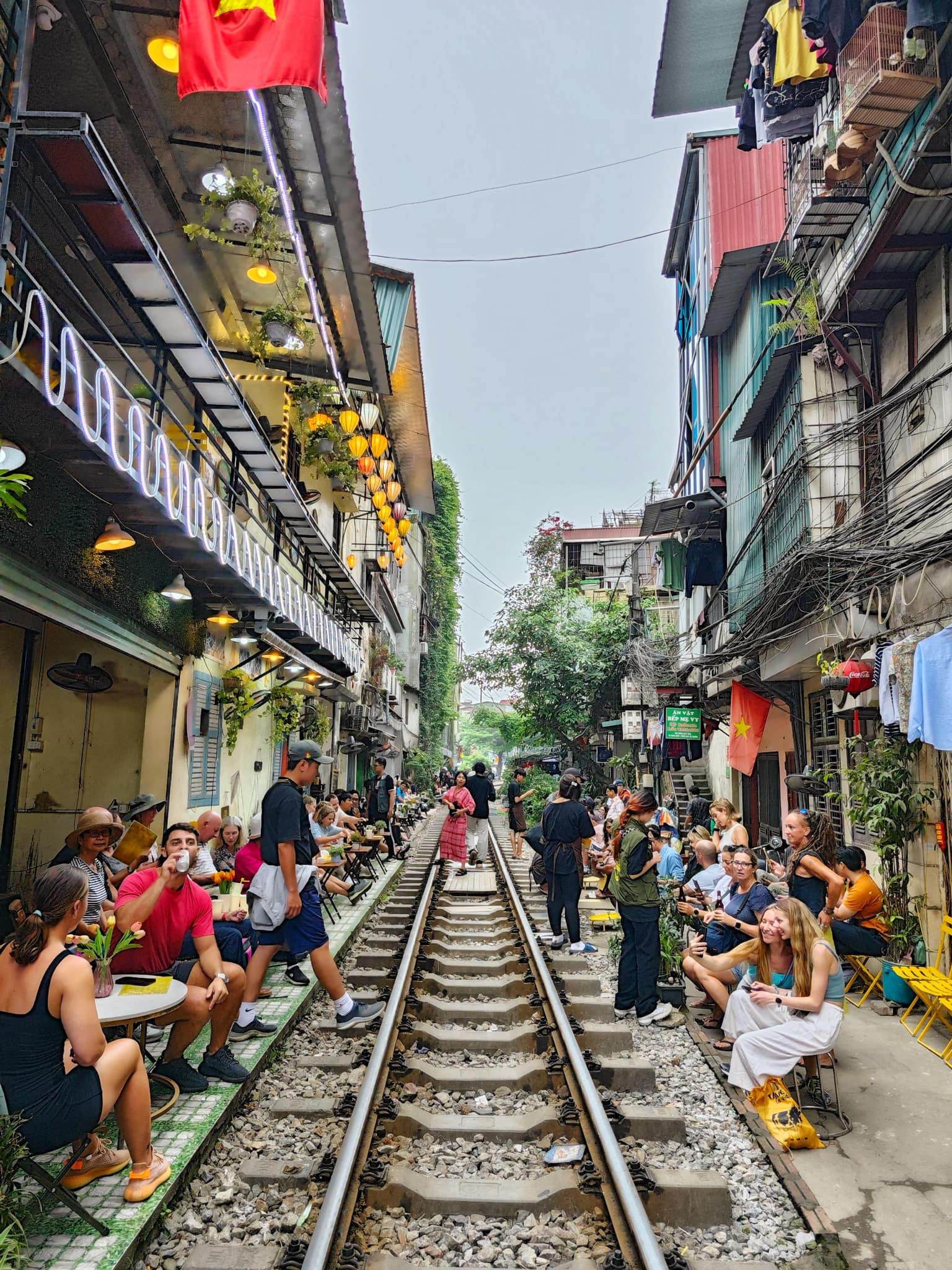
Each coffee shop along Hanoi’s Train Street offers more than a drink.
They sell memories.
They sell a glimpse of Hanoi that is both nostalgic and alive - where the scent of strong coffee mingles with the metallic gust of passing trains, where balconies brim with clotheslines and life, and where one fleeting moment can feel like all of Hanoi compressed into a single frame.
And that’s precisely what we risk losing.
Recently, as authorities moved to shut down cafés and clear the narrow corridor along the tracks near Kham Thien for safety reasons, I found myself torn between two truths.
One: safety must never be compromised.
Two: culture, memory, and identity are not so easily rebuilt once gone.
This is not merely a matter of urban order - it is a matter of cultural conduct. How do we treat spaces, however small, that carry the soul of a city?
I still recall a crisp autumn afternoon last year, wandering through the area with a visiting friend from abroad.
The air was tinged with the smell of roasted coffee, and rows of brightly colored clothes fluttered from balconies.
When the train roared by, people pressed themselves against the walls, laughing with equal parts thrill and reverence.
My friend turned to me and said, “I’ve never experienced anything like this anywhere else. This is my Hanoi.”
Such moments are spontaneous, yet profound. They arise not from planned heritage but from lived culture - urban creativity shaped by the people themselves.
That is why, though I agree that public safety is paramount and non-negotiable, I can’t help but feel a twinge of loss.
Could we not have preserved the spirit of Train Street another way?
Must authenticity always be sacrificed in the name of order?
We need not choose between culture and safety.
What we need is vision.
Could this have been redesigned as a regulated tourism space?
Could authorities have issued safety protocols, time windows for train passage, crowd management systems, or collaborated with businesses on sustainable practices?
Other cities have done it.
In Thailand’s Mae Klong Market, for instance, vendors temporarily pack up as the train approaches, only to reopen their stalls moments later.
That isn’t chaos - it’s choreography.
And it works because it was built on mutual respect between government, community, and culture.
Hanoi has no shortage of spontaneous creative spaces.
Night markets, expat streets, indie art corners hidden in old alleys, cafés ringing Hoan Kiem Lake, or Indochine-style homestays tucked into aging apartment blocks - none of them began as part of any master plan.
But together, they pulse with the city's contemporary life.
Train Street simply happened to go viral.
Instead of erasing such places, we could study, regulate, and integrate them.
We could treat them as cultural assets.
We could create flexible frameworks - soft zoning, staggered access, managed hours, legal training, and micro-loans to help locals adapt.
Or we could relocate the idea - not the experience - to a nearby stretch of rail that allows for safer proximity, preserving the thrill but avoiding the risk.
All of this is possible with creative governance.
But perhaps most of all, we must consider the livelihoods that hang in the balance.
For many residents, this street café was their everything.
They served more than coffee.
They shared a version of Hanoi tourists rarely get to see - a place where the line between daily life and magic blurs.
When the cafés disappear, so too might their incomes, their memories, their sense of place.
We cannot ask them to sacrifice all that and walk away unaided.
Instead, we should help them transition.
Offer skill training, financial support, space in nearby cultural zones, or roles in the city’s broader tourism ecosystem.
Urban life is not just buildings and bylaws.
It is people.
Too often, we wait until creative spaces become “problems” before we act.
But with better foresight, more flexible licensing, and a deeper understanding that informal culture is part of formal urban identity, we can act earlier, smarter, and more humanely.
Train Street challenges us to manage not just the rails, but the rhythm of a city.
It asks us: can we protect life without sterilizing it?
Can we keep people safe without shutting down the very things that make them feel alive?
Hanoi is entering a new era of urban renewal, defined by sustainability, heritage, and identity.
This is the moment to ask: how do we build cities that don’t just function, but feel?
Train Street, in all its cramped, chaotic charm, offers a lesson.
Not just in urban management, but in cultural empathy.
In the end, people don’t fall in love with perfect cities.
They fall in love with places that surprise them.
That stir something.
That remind them they’re alive.
That’s what Train Street offered.
A fleeting flash of metal and magic.
A reminder that even in a modern metropolis, there’s room for wonder.
May we never forget that.
Bui Hoai Son (Hanoi’s National Assembly deputy)
.svg)
