 Vietnamnet.vn

 Podcast



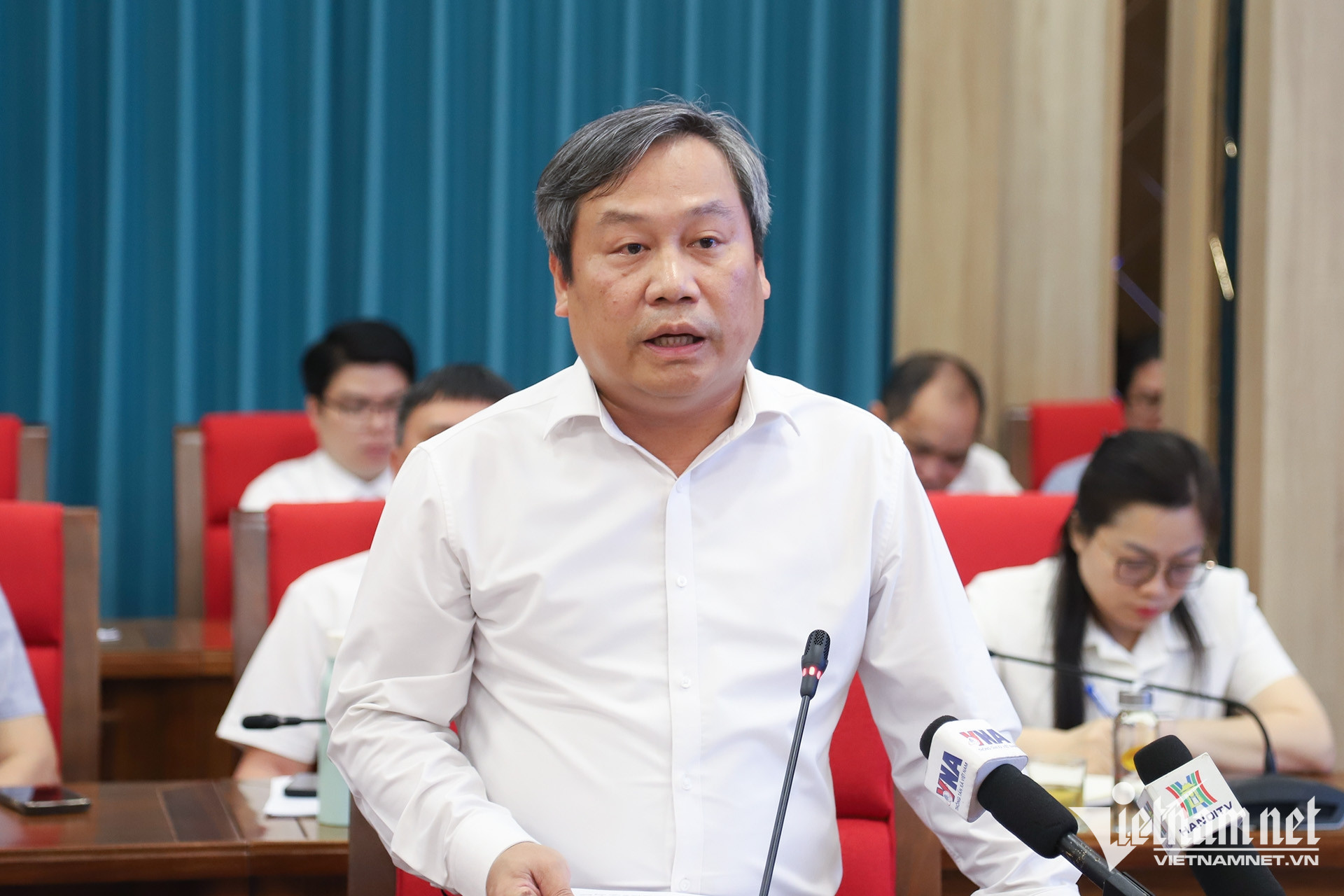
Under the proposal, communes and wards would not merely serve as administrative units but become spaces for organizing development and directly translating Party policies into concrete outcomes in people’s daily lives.
From the first quarter of this year, Hanoi established a steering committee and working groups to develop the socialist commune and ward project.
Vu Dai Thang stressed that all policies and activities must center on people’s well-being, ensuring fairness, progress and that no one is left behind.
He added that the project aims to transform Hanoi into a model city of comprehensive, civilized and modern development where traditional cultural values are preserved and promoted under new conditions.
The proposal identifies all communes and wards across Hanoi as eligible to apply criteria suited to local conditions.
However, the city plans to select pilot locations first to create a practical basis for reviewing, refining and eventually expanding the model citywide.
The overall goal is to build a cultured, civilized, modern and happy capital through the pilot implementation of socialist communes and wards before scaling up the initiative across Hanoi.
Eight core pillars
According to Vu Dai Thang, socialist communes and wards are defined as integrated governance and development models at the grassroots level.
Rather than performing purely administrative functions, they are expected to directly transform the defining values and objectives of socialism into tangible development outcomes.
Hanoi has translated eight core characteristics of Vietnamese socialism into practical grassroots conditions for the capital.
The eight pillars include:
Building a strong grassroots political system, service-oriented governance and promoting people’s ownership rights
Developing modern and synchronized infrastructure and smart urban spaces
Promoting local economic development tied to modern productive forces
Ensuring fair social welfare and inclusive development
Developing a cultured, elegant and civilized Hanoi identity
Building a green, safe and sustainable environment
Ensuring national defense, security, social safety and people-to-people diplomacy
Promoting science, technology, innovation and digital transformation
“In particular, economic development, cultural governance, social welfare, environmental protection, national defense, security, people-to-people diplomacy and digital transformation all aim toward improving people’s quality of life and happiness,” Vu Dai Thang said.
Fifty-four evaluation criteria
The chairman said the proposal has been designed with measurable indicators that can be quantified and evaluated.
Key criteria groups include economic development, employment, income and sustainable livelihoods, urban planning and infrastructure, healthcare, education, culture, social welfare, environmental protection, national defense, security, science and technology, innovation, digital transformation, public happiness and satisfaction, community life and social governance.
The proposal currently contains 54 criteria, including 52 primary indicators and two composite indicators measuring public happiness and overall satisfaction.
These indicators are organized under the eight core pillars and are expected to be applicable to all communes and wards across the city, not only pilot areas.
Regarding pilot site selection, Vu Dai Thang said Hanoi would prioritize areas balancing representativeness and feasibility.
The city will avoid locations considered overly unique or excessively difficult to implement and instead prioritize areas capable of simultaneously deploying all eight core components of the project.
Pilot locations must also demonstrate strong political commitment and sufficient room for future development.
The selected sites should have relatively independent positioning and convenient connections to major transport corridors, green spaces, rivers, lakes and other functional zones to support future expansion.
Beyond existing conditions, Hanoi is also focusing on leadership capacity and the readiness of grassroots political systems to embrace innovation.
“Currently, the city plans to select two adjacent communes for simultaneous implementation to ensure a combined population scale of around 700,000 residents,” Vu Dai Thang said.
Funding sources for the project include the state budget, socialized investment and special mechanisms to attract private investors.
Hanoi is also studying suitable governance and management models to ensure centralized, unified and grassroots-oriented implementation.
Vu Dai Thang said the proposal has already undergone three rounds of feedback from the Standing Committee of the Hanoi Party Committee and is continuing to be refined through scientific workshops and consultations with central ministries and agencies.
The city expects to complete the proposal in May before submitting it to competent authorities for consideration.
Three implementation phases
In 2026, Hanoi will finalize the proposal, select pilot locations and allocate resources. Site selection is expected to be completed by September 2026 before implementation begins.
During the 2027-2030 period, the city will simultaneously deploy all tasks in the pilot areas. By 2030, Hanoi plans to conduct a midterm review and finalize the evaluation criteria.
From 2031 to 2035, Hanoi will continue implementation and conduct a comprehensive review of the project.
Tran Thuong
.svg)
