 Vietnamnet.vn

 Podcast



The waves

Tran Thanh Trung is among the newer overseas Vietnamese players returning to compete in Vietnam.
Over the past decade, Vietnamese football has experienced a special current: players of Vietnamese descent, born and raised abroad, gradually making their way back. It is not merely a professional decision, but a journey toward roots - where emotion, identity and ambition converge.
The first wave arrived quietly and in limited numbers, with names such as Dang Van Lam and Mac Hong Quan. Today, however, it has grown into a stronger and more diverse movement, with dozens of overseas Vietnamese players, or those carrying Vietnamese blood, appearing in the V-League and the First Division.
What unites these waves is not only technical quality, but also the emotional dimension of homecoming. For many overseas Vietnamese players, Vietnam is not simply a career destination. It is where they wish to assert themselves in colors that carry family and historical meaning. In this sense, football becomes a bridge between two worlds: modern and traditional, Western and Eastern.
On a broader scale, the influx of overseas Vietnamese players also reflects a shift in thinking within Vietnamese football. The door to integration has been opened wider. Player selection criteria are no longer confined by geography, but oriented toward quality, identity and long-term contribution. It is a necessary transition at a time when regional football is becoming increasingly competitive.
The challenges
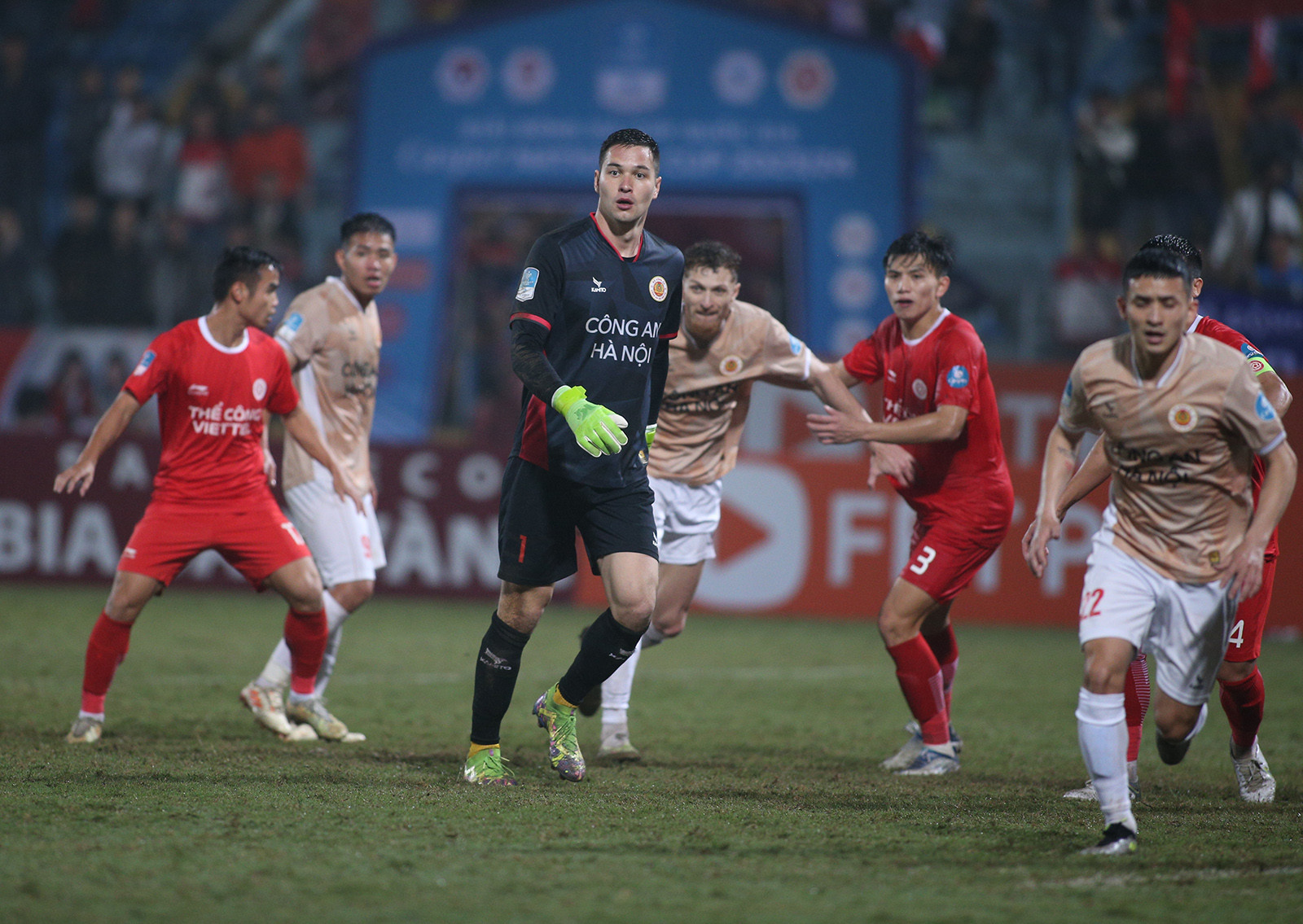
Even so, overseas Vietnamese players must make tremendous efforts to stay and prove themselves.
Yet the journey back to the homeland has never been paved with roses. Behind the glow of expectation lie countless challenges, both visible and invisible.
The first hurdle is cultural difference and the competitive environment. Vietnamese football has its own rhythm, intensity and characteristics, far removed from what many overseas Vietnamese players experienced in Europe. Some require months, even a couple of seasons, to adapt to the climate, pitch conditions and team dynamics before they can truly establish themselves. Others depart early, unable to find their footing.
Language and tactical communication present another barrier. Despite their Vietnamese heritage, not all players speak the language fluently. In top-level football, even a brief delay in on-field communication can lead to costly mistakes. This demands double the effort from the players and calls for patience and proper support from coaching staffs.
Perhaps the most sensitive challenge lies in expectation. Overseas Vietnamese players are often seen as ready-made solutions to unresolved problems in Vietnamese football. When performances fall short of anticipation, they quickly become targets of criticism. The pressure comes not only from supporters, but sometimes from within - from their own determination to prove that returning home was the right choice.
Yet it is precisely through these trials that the true value of the homecoming journey takes shape. Each overseas Vietnamese player who endures, who secures a place, helps narrow the gap between Vietnamese football and the world. They bring professional standards and modern thinking, while learning to blend into the current of local identity.
The story of overseas Vietnamese players returning home is not solely about football. It is a story of roots, of choice, and of the desire to give back. At a seasonal crossroads, when Vietnamese people turn their hearts toward family and homeland, that journey feels even more meaningful - a reminder that no matter how far one travels, the road home always carries the weight of the heart.
Duy Nguyen
.svg)
