 Vietnamnet.vn

 Podcast



The new Honor Magic 8 Pro Air is almost as thin as the iPhone Air but even lighter, weighing just 155g. It comes with proper stereo speakers - not a downgraded version - and most shockingly, a triple-camera setup on the back. Even more impressive, packed inside its super-slim frame is a 5,500 mAh silicon–carbon battery - more than double the iPhone Air’s capacity and nearly 50% bigger than the Galaxy S25 Edge’s.
A compact flagship that challenges industry norms
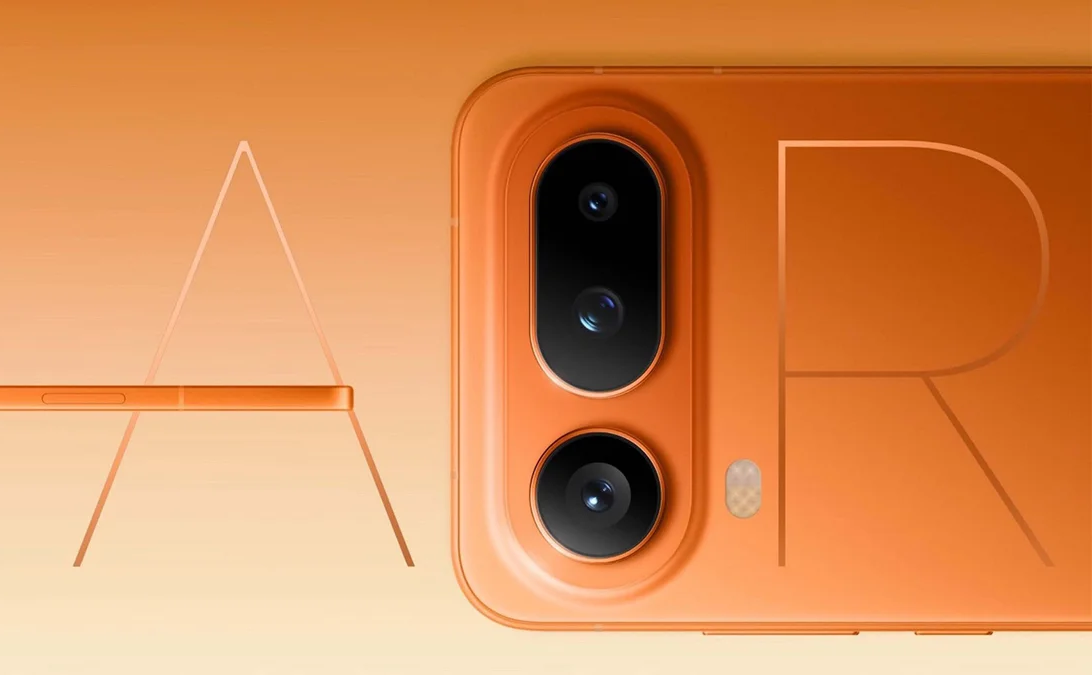
This is not just a concept or a prototype. It’s real. The phone is called the Honor Magic 8 Pro Air, and it marks the debut of Honor’s “Pro Air” line - an attempt to blend ultra-thin, lightweight design with uncompromising flagship specs.
Right from its unveiling, the Magic 8 Pro Air forced people to reconsider what a slim flagship phone can be. This is not a device that sacrifices everything for the sake of thinness, but one that demonstrates just how far hardware design has evolved - if brands are willing to push it.
While the Galaxy S25 Edge sports a 6.7-inch display and the iPhone Air has a 6.5-inch panel, Honor keeps things modest with a 6.3-inch screen. That difference may seem minor on paper, but in the hand, it makes a big difference. The device is shorter, narrower, and far easier to use one-handed - positioning it as a top contender for “best compact flagship of 2026.”
More notably, the screen size is identical to the standard iPhone 17, but Honor’s phone is nearly 20 grams lighter and about 30% thinner: just 6.1mm thick compared to the iPhone’s 8mm. That’s not a small difference.
Small design touches with big impact
Honor also seems to have a better grasp of user experience. The Magic 8 Pro Air comes with a complimentary case - something increasingly rare these days. It’s not a bulky protector either, but a sleek cover that shields the back while leaving the sides exposed, maintaining the phone’s airy feel in hand.
While the device doesn’t use “luxury” materials like titanium - as found in the iPhone Air - it still features a durable frame combined with a specially designed ultra-thin glass back. Which naturally raises the question: how durable is it?
Honor had a clever answer. At the launch event, they had dancers perform on a stage literally supported by Magic 8 Pro Air phones. It was an unmistakable declaration of structural strength, disguised as a marketing stunt.
Camera and battery that shame the competition
The camera setup is another surprise. While Apple and Samsung still struggle to fit more than one or two cameras into their slim models, Honor includes a full triple-camera array without compromise.
You get a wide-angle lens, an ultra-wide lens, and even a telephoto lens. The main sensor is a large 1/1.3-inch unit - on par with the iPhone Pro Max or Galaxy Ultra. The telephoto offers a practical 3.2x optical zoom, ideal for both portraits and distant shots.
Even better, Honor includes a physical shutter button - similar to the one on the iPhone Air. It may seem minor, but once used, it becomes hard to live without.
Building a slim phone is easy. Building one with a big battery is the real challenge. And Honor has cracked it.
The 5,500 mAh battery in the Magic 8 Pro Air is 75% larger than the one inside the iPhone Air. From a user perspective, that’s a massive leap - and one that Apple should be worried about.
Impressively, the phone still retains a physical SIM slot - a feature that’s becoming rare in ultra-thin designs. And charging speeds? Typical of a high-end Chinese phone: 80W wired and 50W wireless charging, even with its slender profile.
The only real downside may be the USB 2.0 port, which limits data transfer speeds. But to be fair, the iPhone Air suffers from the same issue.
A quiet revolution - or a wake-up call?
The Honor Magic 8 Pro Air leaves you with mixed emotions: awe and disappointment. Awe at the engineering feat of packing a 5,500 mAh battery and a full triple camera into a device this slim. Disappointment that its very existence highlights just how limited - or conservative - Apple and Samsung have become.
This isn’t about being slightly ahead. In terms of hardware, Honor’s latest phone appears to be years ahead of the iPhone and Galaxy flagships. Which leads to a big question for the industry: will the giants adapt, or continue letting others lead?
Hai Phong
.svg)
