 Vietnamnet.vn

 Podcast



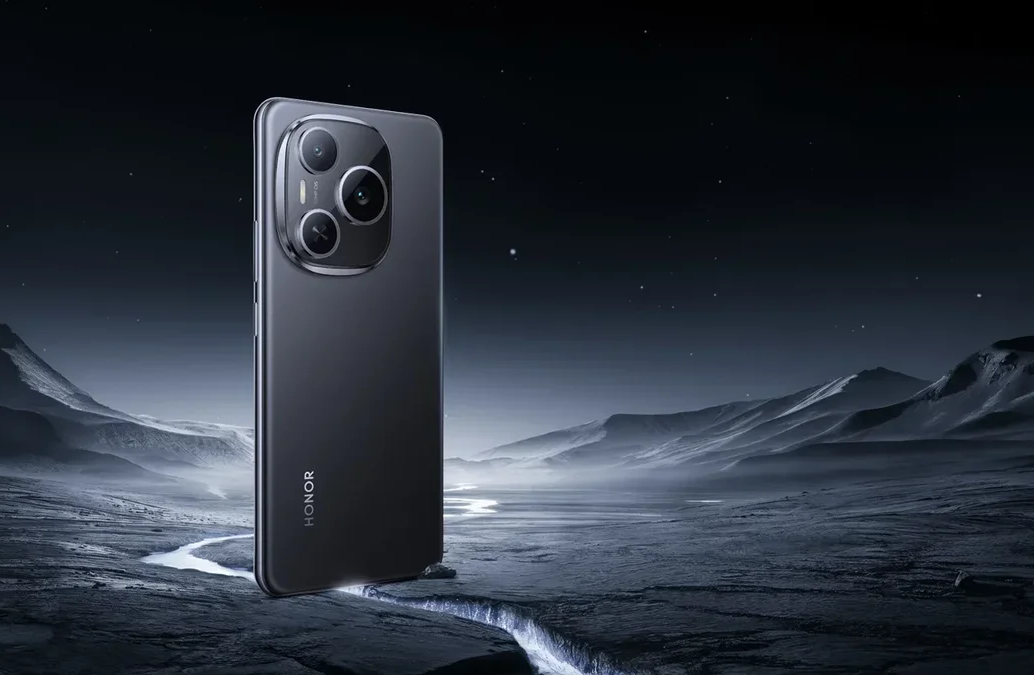
If the leak proves accurate, the endurance offered by iPhones and Galaxy phones could look increasingly modest beside Chinese smartphones powered by silicon-carbon battery technology.
Honor has repeatedly pushed the boundaries of smartphone battery capacity, and the latest leak suggests the company is preparing to go significantly further.
Honor is reportedly developing a smartphone equipped with a battery of up to 12,000mAh, more than twice the capacity commonly found in many of today's flagship devices.
A major step in the battery-capacity race
According to information shared by well-known tipster Digital Chat Station on Weibo, Honor has begun trial production of a new battery.
The battery reportedly has a rated capacity of 11,790mAh, while its typical capacity could reach 12,000mAh.
It remains unclear which Honor smartphone will receive the enormous battery. However, clues in comments under the original Weibo post have drawn attention to the next generation of the Honor Win series.
If the leak is accurate, the battery would represent another significant step in the industry's capacity race, particularly as Honor continues to expand its use of silicon-carbon battery technology.
Alongside its upcoming flagship Honor Magic 9 series, the company is also reportedly preparing a new product line called the Honor Win 2. That series is seen as the most likely candidate for the 12,000mAh battery.
Honor has traditionally taken a more cautious approach with its Magic lineup. Its flagship phones place greater emphasis on slim designs, weight and aesthetics rather than fitting exceptionally large batteries inside their bodies.
For that reason, the prospect of a 12,000mAh battery appearing in the Magic 9 series is considered relatively unlikely.
The Win lineup, by contrast, follows a very different philosophy. If Honor maintains that strategy, the Honor Win Turbo 2 could become one of the first smartphones to feature a 12,000mAh battery.
The previous generation has already demonstrated that Honor is willing to pursue unusually large capacities. Both the Honor Win and Honor Win Turbo were launched in China with 10,000mAh batteries.
Earlier reports also suggested that Honor could eventually push battery capacity as high as 14,000mAh in future generations, although there is no firm evidence yet that such a plan will materialize.
Honor pushes ahead in the big-battery race
If the 12,000mAh battery does make its way into the Honor Win 2, the device would further strengthen Honor's position in the race to deliver smartphones with exceptionally large batteries.
Honor is already among the companies pushing most aggressively into silicon-carbon battery technology.
At present, one of the smartphones with the largest batteries on the market is the Honor X80 Pro Max, which packs an 11,000mAh unit.
Rather than being a premium flagship, the phone sits in the mid-range segment and has relatively modest specifications when its unusually large battery is taken out of the equation.
One potential disappointment is that the Honor Win 2 will most likely be sold only in China initially. Consumers in other markets may therefore have to wait longer for access to an Honor smartphone carrying a 12,000mAh battery.
Even so, the trend points to a gradual shift in the smartphone race.
Instead of competing only over faster processors, increasingly sophisticated cameras or brighter displays, Chinese manufacturers are turning their attention to one of the most persistent frustrations for smartphone users: battery life.
Does a smartphone really need a 12,000mAh battery?
The answer could well be yes.
For years, Apple and Samsung have maintained relatively modest battery capacities in their premium smartphones, partly because manufacturers need to strike a balance between endurance, thickness, weight and overall design.
Silicon-carbon technology, however, is opening up another path.
Honor is currently regarded as one of the manufacturers at the forefront of adopting the technology. Silicon-carbon batteries can enable higher energy density without necessarily requiring a proportional increase in the thickness of the device.
That is a key reason smartphones can potentially carry batteries in the 10,000-12,000mAh range while retaining relatively practical dimensions.
With a 12,000mAh battery, a smartphone could potentially deliver around three days of use on a single charge, even without perfectly optimized software.
That could significantly change the familiar routine of charging a phone every day.
Instead of plugging in a device every night, users might need to charge their phones only around twice a week. That could ultimately prove to be the biggest practical benefit of the industry's growing battery-capacity race.
Apple and Samsung face new pressure
The arrival of smartphones with 10,000-12,000mAh batteries could also present a new challenge for Apple and Samsung.
Both companies retain major advantages in areas including ecosystems, processors, cameras, software and brand strength, but competition over battery endurance is becoming increasingly intense.
While Chinese manufacturers are actively exploring silicon-carbon batteries, Samsung is preparing to pursue another route with solid-state battery technology.
The first products using the technology are expected to emerge in the second half of 2027, initially in wearable devices such as the Galaxy Ring and Galaxy Watch.
That suggests the wider battle over smartphone batteries is still in its early stages.
If Honor does bring a 12,000mAh battery to the Win 2 series, it may be only the beginning of a new competitive cycle in which battery capacity and real-world endurance become just as important to consumers as cameras and performance.
Hai Phong
.svg)
