 Vietnamnet.vn

 Podcast



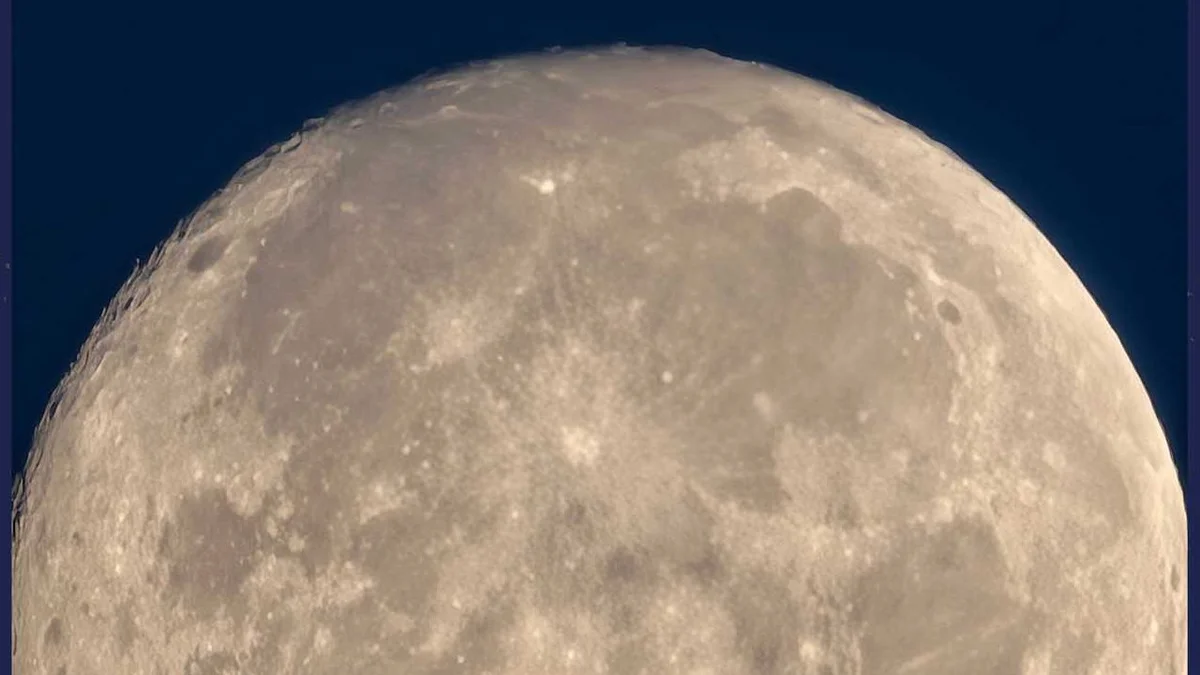
The Honor Magic 9 Pro Max is set to debut with a Photography Master Kit that promises impressive moon photography, drawing comparisons to a miniature telescope.
Honor challenges iPhone 18 Pro with moon photography
The battle to build the best smartphone camera has been running almost as long as phones have had cameras.
Honor has now made its latest move with a new teaser for the Magic 9 Pro Max, showcasing remarkably detailed photographs of the autumn moon.
But the company is looking beyond the phone’s built-in cameras to make an impression.
The key is an entirely new photography accessory package, which Honor calls the Photography Master Kit.
The Honor Magic 9 Pro Max’s official global launch is scheduled for September 28.
Ahead of the event, Honor previewed the camera kit with a provocative question: “Who else can do that?”
Setting aside the smartphone photography kits that have appeared over the past few years, the answer may be: not many.
Even so, the images Honor has released are striking, particularly for what they suggest about the system’s ability to capture subjects at great distances.
Two telephoto lenses turn the Magic 9 Pro Max into a ‘telescope’
At the heart of the Photography Master Kit are two telephoto conversion lenses that attach directly to the Honor Magic 9 Pro Max’s main camera.
The first is the Honor Thumb, a relatively compact 200mm lens designed to substantially extend the smartphone’s optical zoom capabilities without requiring a bulky professional camera system.
The more advanced option is the Honor Giant Cannon, a much larger accessory with a focal length of 500mm.
This is the lens Honor used to produce the particularly impressive moon photographs in its latest teaser.
With a 500mm focal length, the Magic 9 Pro Max’s camera system can reach distant subjects that conventional smartphone cameras would struggle to capture in comparable detail.
Honor’s approach is notably different: rather than continuing to increase megapixel counts or relying solely on image-processing algorithms, it is adding an external optical system to overcome the limitations of smartphone lenses.
How powerful will the Honor Magic 9 Pro Max be?
Honor is expected to unveil the Magic 9 Pro Max on September 28. It will be the company’s first smartphone to carry the “Pro Max” name and will be positioned in the ultra-premium flagship segment.
According to leaks, the Magic 9 Pro Max could feature a silicon-carbon battery with a capacity of up to 8,800mAh, an exceptionally large figure for a smartphone today.
Its cameras are another major selling point. The phone is said to feature a dual 200MP camera setup incorporating ARRI cinematic optical technology.
Honor is also integrating an active cooling fan to manage temperatures for the Snapdragon 8 Elite Gen 6 chip, manufactured on a 2nm process.
On the front, the Magic 9 Pro Max is expected to have a 6.8-inch LTPO OLED display with a 120Hz refresh rate and a resolution of 1,320 × 2,868 pixels.
RAM options are 12GB or 16GB of LPDDR5X, while UFS 4.1 storage ranges from 256GB to 1TB.
If those specifications are confirmed, the Magic 9 Pro Max will be more than a photography-focused smartphone: it will also rank among Honor’s most powerful devices in terms of hardware.
Are external camera kits the future, or a marketing gimmick?
The arrival of the Photography Master Kit raises a broader question for the smartphone industry: will external camera kits become the next step in mobile photography, or prove to be a passing trend?
Manufacturers appear to be approaching the physical limits of smartphone sensors.
Even when a phone has a 1-inch sensor with a resolution of up to 200MP, the lens remains a major constraint on light gathering and optical image quality.
In other words, adding more megapixels cannot solve every problem. Once the sensor is sufficiently large and capable, the next limitation lies in the lens system.
Accessories such as Honor’s Photography Master Kit offer a possible way around that bottleneck. But they also come with considerable drawbacks.
The first is cost. Buyers may have to spend another $200–$400 on a camera kit, a substantial additional outlay after paying a premium for a flagship phone.
Then there is portability. Large lenses make smartphones bulkier, requiring an extra carrying bag and more preparation before taking a photograph.
With accessories attached, a phone designed for quick, convenient use can become heavy and awkward to handle.
It is therefore too early to say whether external camera kits will become a lasting trend. The Honor Magic 9 Pro Max may demonstrate that smartphones still have room to advance in photography. Whether users are willing to carry a 500mm “cannon” around with them is another question entirely.
Hai Phong
.svg)
