 Vietnamnet.vn

 Podcast



In Khanh Son, known as a “durian capital” of Khanh Hoa Province, harvest season is bringing the mountains to life. Workers move busily through orchards while vehicles along local roads carry freshly harvested durians to larger trucks, warehouses and collection points for distribution.
A bold gamble brings big returns
Deep in To Hap Village, Khanh Son Commune, Ka To Nguon’s one-hectare durian orchard spreads lush and green across the hillside. The 47-year-old farmer carefully inspects trees laden with fruit, waiting for traders to arrive for the harvest.
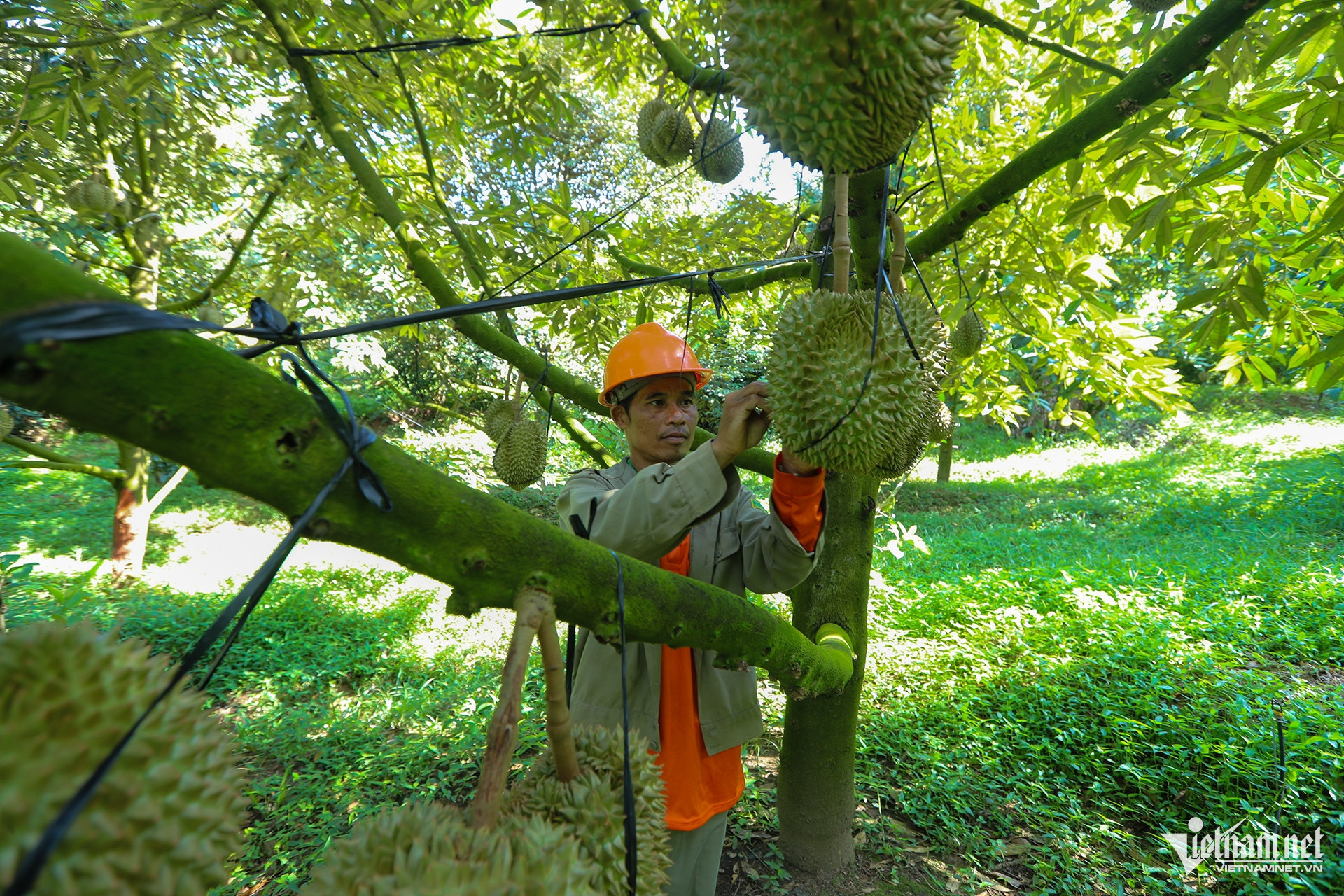
Ka To Nguon checks durians growing in his orchard in Khanh Son Commune, Khanh Hoa Province. Photo: Xuan Ngoc
Nguon was born into a large Raglai family. As a child, he followed his parents to work in the fields and had little opportunity for schooling. He and his wife have two children. Their eldest daughter is at university, while their younger child is still in school.
When the couple began building their livelihood, their greatest asset was a one-hectare plot halfway up a hill. Back then, the slope was covered with acacia. They worked hard throughout the year, but the income was meager.
In 2018, after seeing durian prices climb, Nguon decided to take a major gamble: he uprooted the acacia and planted durian instead.
There was an immediate problem. Durian requires reliable irrigation, but the nearest water source was far from the farm. Nguon and his wife painstakingly laid thousands of meters of plastic piping across steep hills to bring water to their trees.
Nguon recalls that although they had land, they had virtually no money. He took the risk of borrowing VND40 million ($1,500) from a bank.
Without enough capital to develop the entire orchard at once, the couple planted it gradually, carefully saving enough each year to add another 20-30 Monthong durian trees. Little by little, the one-hectare hillside turned green as the trees took root and grew.
According to Nguon, growing durian can be as demanding as caring for a newborn baby. When the trees begin flowering, he spends most of his time at the orchard, constantly monitoring soil moisture.
Over the years, he has developed his own finely tuned approach to fertilizing. He applies fertilizer roughly every 10 days, with larger trees receiving about 700-800 grams at a time.
Nutrition must also be adjusted according to the amount of fruit on each tree. A heavily laden tree may need additional nitrogen, while a tree carrying fewer fruits requires restraint.
“Too much or too little fertilizer and all the fruit can drop,” he said. “If a tree has only a few fruits and you give it too much nitrogen, they grow oversized. If the shape becomes distorted or the spikes crack, traders will reject them.”
That meticulous care began paying off when his first durian trees produced an initial crop after about three and a half years.
Trees now entering their eighth year are delivering strong yields, averaging 35-50 fruits each. Some particularly productive trees carry as many as 70, requiring careful management to prevent them from becoming exhausted.
After three harvest seasons, the family’s fortunes have changed dramatically and their debt has been fully repaid.
Last year, around 200 durian trees produced 13 tons of fruit, which sold for VND41,000-45,000 per kilogram, generating more than VND500 million ($19,000).
This year, production is expected to reach 20 tons. With traders paying around VND50,000 per kilogram at the orchard, the family expects revenue of approximately VND1 billion, or about $38,000.
A bank loan changes a Raglai family’s fortunes
Just over 500 meters away, 63-year-old Raglai farmer Mau Thi Mat and her husband are equally busy as a team of workers harvests their durians.
Calls between workers, bamboo poles knocking against branches and the thud of durians landing in catching sacks create a lively rhythm throughout the orchard.
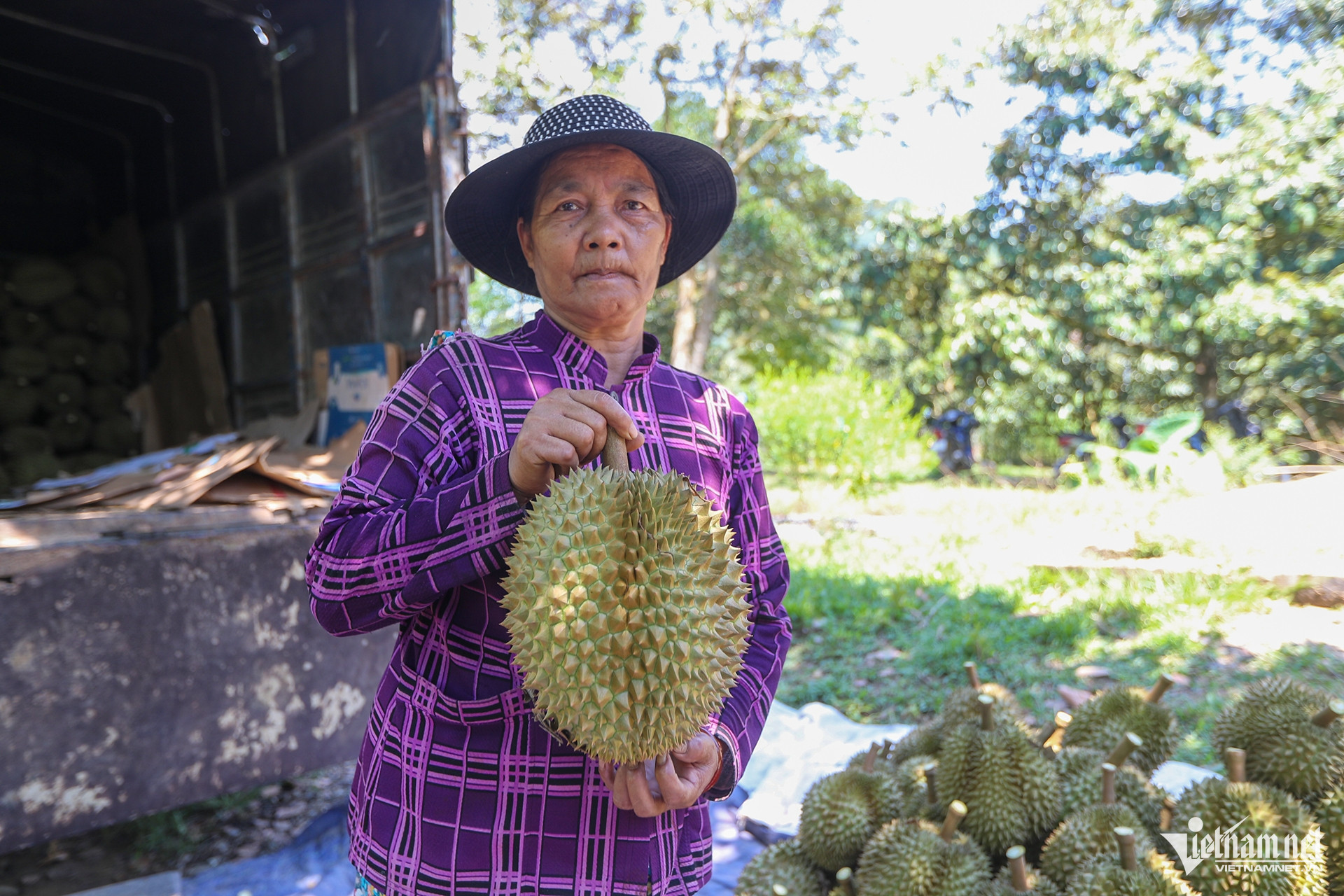
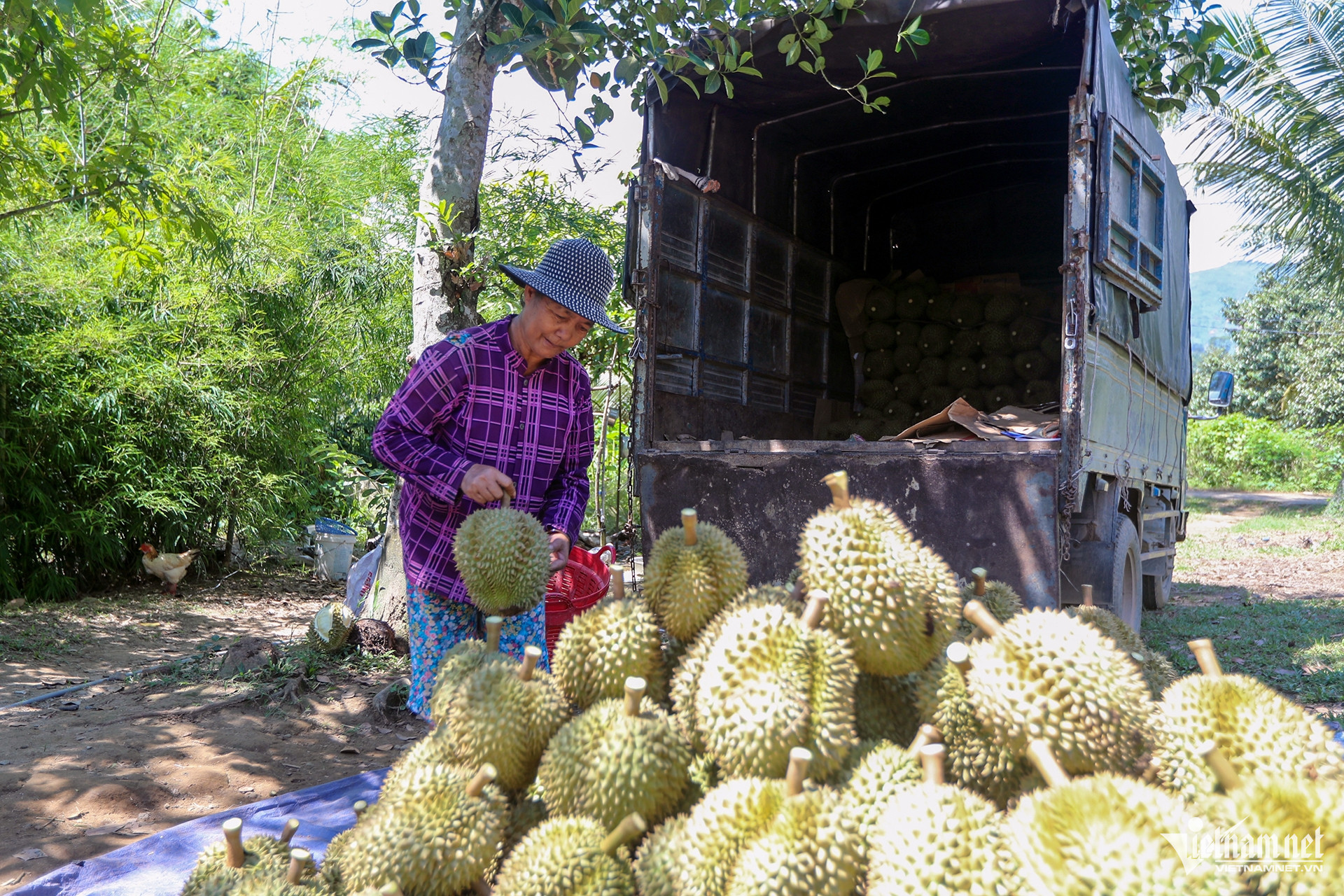
Nearly a decade ago, the family’s 7,000-square-meter plot was used to grow corn, purple sugarcane and rice.
Life was difficult. Even basic necessities, from drinking water to firewood for cooking, were scarce. Farming alone was not enough, so Mat, her husband and their children took on various jobs to supplement the household income.
The couple eventually decided to switch to durian.
Short of capital, they borrowed VND100 million ($3,800), paying around VND1 million in interest each month. The loan gave them enough money to buy seedlings, install irrigation and purchase fertilizer to establish their orchard, Mat recalled.
Their orchard, with more than 120 trees, is now in its eighth year and has delivered stable harvests for the past five years.
This year, it is expected to generate nearly VND700 million ($26,500) in revenue.
“Life is stable now,” Mat said. “My husband and I have been able to save money, build a new house and take care of our children, especially our grandchild who is about to enter university.”
The story is similar at the 6,000-square-meter orchard of Mau Thi Nem, a Raglai woman who heads To Hap Village.
With a sun-darkened face and a gentle smile, Nem recalled that unfavorable weather limited her family’s harvest to just three tons last year. This year, however, the trees are heavy with fruit, and production is expected to exceed 10 tons.
Her family previously grew bananas, but returns were low, prompting them to switch to durian.
What was once regarded as a risky move became a major turning point, making the family considerably better off and turning durian into its main source of income.
Nem has also become active in sharing cultivation techniques with other households, particularly Raglai families who are new to durian farming.
“Everyone is very happy,” she said. “Prices are good this season, so people can take care of their children, repair their homes and invest in fertilizer for the next crop.”
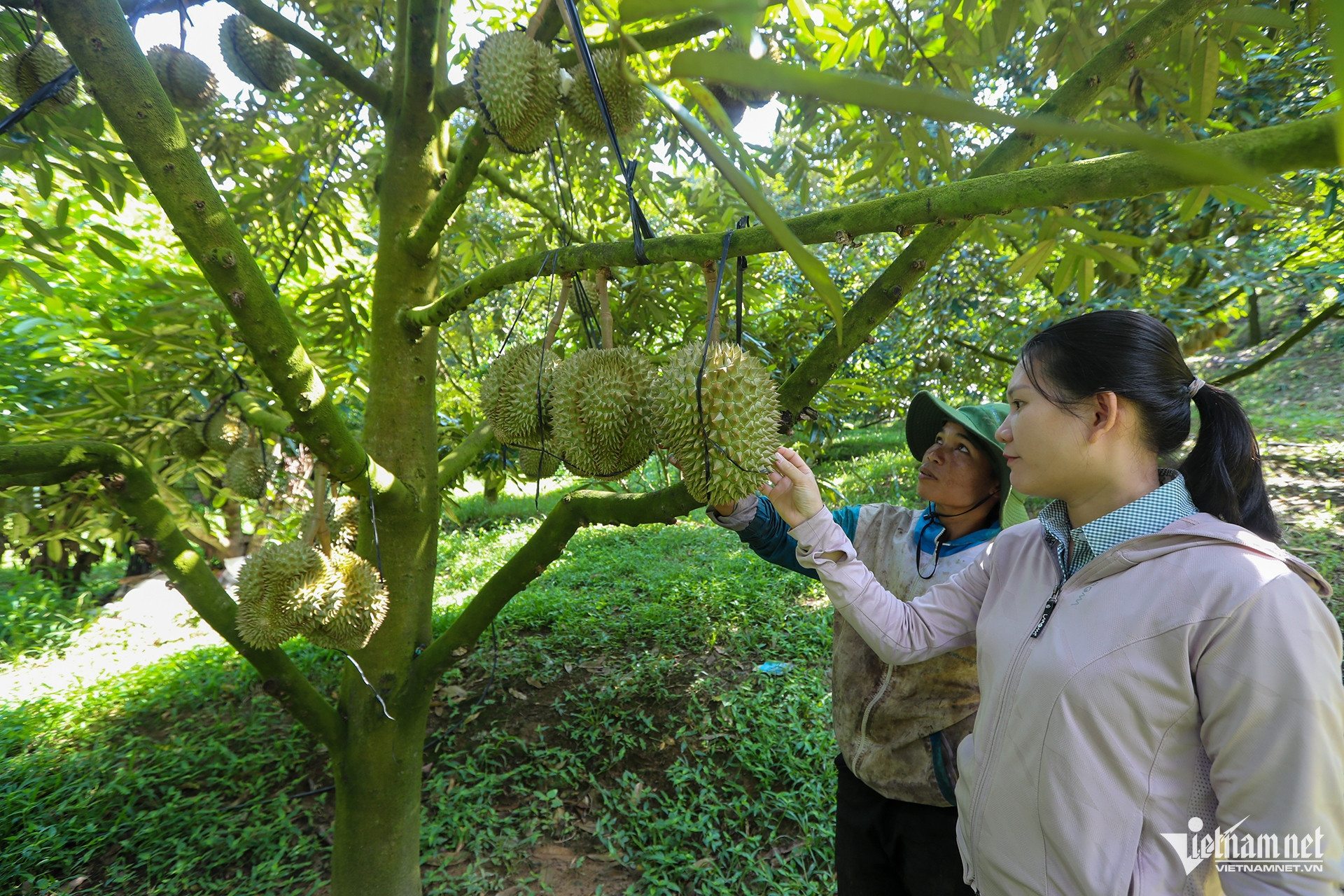
Khanh Son Commune now has 1,345 hectares of durian, according to the local People’s Committee, with more than 997 hectares currently producing fruit.
In 2026, output is expected to reach nearly 18,000 tons, with average yields of 15-20 tons per hectare, contributing to improved livelihoods for local residents.
Local authorities are supporting farmers in accessing capital and technical training while developing production areas under VietGAP standards and completing growing-area codes for exports.
Efforts are also underway to promote the local durian brand and expand its markets, helping turn what began as a bold gamble on the hills into a more sustainable source of prosperity for Khanh Son’s farming communities.
Xuan Ngoc
.svg)
