 Vietnamnet.vn

 Podcast



In the months leading up to the Lunar New Year, a unique dried shrimp from Ca Mau, known for its distinctive bird claw shape, has become a popular choice for Tet gift hampers.
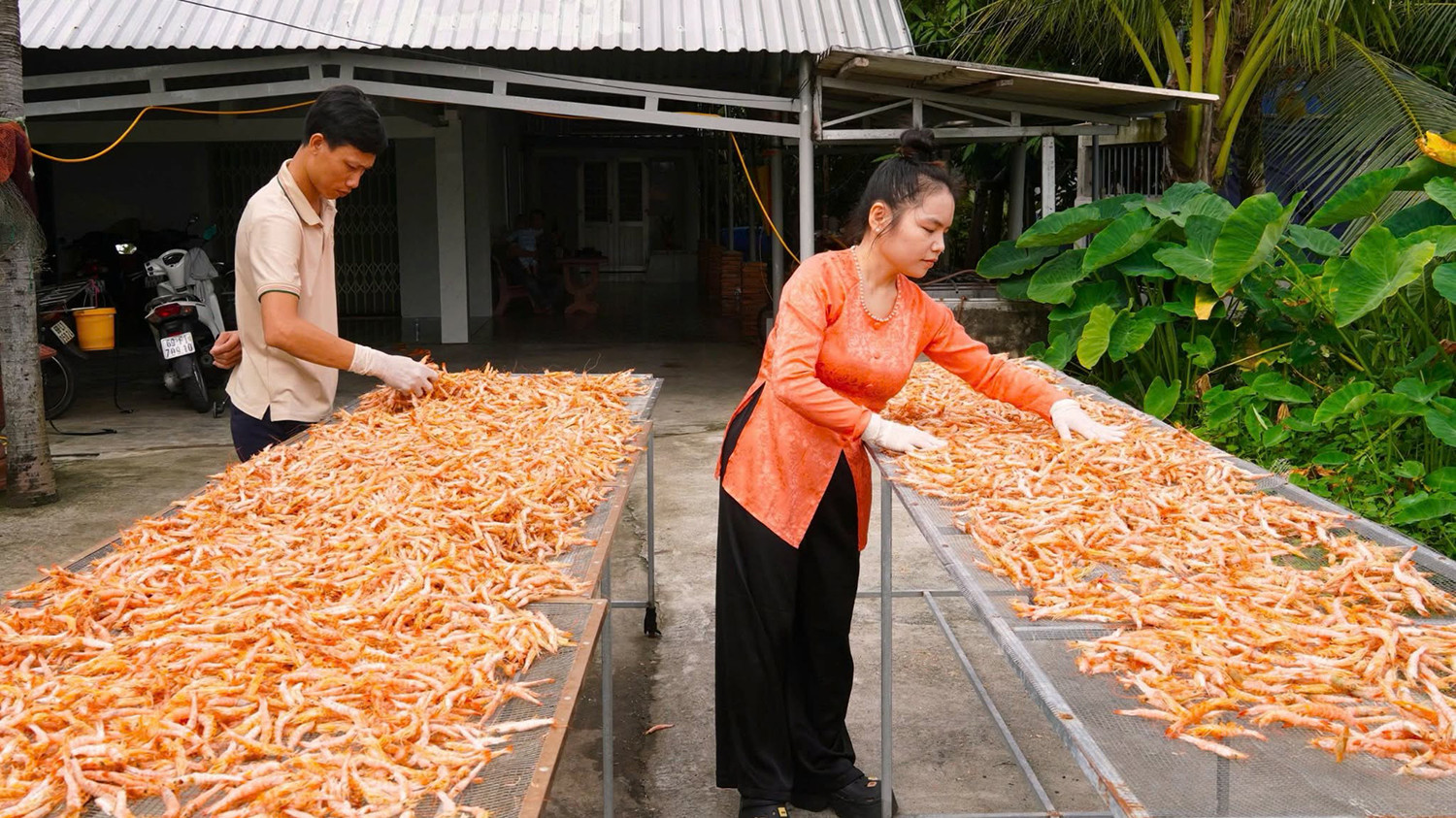
Raw shrimp for the bird claw product are strictly selected. Photo: T.T
Each year, around two months before Tet, the dried shrimp facility run by Le Tuan Kiet, a 29-year-old resident of My Phu Hamlet in Ta An Khuong Commune, Ca Mau, runs at full capacity.
Kiet shared that during this time, orders for the bird claw-shaped dried shrimp-known locally as “tom kho dat mong chim”-increase significantly, sometimes reaching hundreds of kilograms. To meet this surging demand, his facility plans to triple its usual production volume.
According to Kiet, the raw material used is live wild-caught shrimp, specifically tom dat (small native shrimp), known for its sweet, firm meat. When boiled, these shrimp turn a bright red color-a crucial visual trait for high-quality dried shrimp.
“Not all shrimp can become bird claw dried shrimp,” Kiet explained. “They must be alive and strong, with a firm shell. Only then can they retain that elegant curve after boiling and drying.”
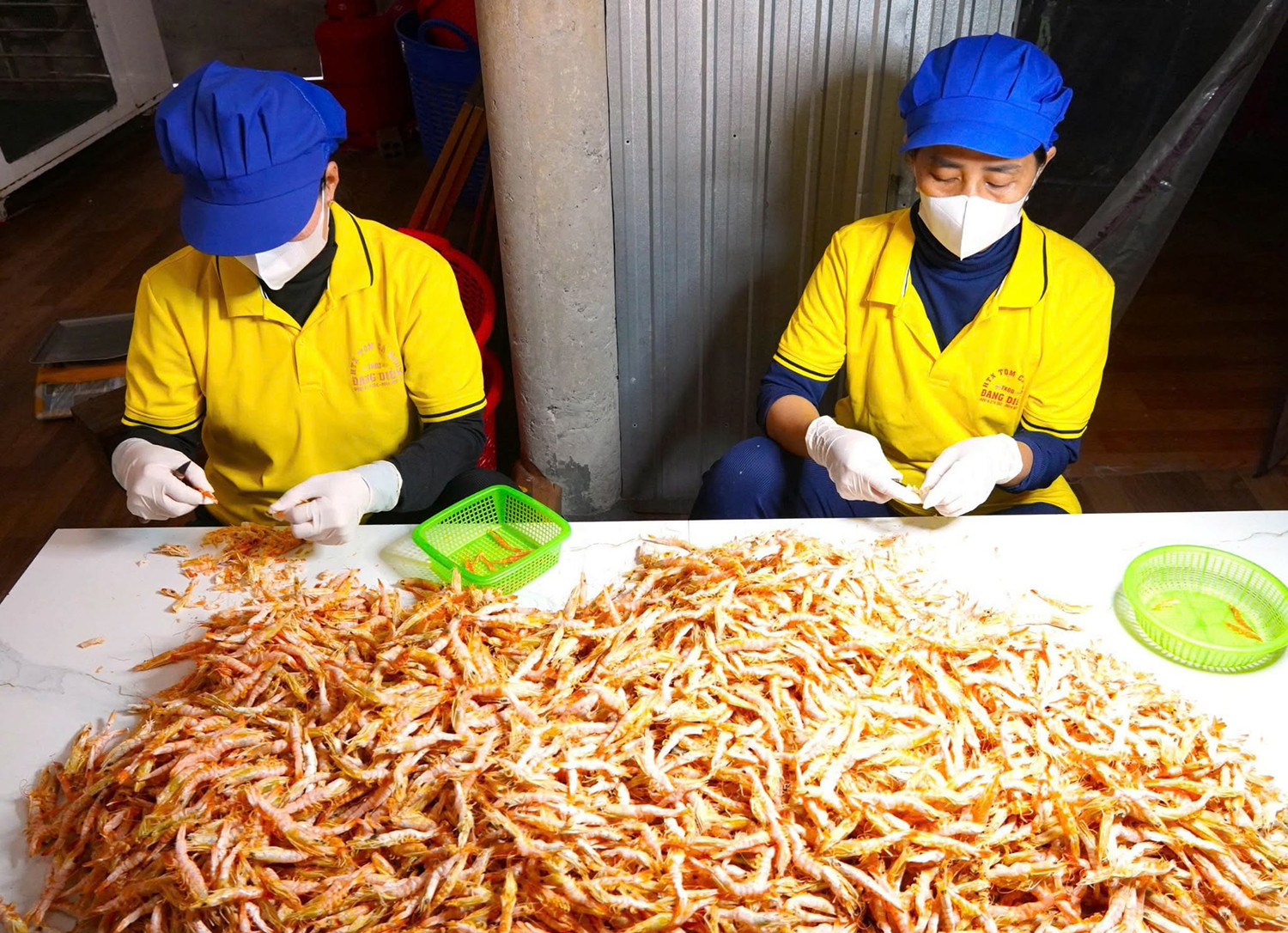
Workers preparing shrimp for packaging. Photo: T.T
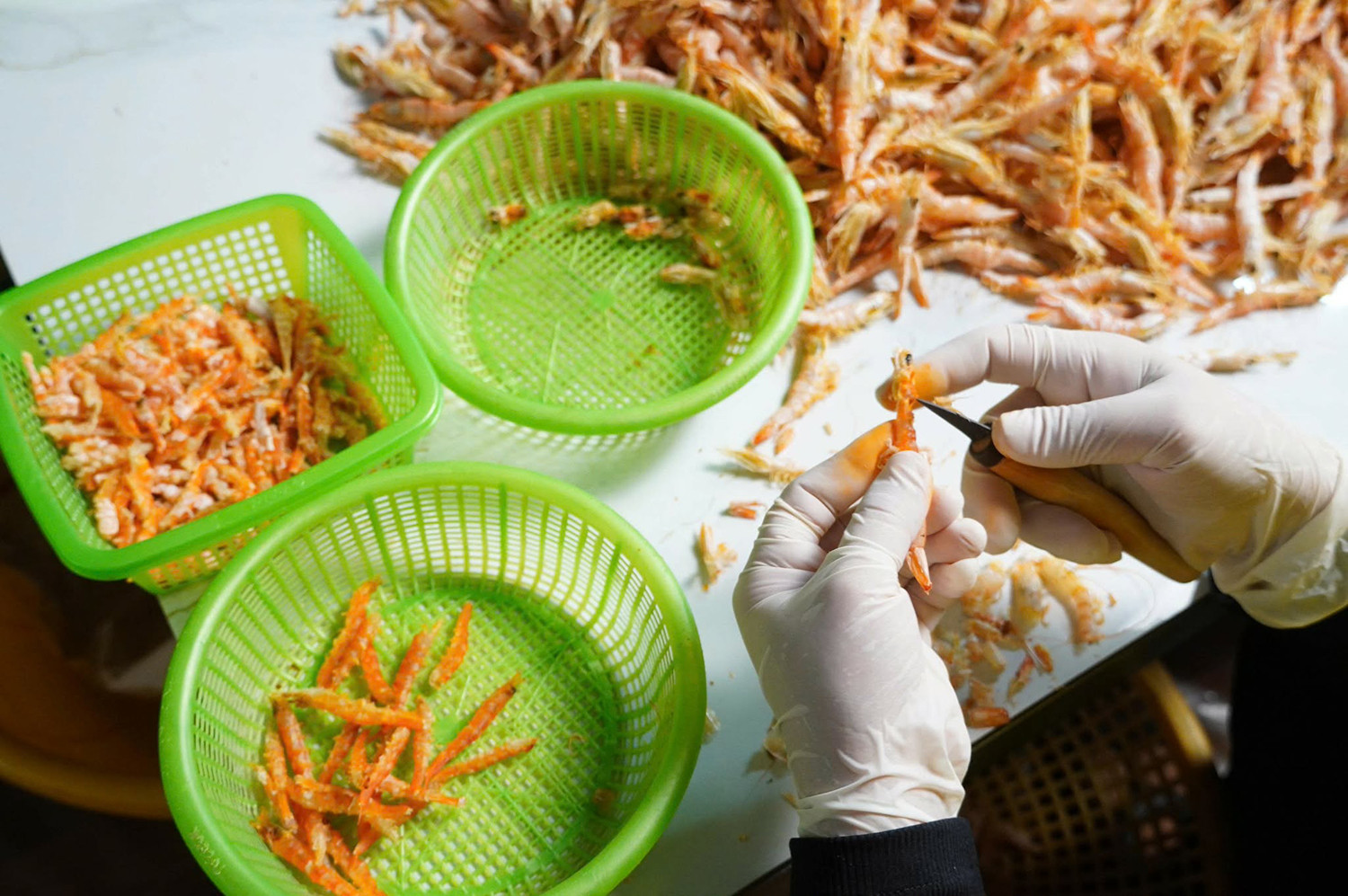
The idea for this specialty arose from the traditional dried shrimp batches. During production, Kiet noticed that only 1–2% of the shrimp naturally curled in a distinctive, bird claw-like shape. Spotting this aesthetic and commercial potential, he began isolating these shrimp and refining his technique to create a consistent product.
It took months of experimentation and fine-tuning the process to perfect the combination of shape, color, and taste. Today, producing bird claw dried shrimp requires far more precision than standard dried shrimp.
Each shrimp is meticulously selected, washed, and chilled on ice for about 15 minutes. They are then boiled in small batches for approximately 25 minutes. This allows tight temperature control to ensure the shrimp cook evenly while preserving their curved form.
Next, the shrimp are dried for about six hours, followed by 1–2 hours of sun-drying to remove any remaining moisture. Only then are they shelled, sorted, and packaged. “That’s how the final product retains its natural aroma, transparent red color, chewy texture, and rich sweetness,” Kiet said.
Due to its intensive process, high rejection rate, and longer production time, bird claw dried shrimp is significantly more laborious than typical dried shrimp. However, the result is a visually striking product that maintains the authentic flavor of wild shrimp.
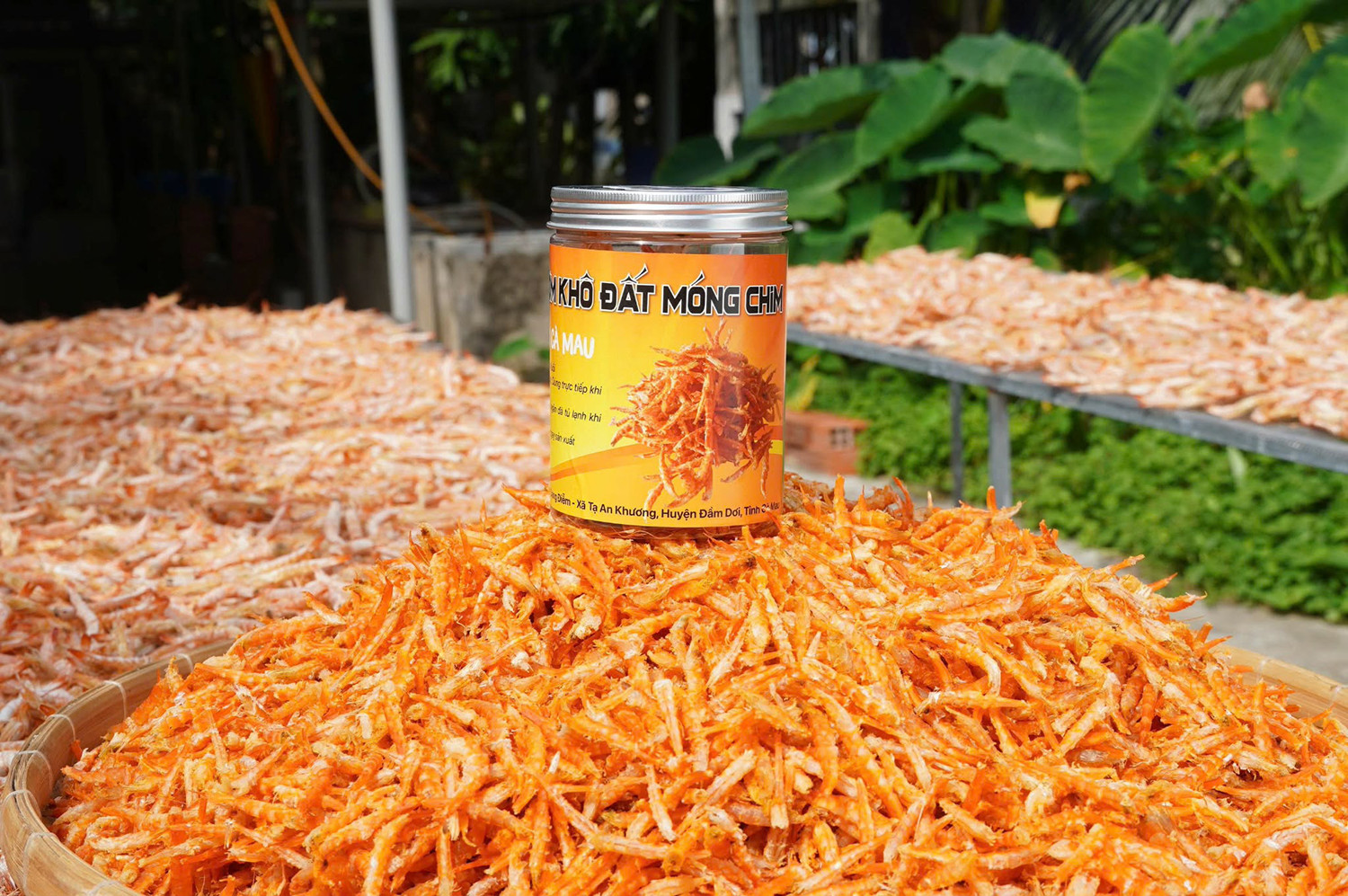
“This is our proudest product,” Kiet said. “It preserves nearly all the natural essence of the shrimp. Although we launched it in 2023, it wasn't until Tet 2024 that the market truly took notice. At one point, we couldn’t secure enough raw shrimp to meet demand.”
Currently, live tom dat are purchased from local ponds at around 170,000 VND per kilogram (about USD 7). It takes 6–8 kg of live shrimp to produce just 1 kg of dried product, due to moisture loss and strict selection.
As a result, the price for premium bird claw dried shrimp ranges from 1.5 to 1.7 million VND per kilogram (approximately USD 62–70), while the version made from tiger shrimp fetches 1.6 to 1.8 million VND/kg (USD 66–75), depending on the season and raw material quality.
On average, Kiet’s facility sells about 200 kg of dried shrimp each month. During Tet, production is expected to triple to meet holiday demand.
More than just a source of stable income for local workers, bird claw dried shrimp has added new flavor and flair to Ca Mau’s culinary landscape. It is now regarded as a symbolic Tet delicacy from the Mekong Delta, chosen by many as a meaningful gift for the New Year.
Tran Tuyen
.svg)
