 Vietnamnet.vn

 Podcast



Tu Hieu Pagoda, also known as Tu Hieu Root Temple, is located on Le Ngo Cat Street in Thuy Xuan Ward, Hue. Its grounds cover around 50,000 square meters, with buildings scattered among pine-covered hills, ponds and mature trees.
Historical records trace the pagoda’s origins to An Duong Hermitage, a simple bamboo-and-thatch retreat established in 1843 by Zen Master Nhat Dinh (1784-1847). Once a senior monk at Giac Hoang Pagoda inside Hue’s Imperial Palace, he later withdrew to the hills of Duong Xuan to pursue a contemplative life while caring for his elderly mother.
In 1848, after Nhat Dinh’s death, several eunuchs serving in the Nguyen Dynasty’s imperial court petitioned for royal support to expand the hermitage into a pagoda.
The complex was developed with a traditional three-compartment, two-wing structure, intricately carved columns and beams, alongside buildings including Thong Hoi Duong, Lac Thien Duong and Ai Nhat Duong, as well as a stele pavilion.
Emperor Tu Duc later bestowed on it the name “Sac tu Tu Hieu Tu,” recognizing the temple by imperial decree.
Through more than 180 years and several restorations, Tu Hieu has retained its quiet, contemplative character and close connection with the surrounding landscape.
Most remarkably, its grounds contain a cemetery dedicated to eunuchs of the Nguyen Dynasty, identified as the only surviving eunuch burial ground in Vietnam.
Photos offer a closer look at Tu Hieu Root Temple and its historic eunuch cemetery:

Seen from above, Tu Hieu Root Temple sits amid expansive green hills west of central Hue. Ancient trees shade the grounds, while paths disappear deep into the complex, creating a cool, secluded landscape far removed from the city.

The pagoda’s three-entrance gate stands behind a semicircular pond, forming one of the historic temple’s most distinctive architectural scenes.

Tu Hieu was built in a traditional rectangular layout. During a major restoration in 1894-1895, a front hall, guesthouse and rear building were added. Further restoration and additions followed in 1931.
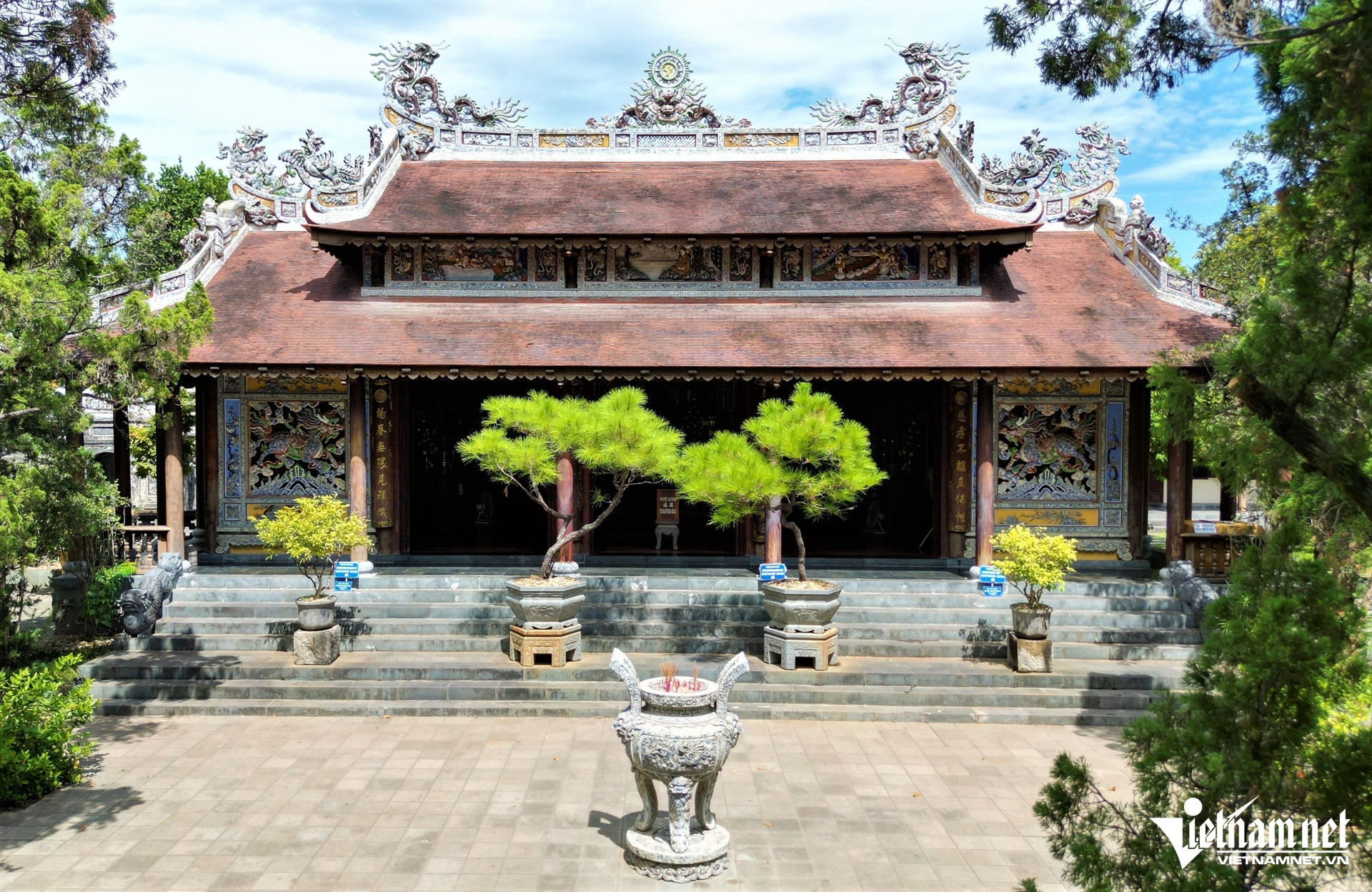
The main sanctuary is distinguished by its tiled roof, with decorative dragons, phoenixes, flowers, foliage and other details characteristic of Hue architecture.

Inside the main sanctuary, Buddhist ceremonies are held while monks, nuns, followers and visitors come to burn incense and pray during festivals and on full-moon days.

Two hexagonal stele pavilions stand in the courtyard in front of the main sanctuary. Their inscriptions record the pagoda’s history and recognize those who contributed to its construction and expansion.

The bell tower stands beside a lotus pond, partly hidden beneath the trees, adding to Tu Hieu’s tranquil atmosphere.

To the left of the main sanctuary is a burial area for Buddhist monks.
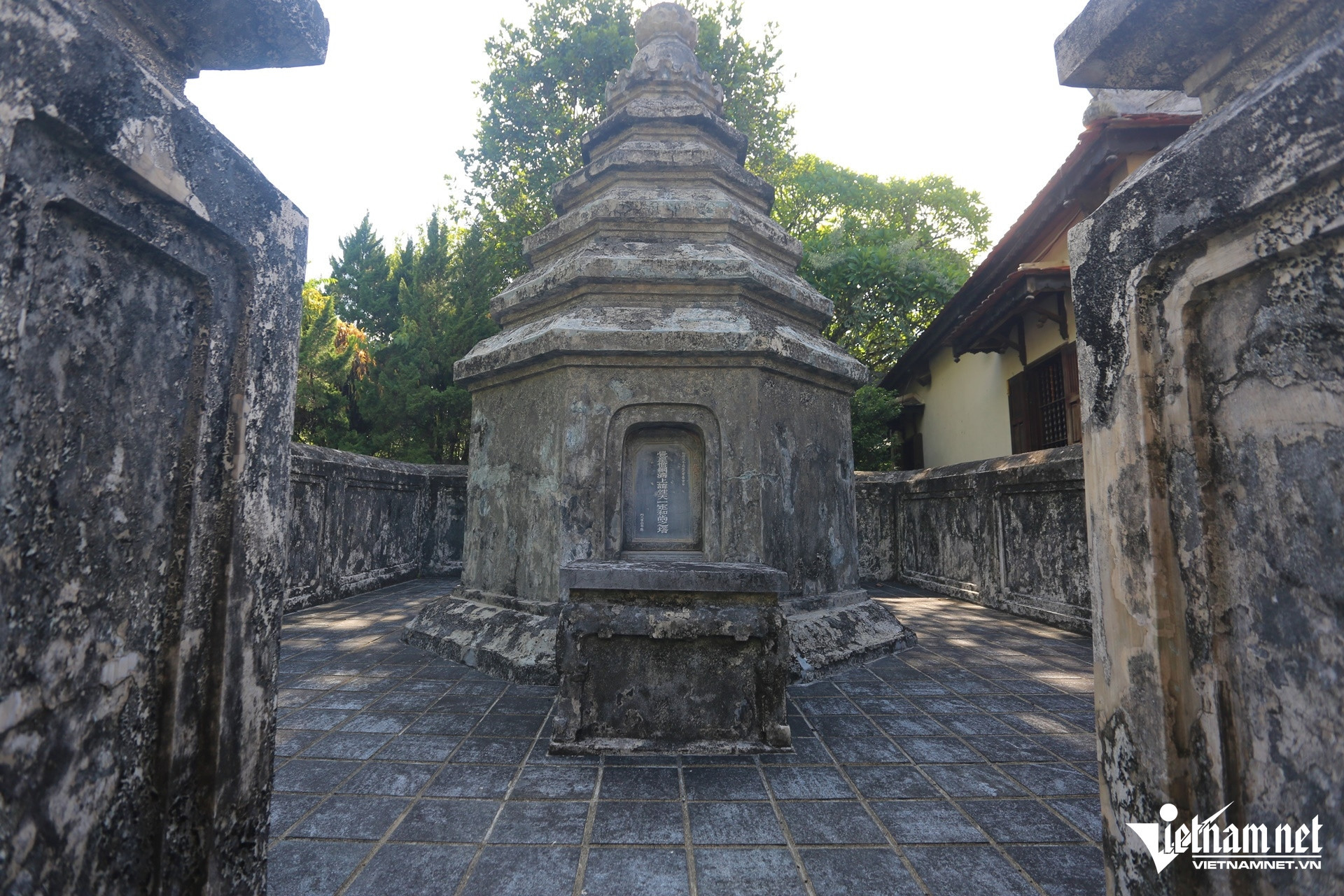
Two funerary stupas stand here, including a seven-story tower marking the resting place of Zen Master Nhat Dinh, founder of Tu Hieu Pagoda.

Near the main sanctuary are the graves of three Nguyen Dynasty eunuchs who made significant contributions to the construction of the historic pagoda. After deteriorating over time, the graves have been restored.

Elsewhere in the grounds lies the cemetery for Nguyen Dynasty eunuchs, comprising 25 graves enclosed by a wall. Quiet and weathered by time, the burial ground is associated with eunuchs who helped build and expand Tu Hieu and later chose it as their final resting place.

The cemetery is divided into three levels according to the eunuchs’ roles and contributions. One particularly noticeable grave, painted blue, belongs to Nguyen Hau, an official who oversaw the Nguyen Dynasty’s eunuch institution and died in 1920.

Every year on the full moon of the 11th lunar month, the pagoda holds a collective death anniversary ceremony in remembrance of the eunuchs buried here.

Today, Tu Hieu Pagoda is not only a pilgrimage and worship destination for Buddhists but also a favorite stop for Vietnamese and international travelers.

Ha Nam
.svg)
