 Vietnamnet.vn

 Podcast



More than four centuries after its founding, Thien Mu Pagoda remains one of the most iconic landmarks in Hue, celebrated for its tranquil setting overlooking the Perfume River and for preserving two of Vietnam's officially recognized national treasures linked to the early history of Buddhism in southern Vietnam and the legacy of the Nguyen Lords.
Historical records trace its origins to 1601, when Nguyen Hoang, the first of the Nguyen Lords, ordered its construction. The temple complex is enclosed by stone and brick walls, with an overall layout traditionally said to resemble the shape of a turtle, a symbol of longevity and stability in East Asian culture.
Viewed from the river, the 425-year-old pagoda presents one of Hue's most recognizable silhouettes. Visitors ascend a flight of 19 brick steps, passing four monumental ceremonial pillars before reaching the three-entrance gate and the towering Phuoc Duyen Pagoda.
Home to two national treasures
Beyond its architectural and spiritual significance, Thien Mu Pagoda preserves a remarkable collection of historical artifacts.
The most important are the Great Bell (Dai Hong Chung) and the stone stele titled "Ngu Kien Thien Mu Tu", both of which have been designated National Treasures of Vietnam.
The Great Bell was commissioned in 1710 by Lord Nguyen Phuc Chu as an offering to the Three Jewels of Buddhism.
Cast in bronze, the bell stands 2.4 meters high, measures 1.4 meters in diameter and weighs nearly two metric tons.
Its surface is engraved with Buddhist inscriptions, decorative motifs and religious symbols. Recognized for its outstanding historical, artistic and metallurgical value, the bell was designated a National Treasure in 2013.
The second National Treasure is the "Ngu Kien Thien Mu Tu" stele, erected in 1715 following a major restoration of the pagoda under Lord Nguyen Phuc Chu.
Mounted on the back of a stone turtle, the stele bears an inscription and commemorative text written by the lord himself, documenting the restoration of the temple while expressing his Buddhist philosophy.
It also bears the official seal "Dai Viet Quoc Nguyen Chua Vinh Tran Chi Bao" carved into both the stele's crown and body.
Because of its exceptional historical importance, artistic value and early eighteenth-century stone-carving craftsmanship, the monument was recognized as a National Treasure in 2020.
In addition to these two nationally protected artifacts, Thien Mu Pagoda houses numerous other relics associated with Vietnamese Buddhism, the Nguyen Lords and the Nguyen Dynasty.
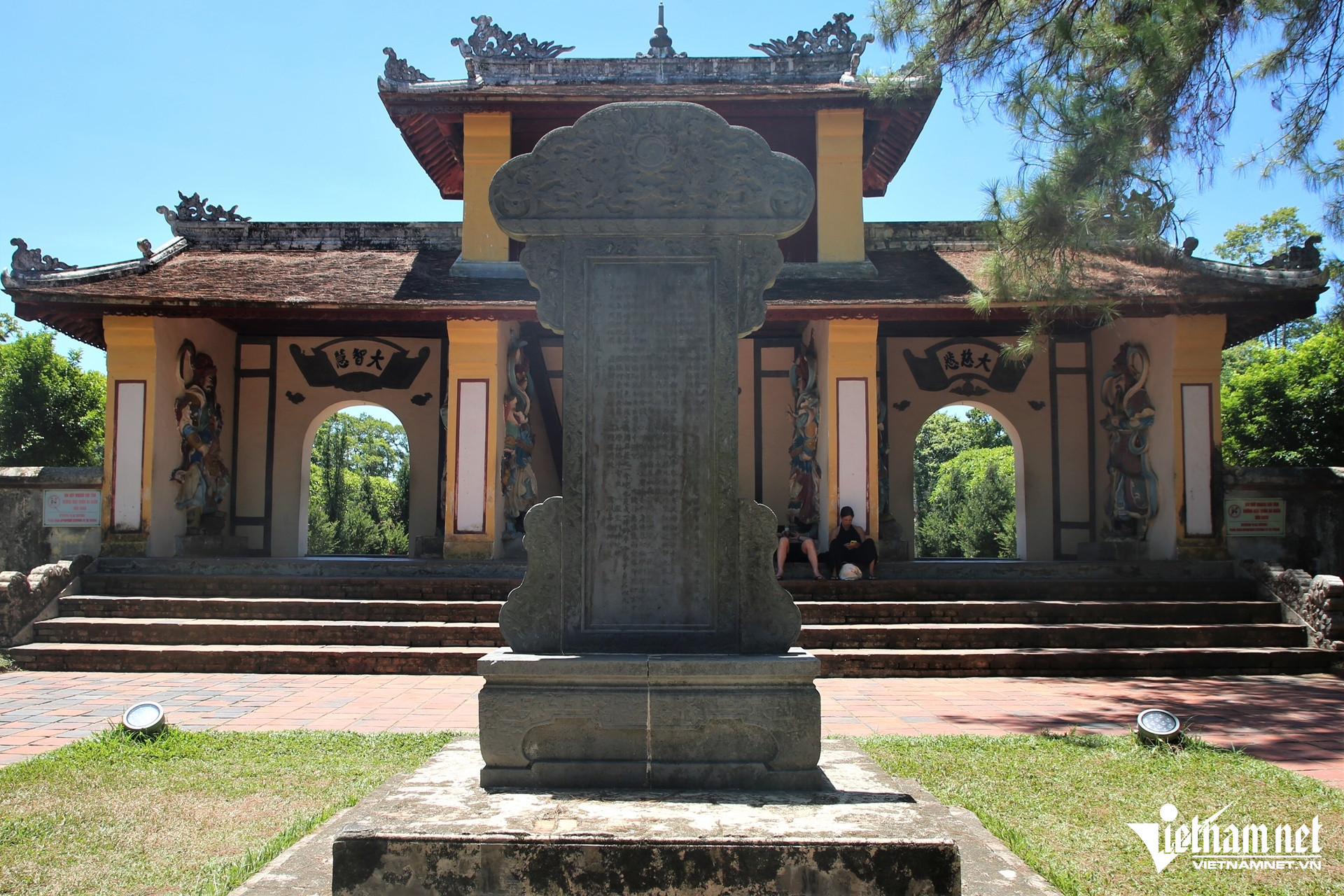
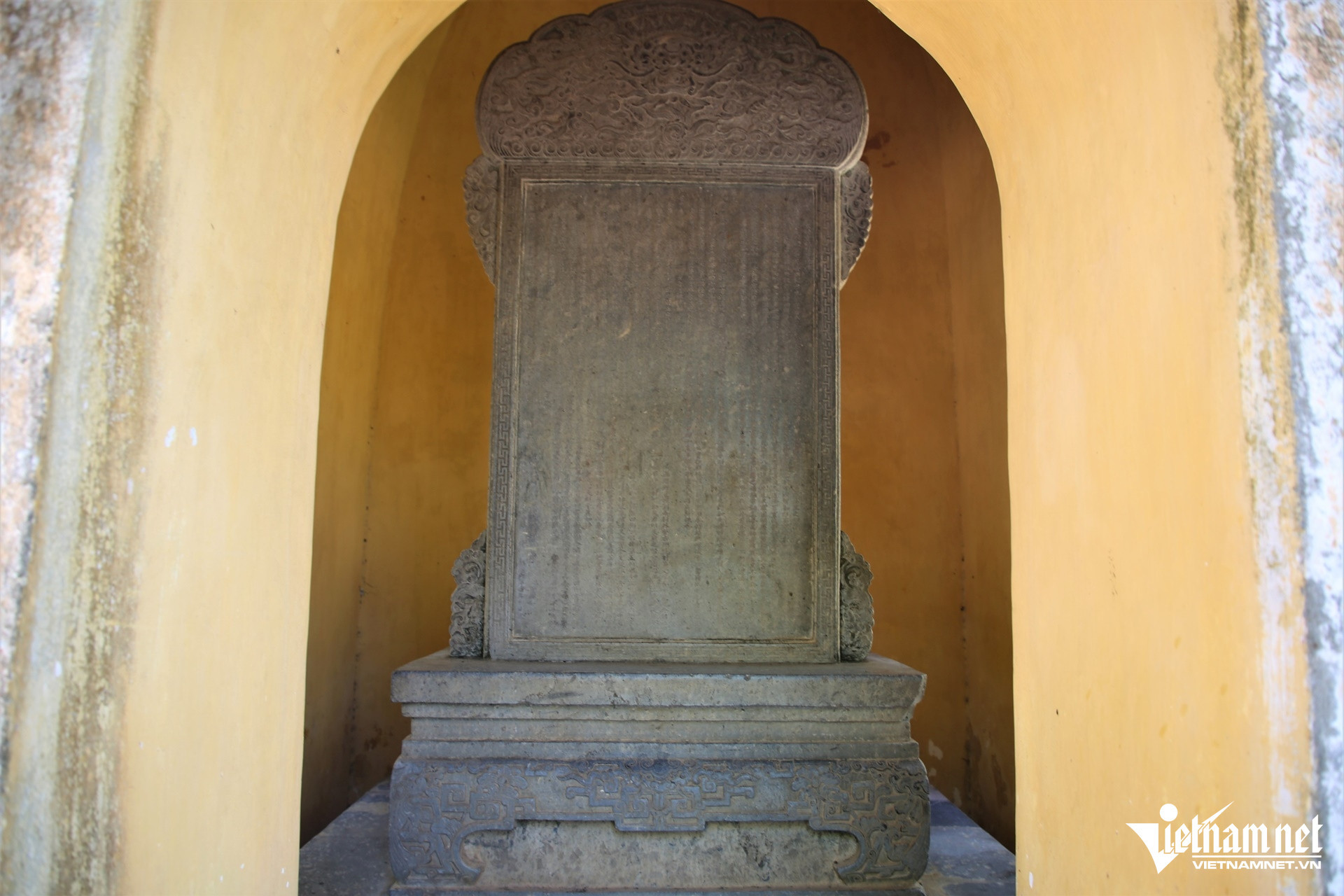
Among them is a stone stele erected in 1919 by Emperor Khai Dinh, engraved with an imperial poem and preface that he composed after visiting the pagoda.
Thien Mu Pagoda was also listed among the 20 most celebrated scenic landmarks of the former imperial capital during the Nguyen Dynasty.
In 1846, Emperor Thieu Tri composed the poem "The Sound of the Bell at Thien Mu Pagoda", which was later carved onto a stone stele displayed within the temple grounds.
More than 425 years after its founding, Thien Mu Pagoda remains one of Hue's defining cultural and spiritual landmarks, welcoming pilgrims and visitors while preserving an important chapter of Vietnam's religious, artistic and imperial heritage.
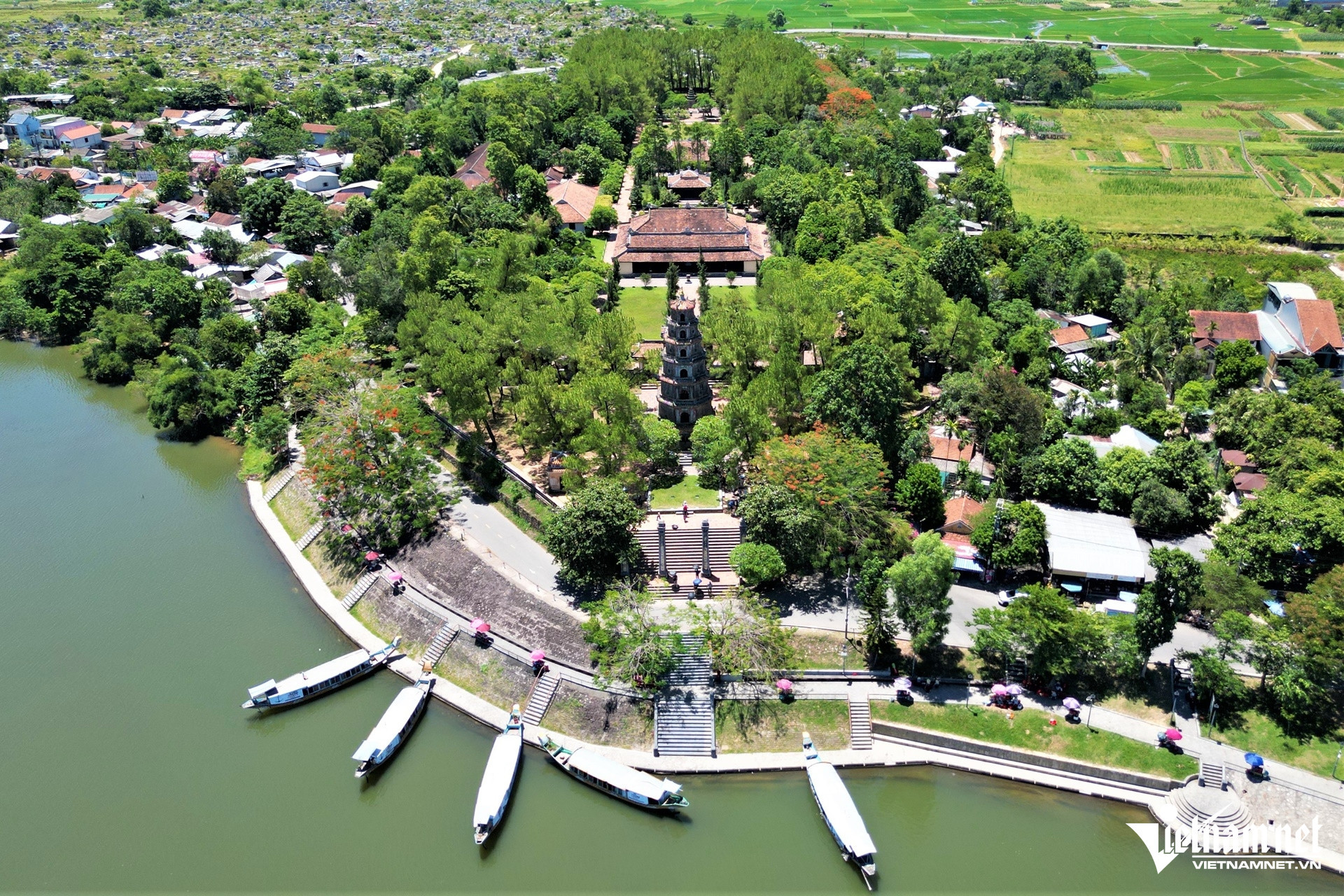
Built in 1844 during the reign of Emperor Thieu Tri, the seven-story octagonal tower rises 21 meters and has become the defining symbol of Thien Mu Pagoda.
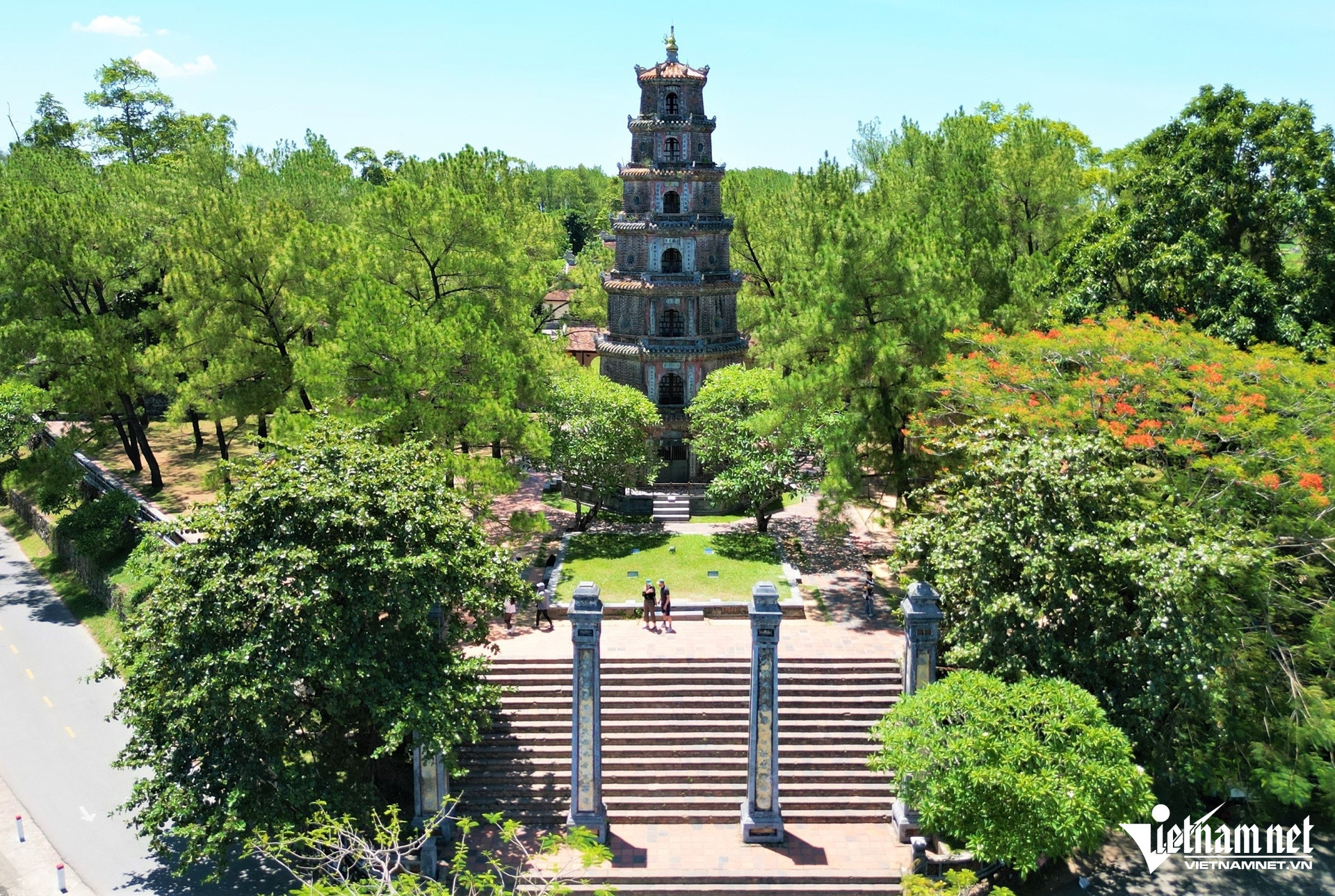
Each level of the tower houses a Buddha statue. A spiral staircase inside leads to the uppermost floor, where a golden Buddha image was once enshrined.
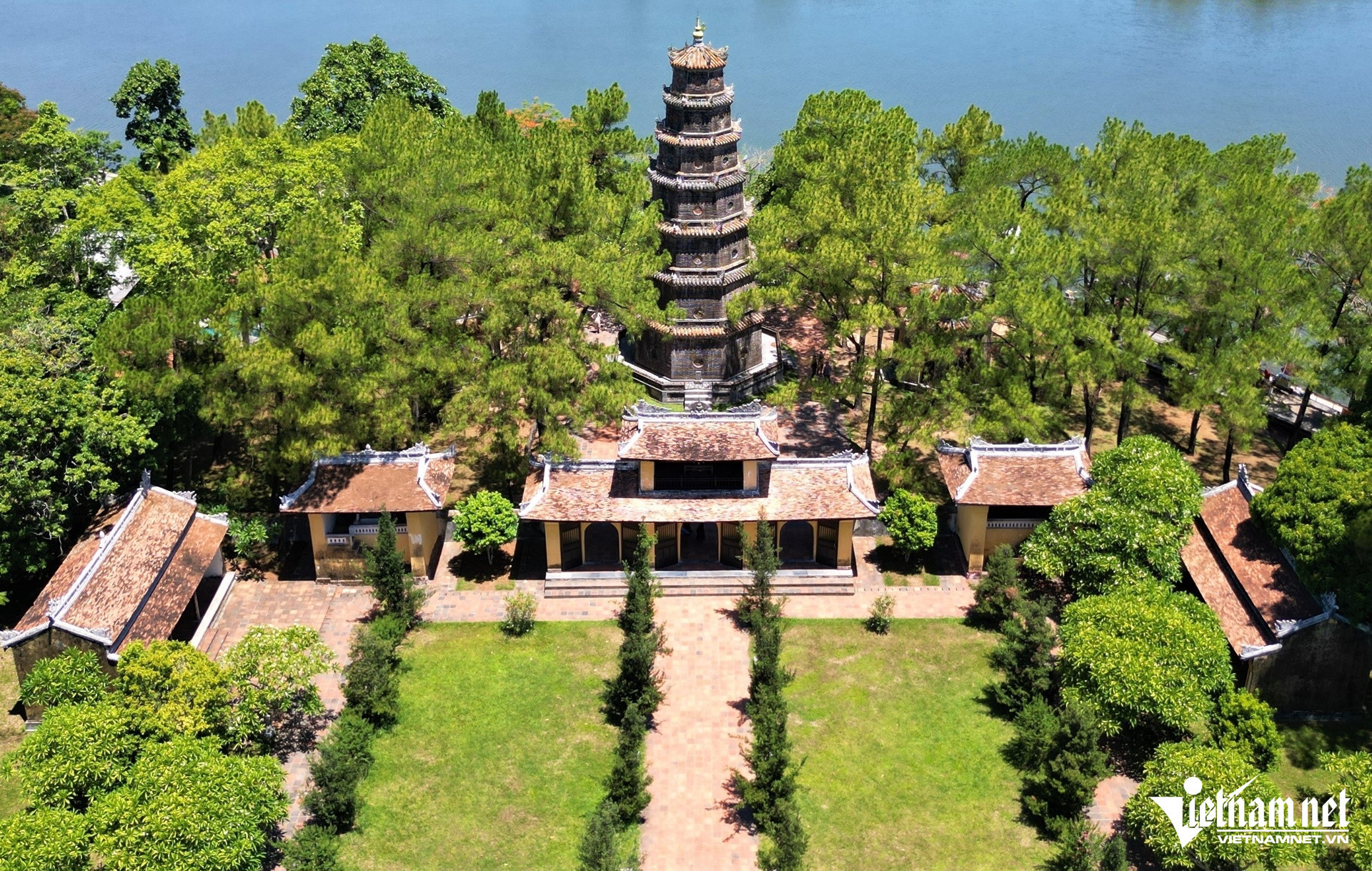
Flanking the tower are the bell pavilion and stele pavilion, whose harmonious design enhances the historic character of the temple's entrance.
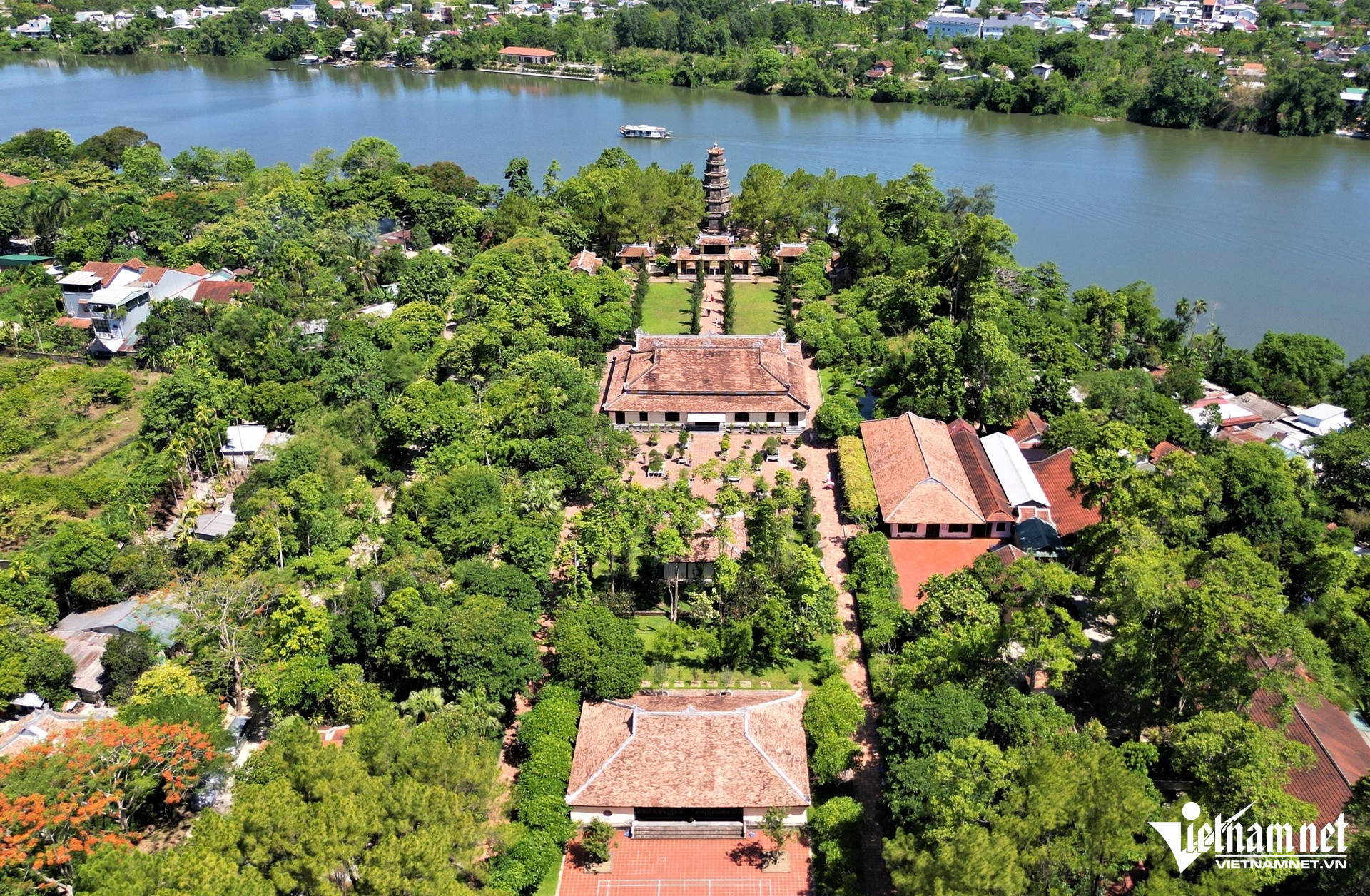
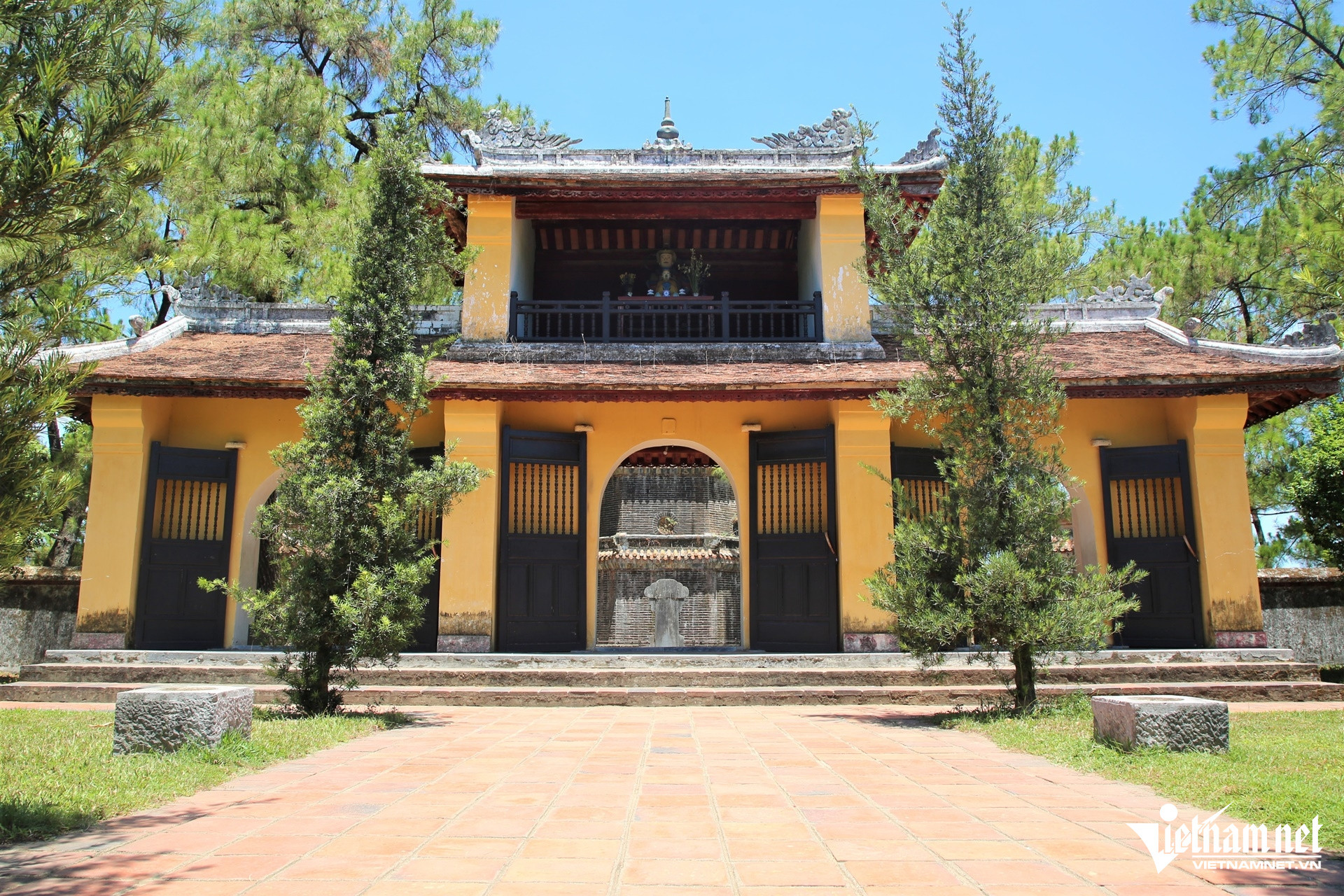
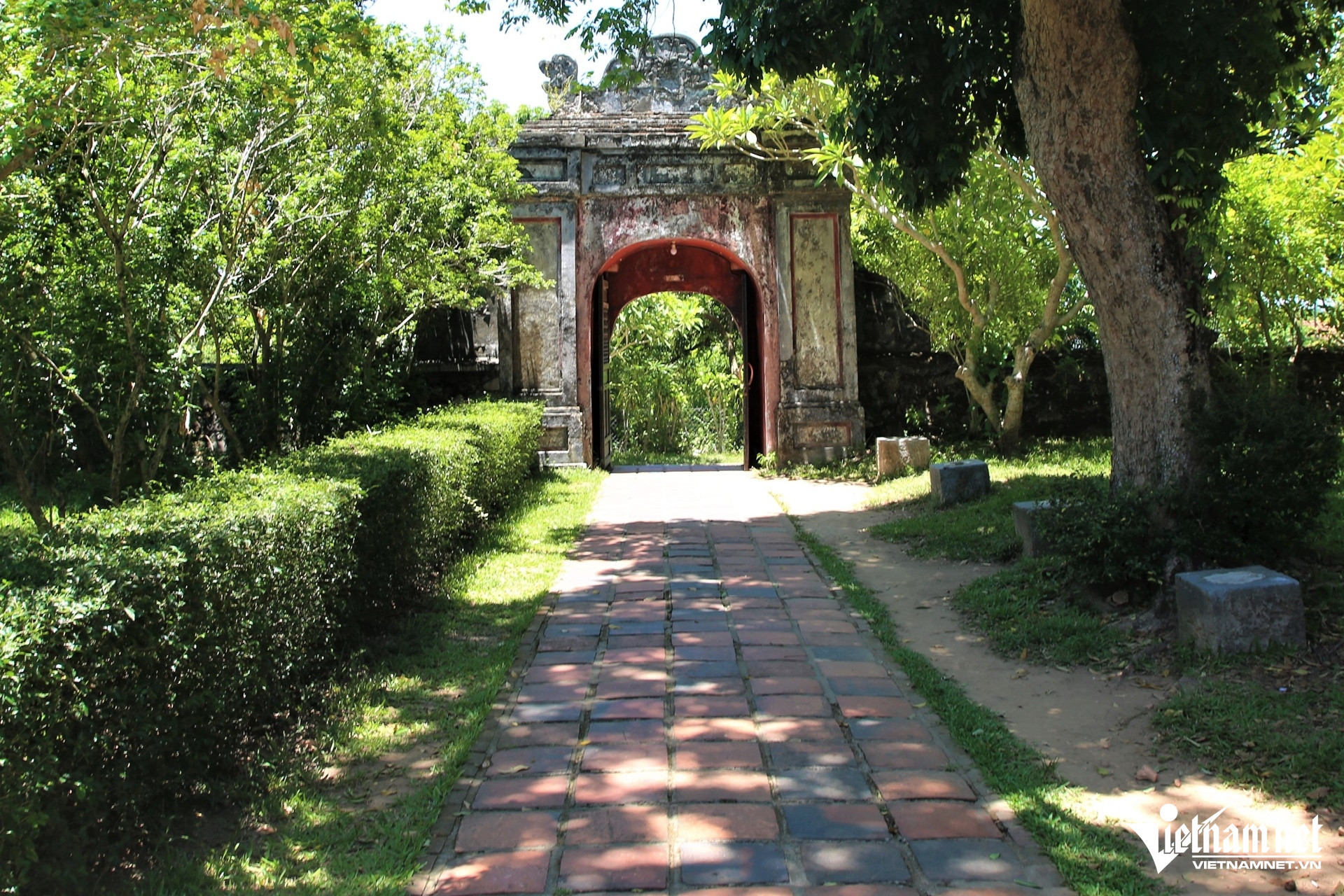
The front courtyard also includes the remains of Huong Nguyen Pavilion, together with square and hexagonal bell and stele pavilions that frame sweeping views of the Perfume River.
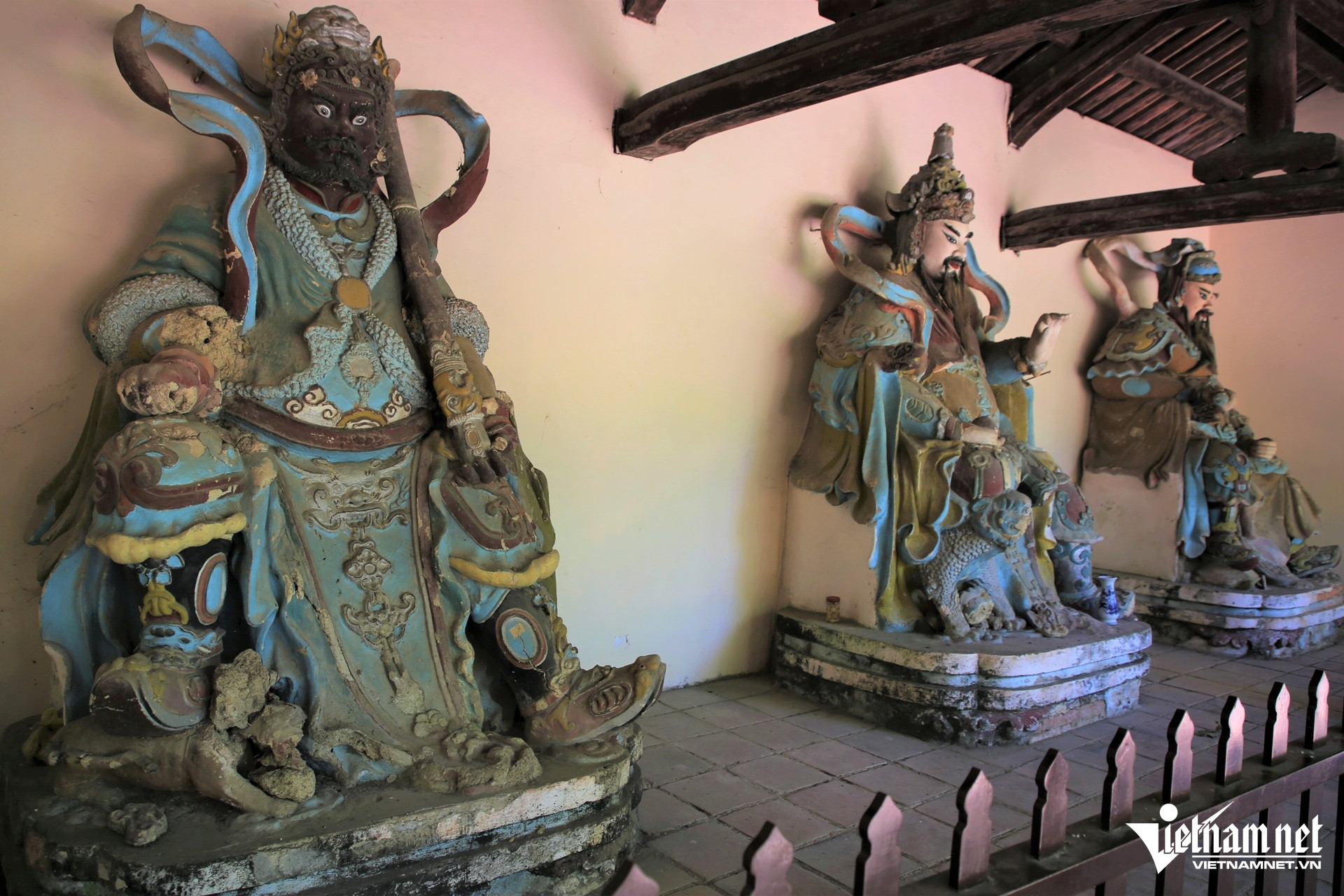
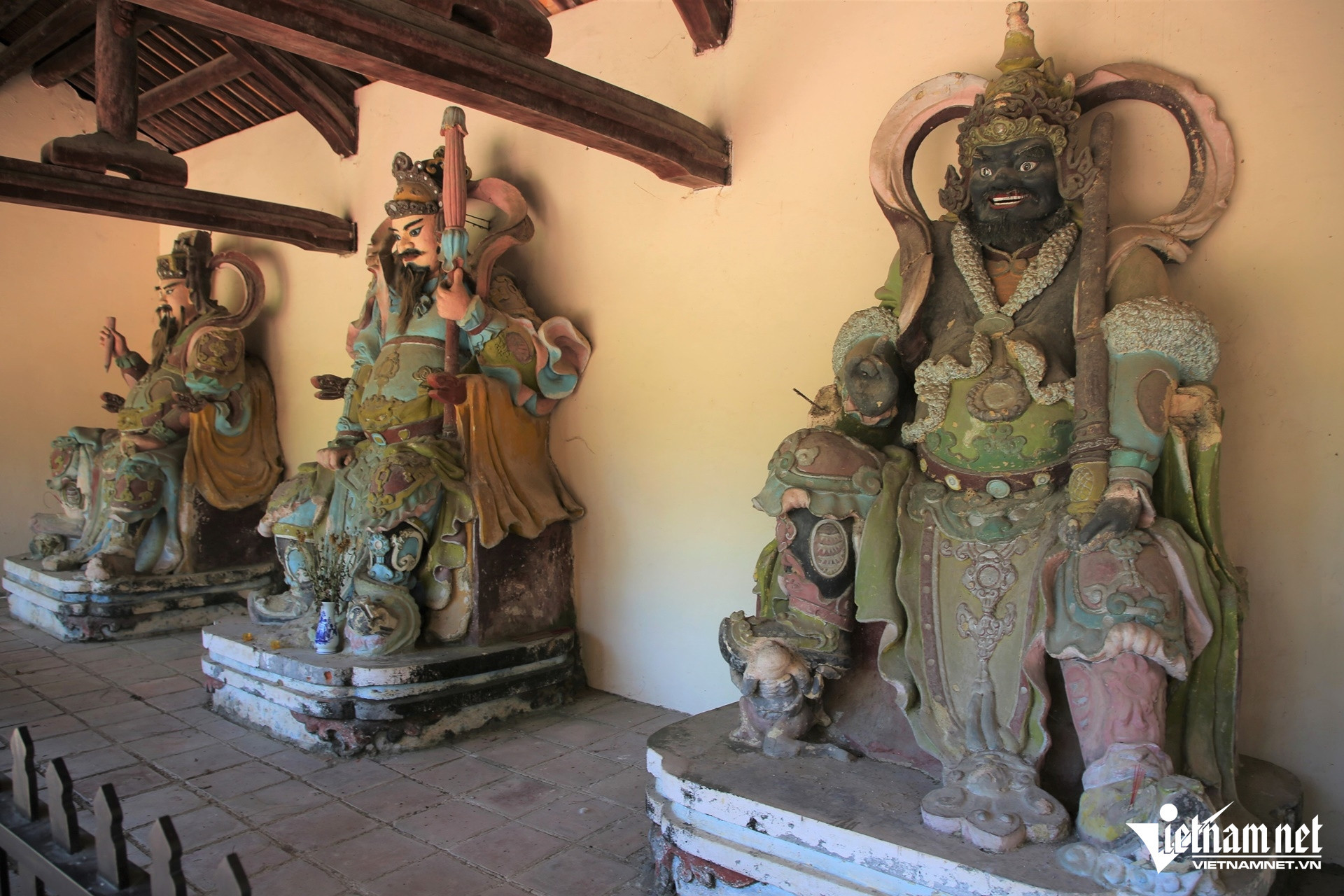
Beyond Phuoc Duyen Tower stands the imposing three-entrance gate, a two-story structure whose upper level contains statues of Nguyen Hoang and the legendary Celestial Lady, the mythical figure whose prophecy is said to have inspired the temple's construction.
The gateway features three entrances, each guarded by finely crafted lime-plaster guardian statues.
Inside the gate, six additional guardian figures stand in two halls on either side, their imposing expressions and intricate craftsmanship reflecting traditional Vietnamese Buddhist temple architecture.
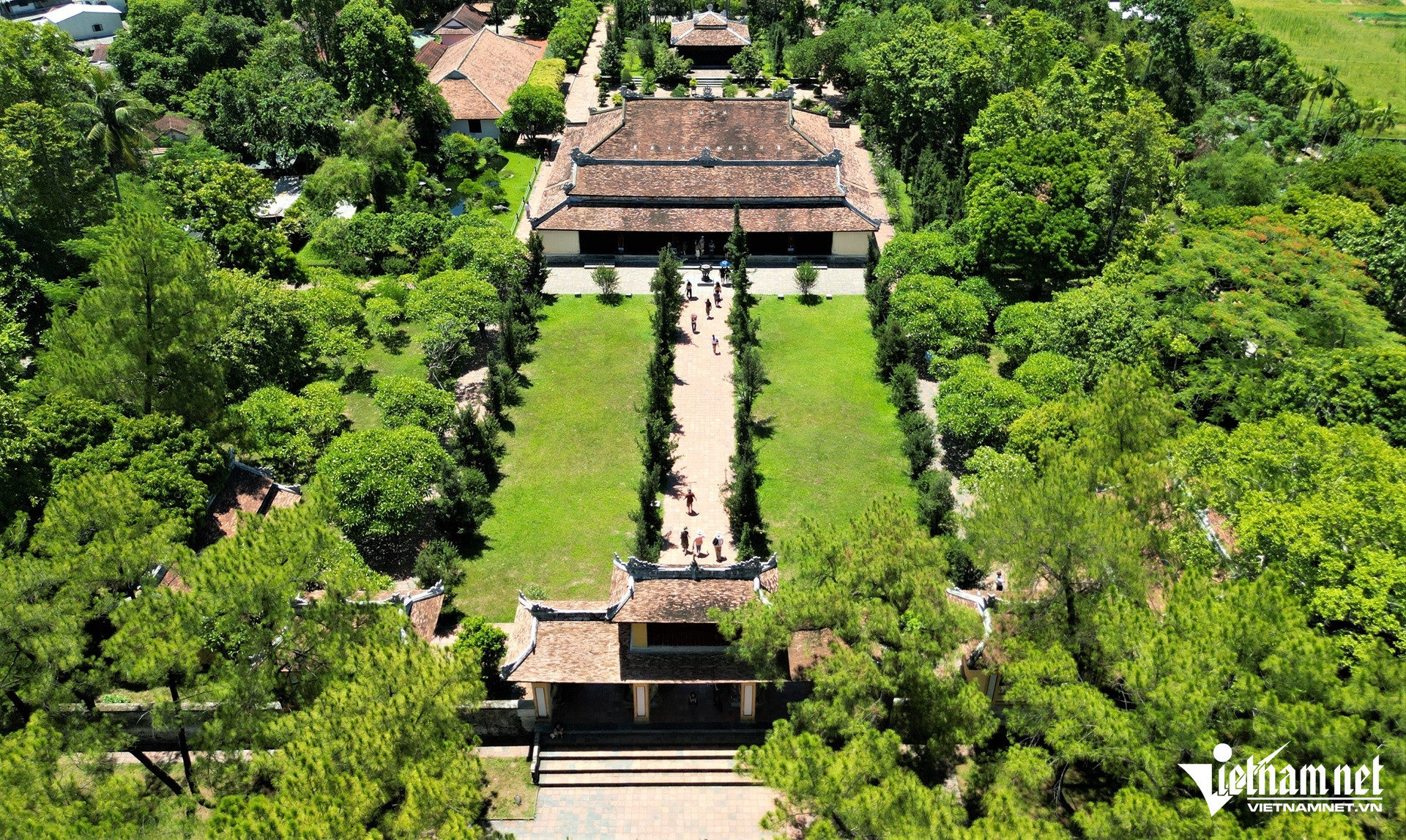
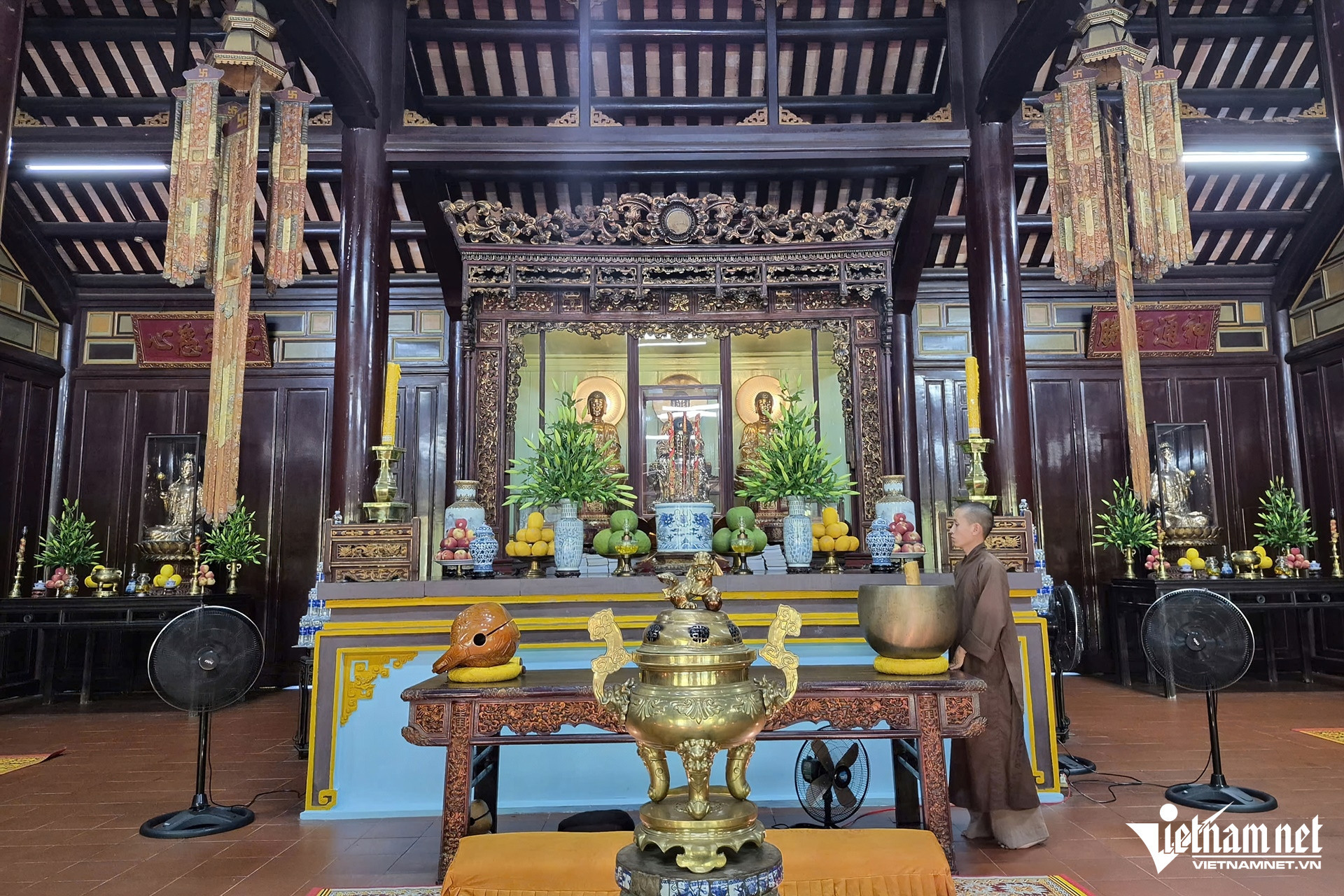
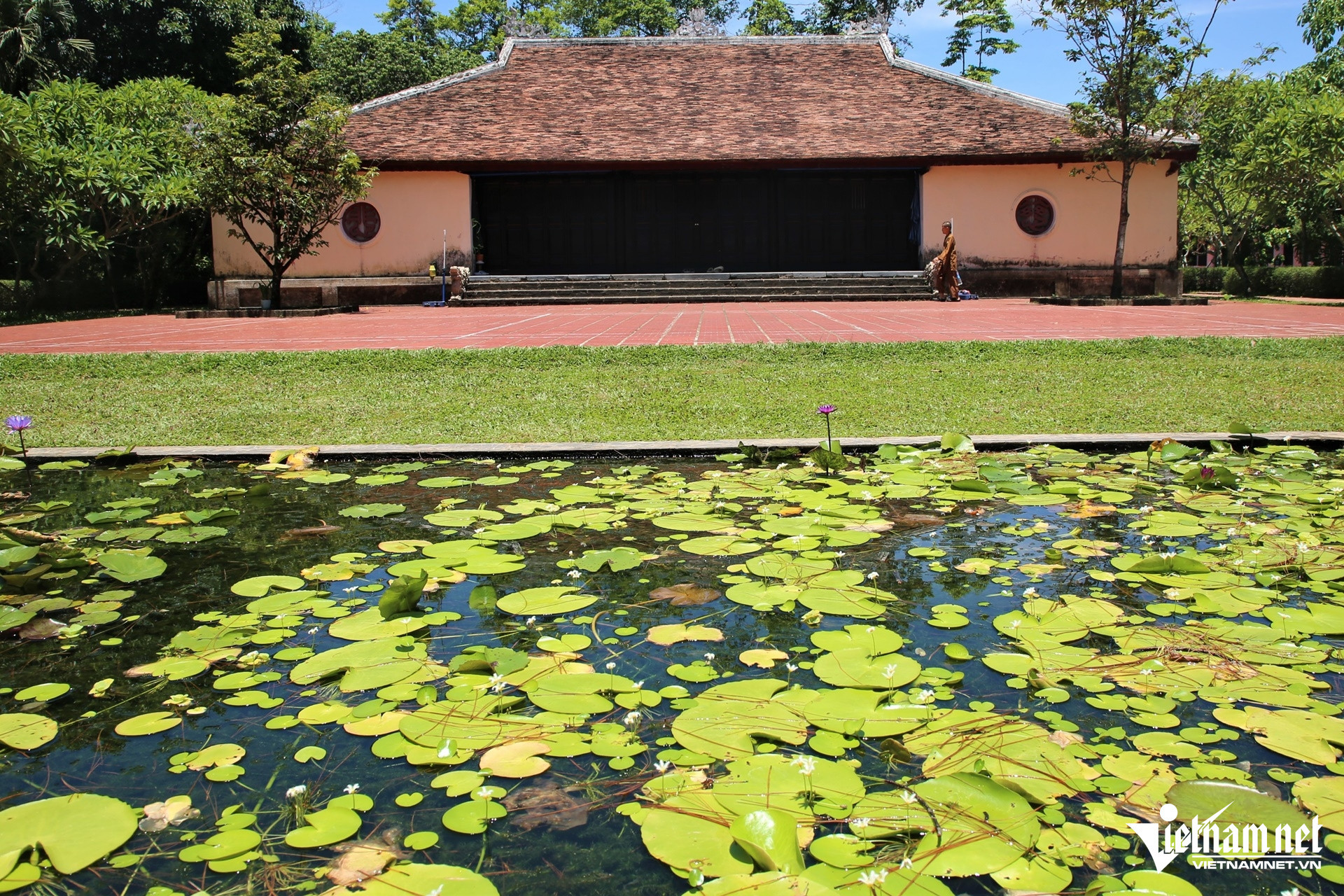
Behind the gateway lies the temple's main worship complex, including Dai Hung Hall, Ksitigarbha Hall, and Avalokitesvara Hall.
Dai Hung Hall serves as the principal sanctuary. Constructed in Hue's traditional timber-frame architectural style, it incorporates many features associated with the imperial architecture of the Nguyen Dynasty, including layered tiled roofs, dragon-shaped roof ridges and elaborately decorated wooden panels.
Although the temple has undergone several restorations over the centuries, much of its historic character has been carefully preserved.
The influence of Nguyen court architecture is particularly evident in the wooden columns, roof structure and richly decorated interior. The main hall also houses numerous historic Buddhist statues valued for both their artistic craftsmanship and historical significance.
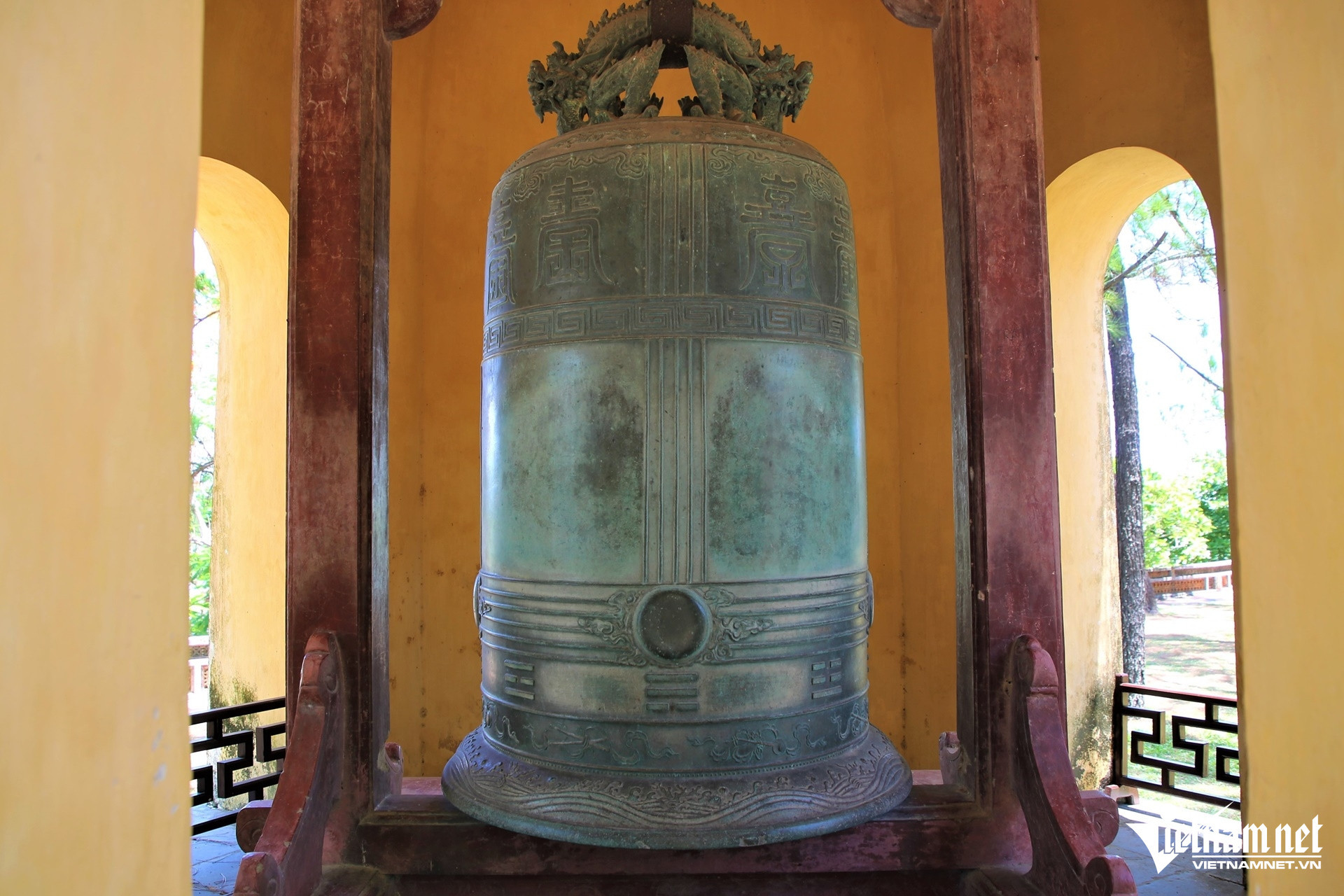
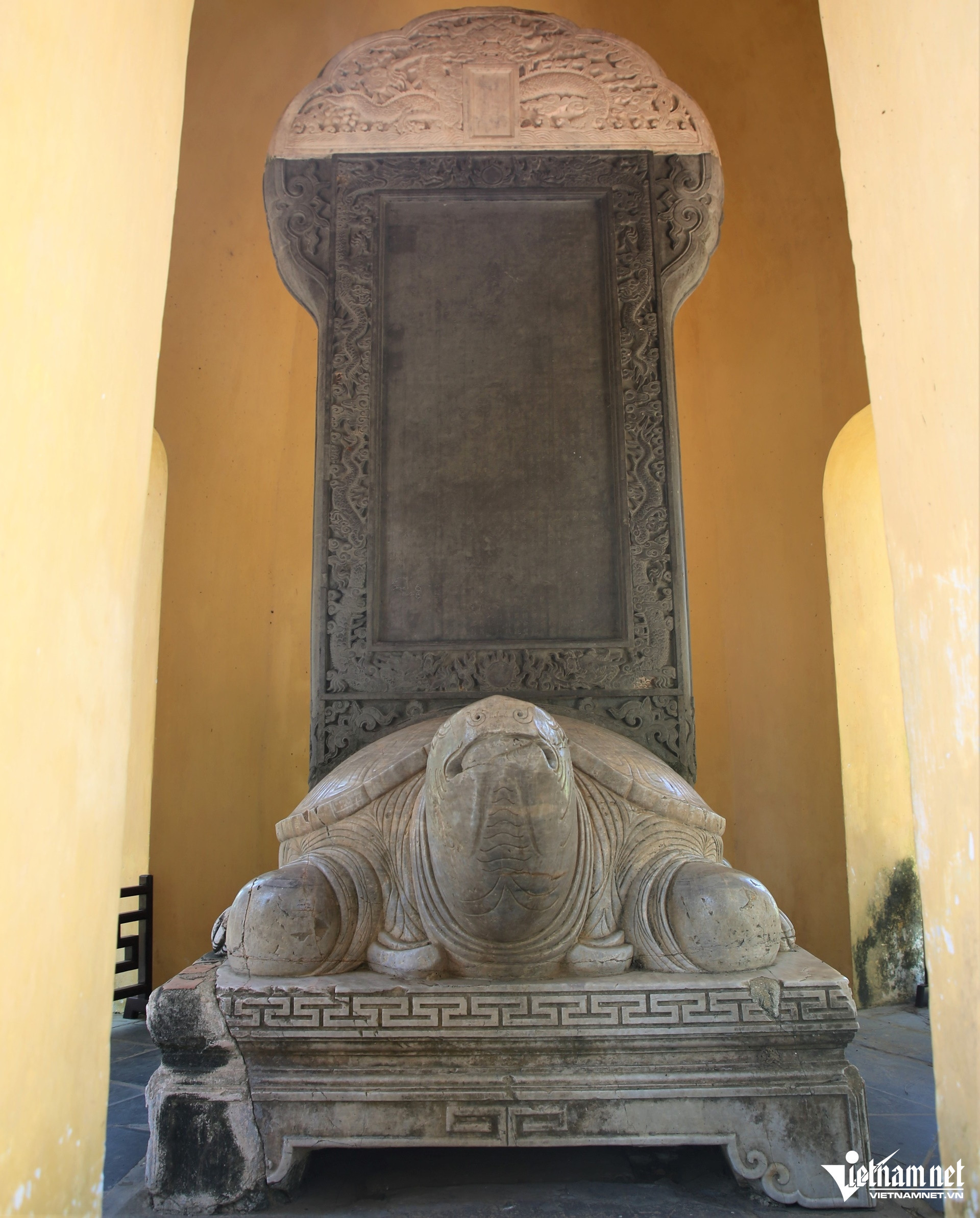
The most important are the Great Bell (Dai Hong Chung) and the stone stele titled "Ngu Kien Thien Mu Tu", both of which have been designated National Treasures of Vietnam.
Ha Nam - Ho Giap
.svg)
