 Vietnamnet.vn

 Podcast



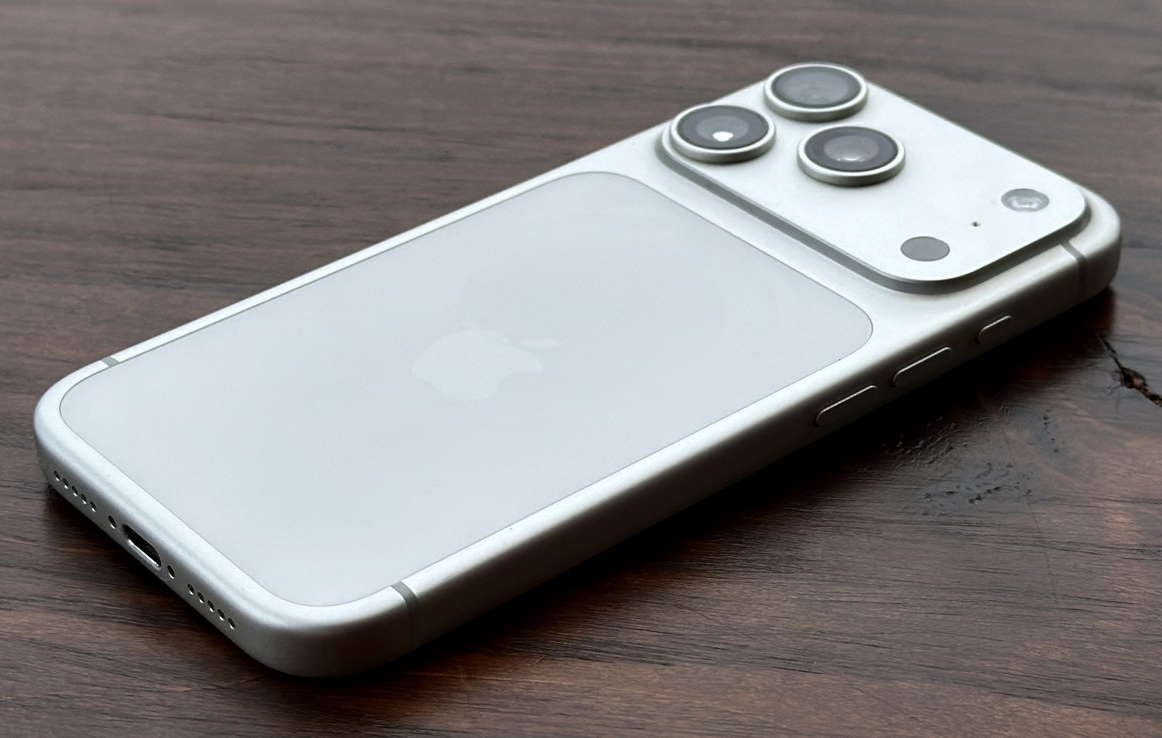
In the latest wave of rumors, well-known Weibo leaker Fixed Focus Digital claimed the chances of Apple sticking with titanium for its next Pro models are relatively low. According to the source, Apple is leaning toward aluminum alloys because they offer better heat dissipation.
The argument has gained traction as Apple accelerates its on-device AI strategy. As AI features demand increasingly powerful processing, thermal management is becoming far more critical. A chassis with stronger heat transfer capabilities could help iPhones maintain stable performance for longer periods, especially while running AI models directly on the device.
According to Fixed Focus Digital, this trend is not limited to Apple. Several Android smartphone makers are also reportedly reconsidering aluminum over titanium in order to improve cooling performance for next-generation AI smartphones.
That said, the leaker’s accuracy record is considered average, similar to many other Weibo tipsters. The report may therefore reflect a broader industry direction rather than concrete details about the iPhone 18 Pro itself.
Apple first introduced titanium with the iPhone 15 Pro series, replacing the stainless steel used on previous Pro generations. At launch, titanium was widely seen as a major step forward because it preserved durability while significantly reducing weight.
Compared with stainless steel, titanium is lighter while still feeling strong and premium in the hand. That was one of the main reasons the iPhone 15 Pro and iPhone 16 Pro received praise for offering a more balanced feel without becoming overly heavy.
In reality, Apple has continuously changed materials over the years to meet evolving engineering goals. The company once shifted MacBooks from plastic to aluminum to improve rigidity and overall build quality. Later, stainless steel became the signature material for high-end iPhones because it delivered a more luxurious and polished appearance.
Titanium represented the next stage in that evolution. But like every material, it comes with trade-offs.
Why Apple could return to aluminum
Despite its premium image, titanium is significantly more difficult to manufacture than aluminum. Production costs are also much higher, making the overall process more complex and expensive.
More importantly, titanium conducts heat less effectively than aluminum. That has become an increasingly important issue as smartphones grow more powerful and consume more energy. Some earlier reports suggested the iPhone 15 Pro experienced heating issues during heavy use, although Apple later addressed those concerns through software updates.
Meanwhile, aluminum offers several practical advantages, including superior heat dissipation, lighter weight, and lower manufacturing costs. Those qualities make it easier for Apple to optimize thinner and lighter designs while maintaining stable performance.
If Apple truly intends to position AI as the centerpiece of future iPhones, prioritizing a material with better thermal control would make perfect sense.
Still, not every leaker believes the titanium era is over. Earlier this month, another well-known source, Instant Digital, claimed Apple is actively researching new titanium alloys for future iPhones.
That possibility is not difficult to imagine. Given Apple’s enormous scale, the company spends billions of dollars annually on research and development, including material science. Apple is almost certainly exploring ways to improve titanium by lowering production costs, increasing thermal efficiency, and optimizing durability.
Apple rarely reveals material changes before a product launch. But history shows the company consistently chooses materials based on technical priorities and long-term product strategy.
If Apple eventually develops a new titanium formula that is lighter, cheaper, and better at heat dissipation, the material could easily return to future iPhones.
For now, however, many signs suggest aluminum better aligns with Apple’s current direction. As smartphones enter the AI era, the biggest priorities may no longer be absolute luxury aesthetics, but rather sustained performance, thermal stability, and battery life.
Titanium still carries strong symbolic value for the Pro lineup, but in today’s technology race, practicality is becoming increasingly important. And at least for now, aluminum appears to be leading the battle for the iPhone 18 Pro and iPhone 18 Pro Max.
Hai Phong
.svg)
