 Vietnamnet.vn

 Podcast



Apple's rumored iPhone 20 Pro Max is shaping up to be the biggest redesign since the iPhone X, with a series of potential upgrades that could reshape the smartphone industry.
Apple is widely expected to be preparing a special iPhone model to celebrate the 20th anniversary of its iconic smartphone. According to multiple industry reports and supply chain leaks, the device - expected to debut in the fall of 2027 - could feature the most comprehensive overhaul since the launch of the iPhone X in 2017, ushering in a new era of iPhone design.
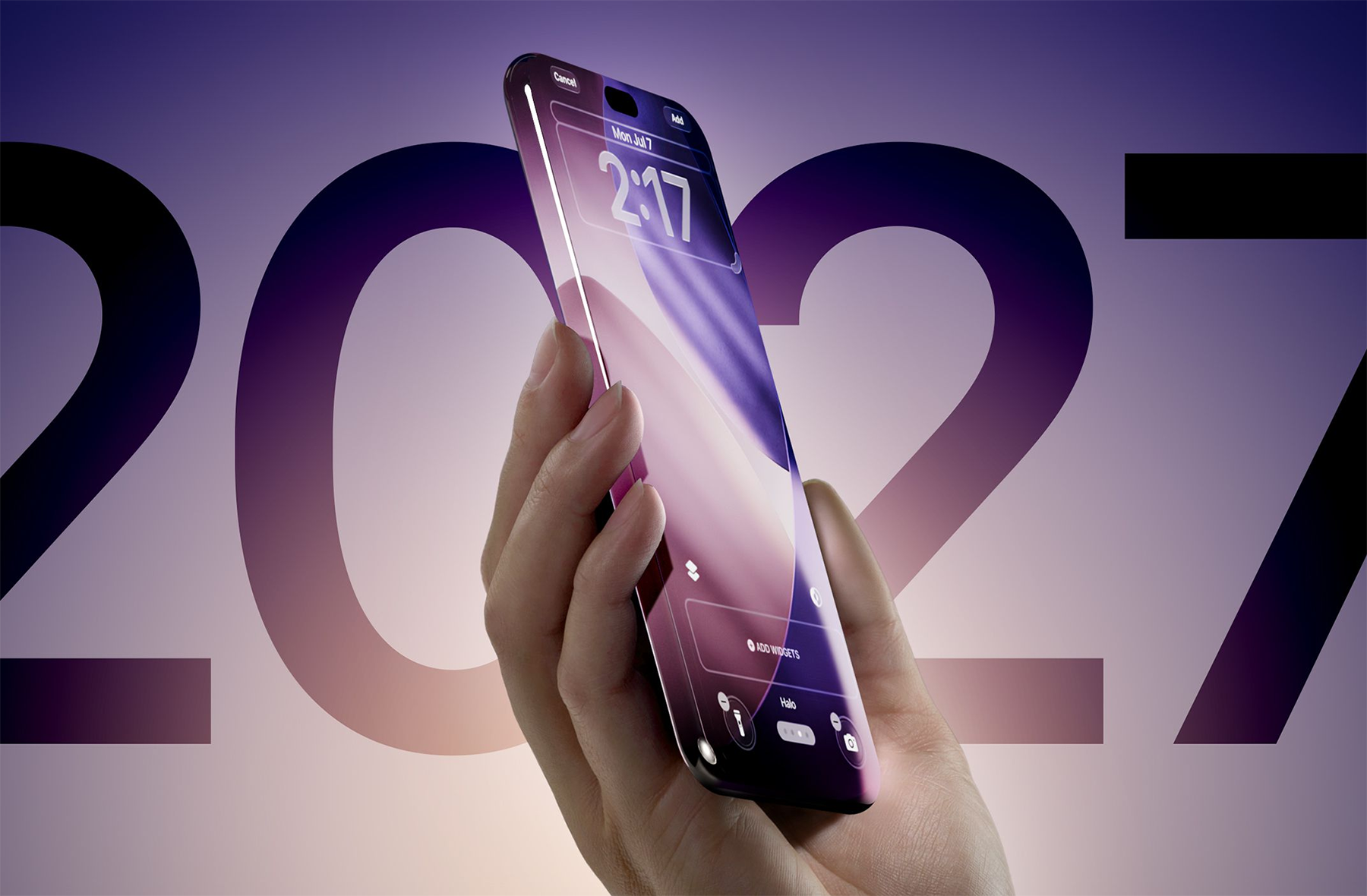
The original iPhone was unveiled in January 2007 before going on sale on June 29 of the same year. While the 20-year anniversary falls in June 2027, Apple is expected to follow the same strategy it used with the iPhone X, unveiling its anniversary model during its traditional September product event.
Over the past year, an increasing number of reports have described what could become Apple's anniversary iPhone. From an all-glass design and next-generation display technology to several innovations Apple has reportedly been developing over multiple product generations, the company appears to be aiming for a device with an impact comparable to that of the iPhone X nearly a decade ago.
iPhone 20 or iPhone XX instead of iPhone 19?
Apple is rumored to skip the "iPhone 19" branding, much as it bypassed the iPhone 9 in favor of the iPhone X in 2017.
Reports remain divided over the final name, with iPhone 20 and iPhone XX emerging as the two most frequently mentioned possibilities, both intended to highlight the product line's 20-year milestone.
Curved glass design with a truly edge-to-edge display
The most significant rumored change is a completely redesigned exterior.
According to multiple supply chain sources, Apple is developing an all-glass chassis with gently curved edges wrapping around both the front and rear of the device, creating a seamless appearance unlike any previous iPhone.
Bloomberg's Mark Gurman has described the device as a curved iPhone with no visible display cutouts. The OLED panel is said to extend toward all four edges, producing an almost bezel-free design.
Unlike the aggressively curved "waterfall" displays previously seen on some Android smartphones, Apple is reportedly opting for subtle curves on all four sides. This approach is expected to improve edge-swipe gestures while minimizing image distortion near the display borders.
Brighter, more efficient next-generation OLED display
Apple is reportedly planning to use Samsung's OLED panels featuring Color Filter on Encapsulation (CoE) technology.
The technology replaces the conventional polarizer with color filters integrated directly into the display encapsulation layer, allowing for a thinner screen with improved light transmission. As a result, the display is expected to become brighter while consuming less power.
The company is also rumored to pair the panel with a next-generation 16nm display driver chip and a specialized light-diffusion layer designed to maintain consistent brightness across the entire screen, including its curved edges.
Under-display Face ID remains a long-term goal
One of the most anticipated upgrades is a Face ID system hidden entirely beneath the display.
Apple is reportedly developing an ultra-transparent glass region that would allow infrared sensors to operate through the OLED panel without compromising display quality.
However, display industry analyst Ross Young of Display Supply Chain Consultants believes the technology may still not be ready by 2027. If that proves accurate, the final device could instead feature a smaller version of the Dynamic Island introduced on recent Pro models.
Two display sizes and an Apple-designed camera sensor
Unlike the single 5.8-inch iPhone X, Apple's anniversary model is rumored to arrive in approximately 6.3-inch and 6.9-inch versions.
With ultra-thin bezels, the larger model could potentially be marketed as offering a display approaching seven inches while maintaining a similar overall device size.
On the camera front, Apple is reportedly developing its own stacked image sensor to replace Sony sensors that have powered iPhone cameras for many years.
The new sensor is said to incorporate LOFIC (Lateral Overflow Integration Capacitor) technology, enabling individual pixels to capture different amounts of light. Reports suggest this could expand dynamic range to around 20 stops, significantly improving photography in challenging lighting conditions.
Solid-state buttons, A21 chip and HBM memory for AI
Apple is also rumored to be reviving its long-discussed Project Bongo, replacing physical buttons with pressure-sensitive solid-state controls integrated into the device's frame.
According to reports, these buttons have successfully undergone testing while users wore gloves, handled wet devices, experienced extreme temperatures and used protective cases.
An ultra-low-power controller would reportedly allow the buttons to remain functional even when the phone is powered off or its battery is depleted.
Both anniversary iPhone models are expected to feature Apple's A21 processor manufactured using second-generation 2-nanometer technology, sharing the same platform as Apple's next-generation foldable iPhone.
Another widely discussed possibility is Apple's first use of High Bandwidth Memory (HBM) in a smartphone. By stacking memory vertically, HBM significantly increases bandwidth between memory and the GPU, potentially accelerating on-device AI processing.
Industry reports suggest Apple has already discussed the technology with Samsung and SK Hynix, both of which are expected to begin mass production of related memory technologies after 2026.
Silicon battery, Apple modem and other rumored features
Alongside the new processor, Apple is also expected to bring its in-house modem to premium iPhone models sold in the United States.
Following earlier generations of Apple-designed modems, the next version is rumored to surpass Qualcomm's offerings in efficiency, AI capabilities and especially power consumption, potentially extending battery life.
Apple is also reportedly developing a pure silicon battery with higher energy density than conventional lithium-ion cells. If current rumors prove accurate, battery capacity could approach 6,000mAh without significantly increasing the size of the iPhone 20 Pro Max.
Other reports have mentioned possible features including reverse wireless charging, under-display speakers that eliminate the traditional earpiece opening and a next-generation Ceramic Shield glass. However, these claims have not yet been corroborated by multiple independent sources.
Despite the growing number of leaks, the iPhone 20 Pro Max remains more than a year away from its expected launch, meaning both its final design and technical specifications could still change before Apple makes any official announcement.
Hai Phong
.svg)
