 Vietnamnet.vn

 Podcast



Thao Trinh
In a recent video uploaded to their YouTube channel with more than 30,000 followers, Misuzu and Taishi from Japan revealed that they traveled all the way to Hue City mainly to enjoy the city’s iconic bun bo Hue.
The dish has been officially recognized by Vietnam’s Ministry of Culture, Sports and Tourism as a national intangible cultural heritage.
It was also named among the Top 100 Vietnamese specialties of 2020-2021 by the Top Vietnam Organization and the Vietnam Records Organization.
In April 2025, bun bo Hue was included in Taste Atlas’ list of the world’s 100 best breakfast dishes.
“Hue is famous as a heritage city, but its cuisine is also incredible. It’s honestly not an exaggeration to say that we flew here just to eat bun bo Hue,” Misuzu shared.
To enjoy the dish, the couple visited a local noodle shop on Hai Trieu Street in Hue’s An Cuu ward.
Although they arrived at 7am, they were surprised by the large number of customers already crowding the restaurant for breakfast.
“A Vietnamese friend recommended this bun bo shop to us. The restaurant opens from 6am to 10am and is very popular with locals, so it gets crowded as soon as it opens,” Taishi said.
He added that both of them were genuinely surprised by the flavor from the very first visit.
Before discovering this restaurant, the pair had already tried bun bo Hue at around five other places that were famous online, but they found the version served here far more distinctive and delicious.
The two travelers said they had eaten here around six times and still had not grown tired of it.
“It makes me so happy to eat this again,” Misuzu exclaimed.
A bowl of bun bo Hue that impressed the Japanese visitors costs just VND30,000 ($1.20).
Each time they visit, Misuzu and Taishi usually order a standard bowl topped with sliced beef and Vietnamese pork sausage.
They were particularly impressed by the tender and flavorful beef.
According to Misuzu, the broth is clear yet rich, carrying layers of flavor from bones slowly simmered with different types of meat.
She also noted that the noodles are smooth and chewy, completely different from pho.
“The noodles have a very distinct rice aroma and natural sweetness. The beef is fresh and tender, something I could eat endlessly. The pork sausage becomes sweeter the more you chew it, and you can really taste ingredients like garlic, lemongrass and pepper,” she said.
Taishi shared the same opinion, saying the broth was deeply flavorful but perfectly balanced by the chewy noodles.
Misuzu also pointed out that bun bo Hue is served with plenty of fresh herbs and vegetables, making the dish feel refreshing rather than heavy.
The broth stays hot for a long time, allowing diners to dip fresh vegetables directly into the bowl without the soup cooling too quickly.
“When you add extra seasonings like lime, fresh chili, chili paste and garlic vinegar, the flavors become even more incredible. I honestly want another bowl,” she laughed.
During their trip to Hue, Misuzu also became a fan of banh canh ca loc, a local thick noodle soup with snakehead fish.
She said the couple regularly visits a familiar shop near the beginning of Hai Trieu Street, not far from the bun bo restaurant.
“We’ve come here more than four times. From the very first visit, we were hooked and didn’t want to eat this dish anywhere else,” she said.
According to Misuzu, the broth is rich, creamy and completely free from any fishy smell.
Adding fried shallots makes the soup even more fragrant and appealing.
She also praised the noodles for being chewy and silky, while the snakehead fish was soft, naturally sweet and perfectly seasoned.
The fish contains very few bones, making it easy to eat.
“Now I understand why so many people call Hue the culinary capital of Vietnam. There are simply so many delicious dishes here. My favorites are definitely bun bo Hue and banh canh ca loc,” Misuzu said.
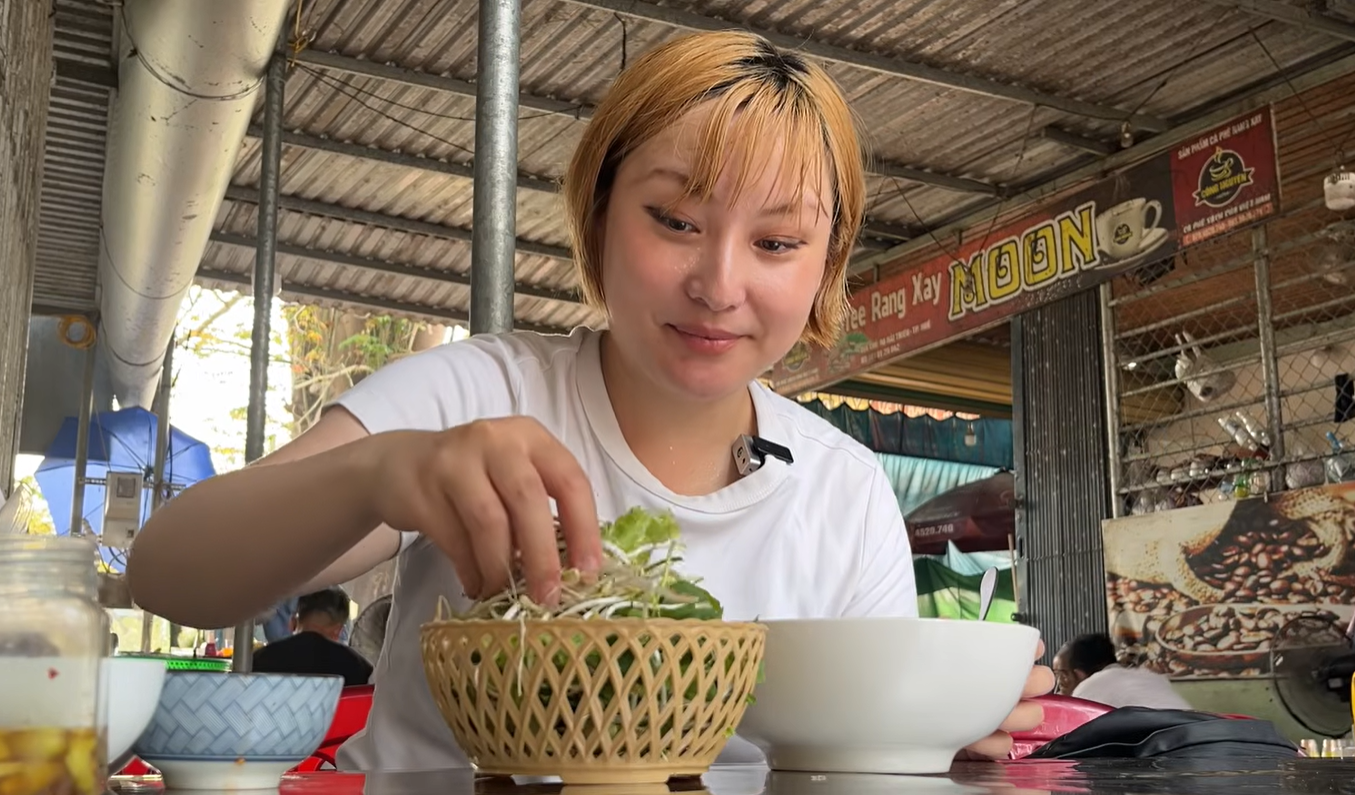
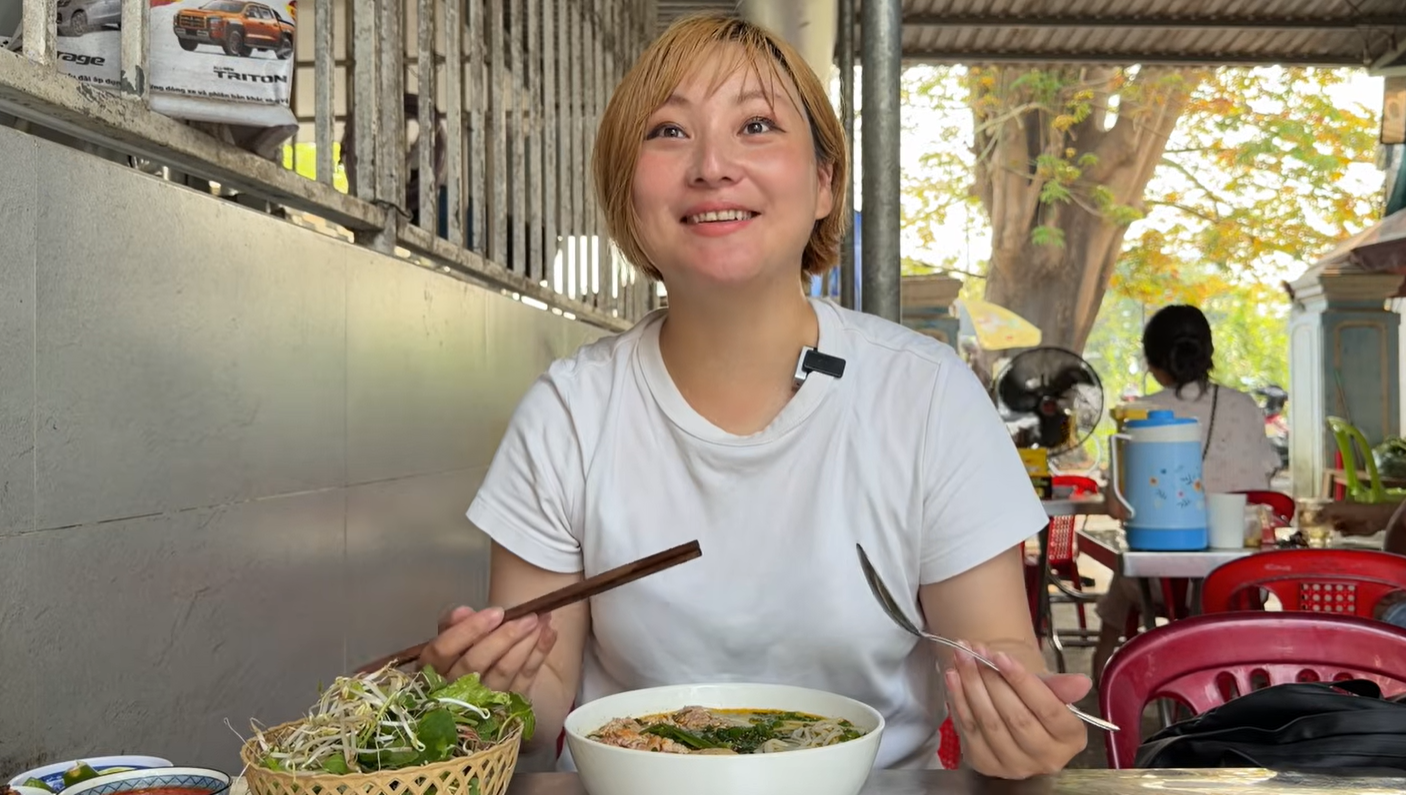
Misuzu, the Japanese tourist, admitted she traveled to Hue because of her love for bun bo Hue.
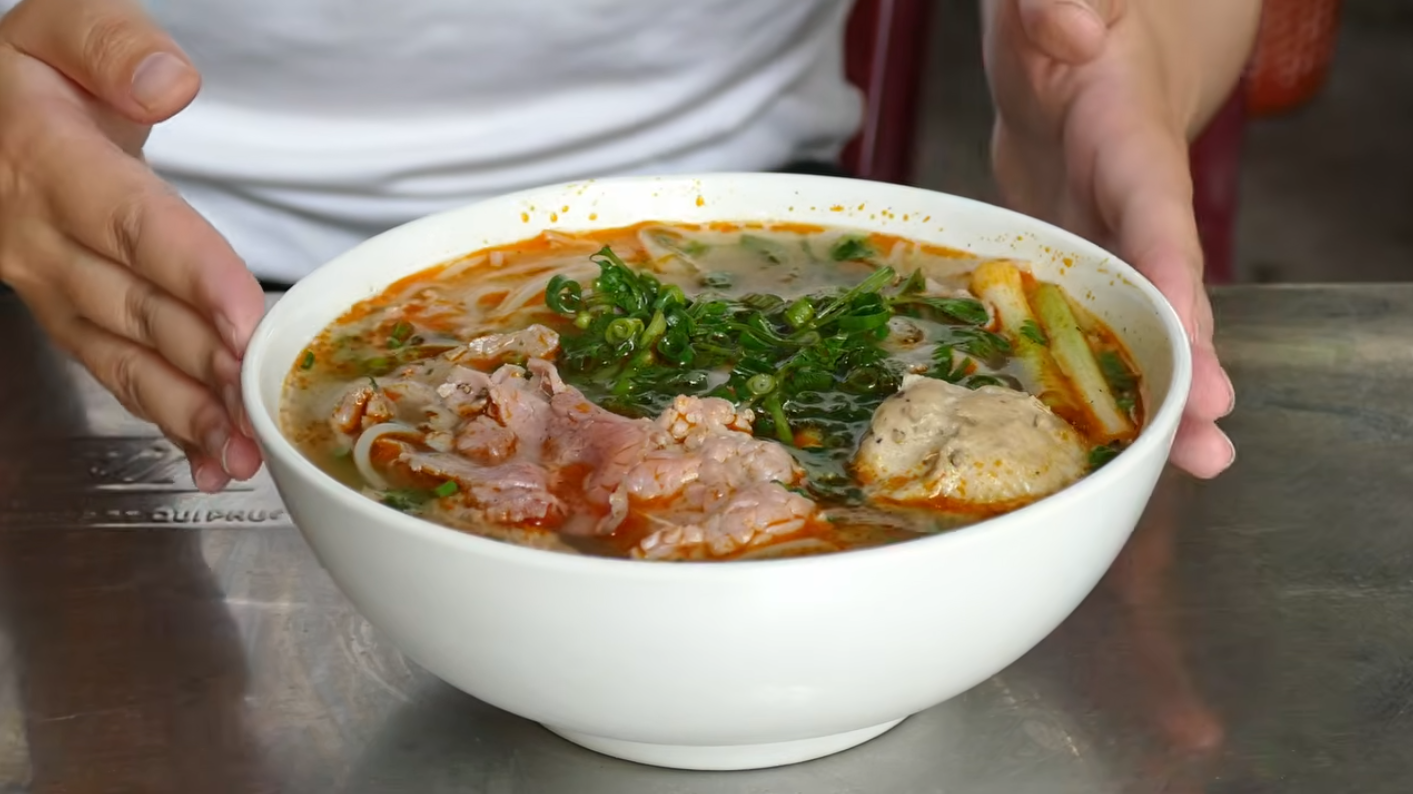
The bowl of bun bo Hue enjoyed by the Japanese visitors costs VND30,000 ($1.20).
Misuzu could not hide her excitement while enjoying bun bo Hue.
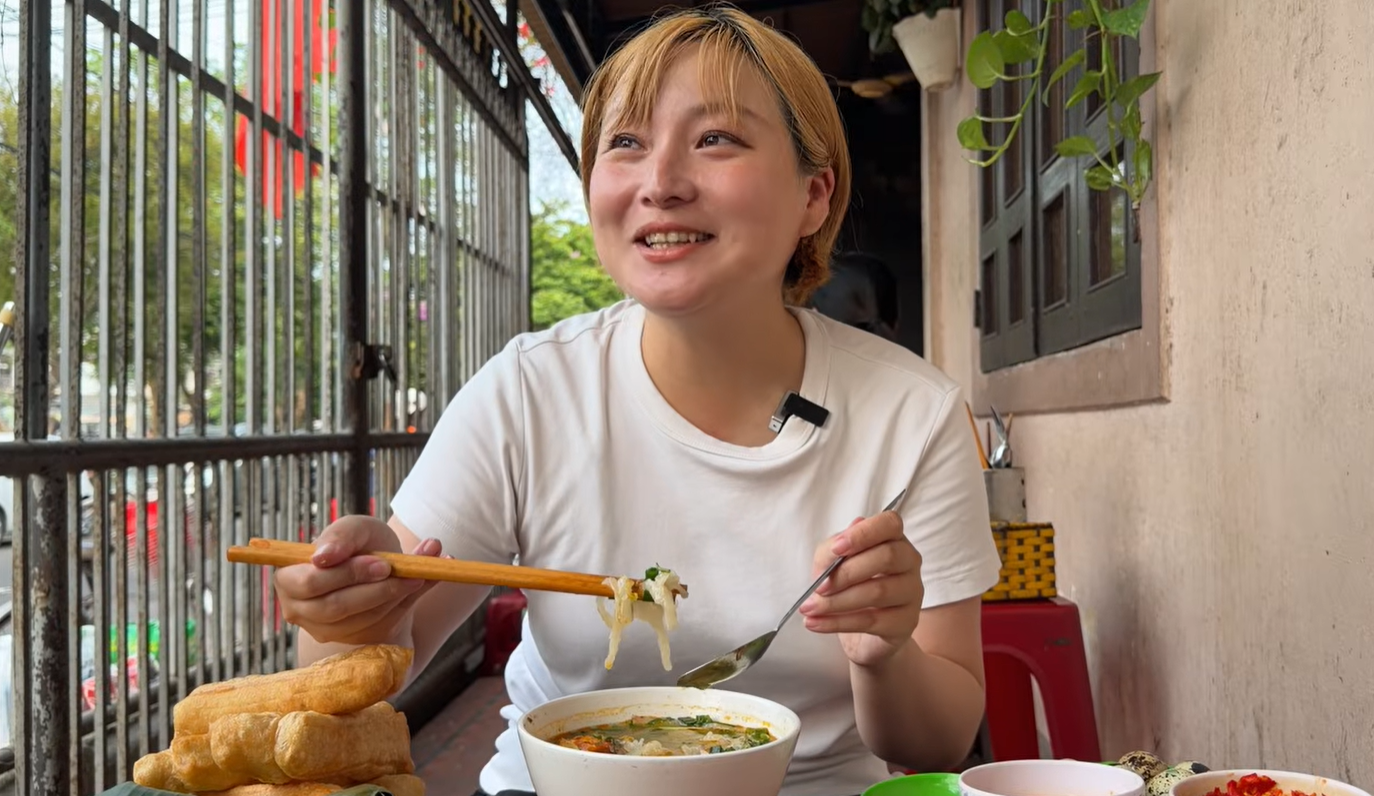
During the Hue trip, the Japanese tourist also tried banh canh ca loc.
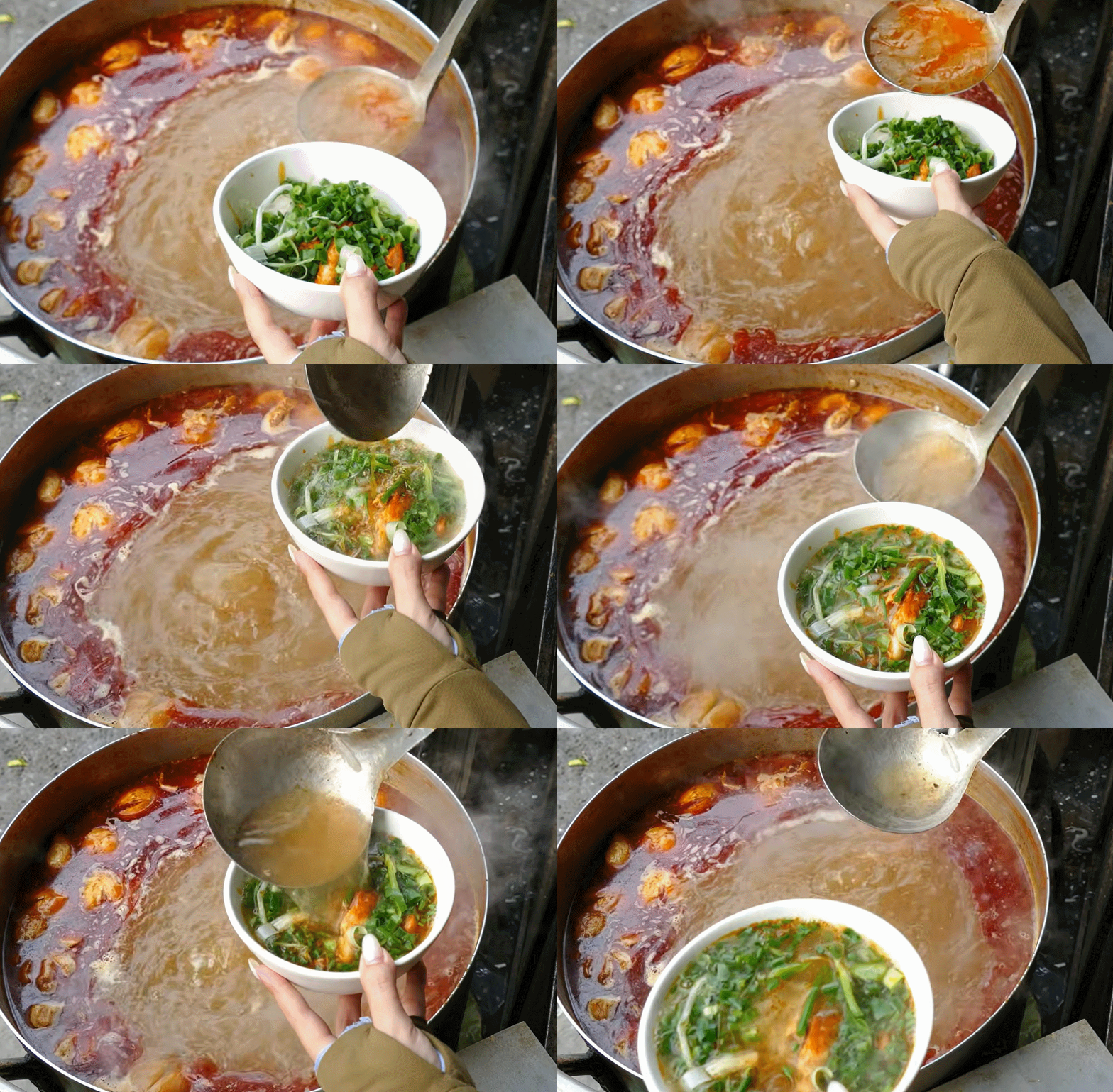
Banh canh ca loc is loved by both Hue locals and visitors from across the country. Photos: @itsumeshi
.svg)
