 Vietnamnet.vn

 Podcast



Resolution No. 105/NQ-CP, issued by the Government on April 8, 2026, to implement Conclusion 210-KL/TW dated November 12, 2025 of the 13th Party Central Committee, assigns the Ministry of Home Affairs to lead efforts in finalizing regulations, providing guidance, and overseeing the reorganization of villages, hamlets, and residential groups in line with new conditions.
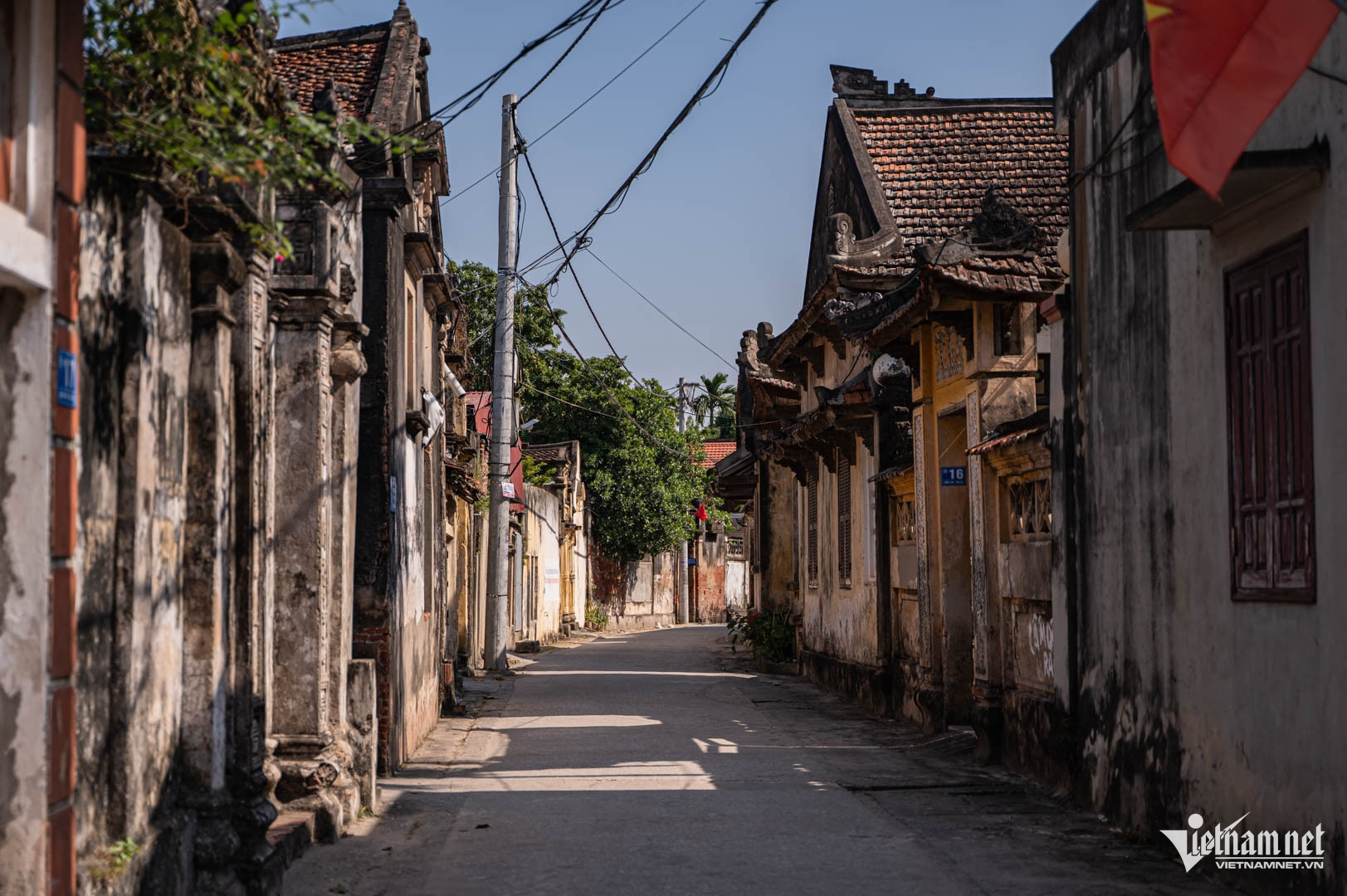
This is a necessary step in the ongoing effort to streamline the administrative apparatus. Yet in Vietnam, every village, every hamlet, every neighborhood is not merely a unit of governance. Each represents a layer of cultural sediment, a space of memory, a way of life, a voice, a communal house, a market day, a folk song.
What people hope for, therefore, is not only a more efficient structure, but also the preservation of village names, the spirit of neighborhoods, and the identity of communities that have shaped Vietnam’s cultural face over generations.
On quiet afternoons in the northern countryside, the echo of loudspeakers across rice fields, the sight of cooking smoke rising behind bamboo hedges, or elderly villagers gathering at the communal house to recall ancestral ceremonies - all of these form an irreplaceable cultural space. A village name is not just a label. It is memory. It is identity. It is how a person locates themselves in the vastness of the world.
That is why discussions of merging villages and residential clusters raise concerns that go beyond administrative adjustment. Many worry that while documents may become more streamlined, something essential in people’s sense of belonging could fade.
These concerns are not unfounded. Resolution 105/NQ-CP clearly sets out the requirement to continue reorganizing the system toward greater efficiency and effectiveness, including the restructuring of grassroots administrative units. The Ministry of Home Affairs is tasked with coordinating with relevant agencies to complete legal frameworks and guide implementation.
This demonstrates that the issue is not a minor local matter, but part of a broader institutional reform aimed at improving the performance of the political system in the coming period.
From a governance perspective, such reforms are necessary. A country undergoing rapid transformation cannot indefinitely maintain structures that have become fragmented, cumbersome, or misaligned with current demographic and infrastructural realities.
Conclusion 210-KL/TW underscores the scale of this restructuring. Yet the challenge lies not only in making the system leaner, but in doing so without inadvertently damaging the cultural undercurrents at the grassroots level.
In Vietnam, a village has never been just a place of residence. It is the repository of cultural identity, the root of many Vietnamese values. Family names, festivals, customs, and ways of life often originate from village structures, from communal houses, shared wells, and village lanes.
Research has shown that villages, hamlets, and settlements are the result of long processes of community formation, where kinship, occupation, belief systems, customs, and traditional self-governance intertwine. Any intervention based solely on administrative logic risks touching the deepest layers of communal life.
Vietnam’s own experience offers important lessons. Through previous rounds of administrative adjustment, some village names have continued to live on in everyday life, even when official documents replaced them with new designations. In other places, villages were divided into smaller clusters, yet cultural practices, communal ties, and collective memory endured.
This shows that administrative reform does not necessarily erase identity, provided it is carried out with care, cultural understanding, and respect for local context.
What must be avoided above all is a mechanical approach. Communities cannot be merged simply by counting households and populations, as if assembling squares on a map. Behind every name is a story. Behind every village is a history of settlement. Behind every neighborhood is a rhythm of life, a way of speaking, a set of values shaped over generations.
If reforms are rushed or overly simplistic, they may achieve administrative neatness at the cost of a profound sense of dislocation among residents.
It is therefore essential to distinguish between “administrative units” and “cultural spaces.” A new administrative structure may improve governance, but it should not erase traditional village names, cultural boundaries, or communal centers.
In the digital age, precise management is entirely possible through databases, digital mapping, and identification systems. Modernization, in fact, offers greater opportunities to streamline administration while preserving layers of cultural identity. The real question is whether there is enough sensitivity to achieve this balance.
One particularly important aspect is naming after mergers. Names are not merely administrative tools; they are repositories of collective memory. A name can evoke history, traditional crafts, rivers, temples, mountains, local deities, or shared values.
If naming is handled carelessly - through mechanical combinations or numerical labels - cultural spaces risk becoming anonymous.
Current regulations indicate that the establishment, dissolution, merger, division, and naming of villages and residential groups fall under the advisory and management responsibilities of local home affairs agencies. This means local authorities have both the responsibility and the opportunity to choose solutions that are administratively sound and culturally sensitive.
Names after mergers should follow clear principles. They must be easy to recognize and practical for administration and daily transactions. At the same time, they should respect historical continuity and avoid severing ties with deeply rooted place names.
New names should reflect local cultural characteristics, drawing from traditional village names, crafts, landmarks, rivers, mountains, historical figures, or widely recognized symbols.
Most importantly, the naming process must involve meaningful participation from residents, as they are the ones who will live with, speak, and pass on these names to future generations.
This issue is even more significant in areas with dense layers of village heritage, such as Hanoi or Bac Ninh. In these regions, village names often function as cultural brands. Mentioning a craft village, a quan ho singing village, a scholarly village, or a historic settlement evokes not just a place, but an entire ecosystem of values.
Such names can become foundations for cultural tourism, heritage education, creative industries, and local branding in the digital era. If these names are entirely absorbed into generic administrative labels after mergers, the loss extends beyond identity to future development potential.
Hanoi offers a clear example. As the capital, it is also a land where each village carries its own layer of cultural legacy - from craft traditions to scholarship, from folk beliefs to poetic imagery embedded in folklore. These names can serve as valuable cultural resources for tourism and creative industries. A careful restructuring policy, therefore, is not only about preserving memory, but also about safeguarding symbolic capital for future growth.
This perspective aligns with current cultural development strategies. Resolution 80-NQ/TW emphasizes that culture must serve as a solid foundation, an internal strength, and a regulatory force for sustainable development. Cultural values should permeate all aspects of life.
In that light, the restructuring of villages and residential groups cannot be treated as a purely technical task. It must be a culturally conscious governance decision, asking whether communities will retain their identity, their stories, and their ability to pass on heritage to future generations.
Alongside regulatory improvements, several guiding principles should be considered. Each restructuring plan should include a review of historical, cultural, and community factors. Areas with traditional villages, craft heritage, festivals, or cultural significance should have mechanisms to preserve traditional names as much as possible.
After mergers, administrative names can coexist with traditional cultural names in signage, heritage records, tourism maps, local education, and community activities. Such an approach would make reform more humane, more profound, and more sustainable.
A successful reform is not merely one that simplifies organizational charts. It is one in which, after necessary changes, people still feel that their homeland remains intact - their village name, communal house, shared spaces, collective memory, and sense of pride all preserved.
Efficiency is necessary. Streamlining is essential. But if, after restructuring, people feel their village has disappeared into an unfamiliar name, that loss will not be easily repaired.
Preserving village names and community identity, therefore, is not an exercise in nostalgia. It is a way of protecting the cultural core of the nation as it moves forward with confidence into the future.
Dr. Bui Hoai Son
.svg)
