 Vietnamnet.vn

 Podcast



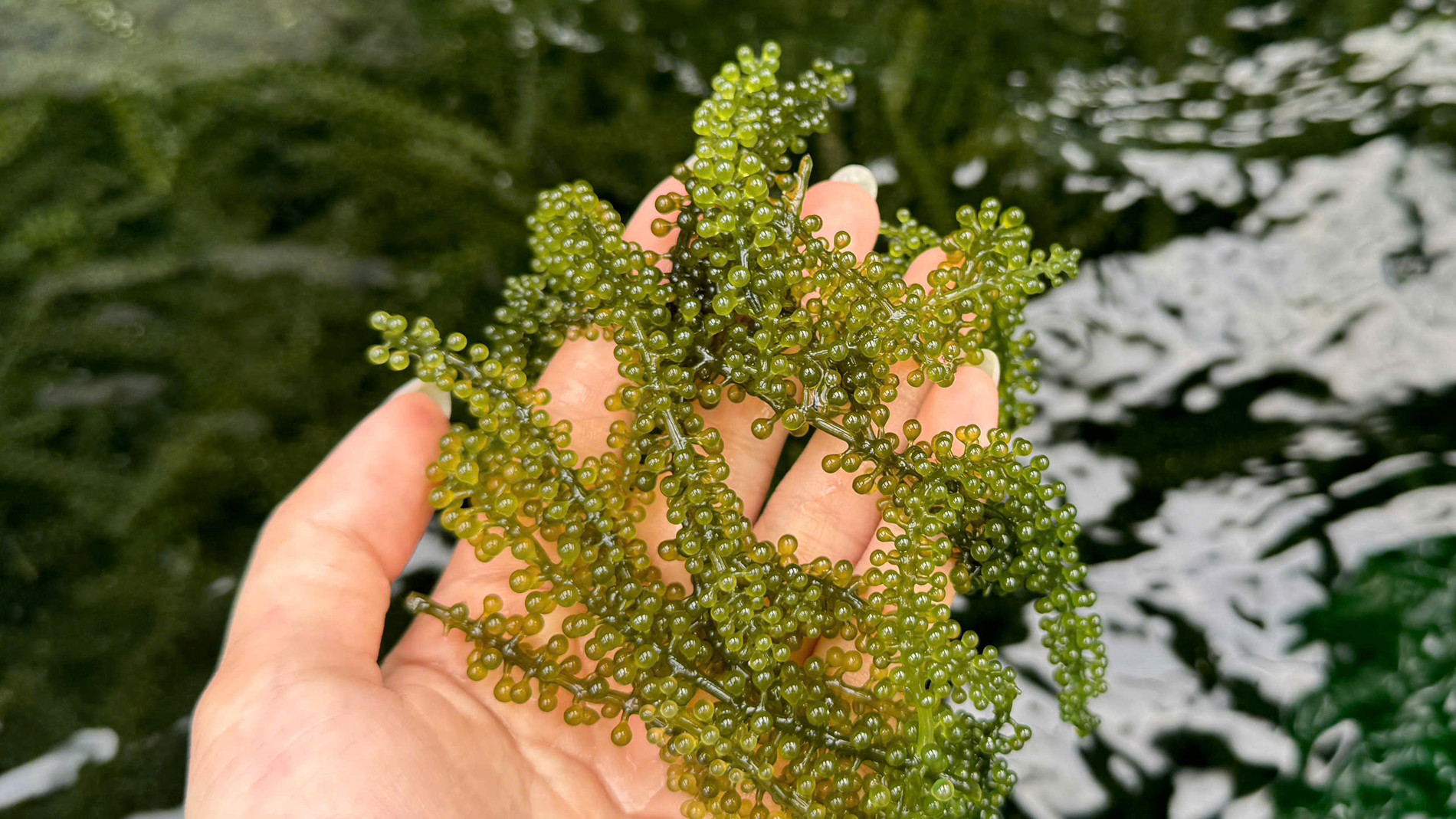
In Vietnam, sea grapes grow naturally, mainly in Phu Quy ward, Lam Dong province (formerly Phu Quy island, Binh Thuan province).
To meet growing consumer demand, sea grapes are now cultivated in clean coastal waters of some central provinces, especially in Khanh Hoa. Sea grape cultivation brings stable yields while retaining their distinctive flavor.
Tran Nhu Hoang, who has spent 15 years farming sea grapes in Dong Ninh Hoa ward, Khanh Hoa, said sea grapes need to be planted once for year-round harvests. With proper care, a crop can be harvested every 10-15 days.
Hoang explained that sea grapes thrive in stable salinity, at least 25 parts per thousand. Below that, they weaken, grow slowly, or die.
“In rainy season, salinity drops sharply and sea grapes die if the salinity drops to below 20 parts per thousand. Sunlight is also essential, but it must be moderate. The farm must be shaded with about 65 percent coverage. If fully covered and too cool, the grapes won’t thrive,” Hoang added.
Sea grapes are ready for their first harvest about 25-30 days after planting. Subsequent harvests can occur every 10-15 days depending on growth conditions. Quality sea grapes have uniform beads, vibrant green color, and 6cm-long strands.
Though harvesting may seem simple, it actually requires skill, experience, and attention to detail. Hoang explained that harvesting typically takes place early in the morning, around 6.30 am.
When harvest sea grapes, local workers lie on specialized foam boards rather than wading into the pond to avoid damage to the fragile plants and prevent the water from becoming cloudy, which would hinder harvesting.
After being picked, sea grapes undergo careful processing to retain their crispness, color, and ensure food safety.
Nguyen Quang Duy, General Director of a sea grape farming and processing enterprise in Khanh Hoa, said that to produce delicious, crispy, and green sea grapes, clean seawater with consistent salinity and ample sunlight is essential.
“The ideal time for cultivation and harvest is from January to October, avoiding the rainy season. Healthy grapes have long, plump strands, and are not dull or mushy. After cutting, the grapes will be reconditioned for a few days before processing,” he said.
To preserve freshness and safety, post-harvest processing is carefully managed. Once harvested, the sea grapes are taken to the factory’s specialized tanks for 2-3 days to maintain crispness and color.
“Sea grapes lose vitality immediately after being cut from the roots. But thanks to this reconditioning stage, they regain freshness, retain their natural crispness, and harmful gut bacteria are eliminated,” Duy explained.
The processing isn’t complex but demands precision. Workers hand-select batches, discarding damaged or substandard strands.
Fresh sea grapes are packed in sealed containers, ready for immediate use and storable at room temperature for 7-10 days, preserving crispness and color.
Fresh sea grapes can be eaten raw or combined with meats and vegetables for cooling salads. They require only a few minutes of soaking before use, with no elaborate preparation needed.
With a lightly salty flavor and a crunchy “popping” sensation in the mouth, sea grapes offer a unique eating experience. Many diners liken them to “green caviar.”
In addition to being eaten fresh, sea grapes are now processed into a variety of snacks and dishes, such as dried sea grapes and sea grape snacks, to suit diverse tastes and facilitate transport to distant provinces and cities.
Among these, dehydrated sea grapes are particularly popular due to their convenience. Consumers only need to soak them in water for five minutes, rinse off the excess salt, add some ice, and they’re ready to eat. The texture and flavor remain comparable to fresh sea grapes.
The coastal waters of Khanh Hoa and the central coastal region are areas with great potential for cultivating sea grapes. This is not only a "superfood" beneficial to human health but also good for the environment.
Wherever sea grapes are grown, the ecosystem improves. This type of seaweed can purify polluted water, especially in areas affected by organic waste, such as industrial shrimp farming zones. Wherever sea grapes are present, they help clean and restore the marine environment.”
Minh Anh
.svg)
