 Vietnamnet.vn

 Podcast



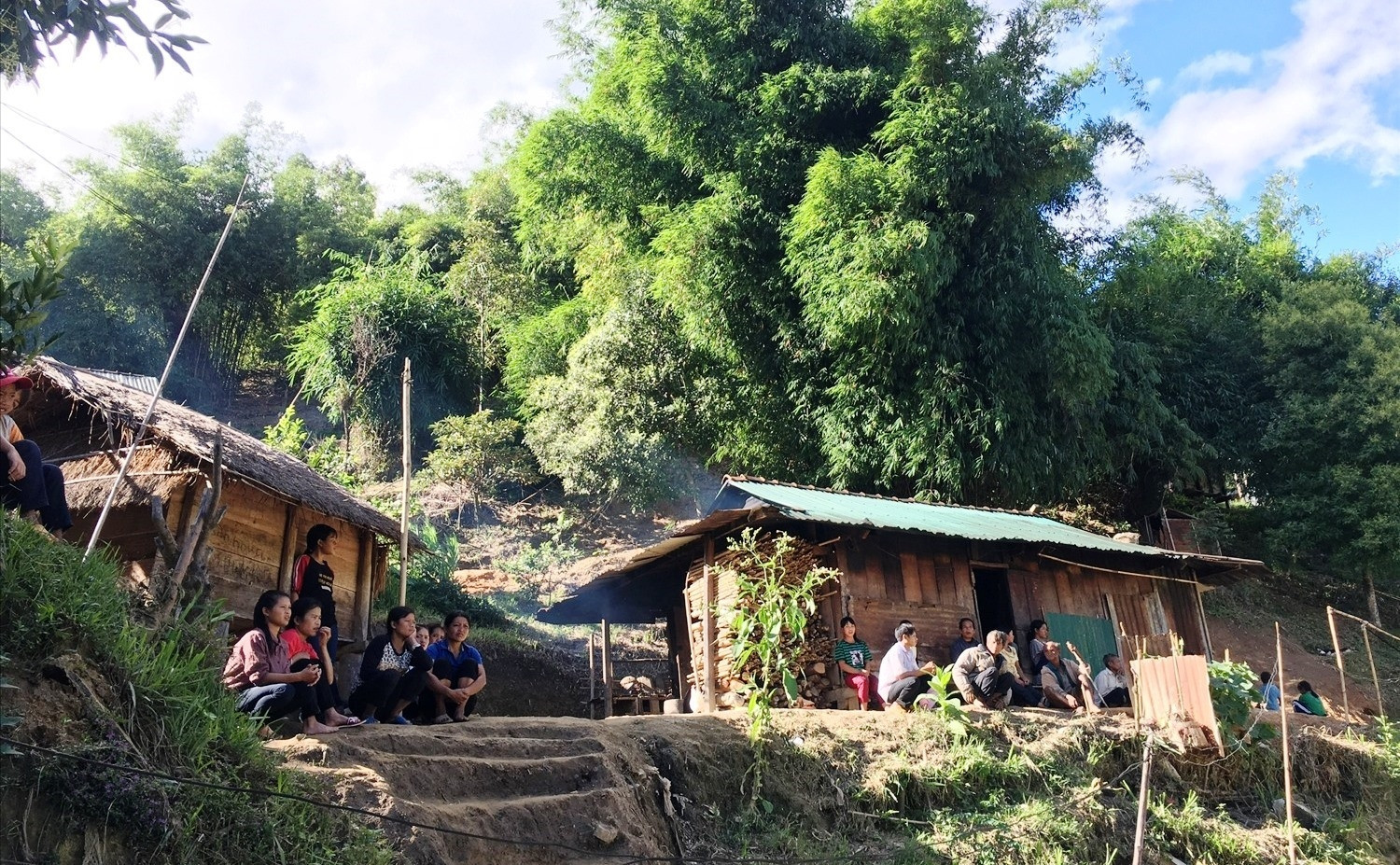
The results of reviews identifying poor and near-poor households are not only the basis for the State to formulate and adjust socio-economic development and social welfare policies, but also an indicator of the effectiveness of poverty reduction programs currently being implemented.
For that reason, the draft Circular guiding the process and methodology for reviewing and recognizing poor and near-poor households under the national multidimensional poverty standards for 2027-2030 has attracted significant attention from ministries, sectors and local authorities.
From 2027, the national multidimensional poverty standard will be determined based on income and deprivation in basic social services, including employment, healthcare, education, housing, clean water and information access. The criteria are specified in Decree No 351/2025/ND-CP dated December 30, 2025.
To assess deprivation in basic social services, the draft Circular issued by the Ministry of Agriculture and Environment has developed a set of indicators in the review form.
However, the Ministry of Construction has proposed clarifying the concept of "basic social service deprivation indicators" based on new multidimensional poverty pillars.
According to the ministry, merely listing indicator names without clearly defining their relationship with specific social services could create difficulties and inconsistencies for local officials and residents when using the review forms.
At a consultation workshop organized by the National Poverty Reduction Office under the Ministry of Agriculture and Environment on April 17, Ho Xuan Khanh, deputy head of Rural Development Agency in Da Nang, suggested that the draft should adopt an approach that better reflects reality.
He argued that multidimensional poverty should be assessed more flexibly and not based on scores alone.
"Identifying poor households should not rely solely on numbers but must be linked to actual living conditions, access to services and the sustainability of livelihoods," Khanh said.
He cited cases where a household met the income threshold but lacked certain basic services and was therefore classified as poor, while another household with lower income but no service deprivation was not considered poor. This scoring method could lead to misidentification and reduce the effectiveness of support policies.
In comments on the draft Circular, the Ministry of Health proposed clarifying provisions related to households that have escaped poverty.
The ministry noted that Decree No. 351/2025/ND-CP on national multidimensional poverty standards for 2026-2030 does not define or regulate "households escaping poverty."
In practice, the concept of households escaping poverty continues to present challenges for local authorities.
At the April 17 workshop, Nguyen Thi Khanh Bang, deputy head of Rural Development in Cao Bang, said the current definition could cause confusion between households that have recently moved out of poor or near-poor status and those that have fully escaped poverty with little risk of falling back into hardship.
"Without clearly distinguishing these groups, local authorities face difficulties in identifying the right beneficiaries for support policies. In reality, there should be a separate category of newly escaped-poverty households that require monitoring and appropriate assistance," Bang said.
The Central Office for New Rural Development Coordination also proposed clarifying whether households previously classified as near-poor but no longer meeting near-poor criteria after review should be considered part of the "escaped poverty" category.
According to the office, households escaping poverty and households escaping near-poverty are fundamentally different groups.
These conceptual gaps need to be addressed. Otherwise, support policies may become less accurate, genuinely vulnerable households could be overlooked, and social welfare resources could be spread too thinly, reducing their effectiveness.
Another issue attracting attention from ministries and local authorities is the identification of poor and near-poor households whose poverty is linked to the loss of working capacity.
This indicator has been used for many years to assess poverty conditions, yet there remains no consistent interpretation.
In comments on the draft Circular, the Department of Agriculture and Environment of Thai Nguyen Province proposed clarifying what constitutes a loss of working capacity for households that have members of working age who are unable to work.
The National Poverty Reduction Office explained that the concept has already been defined in current specialized legislation.
Under existing regulations, a person who loses working capacity is someone whose ability to work has been reduced due to occupational accidents, or occupational diseases or other illnesses, requiring temporary or permanent withdrawal from work.
Sy Hao
.svg)
