 Vietnamnet.vn

 Podcast



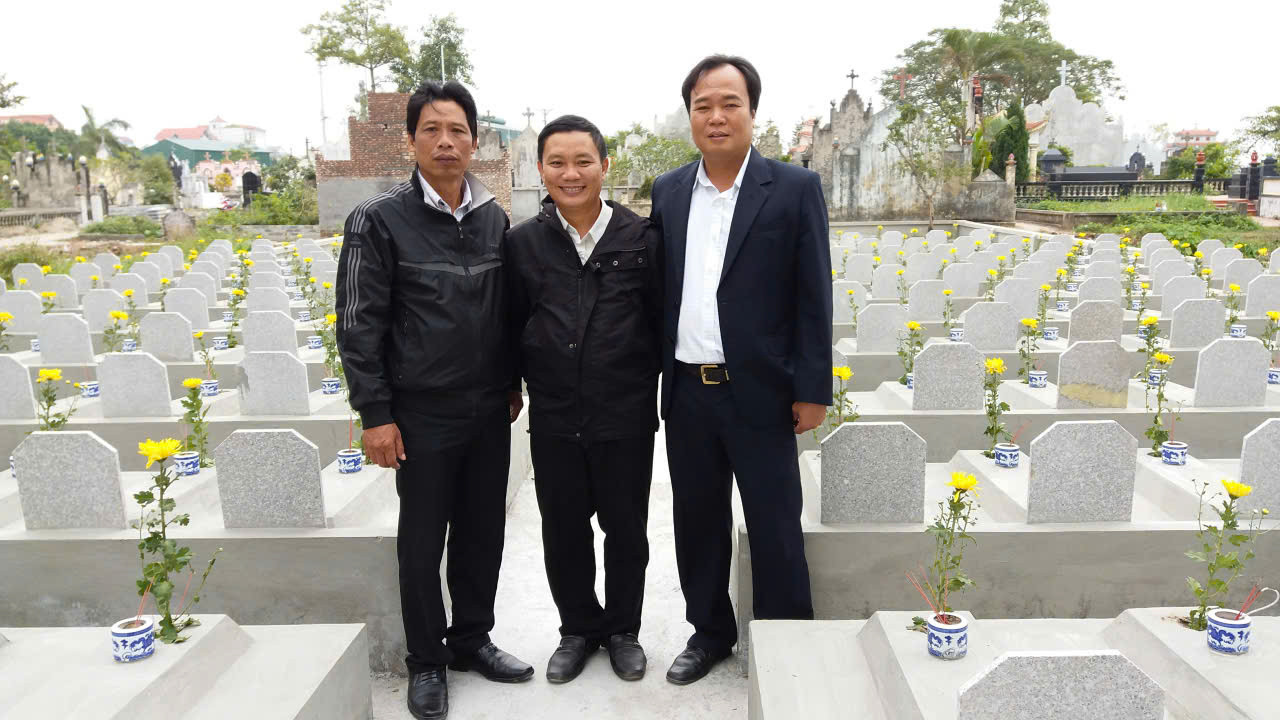
In 1990, Pham Xuan Cu (from Chuon Thuong Village, Chuyen My Commune, Hanoi) left his hometown for HCMC to make a living. Working far away meant his visits home became infrequent.
Each time he returned, however, he felt a deep ache seeing numerous unmarked graves lying silently in cemeteries, along rice field edges, even right next to pathways, exposed to sun and rain, with no one to tend them or offer incense.
The turning point came when his father passed away in May 2015. Out of filial piety, he cared for his father's grave meticulously. But while walking through the local cemetery, he discovered too many nameless, forgotten graves.
"I cared for my father very well. These people were also human beings, someone's grandparents or parents, yet they have no one to burn incense for them. Thinking about that made me ache," Cu shared.
“I took very good care of my father’s grave. Meanwhile, they were also human beings, someone’s grandparents, parents, yet no one burned incense for them. Thinking about that broke my heart,” Cu said.
From that compassion, a decision slowly took shape, one he had never calculated or prepared for before.
As a Catholic, he prayed for permission from above to care for these souls and bring them to a clean, dignified resting place.
A quiet journey with no calculations
By mid-2015, the relocation of unmarked graves officially began. At first, there were only a few dozen graves scattered along ditches and pathways in the village cemetery. The more he worked, the more he realized the number far exceeded his expectations.
“At first I thought there might be 70 or 80 graves at most. But the more we dug and searched, the more we found. Some graves were buried deep underground, covered by trash; in some places, people had dumped waste, built kitchens, or encroached on graves. I couldn’t help but cry,” Cu recalled.
To him, each grave was not just “a mound of earth” but the body and soul of a human being.
During the relocation, he instructed workers to kneel down, light incense, and sincerely ask permission, praying that the departed allow themselves to be moved to a clean place where they could be worshipped for life. “They were lost, not abandoned,” he said.
To secure land for a centralized burial area, Cu repeatedly proposed the idea to local Party committees and authorities. After receiving approval, a plot of about 500 sqm in the Chuon Thuong parish cemetery was reserved for this purpose.
He hired workers to level the ground, pour sand, and build each grave neatly in straight rows. He named the cemetery “Dong Danh thanh dia,” a resting place where nameless individuals could finally lie in peace, be properly cared for, and worshipped with dignity.
According to Cu, to date, more than 400 unmarked graves in his hometown have been relocated. All expenses, from exhumation labor and burial jars to construction and cemetery upgrades, have been fully covered by Cu.
He has accepted no financial support. At one point, he even sold two houses in HCMC, earning about VND2 billion, solely to fund this work.
“Many people say I must be crazy to spend money on this. But to me, it’s a matter of conscience,” he said.
Now in his early 50s, with declining health, Cu still regularly returns home to clean the cemetery and burn incense. He also plans to set aside long-term savings to ensure the continued maintenance and care of Dong Danh Thanh Dia in the future.
For him, this work is not for recognition or gratitude, but simply for peace of mind. The once cold and degraded graves are now gathered, renovated, and meticulously cared for.
Vu Van Ca, the head of Chuon Thuong Village, said that previously the locality did not have the conditions to collect anonymous graves. With passion and kindness, Cu proposed and volunteered to carry out this work. According to Ca, every year, residents and many families also participate in offering incense, considering it a meaningful deed.
"Cu's humane actions deeply spread the principle of 'when drinking water, remember its source,' and are highly appreciated and recognized by the local government and people," Ca shared.
Y Nhuy
.svg)
