 Vietnamnet.vn

 Podcast



Vietnam’s supplement market is currently worth $2.4 billion, growing 15 percent annually with around 23,000 licensed products. Every day, 8–10 new products enter the market, reflecting its attractiveness but also placing consumers in a high-risk zone.
One major issue is information disorder. Surveys show the most common violation comes from exaggerated advertising claims, turning health-support products into “miracle cures.” The explosion of livestreaming and KOLs/KOCs has made control even more difficult.
Authorities continuously detect products failing to meet standards or safety requirements; in many cases, registration documents do not match testing results. These warnings reflect rising risks in a fast-growing but still unstable market.
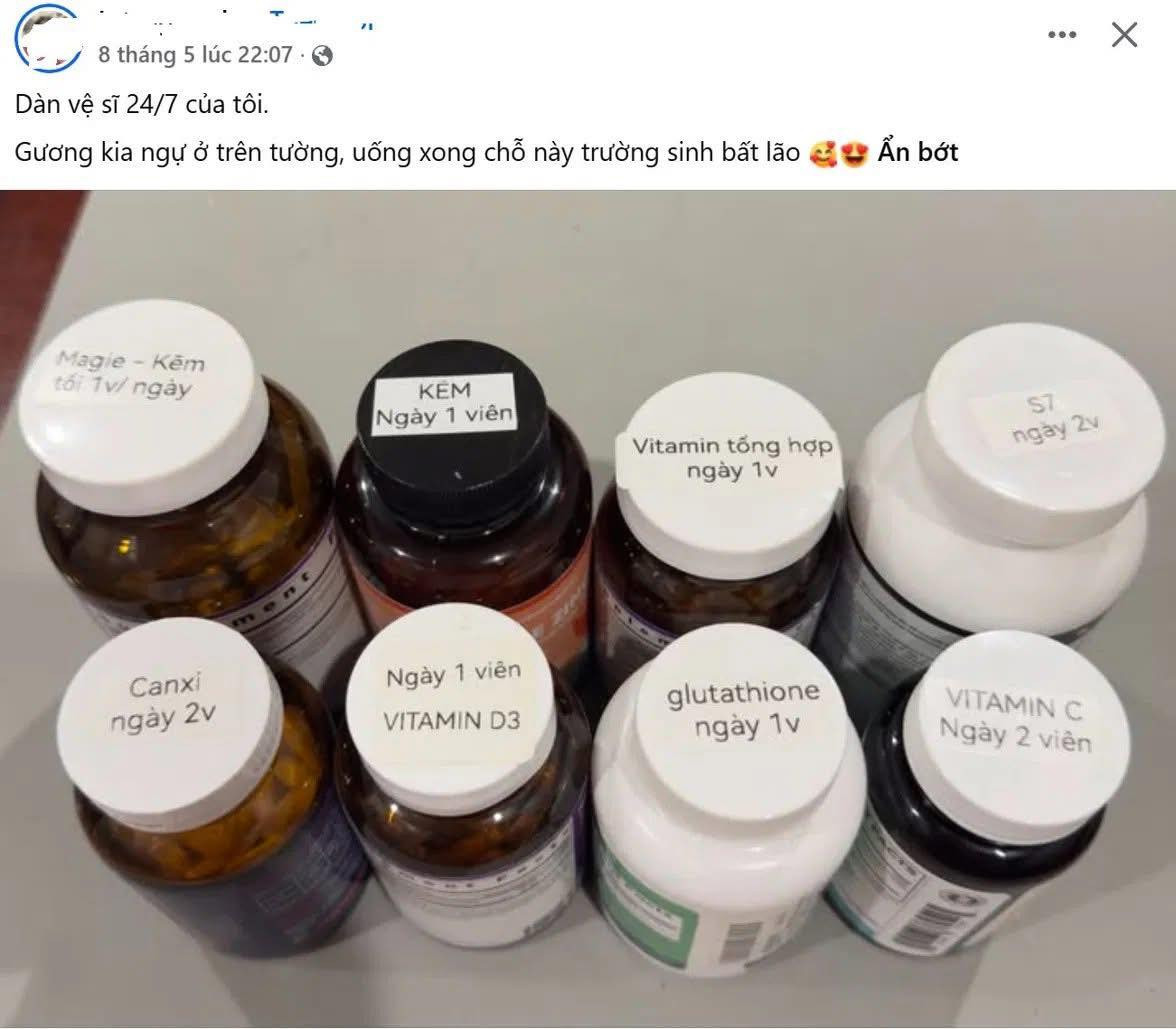
Recently, a Facebook account drew attention after sharing a “health bodyguard squad” consisting of nearly 10 types of supplements and calling them the secret to “eternal youth.” The list included magnesium zinc, standalone zinc, calcium, vitamin D3, multivitamins, vitamin C, glutathione, and many other support products.
Meanwhile, according to Dr. Nguyen Dinh Lien, Head of the Department of Urological and Andrological Surgery at E Hospital, overlapping use of multiple products can lead to nutrient overload. For example, multivitamins already contain zinc, vitamin C, and D3, yet users still add separate pills. This causes the body to absorb multiple sources of micronutrients simultaneously without controlling dosage levels.
In addition, excessive zinc intake can cause nausea, digestive disorders, and interfere with copper absorption. Long-term excess calcium increases the risk of kidney stones and vascular calcification. High doses of vitamin C may lead to oxalate stones.
Many people have even been hospitalized due to overusing “health supplements.” N.P.C. (47, Hanoi) said she took many kinds of supplements every day to fight aging and maintain her figure. In the morning she took multivitamins, at noon liver detox pills, in the afternoon collagen, and at night sleep-support pills along with many other weight-loss and muscle-building products.
The woman was afraid of taking medicine because of side effects but was obsessed with supplements, using whatever others recommend.
Recently, during a health checkup, she was shocked to discover elevated liver enzymes and liver cell damage. Doctors believed the cause was likely related to long-term use of too many supplements. Each product contains dozens of active ingredients, most of which must be metabolized by the liver.
Do not turn yourself into a “walking pillbox”
Associate Prof Dr Le Xuan Hai, a specialist in hematology immunology and integrative medicine currently working at the National Institute of Hematology and Blood Transfusion in Hanoi, regularly receives questions from women about taking “combos” of 5–7 kinds of vitamins, collagen, or hormones to stay youthful.
“I often tell them that taking more is not necessarily better. It can even burden the liver and waste money,” Hai said.
According to him, one of today’s common misconceptions is believing that vitamin deficiency should immediately be treated with pills and that higher doses work better. In fact, vitamins are like the body’s “seasoning”: deficiency affects health, but excess can become a burden.
Hai gave the example that vitamin E is not a “miracle beauty drug” that can be taken year-round. Long-term abuse of high-dose vitamin E may increase bleeding risks and affect cardiovascular health. Excessive vitamin B6 intake can damage nerves and cause numbness in the limbs.
The most common mistakes are taking vitamins at the wrong time, consuming too many pills at once, or combining numerous supplements without understanding their ingredients. This not only reduces absorption efficiency but also raises the risk of side effects.
Many people also believe vitamins can “save” an unhealthy diet. However, supplements cannot replace vegetables, fruits, and balanced nutrition. Overusing vitamins, especially cheap products of unclear origin, also carries risks for the liver, kidneys, and digestive system.
In addition, Hai said many people ignore interactions between vitamins and prescription medications or arbitrarily take high doses for prolonged periods.
Meanwhile, many vitamins can naturally be obtained through daily foods. Vitamin A is abundant in carrots and pumpkins; vitamin C in guava and grapefruit; folate (vitamin B9) in dark green leafy vegetables; and vitamin D can be synthesized through exercise under early morning sunlight.
“Do not turn yourself into a ‘walking pillbox.’ A balanced lifestyle and natural nutrition are the true foundation for long-term health,” Hai emphasized.
Phuong Thuy
.svg)
