 Vietnamnet.vn

 Podcast


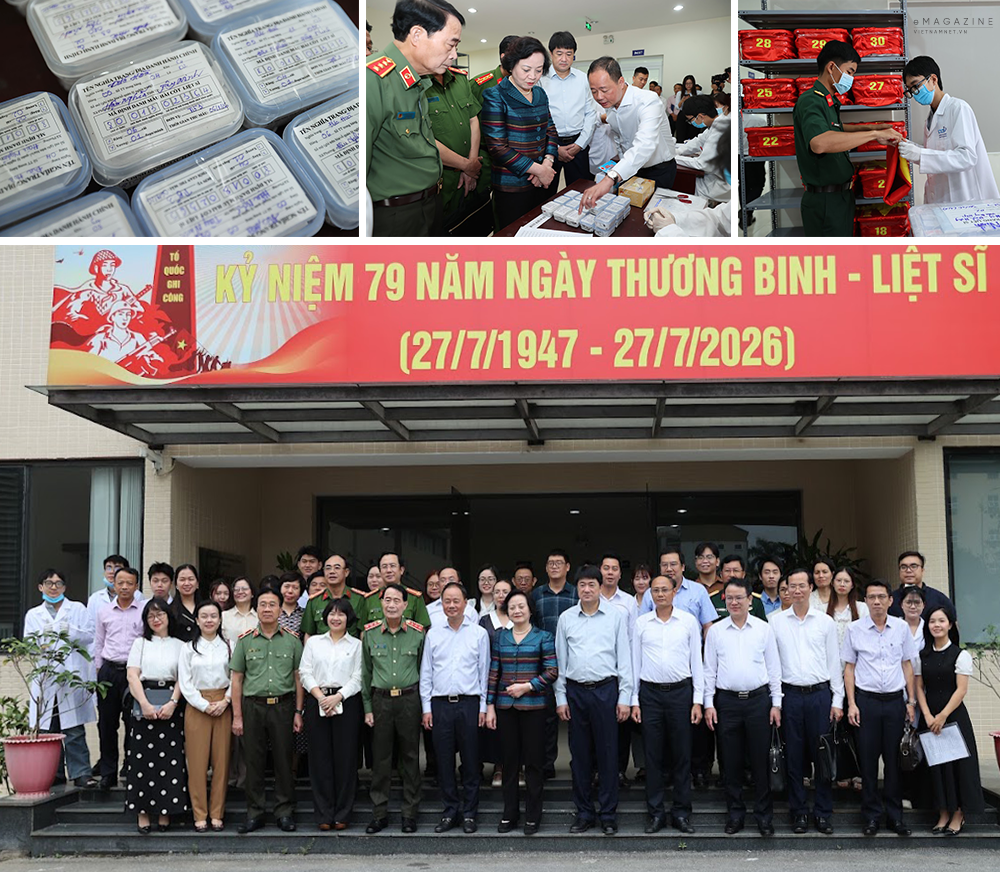
Human capability, international cooperation, and practical applications remain the decisive factors in enabling Vietnamese science to master core technologies and address major national challenges over the coming decades, according to Prof. Tran Hong Thai.
Why mastering core technology depends on human talent
Thai said the 500-Day Campaign demonstrates immense determination across the entire political system. This extends beyond Party and Government leadership to active participation from scientists, agencies, organizations, and enterprises, creating a combined force to execute the task.
Based on international surveys, the technologies Vietnam currently applies, and yields preliminary results from, belong to modern, high-precision technology groups. Many advanced nations are similarly researching and applying these technologies.
Vietnam ranks among the early adopters of this technological direction. Naturally, significant challenges remain ahead. Following successful research and pilot testing, we must expand application scale, train additional human resources, and upgrade laboratory capacity and throughput, Thai said.
The success of a major scientific mission does not come solely from machinery or technology. In your view, Professor, how decisive is the human factor?
A laboratory can function effectively only with a qualified workforce to operate it. Infrastructure, no matter how modern, truly holds value only when mastered by people.
The core soul of any laboratory resides in knowledge and a workforce capable of mastering technology.
Therefore, training human resources is a paramount task. Alongside basic and cutting-edge research, the Academy places great emphasis on training personnel for critical national fields such as nuclear energy, high-speed rail, advanced materials, quantum technology, and satellite technology.
Over the past 50 years, Vietnam has gradually built a cadre of scientific personnel. However, to meet new demands, we must continue leveraging this foundation - treating international cooperation as a bridge to bring advanced knowledge and technology to Vietnam, moving toward mastering core technologies.
Mastering core technology through global knowledge linkages
Science must integrate into daily life. As General Secretary and President To Lam noted, science and technology are not distant concepts; they manifest in crop varieties, oranges, fish, and the overall growth of the agricultural sector.
While the 500-Day Campaign represents a critical task in biological science, biology must also contribute to developing livelihoods, enhancing crop yields, improving production, and protecting the environment. That is the tangible value science and technology should target.
Today, must a Vietnamese scientist return to work full-time domestically to contribute to the nation? How should we build mechanisms to connect global intellectuals?
We have highly suitable policies and directions for attracting and utilizing talent.
Talent can include those being trained or working in Vietnam, as well as Vietnamese professionals working in international environments.
It is not strictly necessary for every scientist to return and work full-time in person to make contributions to the country.
Certain tasks require direct involvement using local research systems and facilities. However, many efforts can be executed via remote consultation, joint research, knowledge sharing, or connecting research groups.
In particular, overseas Vietnamese intellectuals can serve as bridges - bringing new knowledge, emerging technologies, and global scientific developments home to serve Vietnam.
A key strategic direction involves establishing seamless connectivity between the public and private sectors, as well as between domestic intellectuals and overseas Vietnamese talent.
Furthermore, contributions are not limited to Vietnamese nationals alone. We must also connect with capable international experts and scientists eager to participate in the nation's development.
With appropriate cooperation mechanisms, we can mobilize a far broader intellectual pool, unbounded by single agencies, organizations, or national borders.
Looking ahead over the next 20 years, Professor, what must Vietnam do to create favorable conditions for science to tackle emerging national challenges?
I believe 20 years provides a sufficient window to execute cycles of research, experimentation, technology development, and practical deployment.
First and foremost, we must continue advancing basic research. As General Secretary and President To Lam emphasized, whoever masters basic research holds the key to mastering the future of the nation and the world.
In parallel, we must direct science and technology toward practical applications - identifying emerging trends and global core technologies of the future to formulate suitable socio-economic development plans.
We have many Vietnamese professionals working abroad who possess cutting-edge knowledge and hold leading positions in various scientific fields. This represents a vital resource.
The key lies in overarching coordination - integrating these resources into a continuous value chain, extending from basic and applied research to pilot production and commercial rollout.
We must not stop at research papers alone; our ultimate goal must be creating genuine Vietnamese scientific and technological products that drive national development.
Thai An - Van Nga - Nguyen Duc

