 Vietnamnet.vn

 Podcast



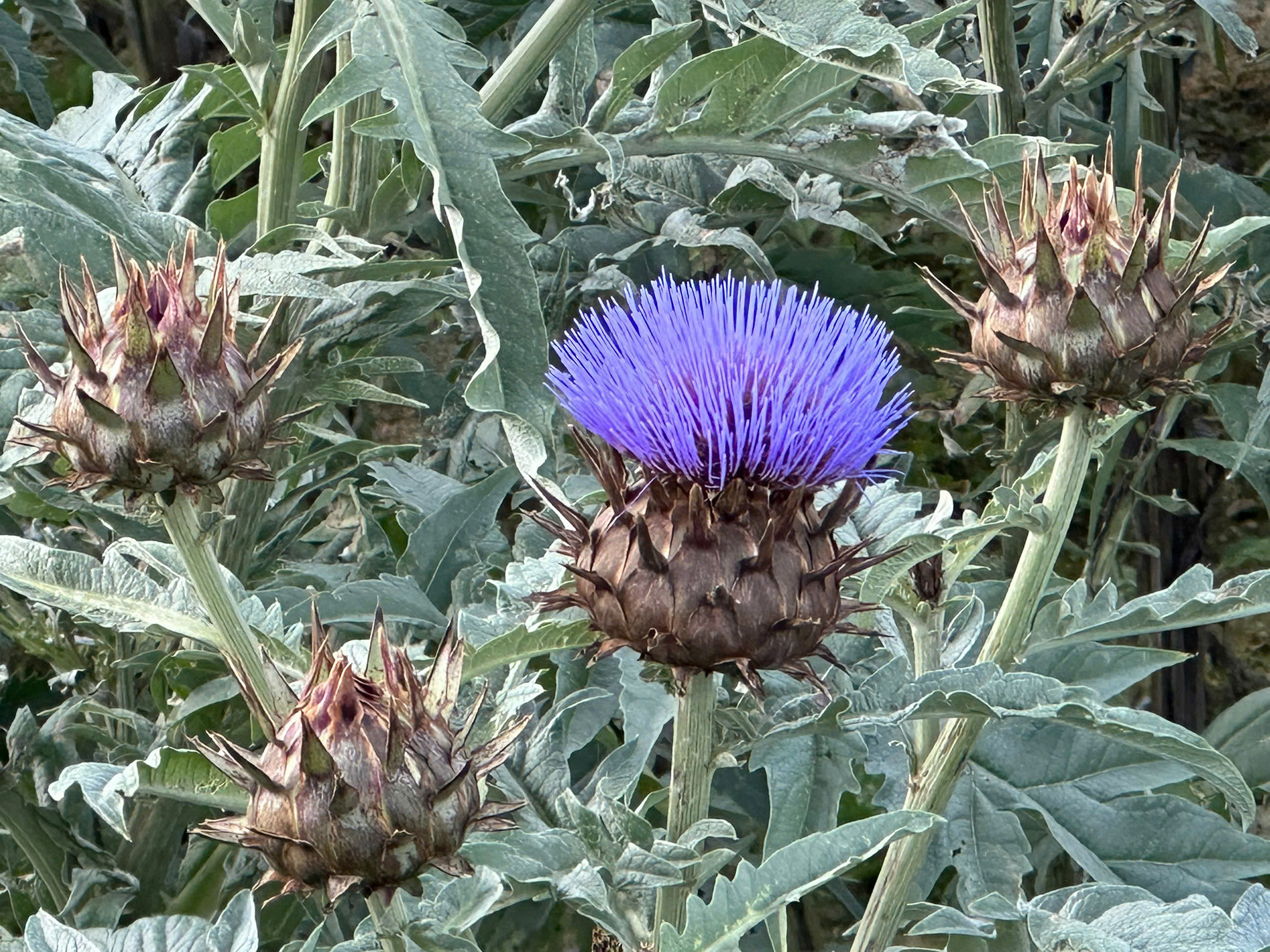
Actiso flowers bloom across Sa Pa.
Each year when Actiso flowers bloom across Sa Pa, shades of purple spread softly over the mountainsides like mist.
For many Mong families living there, that purple has become the color of stability, new homes and children finally able to pursue an education - even overseas.
Few could have imagined that a medicinal plant once viewed merely as an experimental crop would go on to transform the lives of so many highland households.
Before Actiso arrived, most local families survived on corn, rice, vegetables and small-scale livestock farming.
The steep terrain and harsh climate made life uncertain.
A good harvest often meant falling prices, while crop failures could leave families struggling to find enough food.
Even households working relentlessly year-round barely earned enough to cover daily expenses.
For many, building a solid home or sending children to higher education remained an impossible dream.
Then Actiso took root in Sa Pa.
From the first crop rows to a 1.6 billion VND lim wood home
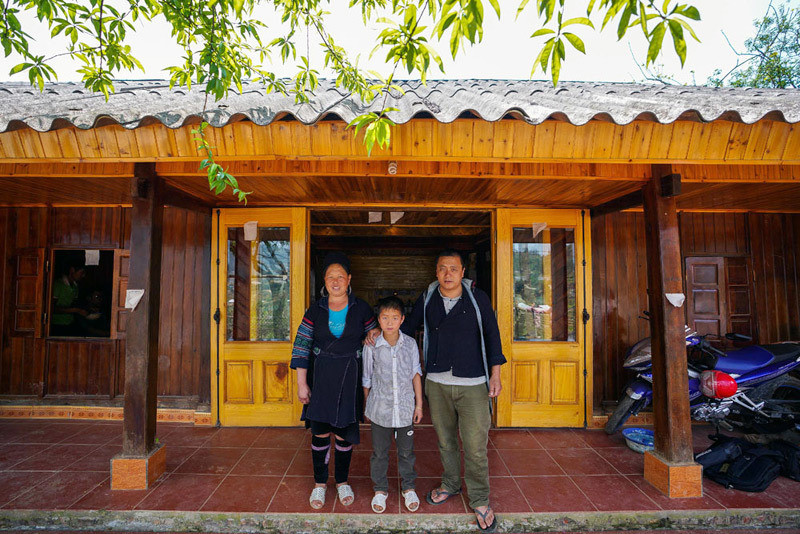
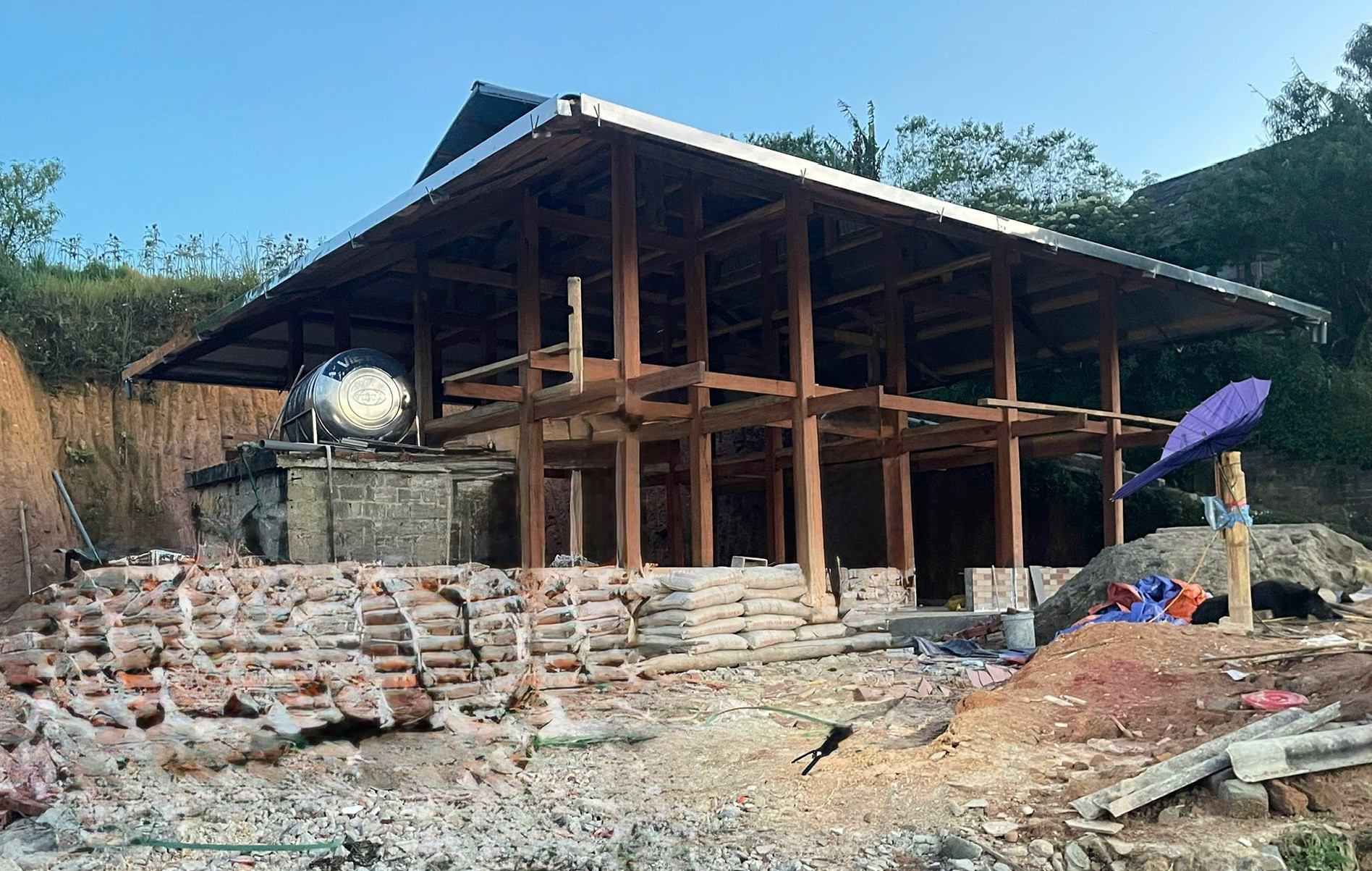
The pinewood house built seven years ago by Thao A Tu’s family stands beside the new lim wood home now under construction, estimated to cost 1.6 billion VND.
In Ham Rong 3 residential group in Sa Pa Ward, Lao Cai Province, Thao A Tu was among the earliest farmers to commit to growing Actiso.
Before that, he earned a living through temporary labor jobs far from home while his wife and children stayed behind.
Income was unstable and life was difficult.
In 2011, while many villagers remained hesitant, he joined a medicinal herb cultivation program based on the “four-party linkage” model involving the state, scientists, businesses and farmers.
At the time, switching to an unfamiliar crop was not an easy decision for highland farmers.
Corn and rice generated low income but were familiar to cultivate.
Actiso, by contrast, required technical precision, proper harvesting procedures and careful maintenance.
During the first seasons, Tu and his family learned through trial and error.
Everything - from selecting seedlings and preparing the soil to fertilizing, tending the plants and harvesting leaves - had to follow detailed guidance.
Gradually, he realized that Actiso suited Sa Pa’s climate and delivered far more stable income than traditional crops.
About seven years ago, after years of earnings from Actiso and off-season vegetables, the family built a spacious pinewood house worth 300 million VND, fully equipped with a television, motorbike, refrigerator and even a tiller for farming.
Income from Actiso alone brought the family around 100-120 million VND annually after expenses.
More recently, Tu decided to replace the old house with a much larger two-story traditional stilt house made from lim wood, with estimated construction costs of around 1.6 billion VND.
The family has four children - three daughters and one son - all of whom received proper schooling.
Two daughters are now married, another daughter is studying foreign languages and the youngest son is in 11th grade.
For Tu, the greatest achievement brought by medicinal herb farming is not the larger house or improved income, but the educational opportunities now available to his children.
Today, alongside Actiso, his garden also contains peach blossoms, apricot trees and ornamental plants.
But Actiso remains the foundation of the family’s stability and future.
A father who could not study determined his children would
Ma A Ky, from Ham Rong 2 residential group, was born in 1981.
He only completed literacy classes, while his wife never attended school and still mainly communicates in the Mong language.
The hardships of their generation turned education into an unfinished dream.
Perhaps because of that, the couple made one promise to themselves: their children’s lives would be different.
In 2014, after seeing neighbors begin cultivating Actiso, Ky volunteered to join the growing area program.
On roughly half a hectare of land, the family planted Actiso alongside off-season vegetables.
Season after season, the medicinal plant gradually became the household’s economic backbone.
Under current prices, one hectare of Actiso can generate around 300 million VND, with most income coming from the leaves, along with the stems and flowers.
Steady earnings allowed the family to build a larger home and purchase household necessities.
But their biggest investment was their children’s future.
The couple has three children.
One daughter is married.
One son recently graduated from a tourism college.
Another child is currently studying in Japan.
Every month, the parents send their child 30 million VND to cover living expenses abroad.
Asked why they chose to support overseas study, Ky’s wife, Thao Thi Sung, answered through translation from her son into Vietnamese: “Our child wanted to study and was capable of studying, so we let him go.”
The answer sounded simple.
But behind that overseas education journey were countless Actiso harvests, long days of labor in the fields and years of careful saving to ensure their children would not inherit the same disadvantages as their parents.
Actiso did not simply lift the family out of poverty.
It helped an entire generation move beyond the limits of the village.
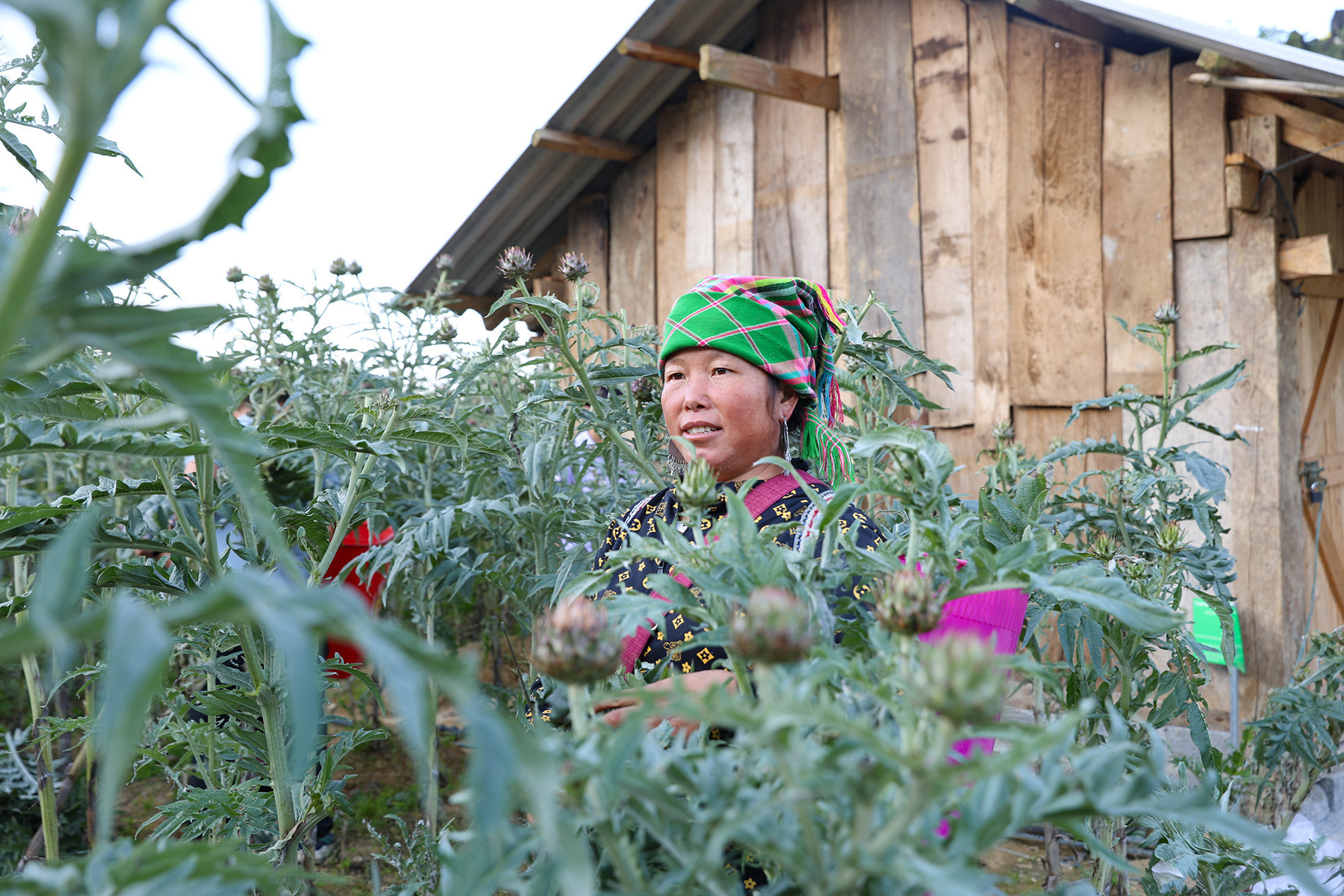
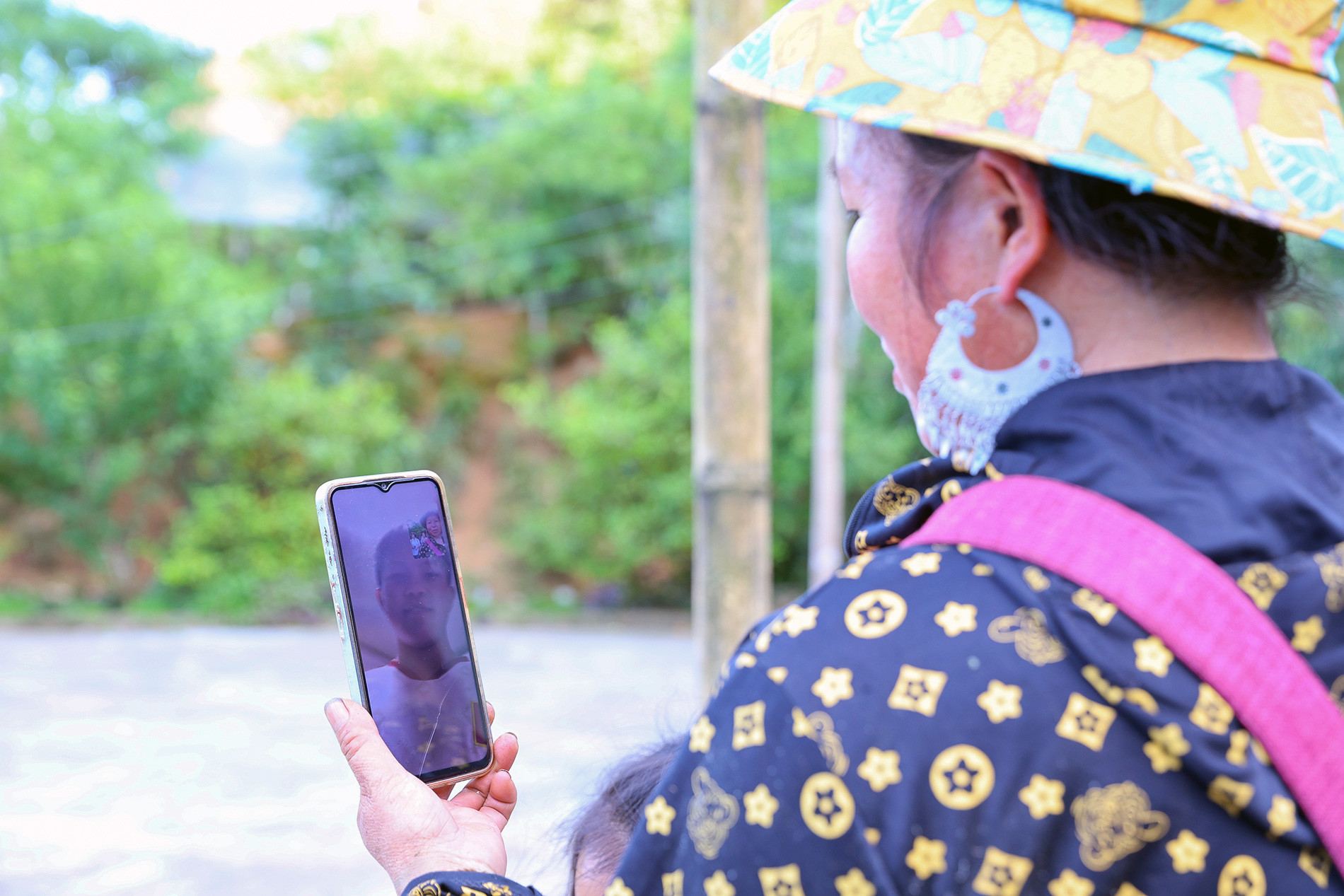
After working in the Actiso fields, Thao Thi Sung’s greatest joy is calling her son studying in Japan.
From laborer to employer
Also in Ham Rong 3, Ma A Chu began growing Actiso in 2011.
Besides farming, he has also served in local grassroots administration, previously working in village healthcare and as a local party cell secretary.
What stands out about Chu is his disciplined approach to farming.
Growing medicinal herbs differs greatly from cultivating ordinary vegetables.
To enter stable production chains, medicinal crops must meet strict cleanliness and traceability standards.
Farmers cannot rely on old habits or use fertilizers and pesticides carelessly.
Chu consistently followed technical procedures, learned new cultivation methods and invested in automated irrigation systems to reduce labor and improve plant care.
On around 0.6 hectares, his family grows Actiso alongside vegetables, orchids and livestock.
Still, Actiso remains the core crop.
He also guides neighboring households on proper cultivation techniques and quality standards.
Years ago, Chu worked as a hired laborer and carefully saved every small amount he earned to send home.
Now, during each Actiso harvest season, he hires up to 10 workers a day.
In 2025 alone, his family earned more than 150 million VND from Actiso farming.
That same year, they built a spacious new home.
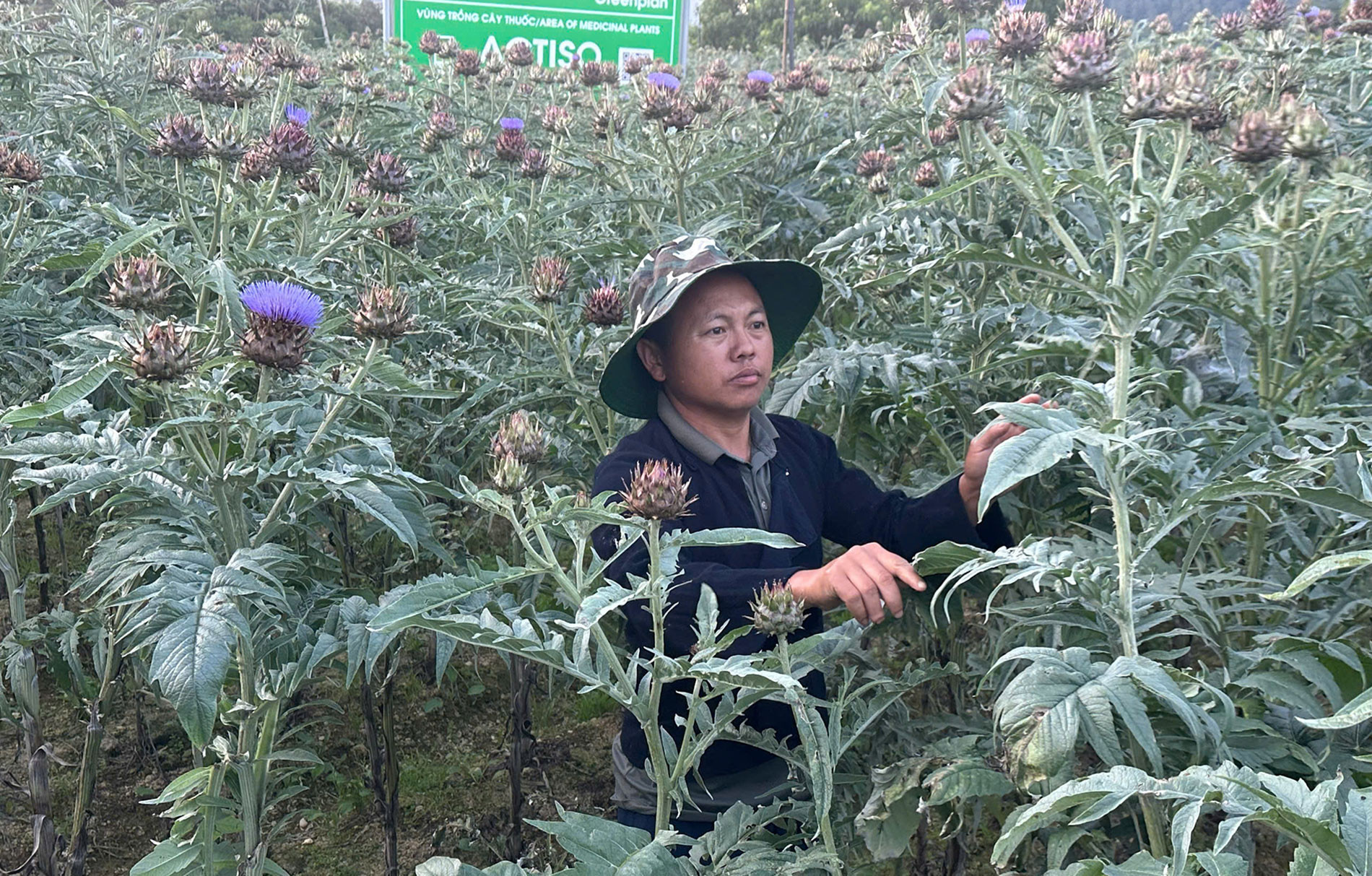
Ma A Chu has been cultivating Actiso since 2011.
But like many other Mong families transformed by medicinal herbs, Chu says his greatest happiness comes from his children.
His daughter graduated from Thai Nguyen University of Education and now has stable employment.
His son is currently attending university.
From a once-struggling farming household in the highlands, the family now has children pursuing higher education and professional careers.
Young people bring Actiso to social media
While older families spent years building livelihoods through Actiso, Hang Thi Co, 28, from Ham Rong 2 represents a younger generation approaching the medicinal herb industry differently.
After joining the Actiso cultivation network in 2021, she and her husband began using TikTok and Facebook to introduce Actiso farming, purple flower fields, highland life and products linked to medicinal herbs.
Their videos may appear simple at first glance - scenes of working in the fields, blooming flowers or livestreams from the plantations.
But behind them lies a new business mindset.
They are bringing the story of the growing region directly to consumers, turning medicinal herbs not only into industrial raw materials but also into part of local culture, tourism and experience-based products.
For young people like Co, Actiso is not merely something to harvest and sell.
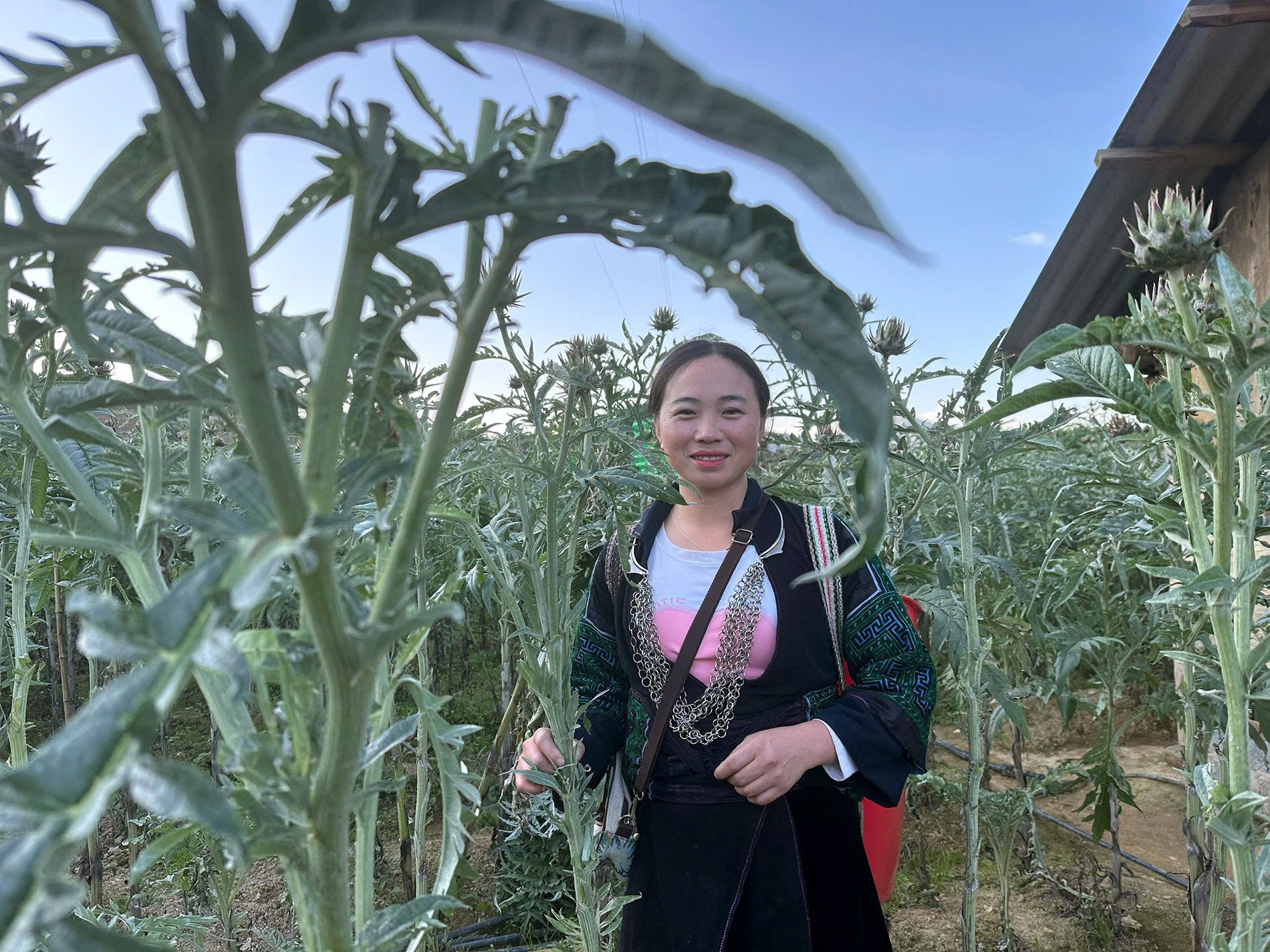
Hang Thi Co uses TikTok and Facebook to introduce Actiso cultivation and life in Sa Pa.
It is also a story to tell - about Sa Pa, the Mong people and how one medicinal plant changed life in the highlands.
Social media has allowed younger generations to move beyond the bottom of the production chain and actively participate in branding, marketing and promoting their own homeland.
Building an entire medicinal herb economy
The transformation of Mong households in Sa Pa did not happen in isolation.
It grew alongside the development of a broader medicinal herb supply chain in Lao Cai Province.
One of the key strengths of the model is that farmers do not grow crops independently or struggle to find buyers on their own.
Instead, they participate in a connected system with access to seedlings, technical guidance, quality standards and guaranteed product purchasing.
According to Cao Thi Hoa Binh, head of Lao Cai’s Department of Cultivation, Plant Protection and Livestock-Fisheries, the province issued Resolution No. 48 on February 3, 2026, focusing on strategic medicinal herb development for the 2026-2030 period with a vision toward 2050.
Lao Cai now views medicinal herbs not simply as agricultural crops, but as an economic sector capable of generating livelihoods, developing raw material regions, expanding deep processing industries and building sustainable value chains.
For Actiso, value extends far beyond fresh leaves.
The plant can support pharmaceuticals, health supplements, teas, beverages, nutritional products, tourism experiences and agricultural tourism activities.
Diversifying products allows Actiso farming to avoid dependence on a single market while increasing economic value on the same area of land.
At a regional scale, the crop also creates broader economic connections.
Farmers cultivate the plants.
Businesses support them with seedlings, farming techniques, quality standards and guaranteed purchasing agreements.
Tourism benefits from flower seasons, landscapes and harvesting experiences.
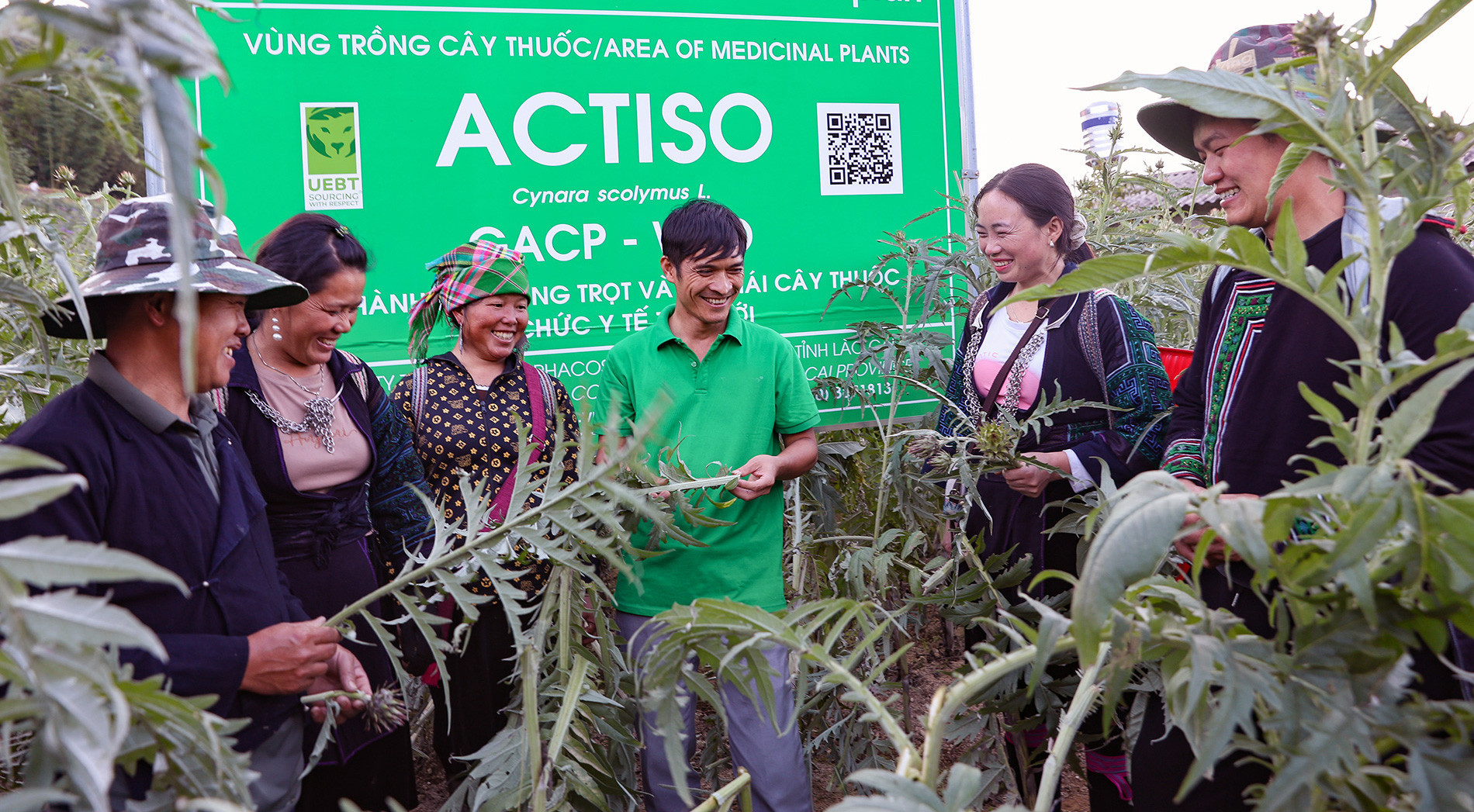
For the Mong people in Sa Pa, Actiso has brought not only livelihoods but also renewed confidence in the future.
Trade and media help products reach wider markets.
As these links operate together, the economic value spreads far beyond the fields themselves.
Most importantly, local people remain at the center of the process.
They are the owners of the growing regions, the keepers of cultivation techniques and the guardians of the cultural stories tied to medicinal herbs.
With stable incomes, families can remain in their hometowns, build homes, educate their children and participate more deeply in the market economy.
For the Mong people of Sa Pa, Actiso has become far more than a medicinal plant.
It has become proof that with support, cooperation and long-term planning, highland farmers can completely transform their future on the land they have always called home.
As evening settles over the hills of Sa Pa, new homes now stand among peach orchards, vegetable gardens and medicinal herb fields.
Some were built from years of savings.
Some carry dreams of children studying far away.
And somewhere among the purple Actiso flowers, young people livestream their stories to the world.
Thai An
.svg)
