 Vietnamnet.vn

 Podcast



Vietnam stands at a historic juncture on its path toward becoming a modern industrialized nation by 2045 and achieving Net Zero emissions by 2050. In that journey, mega infrastructure projects - from airports and seaports to high-speed railways - are expected to play a pivotal role in expanding development space and enhancing national competitiveness.
A tripod of strategic airports
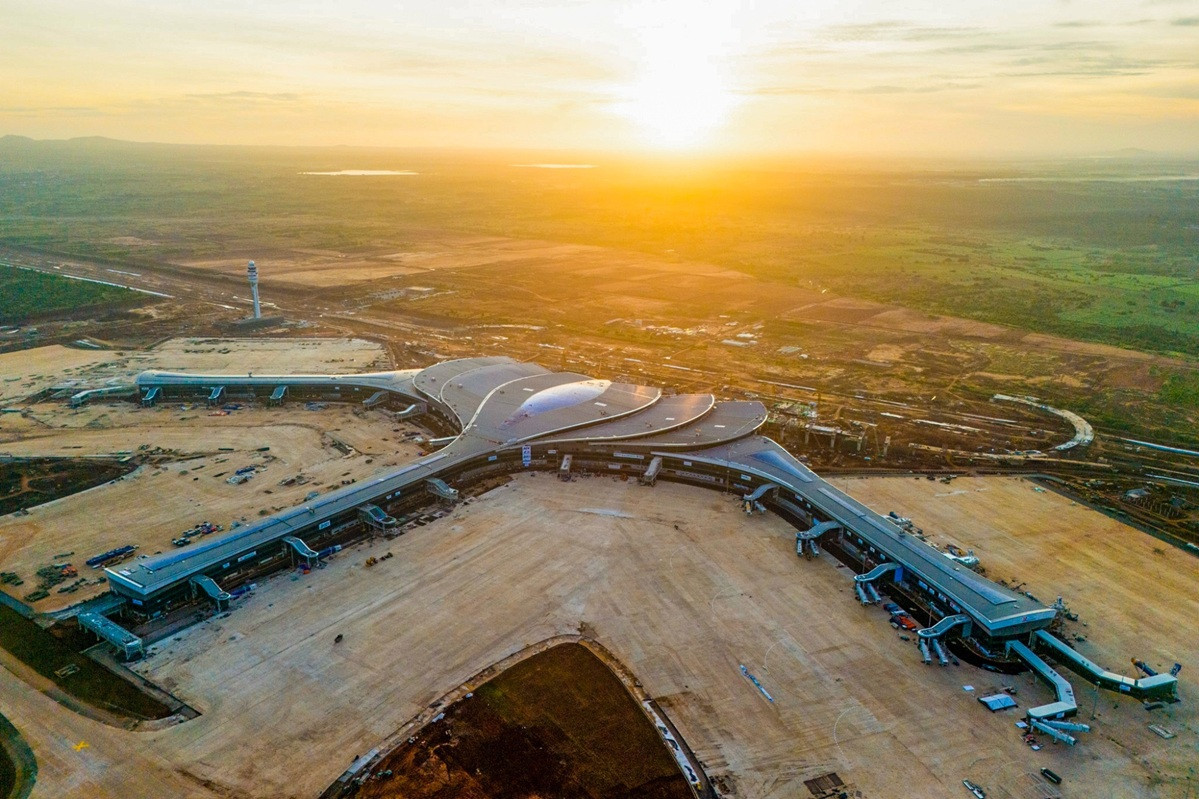
Long Thanh, Gia Binh and Phu Quoc airports are not merely transport facilities. Together, they form three pillars shaping a new economic structure powered by digital transformation, artificial intelligence and green growth commitments.
On December 19, 2025, Long Thanh International Airport welcomed its first three successful landings amid the simultaneous groundbreaking and inauguration of 234 projects nationwide. As a key national project, Long Thanh is envisioned as an international transit hub. Phase 1 is scheduled for operation from June 2026, featuring a next-generation smart airport model integrating digital technologies, AI, Airport Collaborative Decision Making and end-to-end biometric systems for passengers.
Once completed, Long Thanh is expected to become the “heart” of an airport economic ecosystem, including an international-standard aircraft maintenance center and an automated logistics complex directly connected to aircraft aprons. According to the Airports Council International, the ecosystem surrounding Long Thanh could contribute 3-5 percent of GDP and generate 40,000 to 50,000 jobs in its initial phase. Combined with the Cai Mep - Thi Vai port cluster, it is set to create an optimized Air-Sea transport model, significantly reducing logistics costs and strengthening supply chain competitiveness. The airport is also being developed under green airport standards to meet CO2 emission reduction requirements.
Gia Binh International Airport in Bac Ninh is emerging as a breakthrough in dual-use planning, combining economic and defense functions. Planned to reach 4F classification with a capacity of 50 million passengers per year and four runways, Gia Binh is positioned as a strategic link for national security while supporting the development of a large industrial and logistics hub in Bac Ninh.
Construction Minister Tran Hong Minh noted that the planning and development of Gia Binh Airport would help restructure the capital region’s aviation network under a dual-airport cluster model, expanding and enhancing overall aviation capacity through connections with neighboring airports.
Phu Quoc International Airport is charting a new path through a transfer and direct private investment model, with Sun Group participating in the upgrade, expansion and terminal operation. The expansion will raise capacity to 20 million passengers per year, add a second runway and build a 354,000 square meter Terminal T2. Beyond meeting tourism growth demand, the project aims to dramatically enhance the airport’s ability to accommodate long-haul international flights.
When completed, the expanded Phu Quoc Airport is expected to shorten travel time to the “Pearl Island,” attract more airlines, increase flight frequencies and establish direct connections with Europe, Northeast Asia and the Middle East. It is regarded as a growth engine to strengthen Vietnam’s global tourism competitiveness.
The synergy of these three growth poles creates a solid tripod: Long Thanh connects Vietnam to the world, Gia Binh supports high-tech industrial flows and Phu Quoc elevates premium international tourism. All operate on three pillars - green institutions, green technology and green human resources - as emphasized by General Secretary To Lam at the P4G Global Summit in Vietnam.
High-speed rail opens new development space
Two high-speed railway projects - the North-South line and the Lao Cai - Hanoi - Hai Phong route - are expected to transform the national transport network, expand development space, enhance logistics competitiveness and drive sustainable growth.
The North-South high-speed railway, stretching 1,541 kilometers with a design speed of 350 kilometers per hour, is the largest infrastructure project ever undertaken in Vietnam, with a total investment exceeding VND1.7 quadrillion, equivalent to US$67.3 billion. The line will include 23 passenger stations and five freight terminals, serving as the backbone linking the country’s three regions.
In parallel, the 419-kilometer Hai Phong - Hanoi - Lao Cai railway, with an estimated investment of VND203 trillion (US$8.36 billion), will function as a strategic freight corridor in the north, directly connecting Hai Phong’s seaport system to Lao Cai border gate and onward to China and Europe.
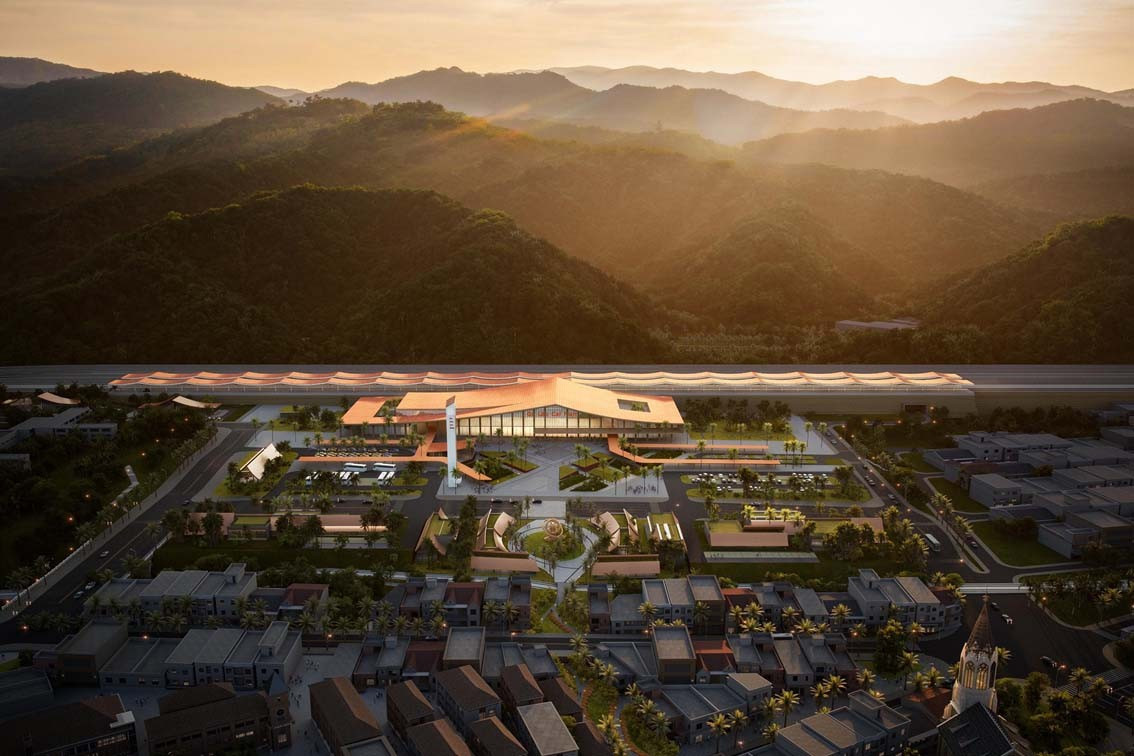
Perspective of Lao Cai - Hanoi - Hai Phong railway station.
Tran Thien Canh, Director of the Vietnam Railway Authority under the Ministry of Construction, said the North-South high-speed line would play a central role along the economic corridor, shorten travel time, reduce pressure on road and air transport and promote trade while lowering logistics costs for businesses. Stations integrated with urban, industrial and service zones are expected to accelerate urbanization, labor mobility, tourism development and population redistribution, forming a new development axis running the length of the country. Meanwhile, the Lao Cai - Hanoi - Hai Phong route will strengthen connectivity with China and extend further to Europe along the Kunming - Lao Cai - Hanoi - Hai Phong economic corridor.
Completion of these two strategic railways is projected to enhance transport capacity, reduce logistics costs, improve export competitiveness and reinforce Vietnam’s position in regional supply chains. Simultaneous implementation also offers an opportunity to build a modern railway industry and supporting industrial ecosystem domestically, promote technology transfer and stimulate mechanical engineering and advanced materials production.
The potential of an international transshipment mega port
Within the national seaport development strategy, while projects such as Tran De or Hon Khoai remain long-term visions, the Can Gio International Transshipment Port is considered the most feasible thanks to strong investor capacity and a clearly defined development model.
The Prime Minister has approved the investment policy for the project, with total capital exceeding VND113.531 trillion, equivalent to US$4.8 billion. The project is proposed by a consortium comprising Saigon Port Joint Stock Company, a member of Vietnam Maritime Corporation (VIMC), and Terminal Investment Limited Holding S.A, part of MSC, the world’s largest shipping line.
The project will cover approximately 571 hectares, with a main wharf extending over 7 kilometers. It will be capable of handling the largest container vessels currently in operation, up to 250,000 DWT or 24,000 TEU, with an annual capacity of 10 to 15 million TEU. Divided into seven phases, the first stage is expected to begin operations in 2027, with full completion by 2045. The “super port” is projected to contribute VND34 to 40 trillion annually to the state budget, create tens of thousands of jobs and establish an ecosystem of infrastructure, logistics, finance and banking services, reducing transport costs and enhancing export competitiveness.
According to Nguyen Canh Tinh, Chairman of VIMC, once completed, the Ho Chi Minh City region will form a “port triangle” comprising Cai Mep - Thi Vai, Cat Lai and, in the future, Can Gio. When operational, total container throughput capacity of the region is expected to reach 32.7 million TEU per year, approaching Singapore’s current output as the world’s second busiest port. In the long term, as Singapore faces land and labor constraints, Vietnam has the opportunity to emerge as a logistics gateway for Southeast Asia.
On December 19, 2025, in celebration of the 14th National Party Congress, 234 projects nationwide were simultaneously launched, inaugurated or technically opened to traffic, with a combined investment of VND3.4 quadrillion.
Alongside airport and railway projects, numerous expressways were opened to traffic, including Huu Nghi - Chi Lang (60 km), Quang Ngai - Hoai Nhon (88 km) and Can Tho - Hau Giang (over 37 km), contributing to the goal of completing more than 3,000 kilometers of expressways.
Major urban and industrial projects are also underway, such as the Olympic Sports Urban Area in Thuong Phuc commune, Hanoi, with a preliminary investment of approximately VND925.651 trillion, the Red River Landscape Boulevard with an estimated VND855 trillion investment and the Hoa Phat Dung Quat rail and special steel manufacturing plant with total investment of VND10 trillion, expected to supply high-speed rail tracks from 2027.
Vu Diep - Nguyen Phuoc Thang (Hoa Binh University)
.svg)
