 Vietnamnet.vn

 Podcast


A family recipe passed down through generations
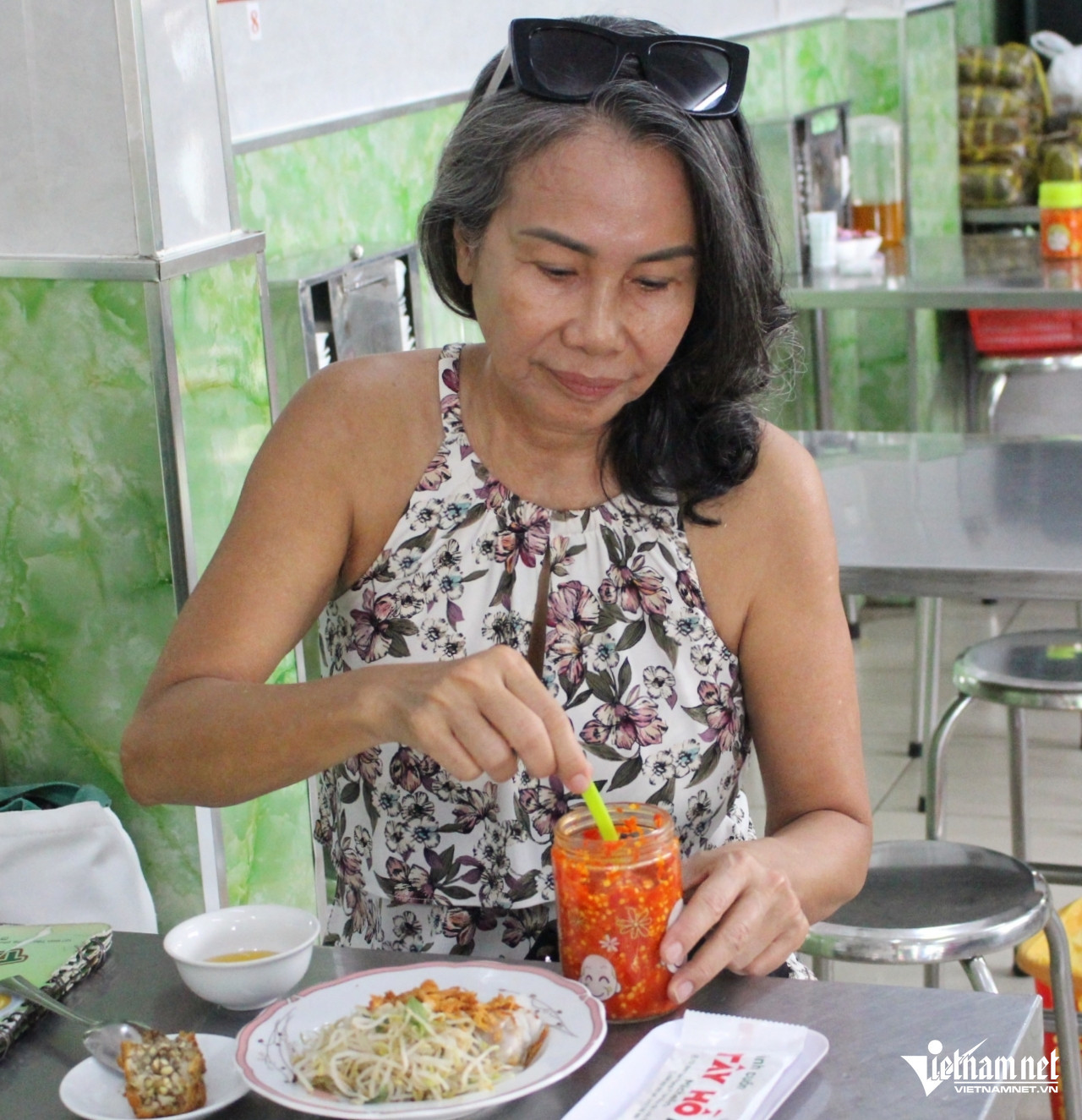
On a weekend morning, 66-year-old Lan traveled from her home in the former District 7 to Tay Ho banh cuon restaurant in Tan Dinh Ward, Ho Chi Minh City, to enjoy a familiar dish.
Lan has been a regular customer since the 1980s.
For her, the restaurant holds memories of her younger years. Although she no longer lives nearby, she still returns whenever she has the opportunity.
Seated not far from Lan were Tuyen, born in 1984, and her Singaporean friend Carmen, born in 1985.
Tuyen has also known the restaurant for many years.
"This banh cuon restaurant has been famous for a long time. The rice rolls are delicious, and the dipping sauce is just right," she said. "Carmen also loves Vietnamese banh cuon and banh gio (steamed rice dumplings). Whenever I have the chance, I bring her here for banh cuon."
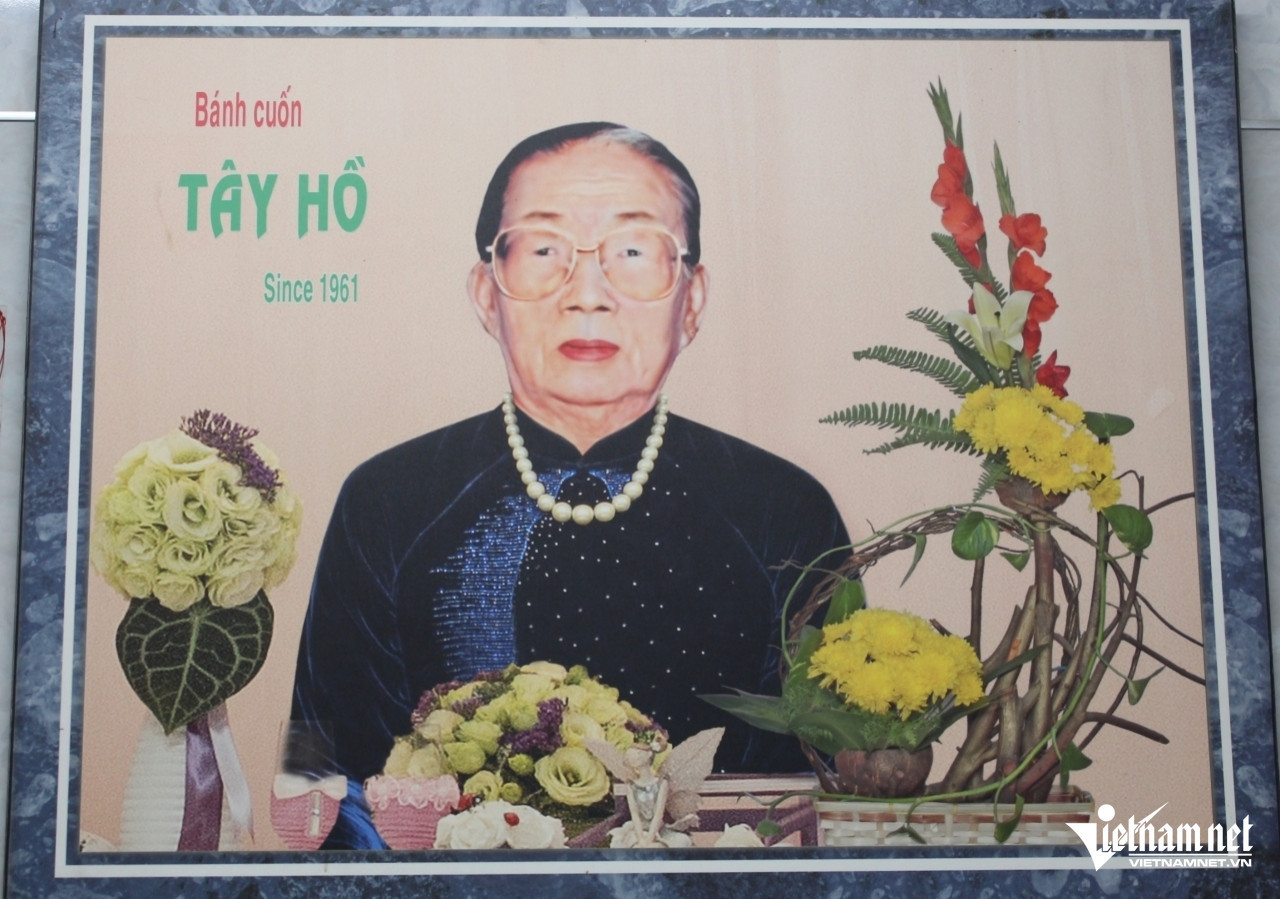
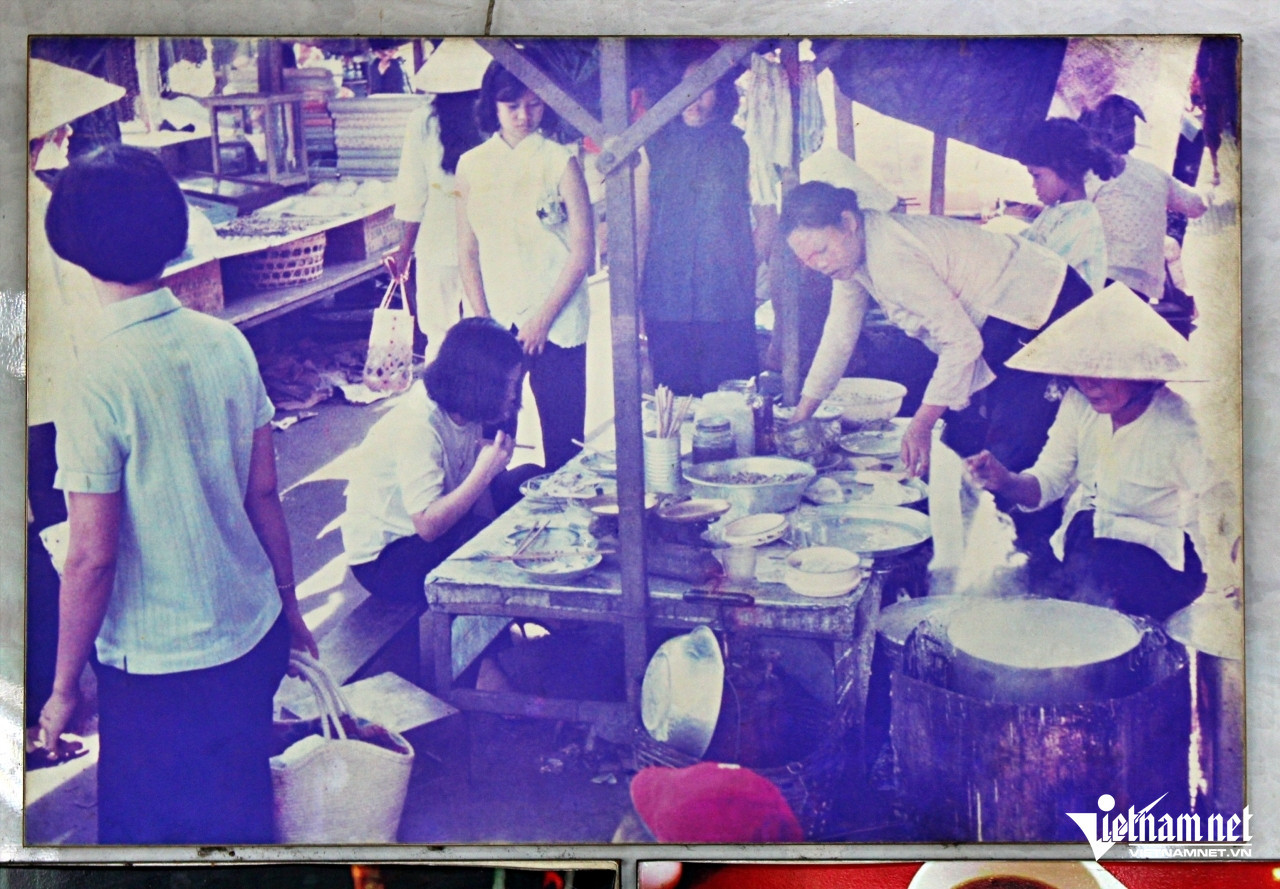
Restaurant owner Tran Thi Thuy Loan, born in 1974, said the business was established in 1961 by her late mother-in-law, Tran Thi Ca.
Ca initially operated a small roadside stall beside a temple dedicated to Vietnamese patriot and reformer Phan Chau Trinh on Gallimard Street, now Nguyen Huy Tu Street in Da Kao Ward, formerly part of District 1.
"Phan Chau Trinh was also known by the pen name Tay Ho, so people often called him Phan Tay Ho," Loan explained. "Customers began referring to my mother-in-law's stall as Tay Ho banh cuon to make it easier to remember and find. She liked the name and decided to keep it."
When the restaurant later moved to a new location, it retained the original name.
As Ca grew older, Loan and other family members gradually took over the business. For the past three years, Loan has been primarily responsible for running it.
Throughout the decades, she has preserved the traditional banh cuon recipe handed down by her mother-in-law.
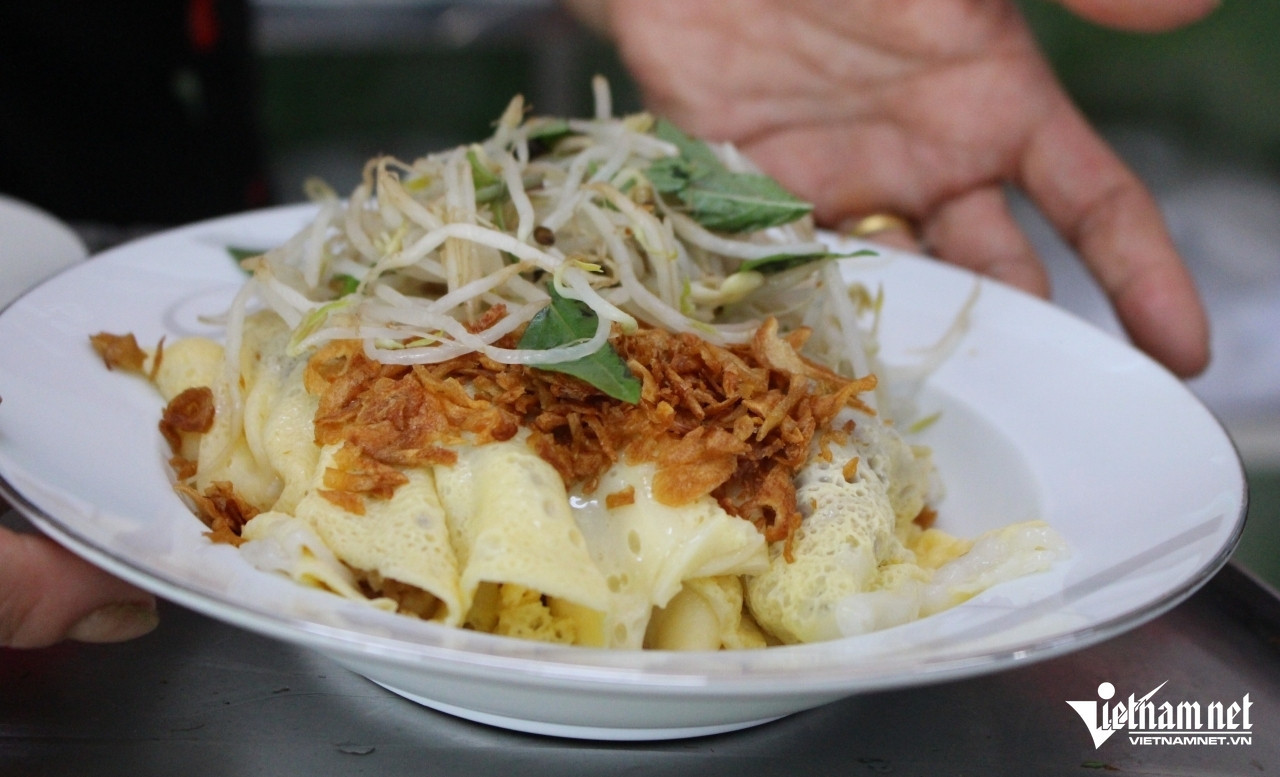
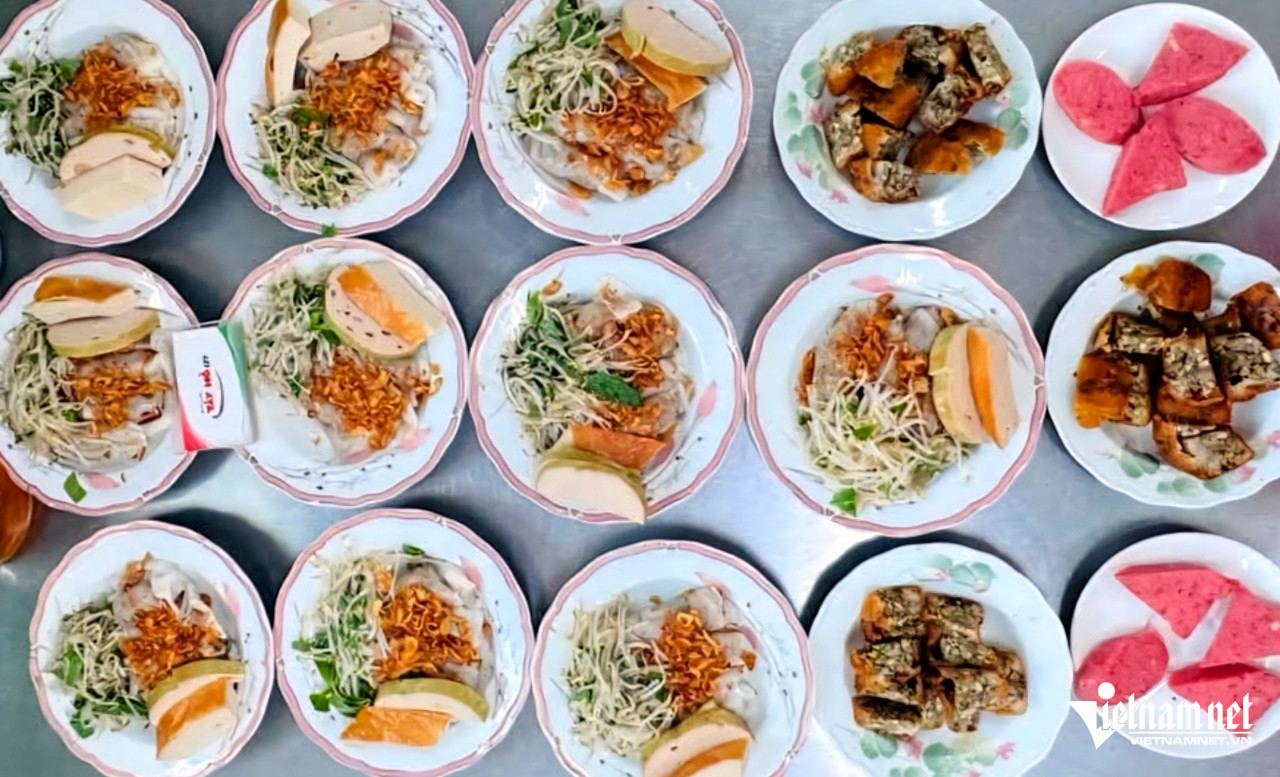
The dish consists of delicate steamed rice-flour sheets wrapped around a filling of pork, jicama and wood ear mushrooms.
To accommodate different tastes, Loan has expanded the menu beyond the original recipe.
Customers can now choose rice rolls filled with shrimp, pork and mushrooms; chicken and mushrooms; shredded pork floss; or shrimp floss.
The restaurant also offers vegetarian varieties, including mixed rice rolls filled with mushrooms, lotus seeds and beans; pandan-flavored rice rolls with vegetables and tofu; and rolls filled with lingzhi mushrooms.
In June 2026, Tay Ho received a Bib Gourmand distinction from the Michelin Guide, which recognizes restaurants offering good food at reasonable prices.
Michelin praised the restaurant's thin, tender and light rice rolls, noting that the ingredients are prepared beside an open kitchen and that the traditional pork-and-jicama filling is complemented by vegetarian options.
The restaurant operates daily from 5:30 a.m. to 9:30 p.m.
Depending on the filling, dishes cost VND40,000-72,000 (approximately $1.50-2.75) per serving.
An owner who welcomes customers in traditional ao dai
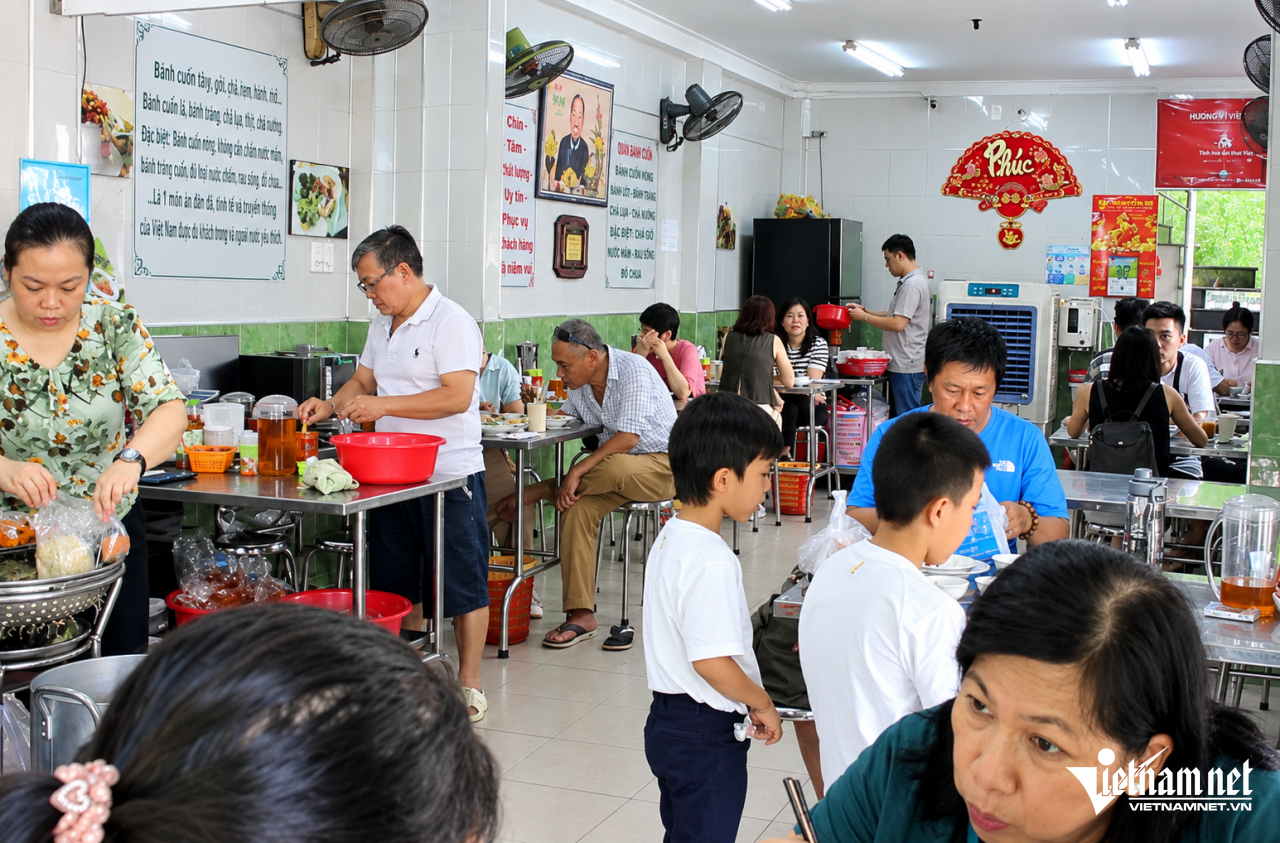
With its flavorful rice rolls and diverse menu, Tay Ho attracts a steady stream of customers.
What began as an unnamed roadside stall has become a well-known two-story restaurant popular with both Vietnamese and international diners.
Many longtime customers first visited when Ca was still preparing and selling the rice rolls.
Today, some return with their own children to enjoy a dish closely connected to their childhood memories.
"I remember two elderly customers in particular," Loan said. "Although they lived very far away, they still traveled here to eat. They told me they came because they missed the old flavors and wanted to revisit memories of their youth."
Younger customers also visit, telling Loan that their parents used to bring them to the restaurant when they were children.
Some have since moved abroad but make a point of returning whenever they visit Vietnam.
"To prove it, they even show me photographs of themselves eating here when they were little," she said.
The restaurant has also attracted growing numbers of international visitors, particularly since receiving Michelin recognition.
To better serve foreign customers, Loan previously spent her evenings studying foreign languages with a teacher after finishing work.
"Thanks to those lessons, I can now serve and talk with international customers," she said. "Many of them stay in touch with me after returning to their home countries. They also recommend the restaurant to friends and relatives. That makes me very touched and happy."
Beyond its food, Tay Ho has become known for Loan's distinctive approach to welcoming guests.
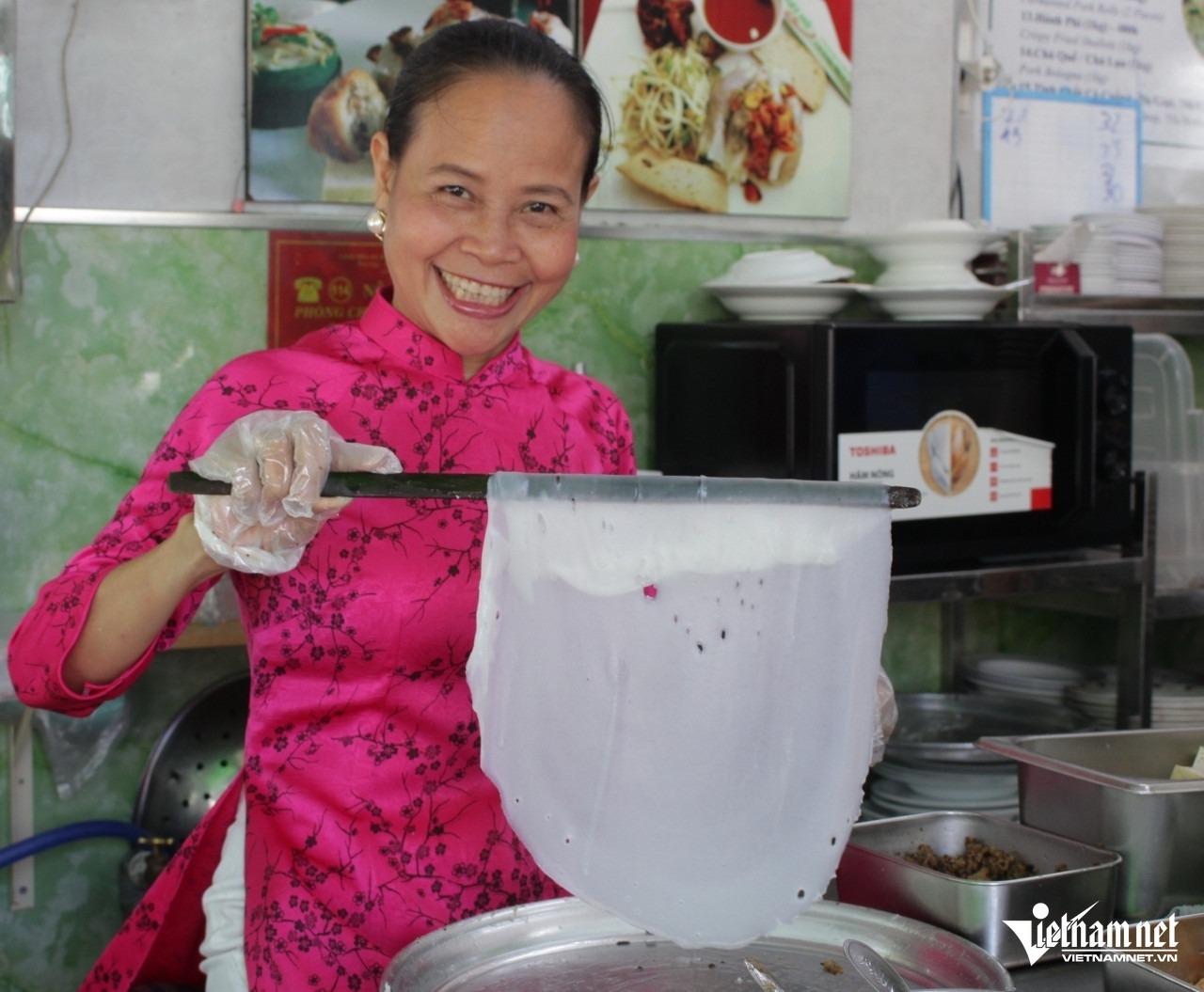
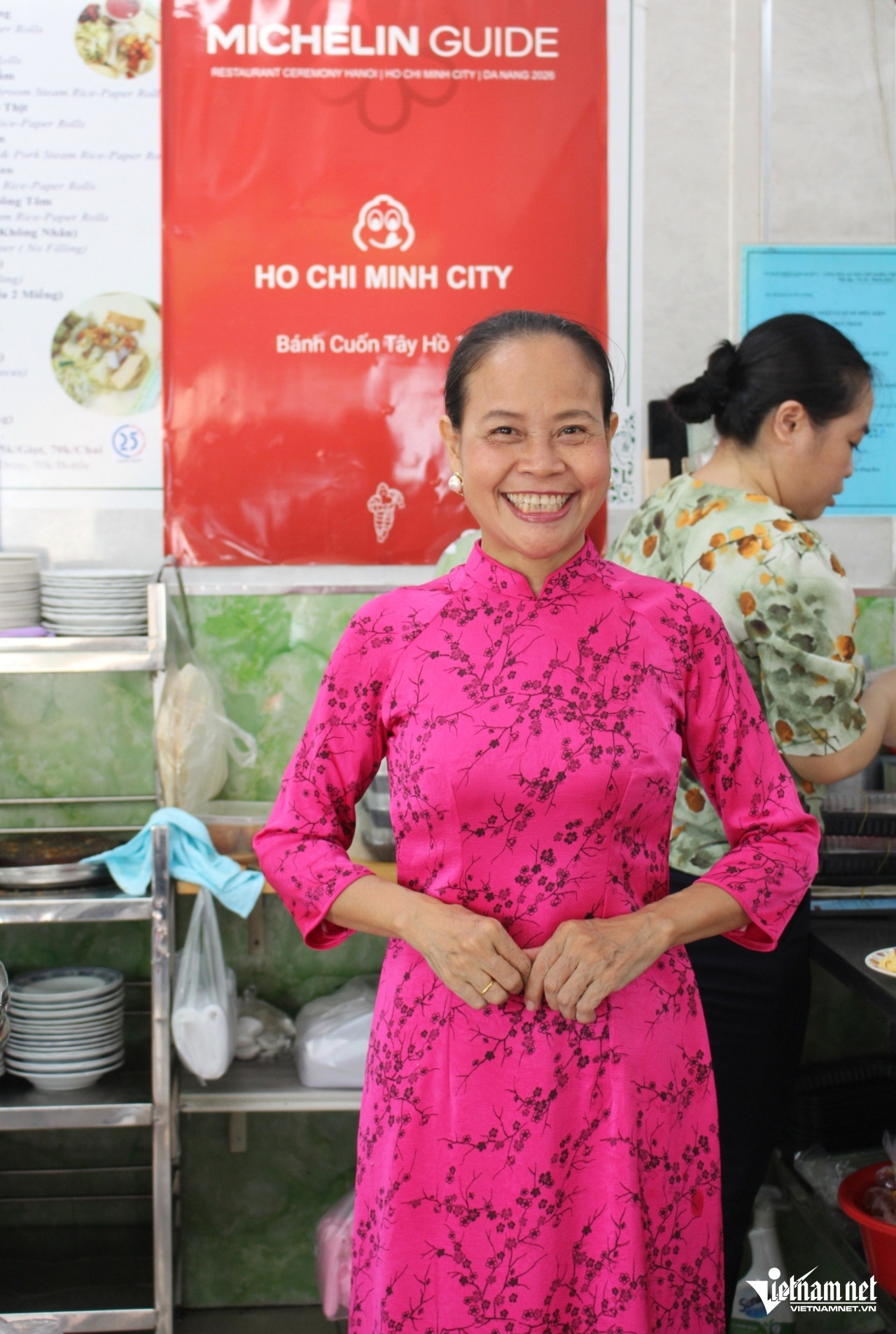
Every day, she arrives at the restaurant wearing a traditional Vietnamese ao dai, greeting customers with a smile as she prepares freshly steamed rice rolls.
The colors and patterns of her outfits change from day to day. She rarely wears the same color twice during a week.
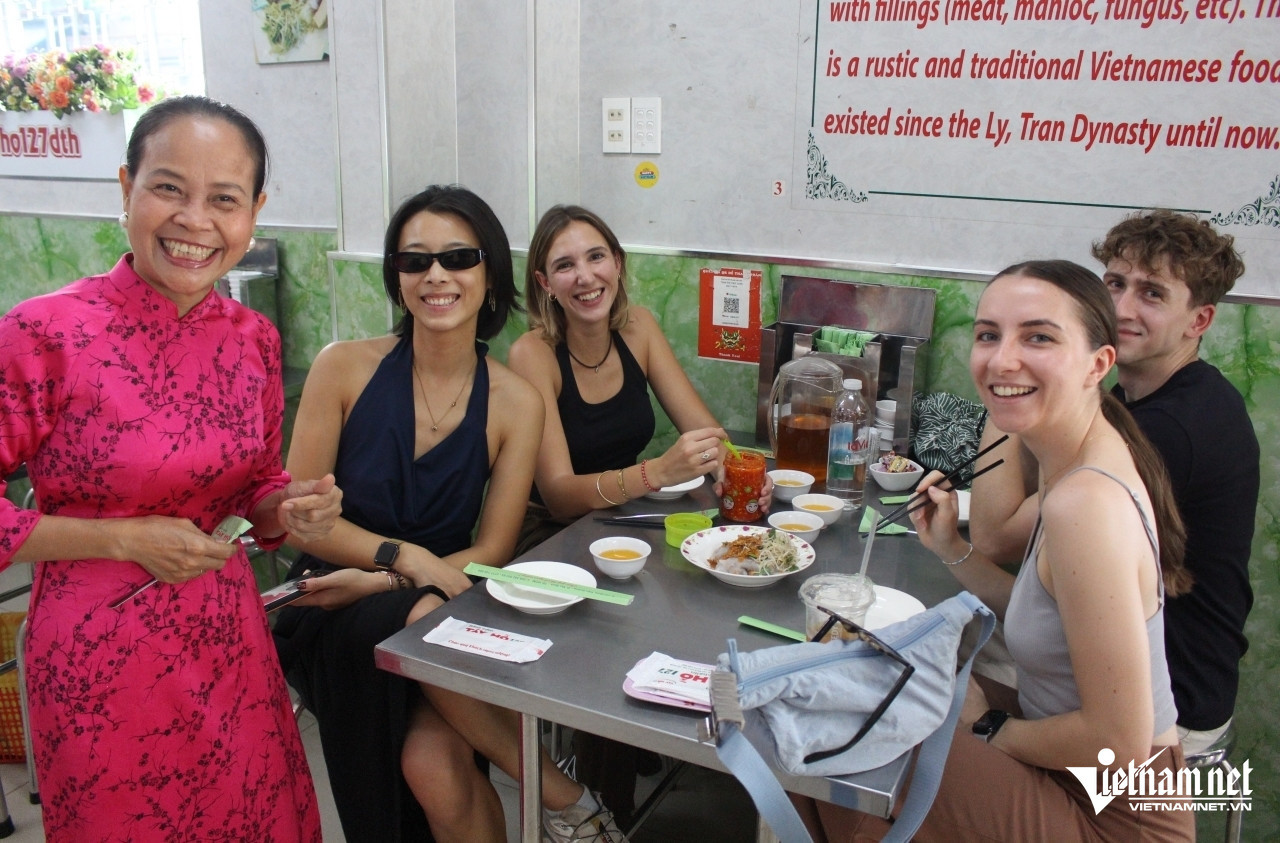
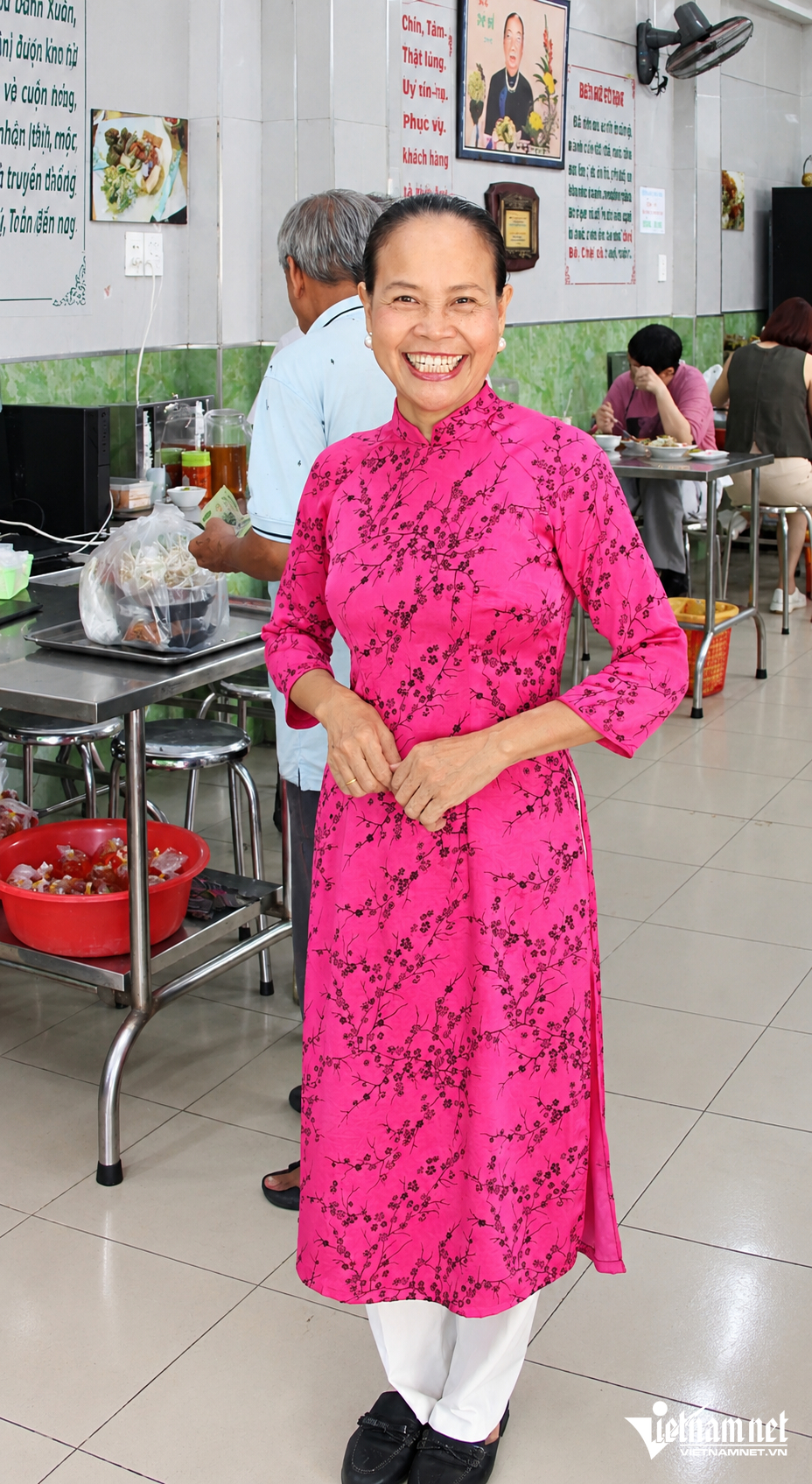
"I believe dressing beautifully and respectfully shouldn't be reserved for parties or special outings," Loan explained. "Even when selling food, we should dress neatly and elegantly to show respect for our customers."
For her, the choice of clothing also carries cultural significance.
"Banh cuon is a traditional Vietnamese dish, and the ao dai is our traditional costume," she said. "I wear an ao dai while serving banh cuon both to show respect for diners and to promote the beauty of Vietnamese culture."
Loan admitted that she initially felt self-conscious wearing the traditional outfit while working in the kitchen.
"But everyone who came to the restaurant complimented me. They said it looked beautiful, elegant and perfectly suited to the food we serve," she recalled. "So, for the past three years, I've worn a different ao dai every day I come to work."
Ha Nguyen

