 Vietnamnet.vn

 Podcast



According to GLOBOCAN data published by the International Agency for Research on Cancer (IARC), Vietnam recorded 180,480 new cancer cases and 120,184 cancer deaths in 2022. The incidence rate stood at 150.8 per 100,000 people, while the mortality rate was 99 per 100,000.
Speaking with VietNamNet, Prof. Mai Trong Khoa, former Deputy Director of Bach Mai Hospital in Hanoi, said Vietnam faces a paradox: while its capacity to diagnose and treat cancer has steadily improved, many patients still do not reach hospitals until the disease is already at an advanced stage.
Equipment is available, but patients arrive too late
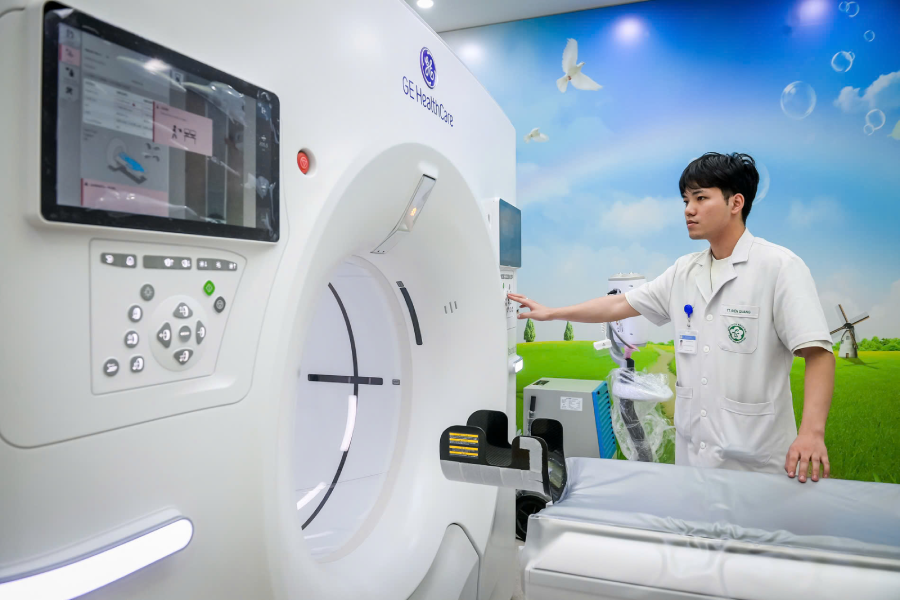
According to Khoa, the growing number of cancer cases is influenced by many factors, including population growth, the environment, diet, lifestyle and other risk factors. At the same time, advances in science and technology are enabling doctors to accurately detect many cases that might previously have gone undiagnosed.
Notably, Vietnam has now mastered a range of modern technologies for cancer diagnosis, screening and treatment.
“It can be said that diagnostic and treatment equipment, particularly technology used for cancer screening and early detection in Vietnam, is in no way inferior to that in developed countries,” Khoa said.
Medical specialists and healthcare workers are also capable of using these technologies effectively. However, Khoa noted that having modern equipment does not necessarily mean patients will have their cancer detected at an early stage.
At major hospitals, many cancer patients still seek medical care only after their disease has progressed. When cancer is already at an advanced stage, treatment becomes much more difficult and expensive, while its effectiveness is reduced.
Many people remain reluctant to undergo screening
Khoa said one important reason patients arrive at hospitals late is that people are still not proactive about cancer screening. Although information about cancer has become increasingly widespread, many continue to avoid medical examinations because they are afraid of discovering that they have the disease.
Early-stage cancer, meanwhile, may cause no obvious symptoms. If people seek medical attention only after noticing unusual signs, they may already have missed the most favorable window for treatment.
Alongside complacency or reluctance to seek care, the cost of examinations and treatment is another barrier, particularly for people facing financial hardship.
Unequal access to healthcare services across different parts of the country is another bottleneck.
Khoa said major cities and central-level hospitals have better conditions for developing advanced equipment, medical technologies and specialist workforces. In remote and disadvantaged areas, however, access to modern equipment and specialist doctors remains limited.
The disparity also reflects differences in economic circumstances and access to information. Urban residents have more opportunities to undergo screening, while in disadvantaged areas, finding the time and money for regular health checks is not always easy.
Khoa therefore called for policies that would enable people across different regions to gain appropriate access to early detection services.
A rise in detected cancer cases is not necessarily bad news
According to Khoa, an increase in the number of detected cancer cases should not automatically be seen as a negative sign. As diagnostic capacity improves and more people undergo medical examinations, the number of detected cases may rise. What matters is the stage at which the disease is found. If cancer is detected early and treated effectively, the increase can carry a very positive meaning.
“What we need to do is bring the cancer mortality rate down. That is our goal,” Khoa stressed.
To achieve that goal, Vietnam needs to strengthen public communication so people better understand the role of screening and become less reluctant to seek medical examinations. At the same time, the country needs to narrow regional disparities in healthcare personnel, equipment and services.
According to Khoa, Vietnam’s cancer challenge is no longer simply a question of whether the country has enough medical equipment. The greater challenge is ensuring that people can reach the healthcare system early enough. Only when more patients are diagnosed at an early stage will Vietnam have a stronger foundation for reducing cancer mortality.
Phuong Thuy
.svg)
