 Vietnamnet.vn

 Podcast



Editor's note: Vietnam is entering the largest infrastructure investment cycle in its history, with financing needs estimated at nearly US$1.5 trillion over the next five years. The key question is who will provide the long-term capital needed to support the country's growth ambitions alongside monetary policy.
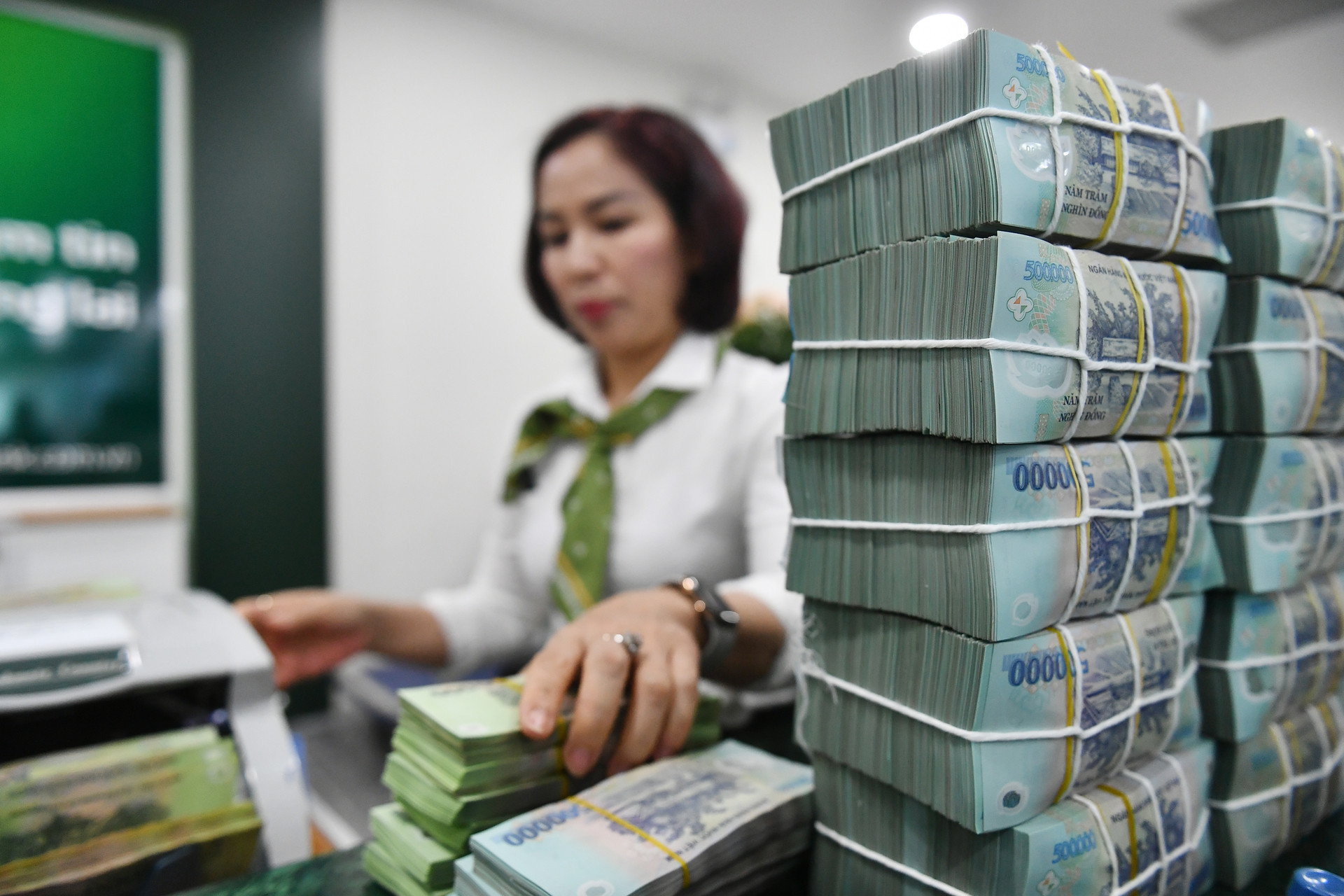
Within little more than a month, the State Bank of Vietnam has introduced a series of changes to credit and prudential regulations.
The measures range from revising the calculation of the loan-to-deposit ratio (LDR), allowing the use of fixed-term deposits from the State Treasury, exempting credit growth limits for social housing, industrial parks and 18 key projects worth approximately US$28.7 billion, to raising the ceiling on the use of short-term funding for medium- and long-term lending to 40%.
Although they employ different policy tools, all of these measures share a common objective: expanding monetary policy flexibility to increase the banking system's capacity to supply capital as Vietnam pursues double-digit economic growth.
Achieving that level of growth will require an enormous amount of investment. According to BIDV Research, total social investment during 2026-2030 will need to reach around 38-39% of GDP, equivalent to US$250-260 billion annually - an investment scale unprecedented in Vietnam's economic development.
Over the long term, growth will need to rely more heavily on productivity, science, technology and innovation.
However, that transition cannot happen overnight. According to economist Can Van Luc, total factor productivity (TFP) currently contributes only about 44-46% of economic growth. To sustain annual growth of 9-10%, BIDV Research estimates that TFP's contribution would need to rise to roughly 51-53%.
This suggests that investment capital will remain a critical growth driver in the medium term.
The question is where that capital will come from.
Unlike many advanced economies, where capital markets provide most medium- and long-term financing, Vietnam still relies predominantly on bank credit.
According to BIDV Research, the banking system currently supplies around 50-57% of total funding for the economy, while the stock market contributes only 10-18% and the corporate bond market accounts for just 3-6%.
As a result, commercial banks perform multiple roles simultaneously. They provide working capital for businesses while also financing medium- and long-term investments ranging from infrastructure and real estate to industrial production.
With the corporate bond market recovering slowly, the stock market yet to become a sufficiently strong fundraising channel and public investment disbursement falling short of expectations, even greater pressure has shifted onto the banking sector.
This also explains why the State Bank of Vietnam has continued expanding monetary policy flexibility. As long as alternative financing channels remain underdeveloped, banks will continue serving as the economy's primary source of capital.
Yet this also raises another question: if banks continue carrying most of the financing burden, how much longer can monetary policy continue expanding its role?
The answer lies in the sheer size of Vietnam's credit system.
According to the State Bank of Vietnam, outstanding credit reached approximately US$765.5 billion by the end of June 2026, increasing by around US$55 billion in just six months.
Meanwhile, total deposits stood at approximately US$663.6 billion, leaving a funding gap of roughly US$102 billion between deposits and outstanding loans. The figures illustrate that demand for credit is growing faster than the banking system's ability to mobilize funds.
Against this backdrop, the central bank has chosen not to pursue broad-based monetary easing through sharp policy rate cuts or large-scale liquidity injections. Instead, it has gradually expanded banks' operating capacity by adjusting prudential regulations.
Revisions to the LDR calculation, the higher ceiling for using short-term funding to finance medium- and long-term loans, and exemptions from credit growth limits for selected priority sectors all serve the same objective: keeping credit flowing while preserving financial stability.
Given current conditions, the approach appears well suited to the challenges facing the economy. At the same time, these decisions also reveal a broader reality: Vietnam's banking system has assumed responsibilities that extend well beyond its traditional role.
According to banking and finance expert Pham Xuan Hoe, an economy that depends excessively on bank credit inevitably sees outstanding loans expand rapidly, bringing leverage closer to risk thresholds.
By the end of 2025, total outstanding credit had reached around US$703 billion, roughly six times higher than at the end of 2012. More notably, the credit-to-GDP ratio had exceeded 147%, higher than in many neighboring economies and approaching the levels seen in highly leveraged financial systems.
Comparisons across Southeast Asia further highlight the contrast. Indonesia and the Philippines maintain credit-to-GDP ratios of only about 40-60%, while Thailand and Malaysia are around 120-130%. Malaysia, however, is able to sustain relatively high credit levels because its more developed capital market provides businesses with substantial medium- and long-term financing outside the banking system.
Each time Vietnam seeks to accelerate growth, the task of mobilizing capital falls primarily on commercial banks. As a result, bank balance sheets continue to expand while monetary policy is expected to shoulder responsibilities that extend beyond its core mandate.
After years of economic development, Vietnam has yet to build a capital market deep enough to share the financing burden with the banking sector.
To sustain high growth over many years, Vietnam will need not only flexible monetary policy but also a stronger corporate bond market, an upgraded stock market, and broader development of investment funds and pension funds capable of supplying long-term capital.
Only then will every new growth target no longer require another round of credit expansion, allowing monetary policy to return more fully to its fundamental role: safeguarding macroeconomic stability and maintaining the resilience of the financial system.
Tu Giang
.svg)
