 Vietnamnet.vn

 Podcast



The unnamed god
Located on a narrow street that shares its name, An Tai Temple in Binh Dong Ward, Ho Chi Minh City, stands out with a newly renovated three-gate entrance adorned with golden dragons on a crimson backdrop.
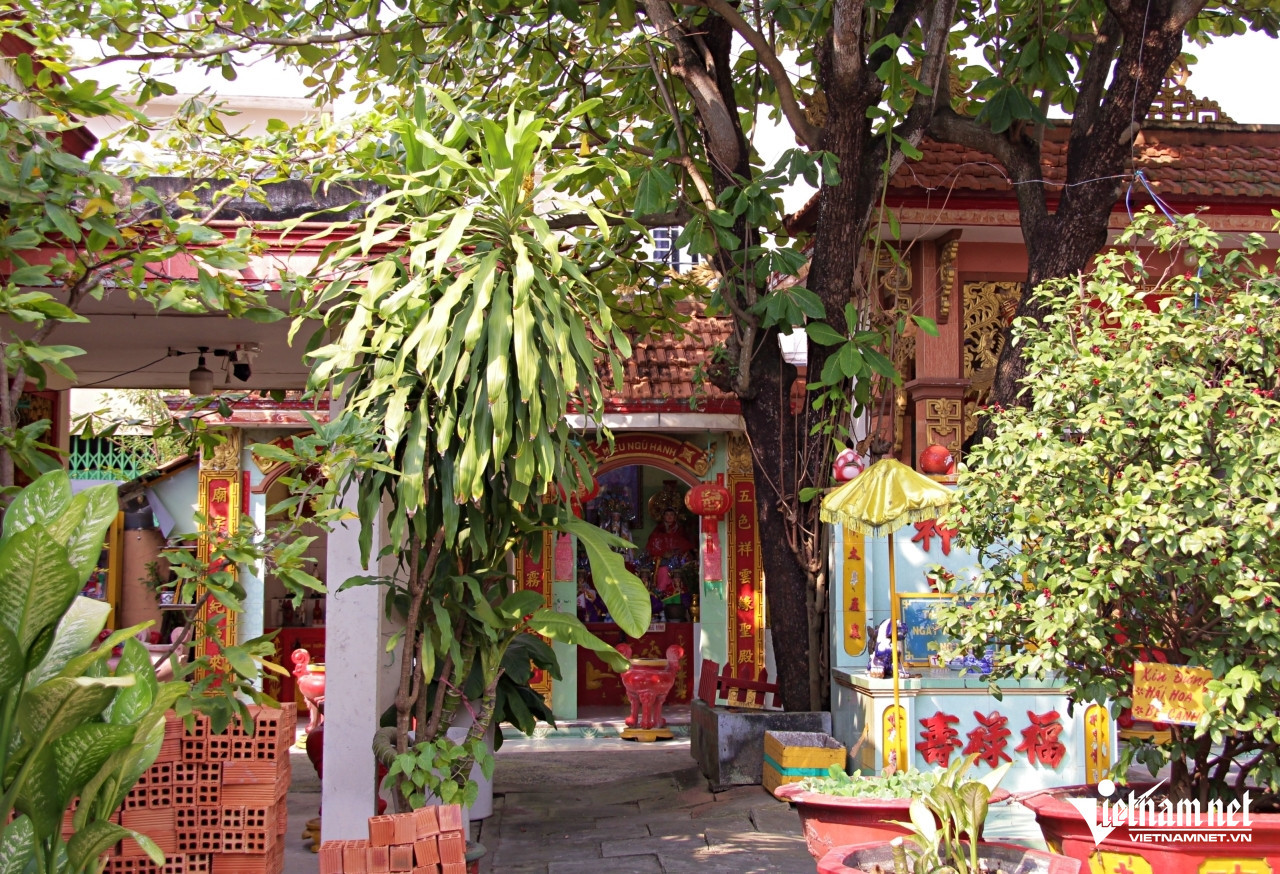
Beyond the ornate gate lies a breezy courtyard filled with lush greenery. Scattered across the compound are various small shrines dedicated to deities like the Mother Goddess, the Five Elements, fallen soldiers, and a group of four female spirits.
But the most elaborate and striking features are the vo ca (ceremonial stage) and the main sanctuary devoted to a mysterious god.
Inside the vo ca, a large altar holds an aged portrait of an elderly deity with flowing silver hair and beard. Behind this area lies the main sanctuary, spacious and richly decorated.
According to Truong Thanh Lam (born 1971), head of the temple’s management board, An Tai Temple was built about a century ago, rooted in a legend where a nameless deity began appearing in local dreams.
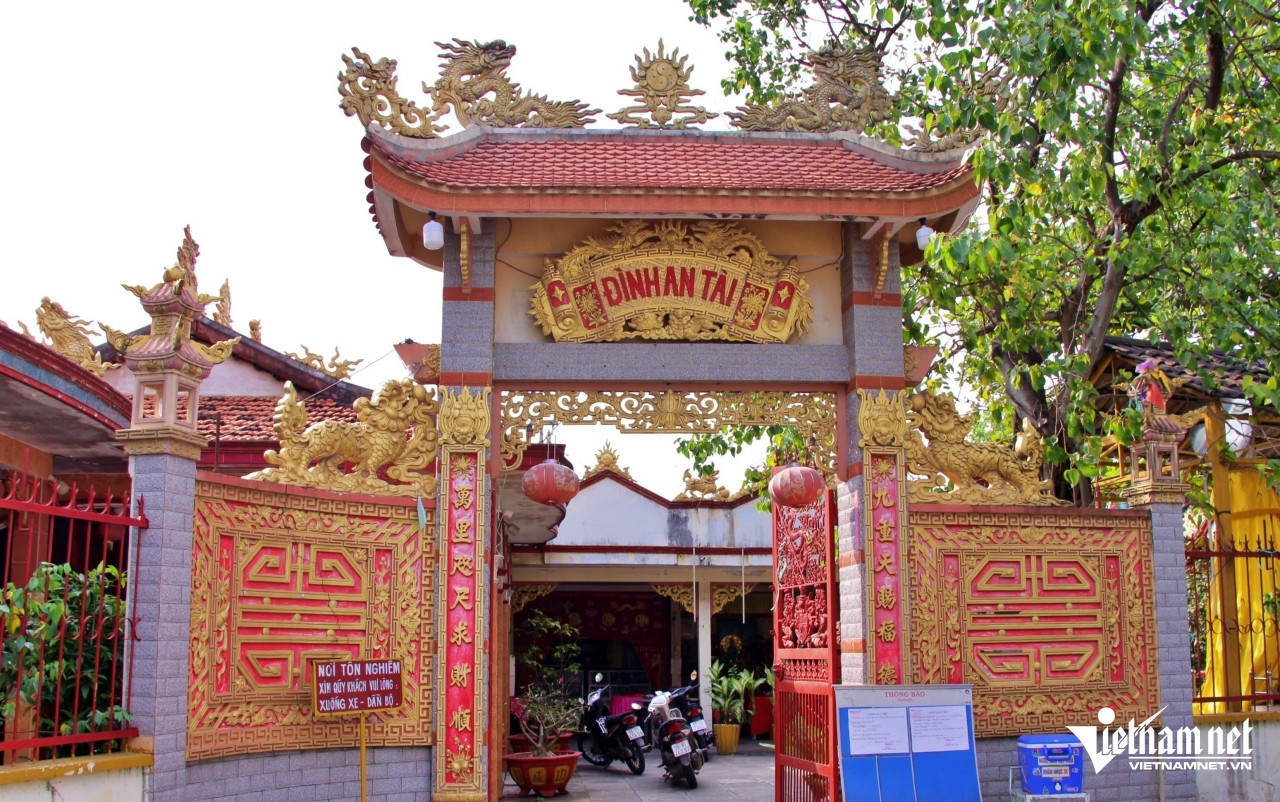
The newly restored three-gate entrance of An Tai Temple. Photo: Ha Nguyen
A god from dreams
Back in the early 1900s, the site where the temple now stands was nothing more than a remote marshland surrounded by rivers, sparsely populated.
Around 1930, ethnic Chinese migrants from nearby Cho Lon arrived to clear the land and build storage facilities. Over time, rice milling factories emerged, drawing an influx of laborers.
"Local workers and residents began reporting dreams of an old man with silver hair and beard," said Lam. "In these dreams, he claimed to be the spiritual guardian of the land."
Moved by the shared visions, locals erected a small shrine on the present-day temple site. Since the deity's name was unknown, and only his silver beard was consistent across the visions, they began calling him Silver Beard God. The modest thatched shrine was soon known as the Silver Beard Shrine.
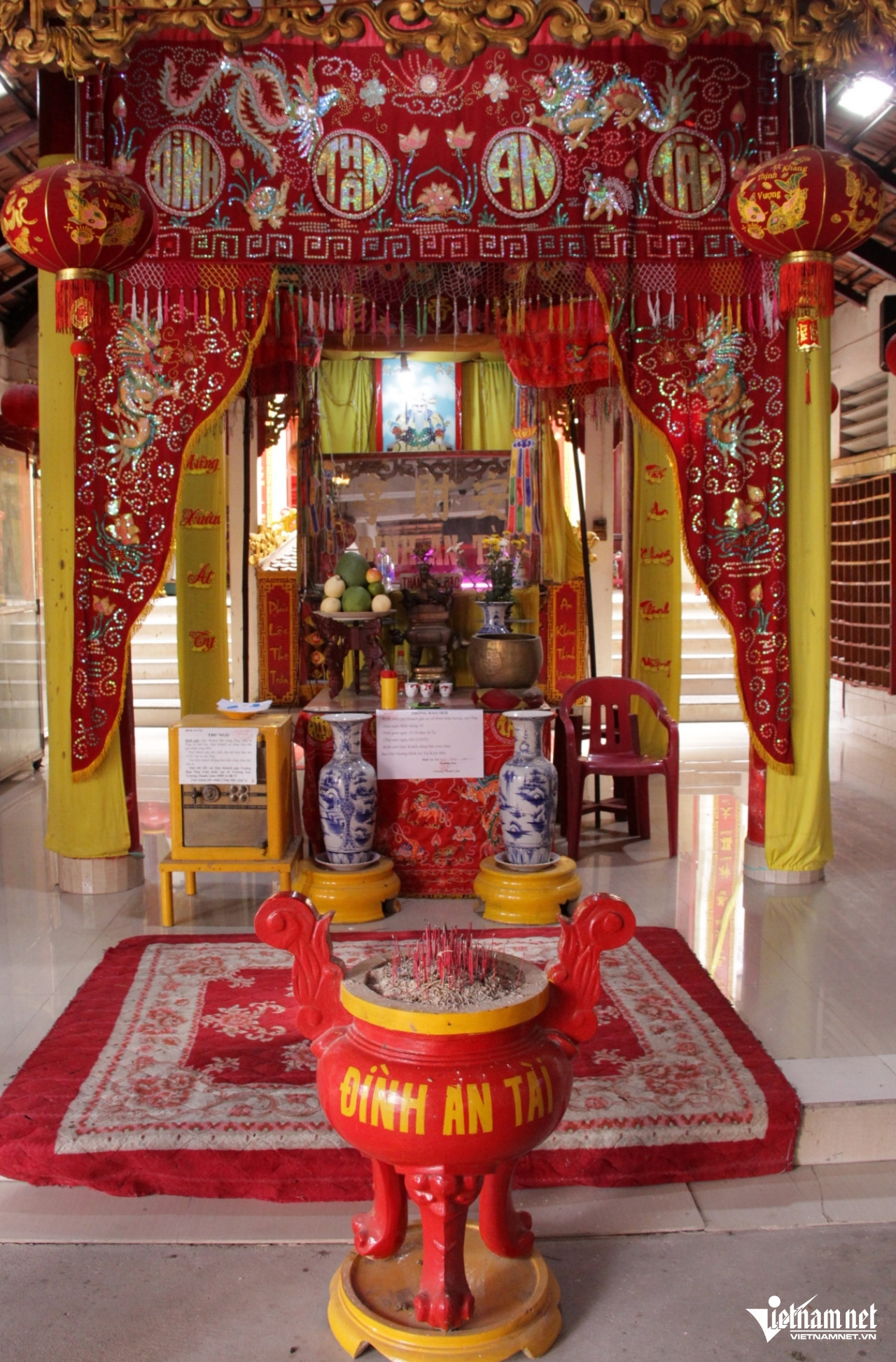
The ceremonial hall houses the portrait of the Silver Beard God. Photo: Ha Nguyen
Faith in hard times
The shrine quickly became a spiritual refuge, especially for exploited mill workers who had no rest and worked long hours.
They would pray at the shrine, hoping for better conditions. Coincidentally - or perhaps miraculously - some machines at the mills began breaking down, temporarily halting production.
News of this spread, prompting even factory owners to visit the shrine, expressing intentions to improve business practices.
In time, local agriculture flourished, and mills operated more smoothly. In gratitude, workers and owners jointly restored and expanded the shrine into a proper temple, naming it An Tai - symbolizing peace and prosperity.
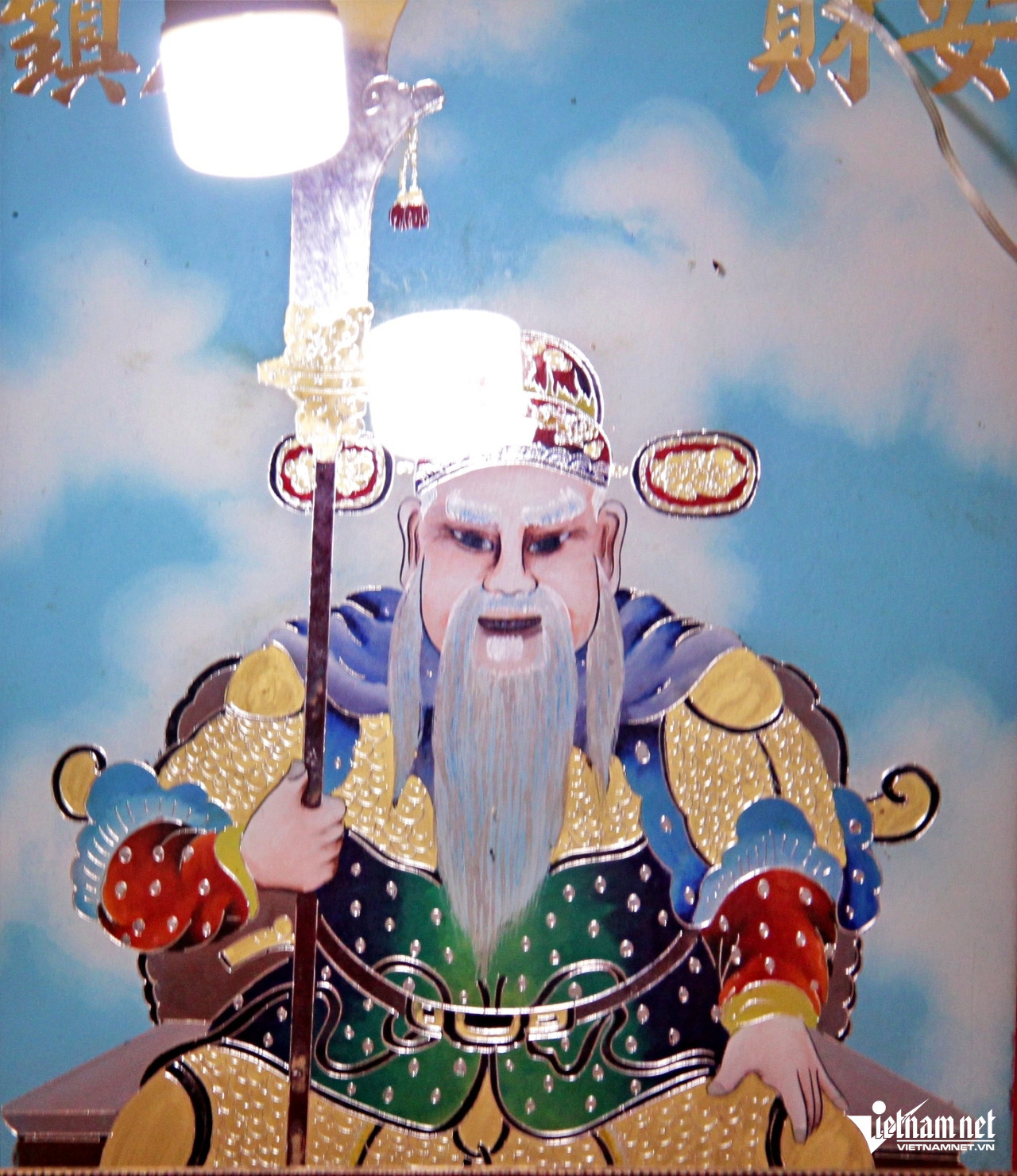
The portrait of the Silver Beard God at An Tai Temple is more than 90 years old. Photo: Ha Nguyen
Tradition preserved
Not long after the temple’s establishment, a devotee pledged to paint a portrait of the Silver Beard God based on dream descriptions. The image, still enshrined above the altar, portrays a kind-faced elder in armor, long silver beard and hair tied high, wielding a massive broadsword.
Lam said the painting is now more than 90 years old, with its own supernatural tale. In one account, a man attempted to remove the portrait from the temple but found himself unable to exit the altar area. Only when village elders intervened and restored the painting did peace return.
During wartime, despite bombings that devastated nearby houses and trees, the temple and a small adjacent shrine remained untouched - an occurrence that deepened its spiritual reputation.
After 1975, the road in front of the temple was widened and officially named An Tai Street. Pilgrims began visiting in greater numbers.
To accommodate the growing devotion, locals built a new sanctuary behind the vo ca, complete with a white horse statue and a pair of cranes. At its center is a large statue of the Silver Beard God, broadsword in hand, modeled after the original portrait.
Rituals of the past still alive
Every year, the temple hosts the Ky Yen (peace-seeking) festival on the 16th, 17th, and 18th days of the second lunar month. The ancient rituals continue, including the rare live pig offering.
"In the past, we sacrificed three live pigs over three days," said Lam. "Today, we only offer one, on the 16th."
The selected pig must meet strict criteria: it must be male, completely white with no spots, weigh over 100 kilograms, and be physically flawless.
A ceremonial team is hired to conduct the rites exactly as they were done in the past. The rituals typically last over an hour and draw large crowds of both locals and visitors.
Ha Nguyen
.svg)
