 Vietnamnet.vn

 Podcast



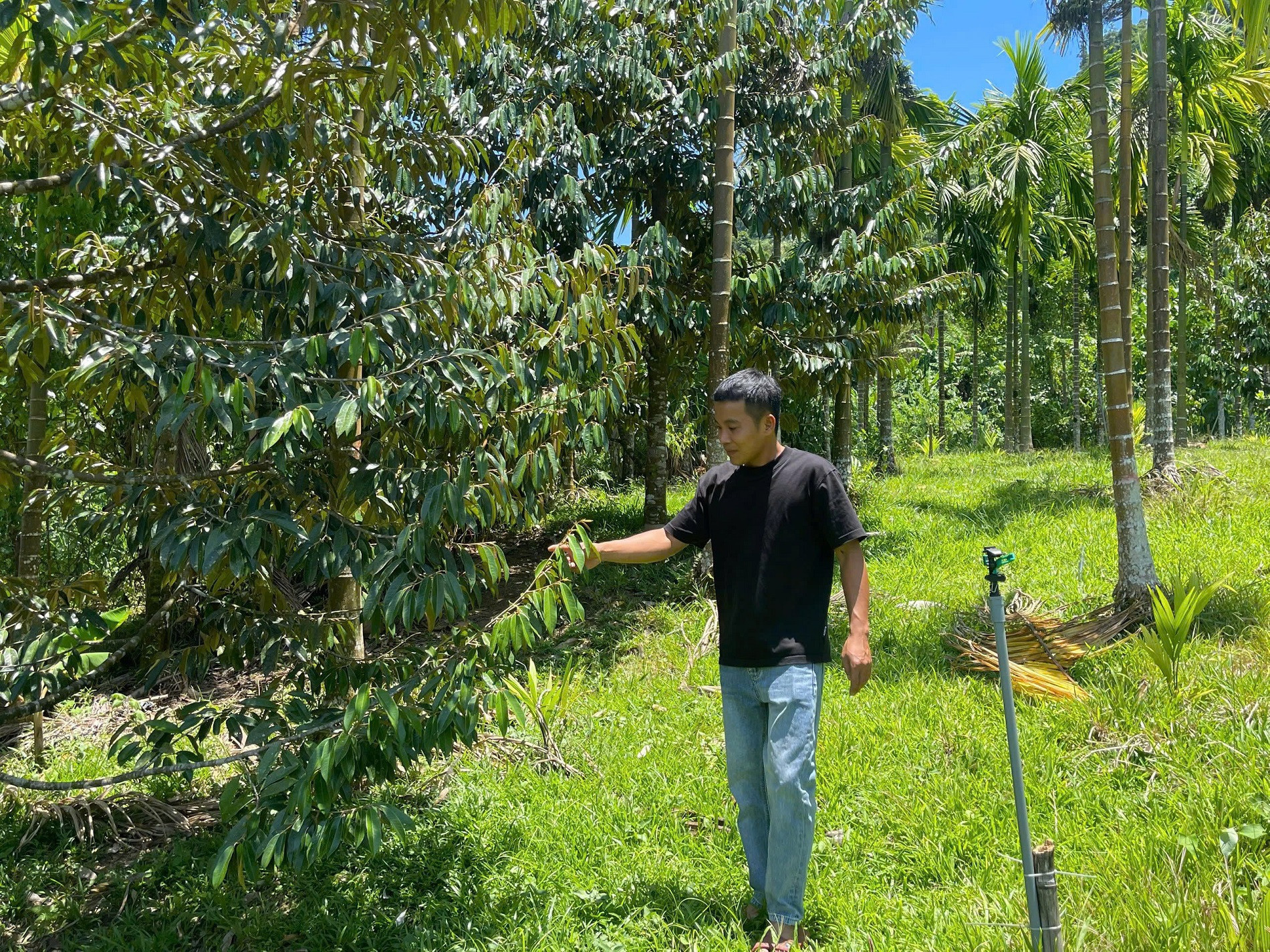
From cultivating acacia-covered hillsides once likened to “lazy trees” because they need little care and generate limited economic returns, many residents in the mountainous Nam Tra My area of Da Nang are switching to cinnamon, areca palms and fruit trees, opening up a path toward sustainable development on sloping land.
In previous years, acacia trees covered many hillsides in Nam Tra My. They were a familiar choice for local residents because they were easy to grow and required little care. After about five to six years, the trees could be harvested for timber.
However, the long wait for harvests and the dependence of their economic value on market prices led many households to realize that they needed a new approach to increase their incomes.
In recent years, with support policies providing seedlings, production capital and technical guidance, many households have begun converting their acacia plantations to crops better suited to local climate and soil conditions.
In Tak Lu Village, Nam Tra My Commune, Ho Van Thu is tending a more than 15-hectare cinnamon plantation. His family previously grew mainly acacia on about 3 hectares. By staggering their planting and harvesting cycles, they were able to harvest part of the plantation each year, earning about VND40 million.
Recognizing that cinnamon was well suited to the local soil and climate, Thu and his wife decided to borrow money to convert part of their land to cinnamon.
Part of the cinnamon plantation is now producing harvests, generating VND50-70 million a year. When cinnamon prices are favorable, the income can exceed VND80 million and even top VND100 million.
What gives Thu the most hope is that much of the cinnamon plantation is now in a strong growth phase. About 8 hectares of three- to five-year-old cinnamon trees are growing on land that was previously used for acacia.
“Cinnamon takes a long time to accumulate value, but its returns increase over time. My family will continue caring for the existing plantation and expand it if conditions allow,” Thu said.
Gardens open path to prosperity
Cinnamon is not the only crop Nam Tra My residents are turning to. Some households are also experimenting with integrated production models that combine different crops and livestock to increase the value generated from the same land.
On a more than 5-hectare hillside, Tran Van Trung is developing a model combining fruit trees, areca palms and fish farming. Rows of trees have been scientifically arranged, including guava, mangosteen, longan and rambutan.
The land was also previously used to grow acacia. However, because of the difficult terrain and challenging harvesting conditions, the returns were low.
After recognizing the area's potential, Trung decided to invest in improving the land, built an access road to the production area and experimented with fruit varieties suited to the area. As the trees grew well, he continued expanding the plantation with more varieties.
Two fish ponds were dug along the edge of the forest, making use of the available water supply while creating an additional source of income for the family.
More than 1,000 areca palms have now started producing, while dozens of guava trees have borne fruit. In particular, more than 10,000 areca palms that are growing well are expected to become the main source of income in the coming years.
According to Trung's calculations, once the areca plantation reaches a stable production stage, the model could generate VND500 million to more than VND1 billion a year, excluding income from fruit trees and fish.
“Farming requires a long-term outlook. When you combine different crops, income becomes more stable and risks are lower than when you rely on a single crop,” Trung said.
Trung is also experimenting with durian. The first trees are growing well, raising hopes for another new direction for the area.
Unlocking the value of sloping land
Nguyen Hong Nhan, Vice Chair of Nam Tra My Commune People's Committee, said local authorities are encouraging residents to transition underperforming farmland toward suitable high-yield crops and livestock.
Cinnamon, fruit trees, and integrated farming models are viewed as high-potential avenues that boost household incomes while efficiently utilizing sloping land resources.
Alongside advocacy campaigns, the commune coordinates the delivery of subsidized seedlings, livestock breeds, and technical training. Proven, successful models are actively replicated to expand livelihood options for locals.
Huy Truong
.svg)
