 Vietnamnet.vn

 Podcast



Tran Nghi
On April 22, the Ninh Binh Department of Culture and Sports confirmed that its units are coordinating with experts to determine the age of the three wooden stakes discovered during the renovation of the Van River embankment in Hoa Lu ward.
Earlier, on April 15, while dredging the riverbank near Cha La Bridge, workers noticed three large wooden stakes protruding from the ground, approximately 30 meters north of the bridge.
Specialized teams were immediately dispatched to the site to conduct surveys, mapping, photography, and archival comparisons. Initial findings show that the stakes were embedded within sediment layers beneath the riverbed, at a depth below the water level.
At the time of discovery, all three stakes were positioned vertically, with sharpened ends pointing downward and their bodies partially exposed above the mud surface. The stakes were arranged in two parallel rows running along a north-south axis, aligned with the river’s flow. The distance between the two rows measured approximately 2 meters, while the spacing between individual stakes within each row was also around 2 meters.
Physical characteristics indicate that the stakes were carefully crafted and deliberately installed. Their vertical placement and uniform design strongly suggest human intervention for a specific purpose, rather than natural driftwood deposits.
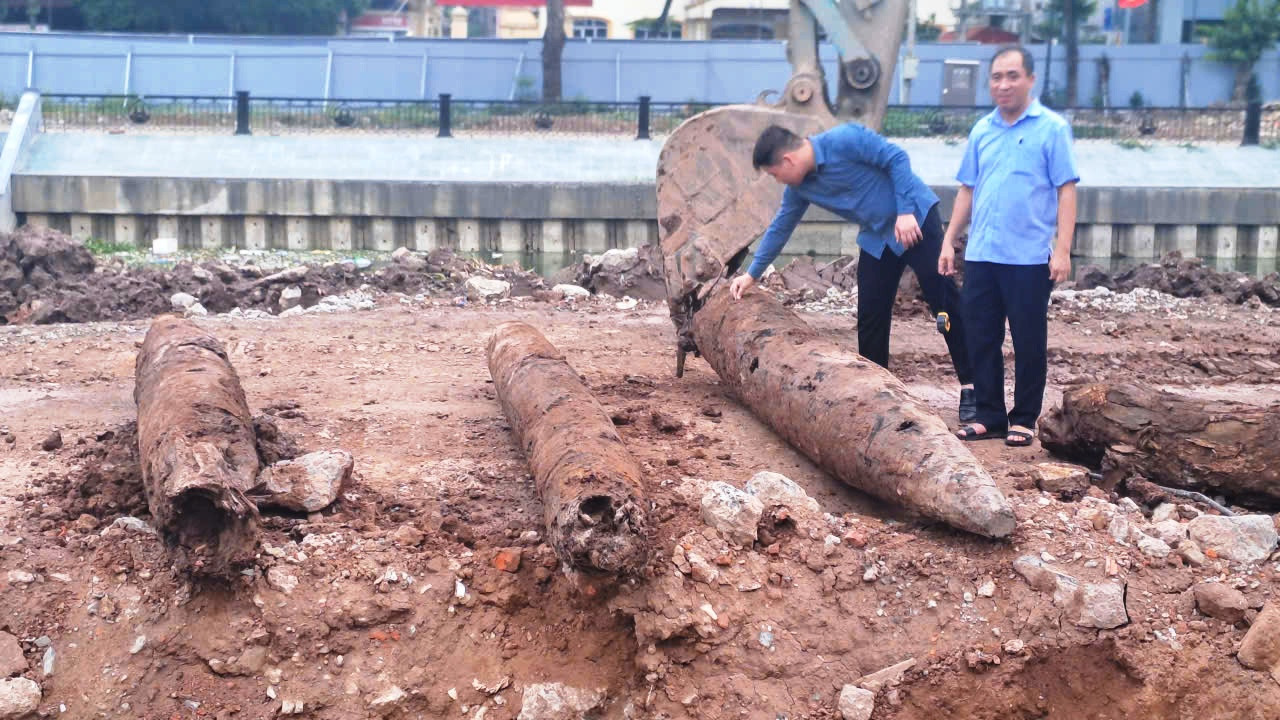
Each stake measures between 3.76 meters and 4.15 meters in length, with a circumference ranging from 1.16 meters to 1.46 meters. They were made from medium to large-diameter timber. Notably, the sharpened tips of all three stakes extend about 1.10 meters, reflecting a consistent technical standard likely produced within the same period.
The stakes share notable similarities with those discovered at Cho Sa in Cam Ly commune, Bac Ninh province, an area associated with the Luc Dau Giang battlefield during the second (1285) and third (1288) resistance wars against Mongol forces. These similarities include construction techniques, natural curvature of the wood, and placement in estuarine environments.
Although there is not yet sufficient evidence to conclusively determine the age or function of the newly found stakes, both their technical features and the site context suggest they are remnants of an organized man-made structure. They may have been used for military defense, water management, or transportation purposes in the past. However, the strongest possibility points to a military function during the Tran Dynasty in the 13th century.
The Van River, also known as Van Sang River, is an ancient waterway closely associated with multiple historical periods in Vietnam. It once served as a vital transportation route and a defensive line protecting the ancient capital of Hoa Lu.
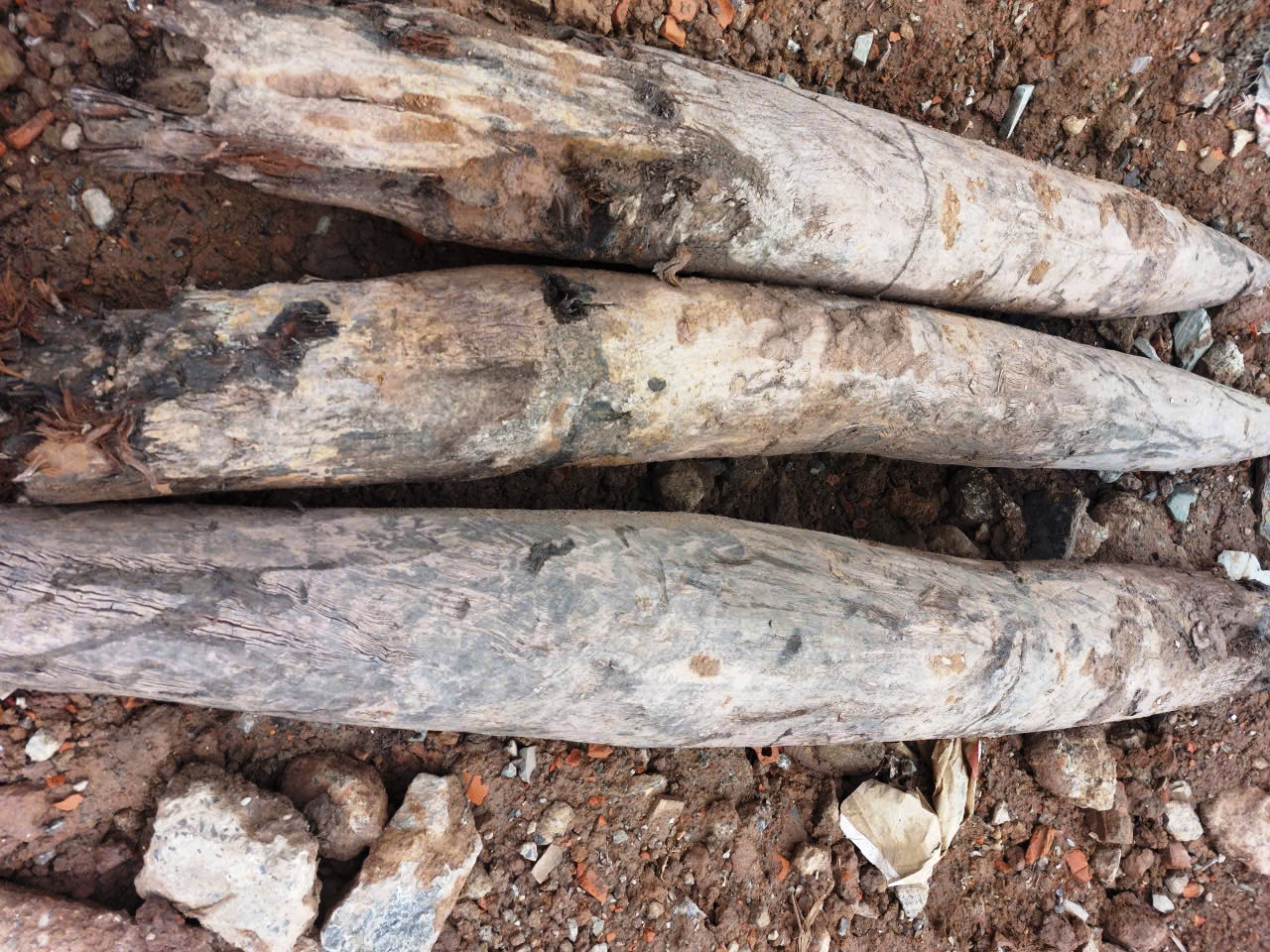
Three ancient wooden stakes, believed to be part of a Tran Dynasty defensive formation, were discovered along the Van River in Ninh Binh. Photo: T.L
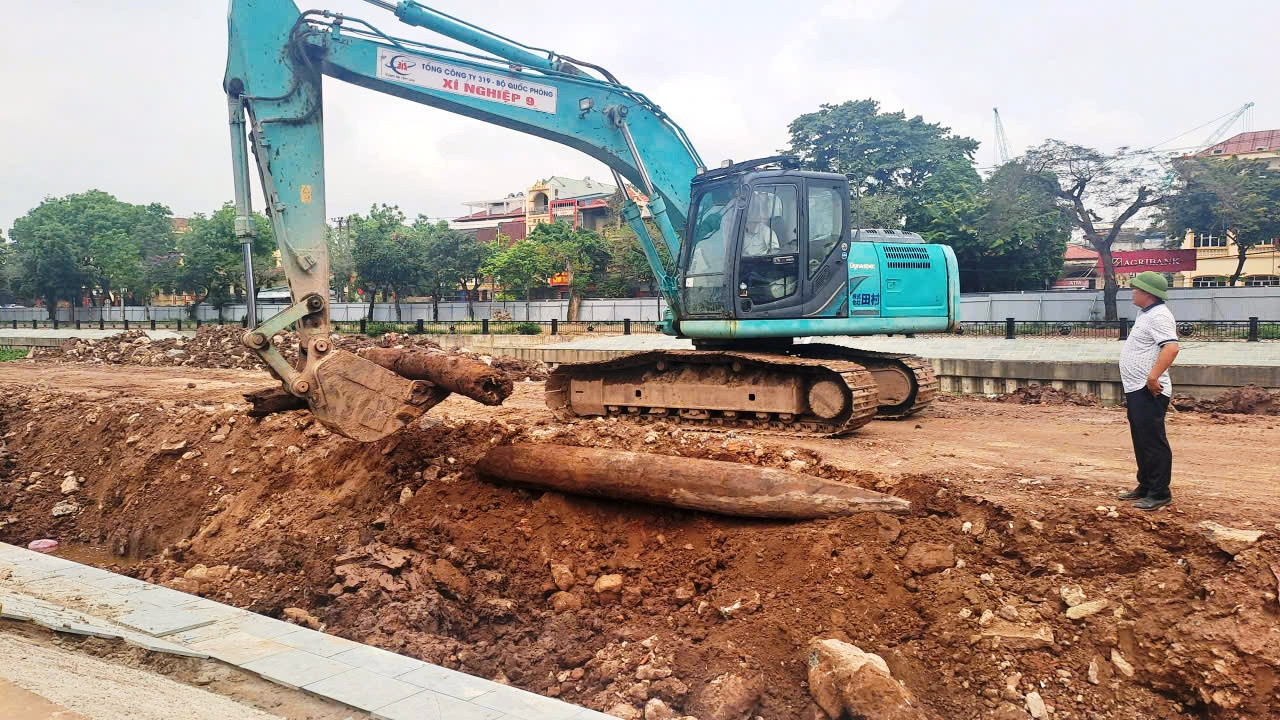
The stakes were found embedded in sediment layers beneath the riverbed, at a depth below the water level. Photo: T.L
.svg)
