 Vietnamnet.vn

 Podcast



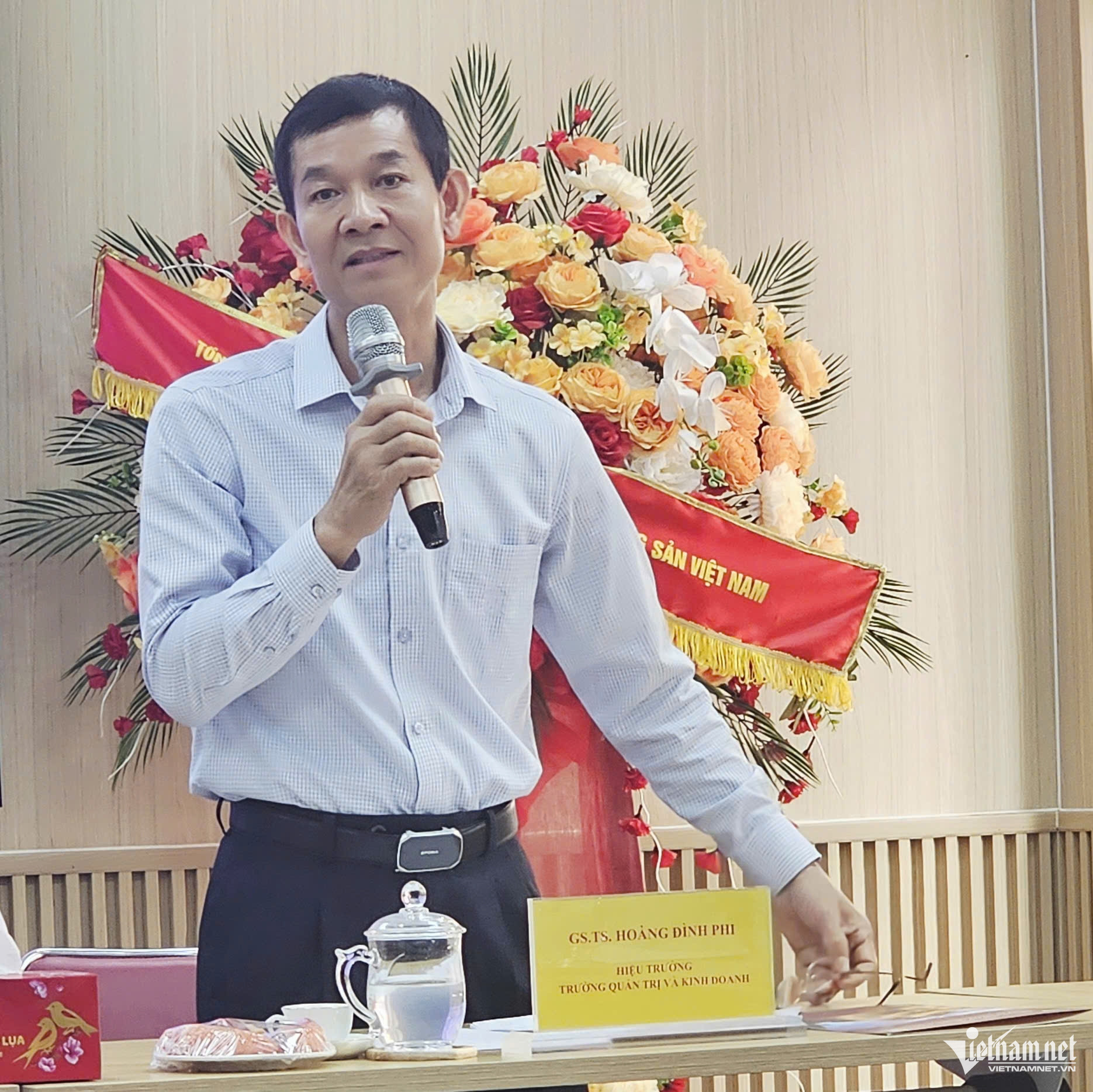
The Government Electronic Information Portal, in collaboration with the Institute of Non-Traditional Security (School of Management and Business, VNU Hanoi), organized a seminar recently titled "Hanoi city planning - a 100-year vision from a non-traditional security perspective."
Tran Ngoc Chinh, chair of the Vietnam Urban Development Planning Association, said that Party General Secretary To Lam places great importance in urban planning and development and has directed the Hanoi Party Committee to develop a 100-year vision for the capital, positioning it as the country’s leading urban growth pole.
Hanoi is not only the administrative capital but also a hub for economic, cultural, scientific, technological, and international exchange activities. While a master plan has been approved by the Hanoi People’s Council, some aspects, particularly non-traditional security, have not yet been fully addressed.
Chinh highlighted transportation as a pressing issue. Hanoi’s population is nearing 10 million, with more than 1.5 million cars and 8 million motorbikes, not including vehicles entering from surrounding areas.
“We aim to build about 1,000 km of metro lines, with around 400 km expected by 2035, but currently only 40 km are in operation. If Hanoi reaches 20 million people and transportation is not properly planned, the city will never solve its internal traffic problems,” he warned.
He added that only when people rely primarily on public transport instead of motorbikes can Hanoi effectively address congestion. The city should prioritize high-speed, high-capacity transport systems and develop the transit-oriented development (TOD) mode.
Satellite urban areas must be fully equipped with offices, schools, and hospitals, rather than serving merely as residential zones whose inhabitants commute back to the city center.
Beyond the Red River as a central axis, Hanoi also has river systems such as the Duong, Day, Tich, Nhue, To Lich, Set, and Lu rivers, all of which must be preserved to ensure continuous flow and ecological health.
Hanoi underground space
From a non-traditional security perspective, Hoang Dinh Phi, rector of the School of Management and Business, believes that Hanoi's underground infrastructure system currently poses many risks due to overlaps and a lack of synchronized planning.
He pointed out five important underground systems: flood drainage, wastewater treatment, water supply, electricity supply, and telecommunications. These are essential systems but face many potential threats.
"In Hanoi's planning, there hasn't been much detailed discussion about underground space, especially the finish floor level (level 00)," Hoang Dinh Phi said.
According to Phi, without deep research into technical infrastructure solutions and international experience in urban planning, especially wastewater collection systems following the terrain's slope, collecting, transferring, and thoroughly treating Hanoi's wastewater will be difficult and cost billions of dollars.
Resolving this requires interdisciplinary coordination, listening from the government, and cooperation between research institutes (such as the Institute of Non-Traditional Security and the Hanoi Institute of Architecture).
Phi also argued that Hanoi is positioned as a diverse ecological capital. Therefore, he believes that not all universities should be relocated, but those with historical depth should be kept to maintain inner-city vitality.
At the same time, he mentioned the low-altitude economy, including vehicles like air taxis and drones for rescue and delivery. These elements need to be integrated immediately into the master plan map to warn of risks and "red lines." Rapid development must be accompanied by sustainability, which is the core of non-traditional security.
Maksim Kurilov, first secretary of the Russian Embassy in Vietnam, said that Moscow has achieved many notable results in urban planning.
The city had a modern metro system with a frequency of about 1 minute between trips, which limits private vehicles. Additionally, the smart city model has helped to significantly reduce crime rates.
Moscow is also implementing a large-scale housing renovation program and applying "digital twin" technology to support planning, transport development, and information systems.
The Russian representative said the country was ready to share its experiences to support Hanoi in the research and development process of the future city.
Thanh Hung
.svg)
