 Vietnamnet.vn

 Podcast



Speaking to VietNamNet about his 15 kWp rooftop solar system and 32 kWh battery energy storage system (BESS), Nguyen Cong Toan, a resident of Bac Ninh, said his family’s latest monthly electricity bill had fallen to just a few hundred thousand dong.
“Not only has our electricity bill dropped sharply, but we have also started selling surplus electricity back to the grid,” he said.
In the first 22 days of July alone, his household sold 204 kWh of surplus electricity to the grid.
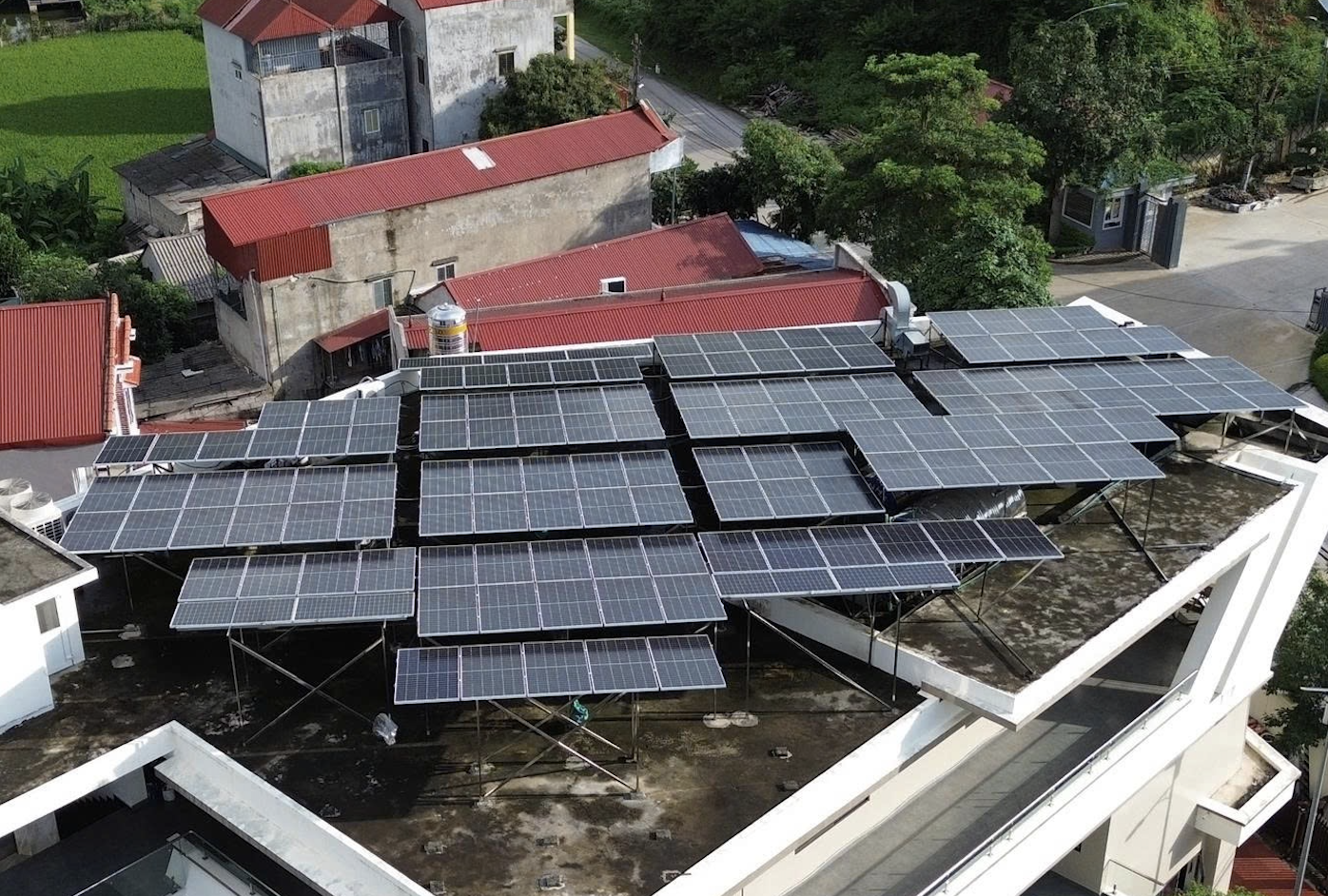
Toan said his family uses a large number of electrical appliances. During the summer, without the rooftop solar system and BESS, their monthly electricity bill could reach VND6-7 million (US$230-270).
Since investing VND250 million (US$9,600) in rooftop solar and battery storage, the family has been able to manage its electricity supply during both the day and night and no longer worries about power cuts. Any electricity they do not use can be sold back to the grid.
“In summer, when there is plenty of sunshine, we can use electricity comfortably and the BESS is always fully charged. In winter, if the weather is clear, the solar panels still generate electricity efficiently,” Toan said.
However, on overcast days with heavy clouds or rain, power generation declines and the family has to draw electricity from the grid.
Vu Xuan Thoan, deputy director of Song Cong Diesel One Member Co., Ltd., said the company invested in a self-generated, self-consumed rooftop solar system in March 2026, with a capacity of around 4 MW.
The system can save the company billions of dong in electricity costs each year. At the same time, it helps the business meet green manufacturing and greenhouse gas reduction requirements set by customers from Germany, Italy, Japan and other markets.
“We have to develop plans and register with them how we will reduce electricity consumption and how renewable energy will be used. So the major objectives behind our investment in rooftop solar are both economic benefits and meeting customer requirements,” Thoan said.
According to Northern Power Corporation (EVNNPC), during the first six months of 2026, 8,500 new customers installed self-generated, self-consumed rooftop solar systems across the 17 northern provinces and cities under its management, excluding Hanoi.
Their combined capacity reached 394.5 MW, equivalent to 167% of the assigned target for customer numbers and 116% of the capacity target.
As of June 30, a total of 10,099 customers had installed rooftop solar systems, with combined capacity reaching 718.3 MW. Of these, 98 customers were selling surplus electricity.
EVNNPC said that after more than a year of implementing Decree 58/2025, the development of self-generated, self-consumed rooftop solar across its service area had produced encouraging results.
Both the number of customers and installed rooftop solar capacity exceeded targets during the first half of the year, indicating that investment in self-generation and self-consumption systems continues to grow strongly.
More mechanisms for rooftop solar
From a consumer perspective, energy expert Ha Dang Son said the benefits of rooftop solar are clear.
The hottest part of the day is typically also when solar systems generate electricity most efficiently. This creates a natural alignment between power generation and electricity demand for cooling.
Installing solar panels on rooftops can also reduce roof surface temperatures by around 2-3 degrees Celsius, helping reduce the need for air conditioning and delivering additional electricity savings.
In terms of cost, the benefits for both households and businesses are significant.
If incentive mechanisms from the Ministry of Industry and Trade are further promoted toward self-generation and self-consumption, users could reduce their electricity costs substantially by limiting their reliance on grid electricity at higher tariff tiers.
For businesses, rooftop solar also has strategic significance as many export markets, particularly Europe, increasingly require green energy to be used throughout production chains.
In the longer term, expanding rooftop solar in combination with energy storage solutions could also help strengthen Vietnam’s ability to ensure a secure national electricity supply.
The Government recently issued Decree 243/2026/ND-CP, which sets out a mechanism for buying and selling surplus electricity.
Under the decree, surplus electricity from rooftop solar systems - including electricity from storage systems charged using solar power - can be bought and sold under agreements between the two parties.
The volume of surplus electricity is determined at the output of the inverter.
From June 26, 2026 through December 31, 2030, surplus electricity can be traded based on agreements between the two parties, but the volume must not exceed 50% of the electricity generated at the output of the rooftop solar source.
This is subject to the condition that the grid at the connection point has sufficient capacity to receive the electricity and that the purchase and sale of surplus power complies with grid safety requirements and applicable power system operating procedures.
For mountainous, border and island areas that are not yet supplied with electricity from the national grid, there is no limit on the amount of surplus electricity that can be sold.
The volume eligible for payment is the entire amount of electricity fed into the surplus power buyer’s grid, as measured by the electricity meter.
Once these areas are connected to the national power system, surplus electricity trading will be subject to the general regulations, including the 50% limit or a higher ratio where permitted under regulations applicable at the time.
Tam An
.svg)
