 Vietnamnet.vn

 Podcast



At the second meeting of the Government’s Steering Committee on Macroeconomic Management, held on the morning of January 26, Prime Minister Pham Minh Chinh reaffirmed that maintaining macroeconomic stability, controlling inflation, and pursuing high-quality growth remain top priorities for Vietnam in 2026 and beyond.
Deputy Prime Minister Ho Duc Phoc, ministers, and senior leaders of central government bodies attended the session.
Weathering global turbulence, sustaining national momentum
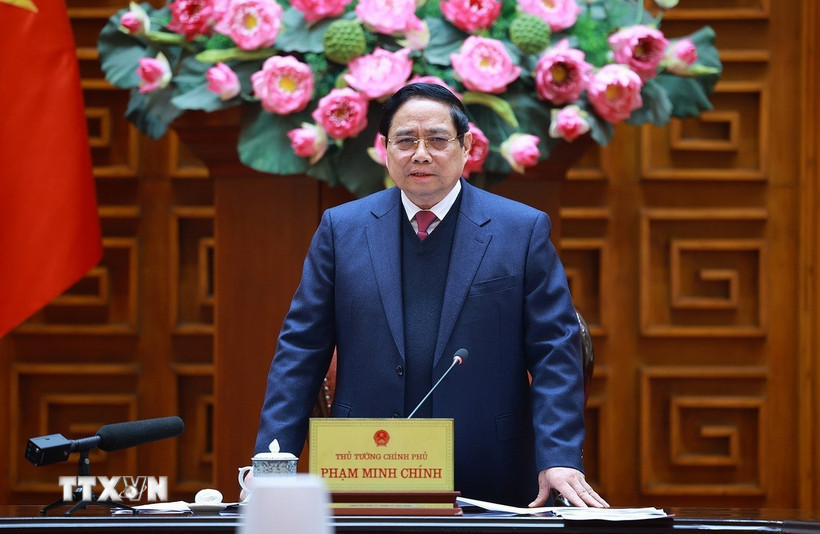
The Steering Committee assessed that 2025 marked a year of global uncertainty driven by geopolitical tensions and shifting trade policies. Domestically, Vietnam also faced severe natural disasters that broke historical records. Despite this, the country delivered a strong economic performance. Inflation was held at 3.31%, while GDP growth hit 8.02% - one of the highest rates in the world. This progress, the committee noted, builds solid momentum toward Vietnam’s development goals for the 2026–2030 period.
Looking ahead, 2026 holds special significance as the first year implementing the national socio-economic development plan for the next five years. It marks the beginning of a new development era shaped by the resolutions of the Party’s 14th National Congress.
The committee emphasized that Vietnam must strengthen institutional frameworks, promptly resolve bottlenecks, and unlock all potential resources for growth. Members called for a shift to a new growth model driven by science, technology, innovation, and digital transformation. They also urged a comprehensive economic restructuring and accelerated industrialization to enhance resilience, productivity, and competitiveness.
From planning to action: A call for strategic execution
Prime Minister Pham Minh Chinh concluded the meeting by underscoring the vital role macroeconomic management has played in sustaining growth throughout the 2021–2025 period. He noted that continued success hinges on maintaining flexibility and discipline while turning vision into action.
With global uncertainties still looming and domestic challenges ahead, the Prime Minister emphasized that 2026 must be a year of bold implementation. He outlined specific goals: maintaining macroeconomic stability, controlling inflation, achieving double-digit growth, managing budget deficits and public debt, and improving both physical and mental well-being for all citizens.
He instructed ministries and sectors to immediately begin executing the Party’s 14th Congress resolutions with a clear focus: “Words must match deeds. Action must deliver real, tangible outcomes for the people - no more window dressing or bureaucracy.”
Policy focus: Balanced, responsive, and inclusive
The Prime Minister called for a proactive fiscal policy - targeted and efficient - supported by rational adjustments to taxes and fees. The aim: to boost growth while ensuring increased public spending on national defense, social welfare, and development priorities. He also advocated for monetary policy that is timely, flexible, and coordinated with fiscal measures.
Budgetary discipline was highlighted as critical. The PM stressed the importance of expanding the tax base, preventing tax evasion - especially in sectors like e-commerce, food services, and retail - and implementing timely tax deferrals or reductions to support small and medium-sized enterprises.
Vietnam must also make strategic use of public debt and budget deficit leeway - within safe limits - to finance key national projects and innovation-focused initiatives, including science, technology, and digital transformation.
Boosting markets and managing risks
The PM instructed swift reforms to stabilize the stock market and corporate bond market, along with well-calibrated interest rate and exchange rate policies to ensure macroeconomic balance and currency stability. Credit growth must be directed toward infrastructure, digital technology, and high-quality rice production chains, while minimizing exposure to risk-prone sectors.
He further urged ministries to renew traditional growth drivers and build new engines of development - encouraging bold thinking, accountability, and strategic vision. All agencies must expedite public investment disbursement, especially for large-scale infrastructure projects like railways, airports, and seaports. The target: 100% disbursement of public capital in 2026.
Administrative procedures must be simplified and streamlined to remove bottlenecks. Ministries were also tasked with attracting major FDI projects in high-tech sectors, such as semiconductors, AI, and digital technology.
Accelerating investment, innovation, and green growth
PM Chinh ordered the fast-tracking of a national one-stop investment portal and the advancement of energy projects and social housing initiatives. He also called for a stable and sustainable real estate market, agricultural restructuring, food security protection, and effective consumer stimulus policies to safeguard supply chains and price stability.
Violations of pricing laws, smuggling, counterfeit trade, and IP infringement must be strictly punished, he added.
The Prime Minister also urged trade promotion and export market diversification, the launch of an international financial center, and the rapid development of national data and innovation hubs. Sectors such as energy, transport, tourism, and agriculture must adopt targeted, effective green transition strategies.
He concluded by emphasizing the importance of optimizing the two-tier local government system for maximum efficiency. PM Chinh expressed confidence that ministries and provinces will take proactive, coordinated steps to ensure that the economic momentum begins in the very first quarter of 2026 - laying a strong foundation for the entire 2026–2030 development cycle.
TTXVN
.svg)
