 Vietnamnet.vn

 Podcast



The primary driver behind these aggressive promotions is the substantial inventory of 2025-VIN vehicles still sitting at many dealerships, while supplies of new 2026 models - both domestically assembled and imported - remain abundant.
With supply clearly exceeding demand, automakers and their distribution networks are being pushed to intensify promotions to clear stock and optimize cash flow ahead of Tet.
As a result, a wide range of incentive programs has been rolled out in parallel, from full registration fee support to direct cash discounts.
Notably, these offers span almost every segment, from entry-level A- and B-segment cars to large SUVs and pickup trucks.
Full registration fee support remains the strongest draw
The most striking feature of the February 2026 auto market is the continued wave of 100% registration fee support, widely regarded by buyers as the most attractive form of promotion due to its transparent value and direct impact on on-road costs.
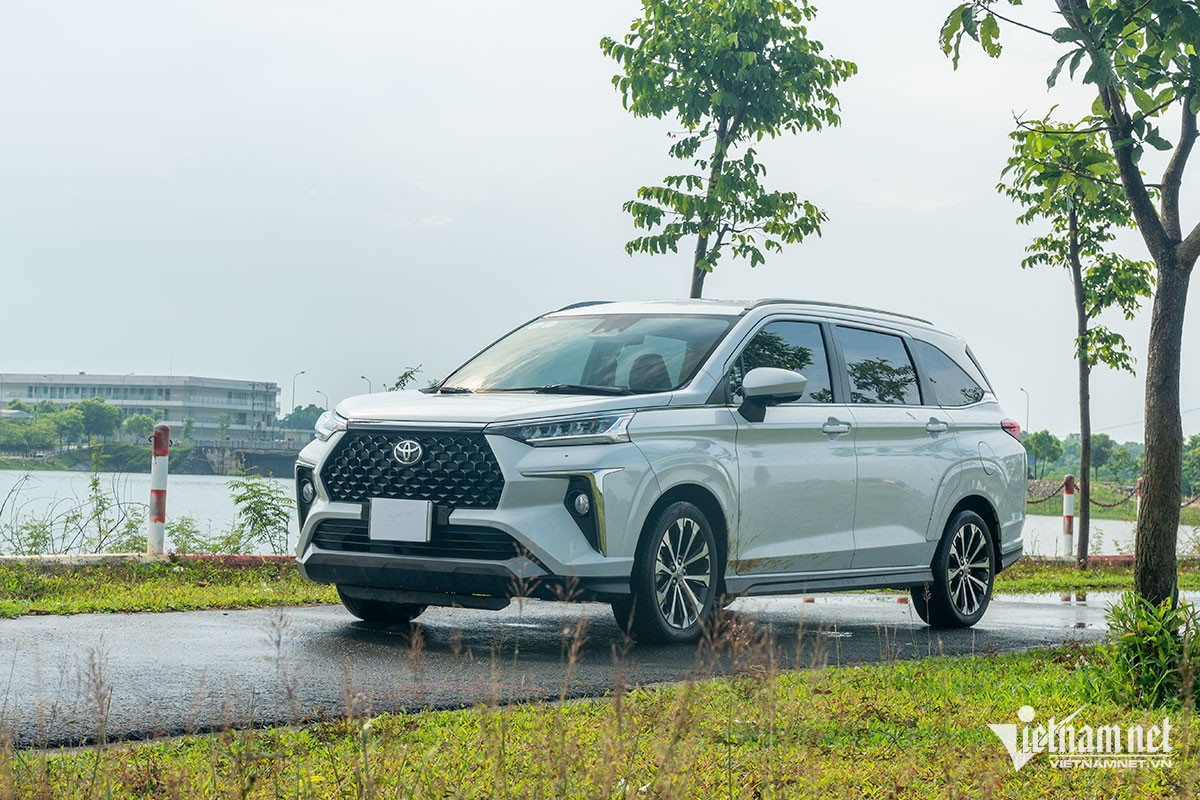
Toyota has reinforced its position in the family car segment by offering full registration fee support for its two seven-seat MPVs, the Veloz Cross and Avanza Premio.
With current prices ranging from approximately $22,000 to $23,600 for the Avanza Premio and $25,100 to $26,000 for the Veloz Cross, buyers can save roughly $2,200 to $2,600, excluding additional dealer-level accessory packages.
Mitsubishi quickly followed suit, offering registration fee support equivalent to 100% for the Xpander AT VIN 2026 (around $2,400), all Triton VIN 2026 variants ($1,600–$2,200), and the Attrage VIN 2025 ($1,500–$1,900).
This move is aimed at defending market share in both the MPV and pickup segments amid intensifying competition.
Ford has also joined the discount race.
Except for the Ranger XL, all other Ranger variants - including XLS, Stormtrak, Wildtrak, and Raptor - as well as the commercial Transit model, are receiving full registration fee support.
However, these incentives mainly apply to VIN 2025 vehicles, clearly reflecting the brand’s objective of clearing inventory before Tet.
For VinFast, the advantage comes from its consistent electric-vehicle policy.
The entire lineup, from VF 3 and VF 5 to VF 6 and VF 9, continues to benefit from a 100% registration fee exemption under current regulations, along with free battery charging through the end of 2027.
When total ownership and operating costs are considered, VinFast’s electric vehicles are creating a noticeable gap compared to gasoline-powered rivals in the same segments.
Cash discounts reach hundreds of millions of dong
Alongside fee support, many automakers are opting for direct price cuts to stimulate faster purchasing decisions.
Hyundai stands out as the most aggressive, offering discounts of up to approximately $8,700 on the D-segment SUV Santa Fe, bringing its real-world price down to around $33,500.
The Hyundai Accent and Stargazer are also receiving substantial reductions of about $2,500 and $3,800 respectively, as the brand seeks to maintain its footing in the highly competitive B-segment sedan and affordable seven-seat MPV categories dominated by Japanese rivals.
One of the most notable clearance campaigns involves the Subaru Forester.
Older units, mainly VIN 2024, are being heavily discounted by nearly $12,000, pulling the SUV’s price down to around $31,500.
This presents a rare opportunity for buyers seeking a full-time all-wheel-drive SUV known for safety and driving performance.
However, buyers must accept a two-year gap in production year and the loss of one generation update compared to the latest model.
Honda, meanwhile, is offering cash discounts of around $3,100 on gasoline-powered CR-V L and G variants, applicable to VIN 2025 vehicles only.
This move is clearly intended to make room for the next generation, following the official launch of the CR-V hybrid 2026 earlier in February.
Hybrid vehicles gain momentum ahead of Tet
February 2026 has also seen a clear acceleration in the hybrid segment, driven by the newly applied special consumption tax policy for hybrid vehicles, which took effect on January 1, 2026.
Toyota has taken the lead by adjusting list prices for its hybrid lineup, including the Yaris Cross HEV, Corolla Cross HEV, Camry HEV TOP, and Alphard HEV.
Price reductions range from approximately $1,500 to $8,000, making hybrid vehicles increasingly practical options rather than experimental alternatives.
With the current incentive landscape, February 2026 is widely regarded as a “golden window” for purchasing a car ahead of the Lunar New Year.
Even so, consumers are advised to remain cautious, carefully comparing trims, model years, and after-sales policies to avoid making decisions based solely on headline discounts.
In an intensely competitive market, the balance of advantage is clearly tilting toward buyers.
Ngo Minh
.svg)
