 Vietnamnet.vn

 Podcast



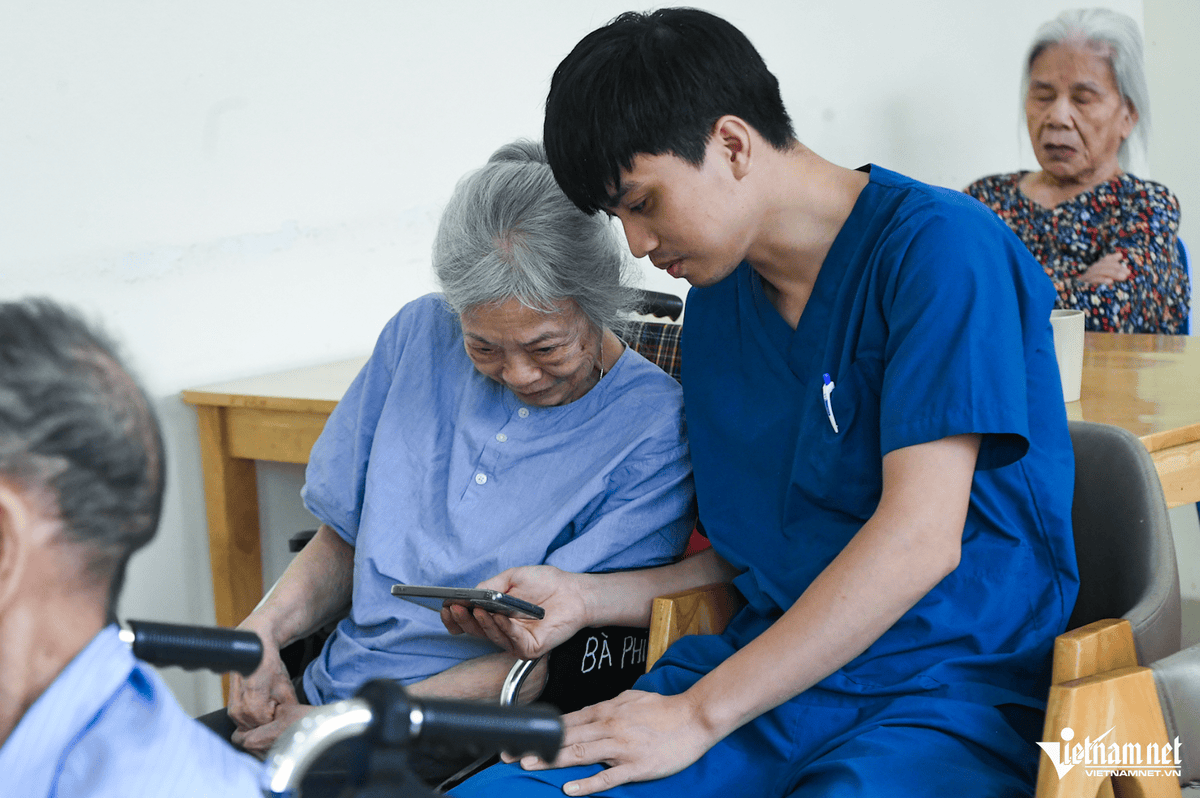
Professor Cu is the former director of the Institute for Population and Social Issues at National Economics University. He has extensive research experience in this field. Below he speaks about his perspectives regarding a recent proposal by the Ministry of Health (MOH):
MOH is proposing to equip individuals aged 40 and older with knowledge to prepare for old age. How do you assess this proposal?
This is a necessary initiative, particularly as Vietnam is experiencing rapid population aging and is approaching an "aged population" phase. Disseminating knowledge on long-term care, healthcare, financial planning, employment, and labor for older adults is highly worthwhile.
However, assuming that one should wait until age 40 to begin preparing for old age is far too late.
Old age is not determined at 60 or 65; rather, it is the cumulative result of early preparation. What an individual does before age 40 determines whether they will enjoy a healthy, independent old age.
If someone smokes, drinks heavily, uses illicit substances, or habitually stays up late starting in adolescence, expecting a healthy old age becomes difficult. Senior health is the accumulated outcome of youthful habits. This reflects the core principle that "prevention is better than cure”.
Beyond health, financial preparation must also begin early. Upon entering the workforce, individuals need stable employment, savings, asset accumulation, and participation in social insurance to secure income after retirement. Starting to save only at age 40 leaves a shorter preparation window.
Psychological preparation is equally vital. The traditional concept that "children rely on parents when young, parents rely on children when old" is no longer realistic as traditional extended families transition into nuclear units with only one or two children. Adult children may study or work in distant locations, or even abroad, meaning elderly parents cannot rely entirely on offspring for care.
Therefore, individuals must cultivate self-reliance early and adapt proactively to societal shifts to avoid psychological shock upon entering old age.
Many people assume they can simply enter a nursing home later without needing children or extensive preparation. However, my surveys at several care facilities found that fees at average-quality centers average around VND8 million per month. In major hubs like Hanoi or HCMC, costs run higher. For seniors suffering from conditions such as dementia, Parkinson's disease, or stroke sequelae requiring specialized care, expenses rise substantially.
Without early asset accumulation, where will the financial resources to cover these costs come from?
I also believe marriage and childbearing should not be delayed excessively. Remaining unmarried and childless at age 40 makes preparing for later life far more challenging. This affects not only reproductive health but also long-term financial plans and family support structures in senior years.
Early preparation is essential for healthy aging.
In your view, what is the ideal age to begin preparing for old age?
There is no absolute age threshold. The earlier one prepares, the better. Preparing for old age actually begins in youth, and conceptually even before a person is born.
For instance, couples should undergo premarital and prenatal health screenings to minimize risks of congenital birth defects. This ensures children have the opportunity to grow up healthy while reducing future burdens on families and society.
Upon reaching adulthood, individuals must maintain healthy habits, take care of their physical well-being, work, accumulate financial reserves, participate in social insurance, and secure stable housing. These foundational elements determine one's capacity for independent living in old age.
In other words, old age does not begin at retirement age; it is built long before. Securing a happy old age requires investing in health, finances, and psychological readiness starting in one's youth.
|
MOH has proposed developing reference materials that provide knowledge on healthy lifestyles, physical exercise, and home caregiving skills for the elderly. The initiative also aims to guide financial planning, labor, and suitable employment for individuals aged 40 and older, enabling them to proactively prepare for later life. Currently, Vietnam has approximately 14.2 million citizens aged 60 and older, accounting for 14.1 percent of the population. Forecasts indicate this number will rise to nearly 18 million by 2030. In 2024, the aging index reached 60.2 percent, meaning there were roughly 60 elderly citizens for every 100 children. According to projections by the General Statistics Office, the elderly population will surpass the child population by 2034, marking Vietnam's transition into an "aged population" phase, two years earlier than previously forecasted. |
Vo Thu
.svg)
