 Vietnamnet.vn

 Podcast



It may be time for Vietnam to rethink how it manages public holidays, moving away from ad hoc administrative decisions toward a transparent, rules-based legal framework that eliminates recurring debates over holiday adjustments.
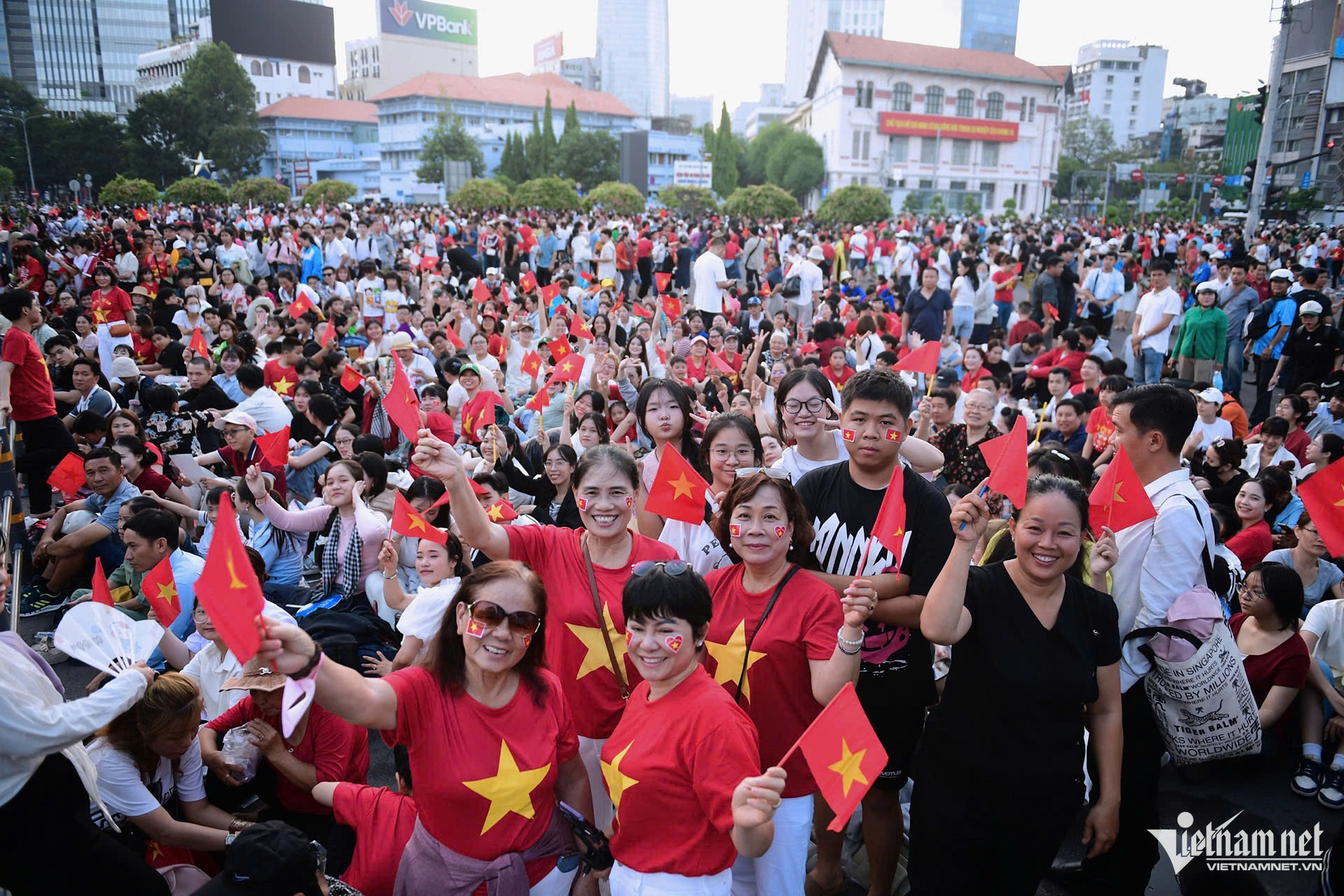
The Ministry of Home Affairs recently confirmed that the 2026 holiday schedule for Hung Kings’ Commemoration Day, Reunification Day (April 30), and International Workers’ Day (May 1) will follow the provisions of the 2019 Labor Code, with no plans for workday swaps to extend the break.
This decision effectively ruled out the widely discussed option of a nine-day holiday, despite a survey by the Vietnam General Confederation of Labor showing that 62% of workers support such adjustments.
Balancing competing interests
In a modern economy, public holidays are not merely calendar adjustments but policy tools requiring careful balancing between the State, employers, and workers.
For migrant workers in industrial zones, long holidays often represent rare opportunities to return home and reconnect with family. These breaks carry significant social and health value, particularly given the high labor intensity in manufacturing sectors.
For businesses, however - especially foreign-invested enterprises and export-oriented industries such as textiles, footwear, and electronics - unexpected disruptions can affect production schedules, delay deliveries, and increase costs due to overtime compensation.
Managing holidays through last-minute administrative decisions can therefore have wide-ranging economic implications.
Global models: law and negotiation
International practices show diverse approaches shaped by legal frameworks and labor relations.
In North America, Canada operates under a clear system of compensatory holidays. If a public holiday falls on a weekend, workers automatically receive a paid day off on the nearest weekday. This predictability allows payroll systems and production planning to function smoothly without annual directives.
Japan offers another model, using legal mechanisms to eliminate uncertainty. Under its system, any working day that falls between two public holidays automatically becomes a holiday, creating extended breaks that can be forecast years in advance.
In the Caribbean, the Dominican Republic applies a similar principle by shifting midweek holidays to the nearest Monday, ensuring consistent long weekends.
Beyond legal automation, collective bargaining plays a crucial role. In Brazil, retail businesses cannot open on public holidays without agreements with labor unions, often requiring higher pay rates or compensatory benefits.
South Africa has also recognized certain major holidays as “non-trading days,” ensuring workers can spend time with family.
The downside of extended holidays
However, prolonged holiday periods are not without risks.
China’s “Golden Week” model, which combines multiple holidays into a seven-to-eight-day break, has led to disruptions in production, port operations, and supply chains, driving up logistics costs and creating supply gaps.
South Korea’s attempts to extend holidays by converting intervening workdays have also produced mixed results. Instead of boosting domestic consumption, many middle-class citizens used the time to travel abroad, contributing to capital outflows while exports declined sharply during production stoppages.
In Southeast Asia, Indonesia’s extended holiday policy has facilitated mass homecoming travel but raised concerns among international organizations such as the IMF about its impact on economic recovery and export capacity.
Toward a predictable framework
Vietnam’s recurring debates over holiday adjustments highlight the need for a more systematic approach.
First, holiday management should move away from administrative decisions toward a legal framework that incorporates an automatic “bridge day” mechanism. Under such a system, workdays between public holidays and weekends would automatically become days off, with compensatory work scheduled in advance.
Second, greater authority should be given to enterprise-level collective bargaining. While public sector schedules may remain mandatory, private-sector arrangements - especially in FDI enterprises - should allow negotiation between employers and trade unions, ensuring fair compensation where work during holidays is required.
Third, policymakers should exercise caution in clustering holidays into extended breaks, which may strain infrastructure and reduce economic efficiency. A more balanced distribution of holidays, combined with flexible leave policies, would allow workers to plan rest periods without disrupting production cycles.
Finally, attention must be given to informal workers, including freelancers and gig economy participants, who often lack social protection and face increased workloads during holidays. Expanding union coverage and establishing minimum protections for these groups will be essential.
A modern economy cannot thrive by exhausting its workforce, nor can it sustain growth amid unpredictable disruptions. Establishing a transparent, rule-based holiday system - supported by effective labor representation - could provide the foundation for both social well-being and long-term economic resilience.
Nguyen Phuoc Thang (Hoa Binh University)
.svg)
