 Vietnamnet.vn

 Podcast



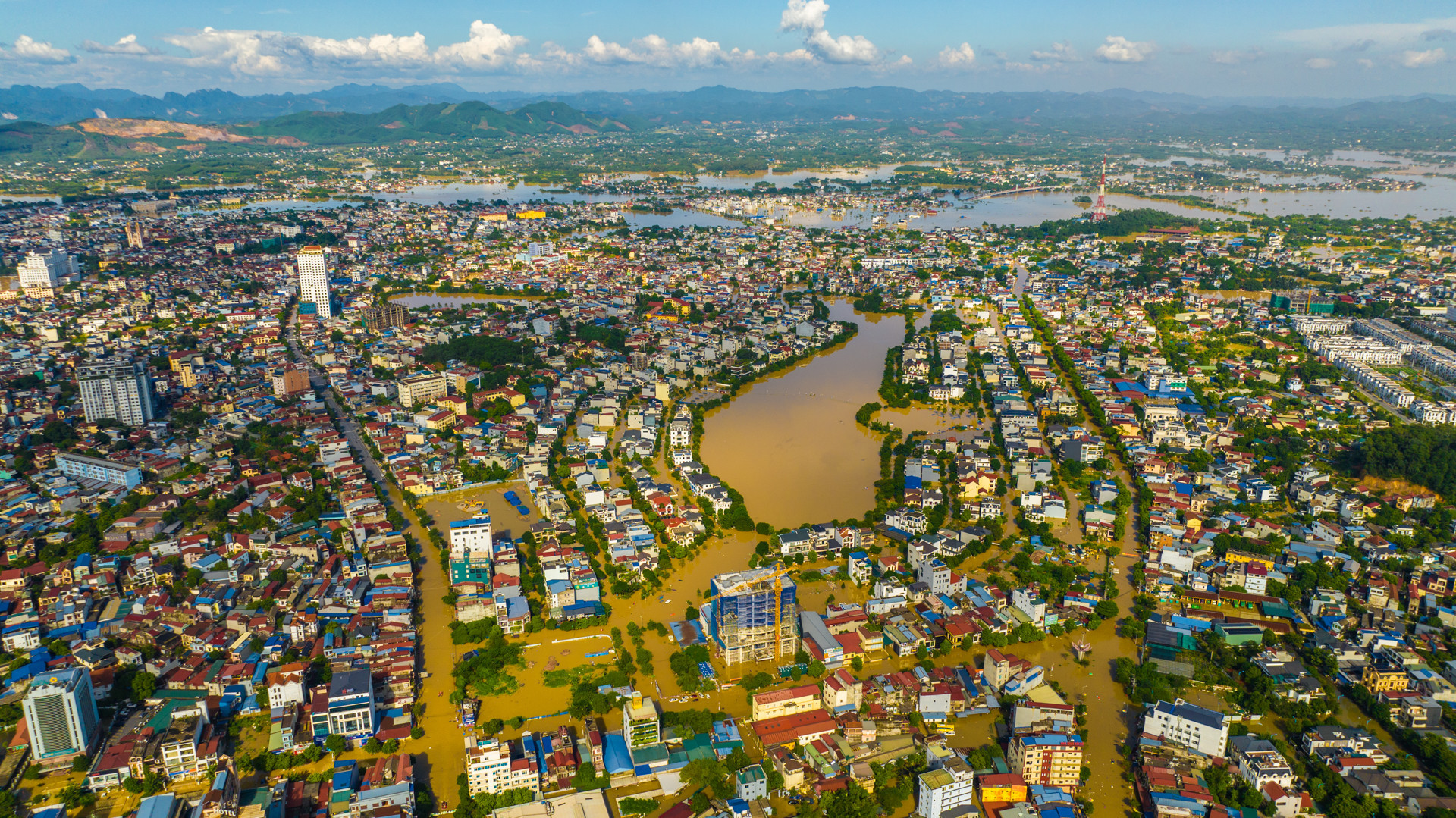
Having once been a victim of the historic 1999 flood in Hue, I believed I understood the force of nature. Yet the 33 days I spent following storms and floods across central Vietnam from October 22, 2025 pushed my emotions to their limits.
I remember the numbness when the Song Ba Ha hydropower plant discharged water at 14,740 cubic meters per second, then surged to 16,100 cubic meters per second just three hours later. The tension was relentless. My phone vibrated constantly with messages pleading for help. With each message I read, my hands trembled. I tried to steady myself, but I must admit the psychological toll was overwhelming.
In 2025, natural disasters and extreme weather stretched from north to south. Preliminary estimates put economic losses at VND100,000 billion, approximately US$4 billion. Production was disrupted nationwide, and recovery in many areas will take years.
The year set a new record for tropical cyclones forming and moving across the East Sea and into the mainland, with 21 systems surpassing the previous high of 2017. Storm No. 3 brought torrential rains that pushed the water level at Ban Ve reservoir beyond its design flood threshold and even past the 5,000-year flood frequency level, triggering catastrophic flooding in western Nghe An.
Historic Storm No. 10 lingered over land longer than any before it. Its aftermath, followed by Storm No. 11’s circulation, unleashed unprecedented floods in Thai Nguyen, Lang Son, Bac Ninh and Hanoi.
Rivers also broke records etched in memory for decades. The Vu Gia River in Quang Nam exceeded its historic 1964 peak. The Bo River in Hue surpassed the devastating 1999 flood level. Toward the end of the year, severe flooding struck Dak Lak, in the area formerly part of Phu Yen, along with Khanh Hoa and Lam Dong, on a scale rarely seen.
When disasters exceed endurance
Disaster risk theory holds that a region is resilient when its ecosystems, infrastructure and public knowledge can withstand shocks. But when rainfall exceeds 1,000 millimeters in 48 hours, few systems can cope.
In October and November, the scale of extreme weather was unmistakable. At Bach Ma peak, rainfall measured 1,739 millimeters within 24 hours from 7pm on October 26 to 7pm on October 27. That figure nearly equals Vietnam’s average annual rainfall of 1,400 to 2,400 millimeters and stands as the highest 24-hour rainfall recorded globally in the 21st century to date.
The rains persisted for days and came in waves, creating complex, multi-hazard scenarios that overwhelmed local capacities. When analyzing and forecasting the floods in Dak Lak before waters even rose, I assessed that the event represented a once-in-a-century hazardous combination of factors.
Scientific data increasingly confirms the link between climate change and extreme weather. As global average temperatures trend beyond 1.5 degrees Celsius above pre-industrial levels, disasters intensify. Rapid shifts between El Nino and La Nina phases, punctuated by short neutral intervals, keep the atmosphere in constant instability.
Monsoon systems, formed and “remembered” over millions of years, appear to be losing that memory. Unusual northeast wind convergence zones, disturbances in easterly winds that produce extreme rainfall, and hot, dry southwest winds that prolong drought are becoming more frequent.
Floods and droughts will continue to alternate, both exerting heavy economic and social impacts on Vietnam. To adapt, we must raise the resilience threshold of both infrastructure and people.
Throughout coverage from Thai Nguyen to the South Central region, what impressed me most was the resilience and solidarity of the Vietnamese people. Areas that had just endured historic floods - Thanh Hoa, Thai Nguyen, Hue, Quang Nam - quickly mobilized to support newly affected regions.
Actions that must be taken now
To safeguard socio-economic achievements, climate adaptation and disaster prevention can no longer be optional. Several urgent measures should be prioritized and implemented consistently.
First, comprehensive response planning
From village and commune to provincial levels, authorities must develop response plans for extreme scenarios and different types of disasters. Clear action plans and mobilization strategies for human and material resources are essential. Vietnam’s “four on the spot” principle has proven effective, but greater proactivity is required.
Second, democratizing disaster risk information
In nearly 20 years of disaster risk research, I have observed that communities frequently exposed to hazards often respond more effectively. Preparatory actions such as reinforcing homes, elevating belongings and relocating to safe shelters are crucial.
Forecasts must be translated into language people understand. Residents need to know whether a storm will directly affect their locality rather than be told it will pass through abstract coordinates. River flood warnings should shift from alert levels 1, 2 or 3 to clear projections of inundation depths in residential areas.
Third, modernizing warning systems
Vietnam’s Disaster Monitoring System is integrated online. Now is the time to expand mobile-based forecasting and early warning applications. Investments should be made in real-time camera monitoring of reservoir and river water levels, coupled with flood scenario modeling based on historical data and meteorological forecasts. In high-risk areas, siren systems for flood and storm alerts are necessary, similar to those in Hue and the integrated river monitoring functions within the Hue-S application.
Fourth, building trained volunteer rescue networks
In 2025, we quickly formed a temporary “Three Regions Disaster Response Team” of around 50 members skilled in operating canoes, drones and logistics. Vietnam has abundant volunteer resources, yet coordination gaps remain. At times, we transported rescue boats more than 500 kilometers to flooded zones despite the presence of idle boats locally.
Some areas had boats but lacked trained operators. Others had both but lacked organized teams. Flood-prone localities should establish formally recognized, well-trained rescue canoe teams integrated into a national network for coordinated support.
Fifth, developing relief and recovery scenarios
Vietnamese solidarity is immense, but the absence of comprehensive relief planning reduces effectiveness. Some communities received excessive donations due to media visibility, while others just five kilometers away received none. Mismatched supplies and poor logistics created waste.
Beyond preparedness and recovery planning, local authorities must deploy rapid needs assessment tools immediately after disasters. Real-time, transparent online platforms should share updated needs to guide charitable organizations efficiently.
Human actions also contribute to escalating disasters. Deforestation, pollution and shrinking safe living spaces intensify vulnerability. The relentless succession of extreme events forces us to ask when we will no longer fear each approaching storm.
Raising the foundation of one’s house to avoid floods is a spontaneous adaptation - “when water rises, the duckweed floats.” Long-term adaptation requires a broader vision: replanting and protecting forests, preserving every tree, lake and river, and safeguarding our living space in harmony with nature.
Dr Nguyen Ngoc Huy
.svg)
