 Vietnamnet.vn

 Podcast



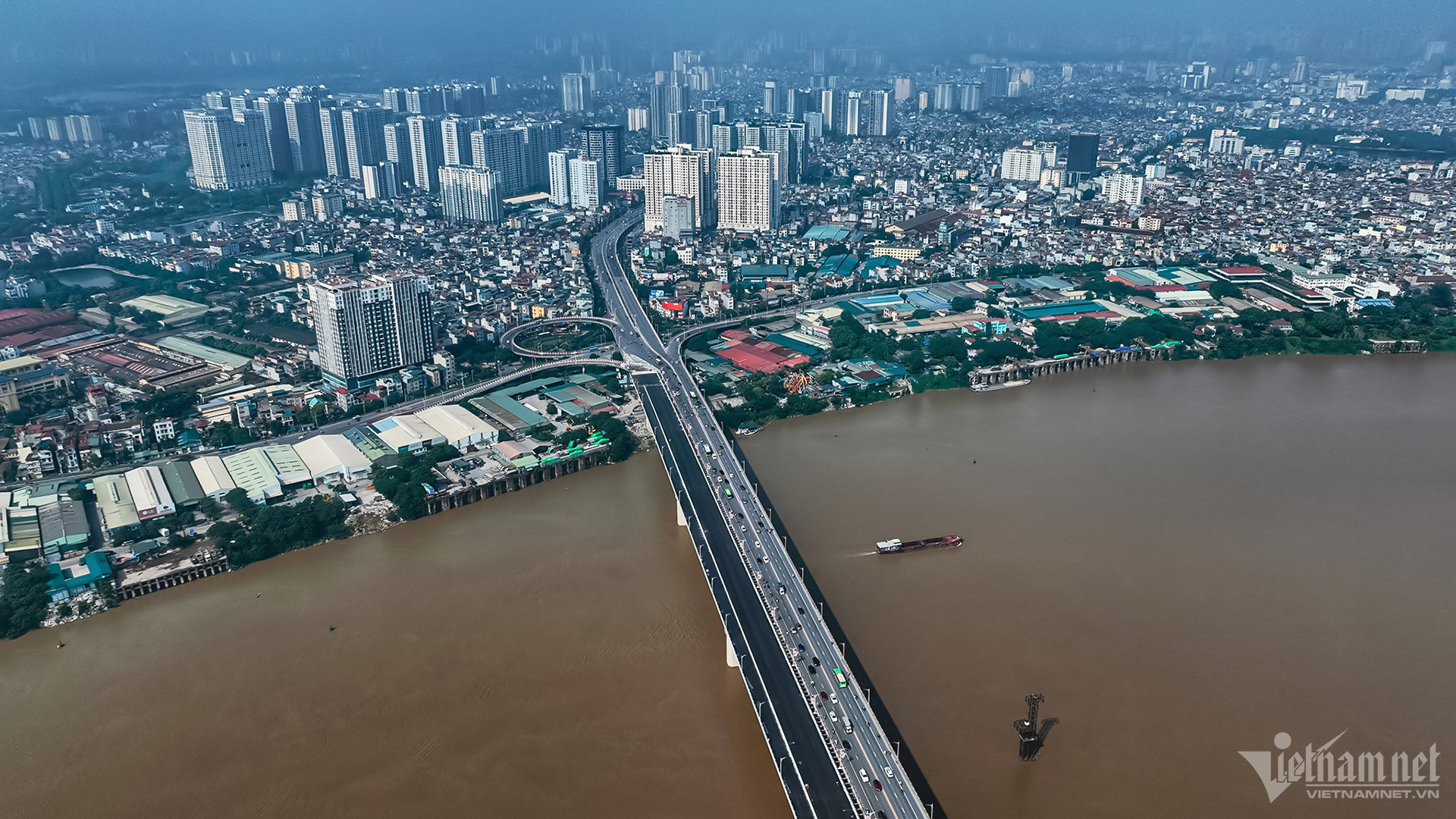
According to Lang, the most significant breakthrough in the new plan lies in Hanoi’s shift in development thinking.
For decades, Hanoi primarily expanded around the Old Quarter and relied heavily on transportation infrastructure as its development backbone.
Now, however, the city is moving toward using the river itself as the central axis of urban growth - an approach he described as modern and aligned with global urban trends.
He pointed to major international cities built around iconic rivers, including the Han River in Seoul, the Seine in Paris, and riverfront urban models in Malaysia and Singapore.
Yet the Red River carries a unique identity of its own as a massive alluvial river deeply intertwined with the history and culture of northern Vietnam’s delta region.
If Hanoi succeeds in transforming the Red River into a greener, cleaner and more attractive urban corridor, turning it into a centerpiece of modern living and public space, the capital could emerge with an entirely different identity.
The city could become one of the region’s and even the world’s most distinctive riverfront capitals.
According to Lang, placing water at the center of development also carries long-term significance for environmental sustainability.
Once the Red River is “awakened,” other urban waterways and ecological systems - including the To Lich River, inner-city lakes and surrounding ecological belts - could also have a chance to recover.
Biggest challenge lies in planning and land clearance
While praising the project’s vision, Nguyen Thuong Lang said the greatest challenge will be urban planning and implementation.
He noted that many areas along the Red River remain fragmented, with inconsistent infrastructure, spontaneous settlements, aging bridges and limited architectural identity.
To build a world-class riverfront metropolis capable of serving the next century, Hanoi must first create a truly high-level master plan that reflects Vietnamese identity while integrating architecture, environment, technology and culture.
Another major obstacle will be land clearance, resettlement and the creation of sustainable livelihoods for residents.
Tens of thousands of households currently living along the Red River floodplain rely on farming, livestock raising, small businesses and traditional craft industries.
Simply relocating them without ensuring long-term livelihoods would make it difficult to gain public support, Lang warned.
“People will naturally ask why they should move if their current homes are already better or more beautiful,” he said. “The government must ensure that new housing is better than the old while also creating new jobs and livelihood opportunities.”
Lang suggested Hanoi should combine on-site resettlement with relocation to newly developed areas.
For households with stable residency and legal documentation, the city should prioritize allowing them to remain while reorganizing living spaces in a more modern and orderly manner.
Preserving craft villages and the cultural soul of the Red River
One major concern surrounding rapid urbanization along the river is whether traditional craft villages and cultural communities such as Bat Trang or Nhat Tan may disappear.
According to Lang, urban development does not mean erasing traditional values.
“Craft villages like Bat Trang pottery village or Nhat Tan peach blossom village should be preserved, but modernized in a greener, cleaner and more technology-driven direction while retaining their cultural identity,” he said.
He cited Japan’s preservation of cherry blossom spaces as an example of how traditional cultural landscapes can be professionally managed and transformed into globally recognized tourism attractions.
“Hanoi can absolutely do something similar with Nhat Tan peach blossoms and Red River cultural spaces,” Lang added.
Urban development must work with nature
Addressing concerns that large-scale riverfront development could affect flood drainage and climate resilience, Lang stressed that the most important principle is “working with nature.”
With current technology, Hanoi can simultaneously develop urban infrastructure and maintain hydrological safety if planning is done properly, he said. “The key is conducting thorough impact assessments, creating flood diversion strategies, establishing early warning systems and controlling water flows with modern technology.”
He also emphasized the need for river dredging, anti-sedimentation measures and modern embankment systems to protect riverbanks while optimizing land use.
Can Hanoi finish the project within 10 years?
Assessing the project’s feasibility, Lang said Hanoi could realistically complete the development within a decade if the city remains determined.
Compared with the past, Hanoi now benefits from special policy mechanisms, stronger financial resources, modern technology and greater political commitment.
“Hanoi can no longer develop using outdated methods,” Lang said. “If land clearance is carried out decisively and science and technology are applied effectively, the project is entirely achievable.”
The expert also expressed hope that once completed, the Red River landscape boulevard would become a new symbol of Hanoi and give rise to a uniquely Vietnamese school of urban architecture.
“For years, we have been heavily influenced by foreign architectural styles,” he said. “But if this project is executed successfully, Hanoi could create an urban space that is both modern and deeply rooted in its thousand-year cultural heritage.”
According to Lang, the future Red River corridor will not only serve as a residential and commercial hub but also emerge as a center for tourism, culture and innovation in the capital.
It could become the defining project shaping Hanoi for the next century.
Vu Diep
.svg)
