 Vietnamnet.vn

 Podcast



Editor's note: Nearly eight years after the adoption of Resolution 36-NQ/TW on Vietnam's sustainable marine economic development, the Party Central Committee is preparing to issue a new resolution on maritime development.
As Vietnam enters a new phase of development with the goal of becoming a developed country by 2045, a new approach is required. While Resolution 36 focused primarily on developing marine economic sectors, the upcoming resolution aims to strengthen governance of Vietnam's national maritime space as a strategic engine for future growth.
This special report examines the evolution of Vietnam's development thinking - from focusing on the marine economy to building a maritime nation - and explores the role of the sea in the country's long-term development strategy through 2045.
Rather than examining individual sectors such as ports, offshore wind, fisheries, logistics or coastal tourism, these industries are used only as examples to illustrate broader strategic arguments.
What distinguishes this series is its institutional and strategic perspective. It views the sea not simply as an economic sector but as an integrated national development space. In doing so, it reflects Vietnam's evolving development philosophy: from resource extraction to creating new growth drivers; from developing marine industries to governing maritime space; and from pursuing prosperity from the sea to building a strong maritime nation for the twenty-first century.
Part 1: Why Vietnam must move beyond the traditional blue economy
Part 2: Beyond the sea economy: Vietnam's path to maritime power
Nearly eight years after Vietnam adopted Resolution 36 on the Strategy for the Sustainable Development of the Marine Economy through 2030 with a vision to 2045, economist Dr. Tran Dinh Thien, former Head of the Vietnam Institute of Economics, argues that the country's greatest opportunity lies not in extracting marine resources, but in embracing the sea as a strategic development space capable of reshaping Vietnam's economic future.
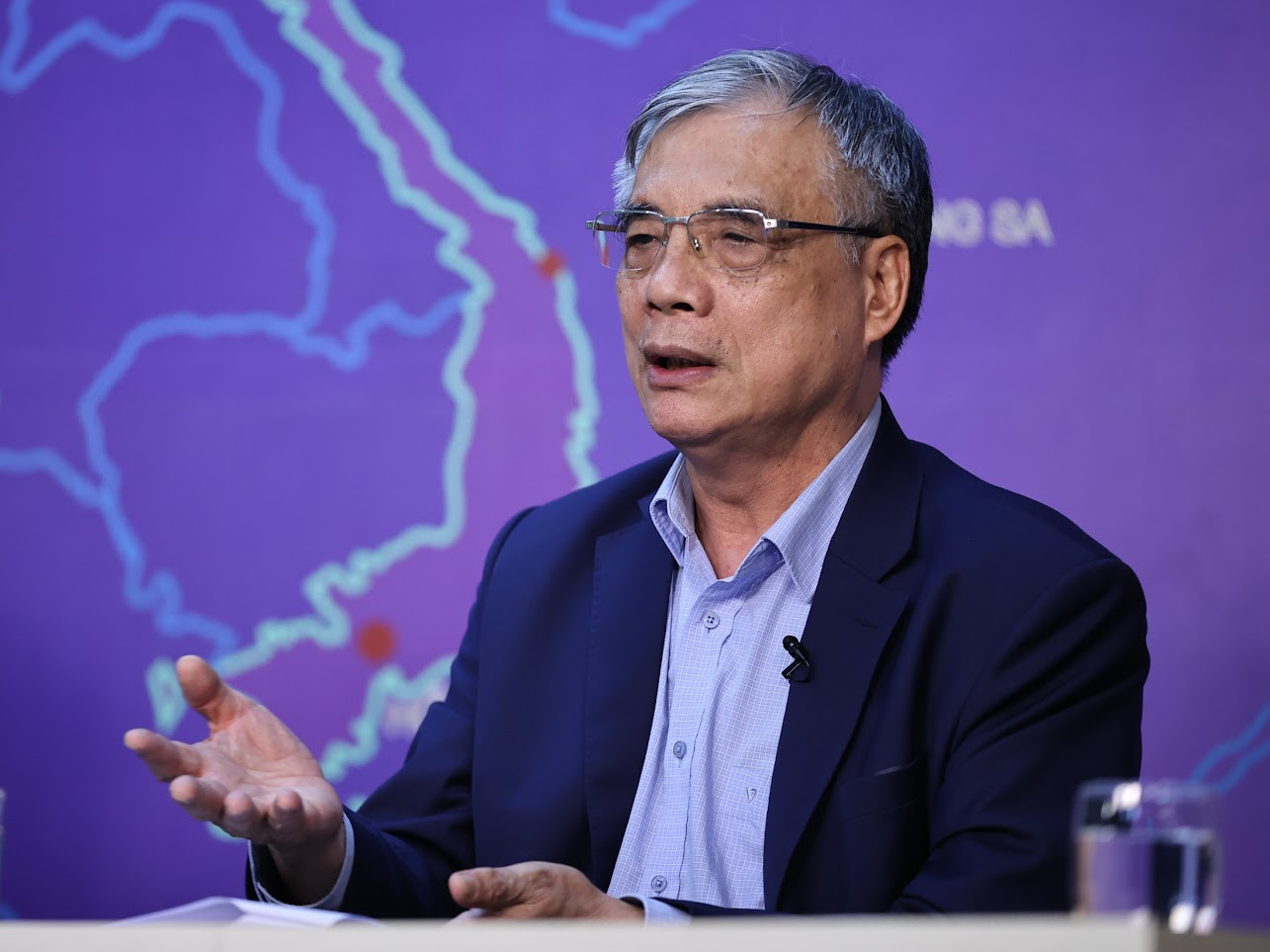
Resolution 36 has been in place for nearly eight years. In your view, what has been its greatest contribution?
Dr. Tran Dinh Thien: The most important achievement of Resolution 36 is not simply that it introduced a development strategy. Its real significance lies in fundamentally changing how Vietnam thinks about the sea.
In the past, we tended to regard the sea primarily as a storehouse of natural resources to fuel economic growth. Discussions about the sea focused on oil and gas, fisheries, tourism or seaports. It was essentially a sector-based approach centered on resource extraction.
Resolution 36 places the sea in an entirely different context. It defines the sea as a space for national survival, development and strategic security - one that is closely tied to Vietnam's long-term future. This aligns with the global trend of recognizing the 21st century as the Century of the Ocean.
That shift in thinking is profoundly important.
In today's world, a country's comparative advantage is no longer determined mainly by the size of its land territory or the mineral wealth beneath it. As technology advances and globalization deepens, competitiveness increasingly depends on the ability to develop and manage open spaces - especially the oceans.
Like airspace and cyberspace, the sea has become where global flows of trade, capital, technology, data and energy converge. Countries capable of organizing and mastering these flows will enjoy lasting competitive advantages.
Viewed in this context, Resolution 36 introduces a fundamentally new perspective: the sea is no longer the periphery of the economy but one of the central pillars of Vietnam's national development strategy.
In essence, it expands not only our vision but also the country's development opportunities.
Yet changing mindsets is not the same as changing reality.
Vietnam has invested more heavily in coastal infrastructure, economic zones, ports, tourism and energy projects. However, much of this development still follows the traditional pattern of "land-based exploitation" and nearshore fishing. The broader ocean economy remains largely beyond our reach.
Overall, the sea has yet to become the growth engine it could - and should - be.
In my view, the underlying reason is that Vietnam continues to develop the sea using an outdated framework. Maritime development remains fragmented by administrative boundaries and sectoral interests, driven largely by a land-based economy focused on extracting raw resources.
Every province wants its own port, economic zone, industrial park and tourism complex.
Building a modern marine economy and becoming a strong maritime nation requires an entirely different model - one based on integrated economic space, advanced technologies and value chains built around national competitive advantages.
Resolution 36 opened the right door.
But walking through that door requires a fundamental transformation in institutions and development thinking.
That is precisely what General Secretary To Lam recently emphasized when he called for a renewed maritime vision that recognizes the sea as Vietnam's strategic development space in the new era.
You have often argued that the sea is not merely a resource but a development space. Why is this distinction so important today?
The difference reflects two entirely different development models.
If the sea is viewed primarily as a resource, the objective is straightforward: extraction.
We ask how much oil can be produced, how many fish can be caught, or how many tourist resorts can be built.
But if the sea is understood as a development space, the questions become very different.
We begin asking where Vietnam should position itself within global shipping networks.
Which segments of international logistics should Vietnamese businesses lead?
What ocean technologies should Vietnam master?
How will the sea strengthen the country's competitiveness over the coming decades?
This represents the shift from the extraction mindset typical of an agrarian economy to a development model built around technology, innovation and value creation.
Vietnam's land-based growth model is gradually approaching its limits.
Land is increasingly scarce. Urban areas face mounting pressure. Natural resources are finite. Growth driven primarily by inexpensive labor has reached its limits.
At the same time, Vietnam possesses more than 3,260 kilometers of coastline and an exclusive economic zone spanning more than one million square kilometers, located along some of the world's busiest maritime routes.
Beyond that lies the wider ocean itself - a strategic opportunity that, in my opinion, has yet to be fully reflected in Vietnam's national maritime strategy.
If we continue viewing the sea solely as a place to extract resources, we unnecessarily limit our own opportunities.
But if we regard it as a new development space, we see not only natural resources but also logistics, international shipping, offshore renewable energy, marine technology, ocean data, maritime airspace, financial services, innovation and countless other possibilities.
The sea's greatest value is therefore not what lies beneath its surface.
Its true value lies in its capacity to create an entirely new economic structure for Vietnam.
Around the world, governments increasingly recognize that the 21st century will witness a major shift in development toward the oceans.
Countries that build an ocean mindset early will enjoy long-term competitive advantages.
Vietnam cannot afford to remain outside this transformation.
Vietnam has more than 3,260 kilometers of coastline and sits along major international shipping routes. Is its greatest advantage really its marine resources - or its geoeconomic position?
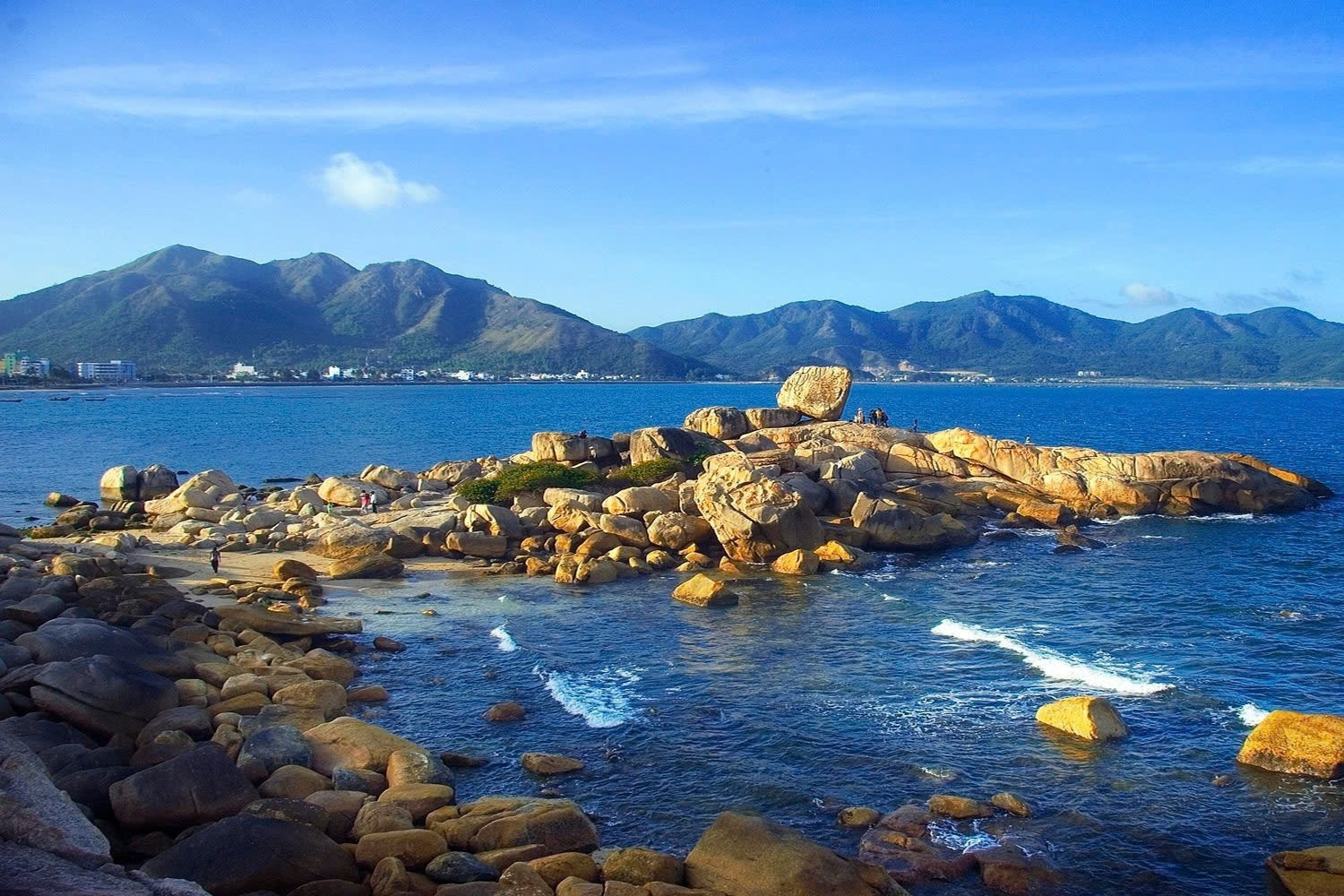
In my opinion, Vietnam's greatest strength lies not in its resources but in its geoeconomic location.
Natural resources are finite.
Oil reserves will eventually decline.
Fish stocks will diminish if overexploited.
Geography, however, can remain a lasting competitive advantage - provided it is properly utilized.
Vietnam opens onto the Pacific Ocean and sits at the crossroads connecting the Pacific and Indian Oceans, along some of the world's busiest maritime routes and within the most dynamic economic region on Earth.
Few countries enjoy such a strategic position.
Vietnam often describes its coastline as having an exceptionally attractive "ocean frontage."
But possessing prime waterfront property does not automatically generate prosperity.
What matters is how that frontage is developed.
If Vietnam merely builds additional industrial parks or provincial ports, it captures only a small fraction of its geographic advantage.
The real objective should be to establish internationally connected gateways - global gateways integrating logistics, maritime finance, shipping services, free trade zones and world-class coastal cities directly linked to global economic networks.
That is how a geographic advantage becomes genuine competitive advantage.
The 21st century will no longer be defined by competition among countries with abundant natural resources.
Instead, success will belong to countries capable of organizing global flows of goods, capital, technology, information and culture.
The sea is where these flows converge.
The real question, therefore, is not how much maritime territory Vietnam possesses or what position it holds in the East Sea.
The more important question is what role Vietnam intends to play across the global ocean economy.
Answering that question will allow the country to move beyond a mindset centered on coastal fishing and define its place within the world economy for decades to come.
Resolution 36 prioritizes marine tourism, maritime services, offshore renewable energy and emerging marine industries instead of focusing primarily on resource extraction. What does this shift represent?
In my view, it reflects a fundamental transformation in Vietnam's development model - from one based on extracting physical resources to one driven by services, advanced technology and human creativity.
For decades, Vietnam largely depended on what nature provided.
If there was oil, we extracted it.
If there were fish, we caught them.
If there were beautiful beaches, we developed tourism.
That was a resource-based model.
But natural resources always have limits.
The true strength of a modern economy no longer depends on how much it extracts from nature but on how much value it creates through knowledge, technology and effective organization.
That is precisely the spirit of Resolution 36.
The objective is no longer simply to exploit oil or fisheries.
It is to develop the entire marine economic space - beneath the seabed, on the ocean surface, within the marine atmosphere and across every economic activity connected with the sea.
An international transshipment port can generate value for far longer than a resource deposit that will eventually be depleted.
A logistics hub, free trade zone, offshore energy cluster or marine research center represents an asset capable of creating prosperity for generations.
Globally, policymakers increasingly speak not simply of the marine economy, but of the ocean economy or the blue economy - an economic model built upon technology, innovation, sustainability and environmentally responsible growth.
These, in my opinion, are precisely the directions Vietnam should pursue in the years ahead.
Tu Giang - Lan Anh
.svg)
