 Vietnamnet.vn

 Podcast



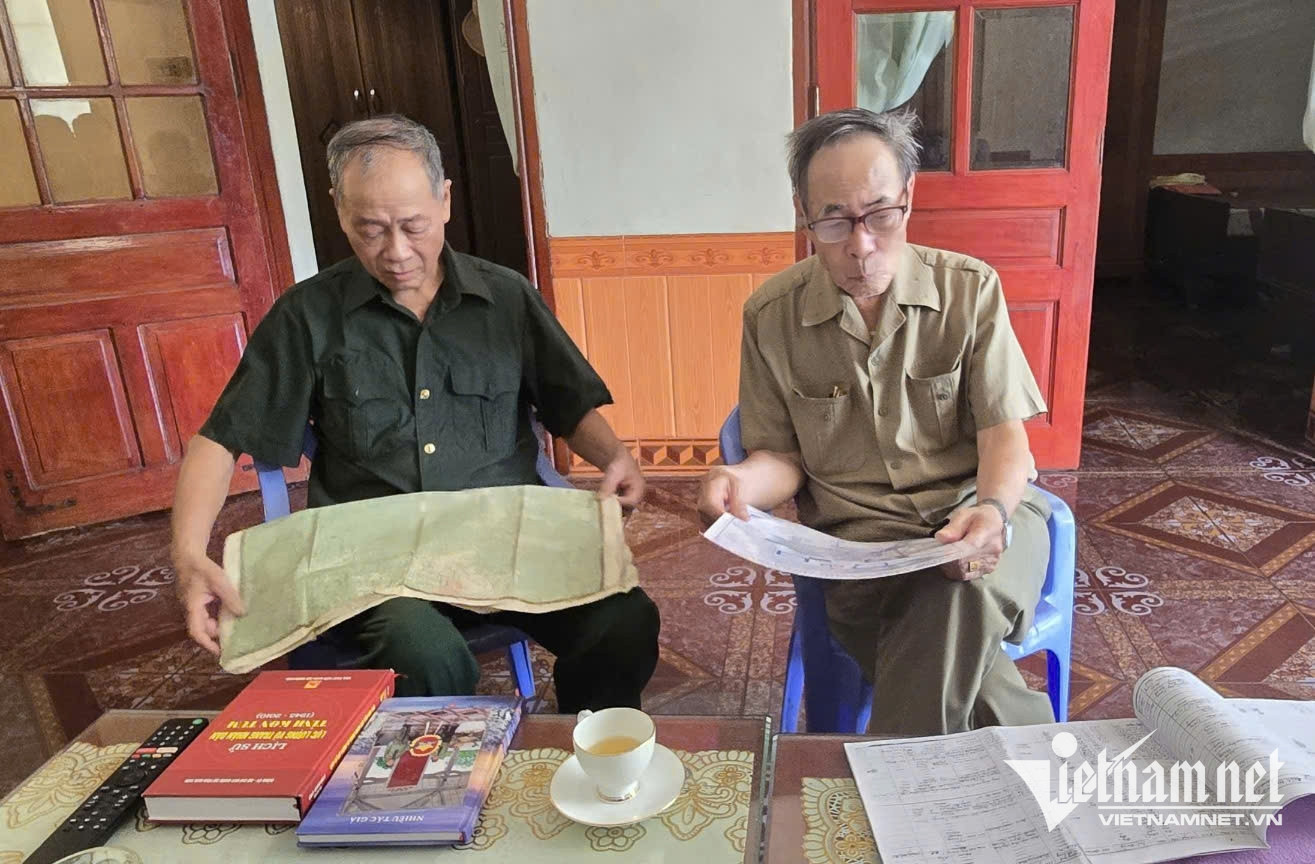
It is a "coordinates of memory" map that has guided his nearly 30-year journey back into the Central Highlands forests to find fallen comrades.
Thong, who is nearly 80, held a faded military map in his hands. His fingertip paused at a hill in Dak To - Tan Canh (Kon Tum), where pencil markings have blurred over time. Silent for a few seconds, he said: "My comrades fell here!"
In July 1967, young Thong joined the army. After training in Yen Tu, in early 1968, he along with over 600 soldiers of Battalion 9, Northeast Military Region, marched on foot for over three months into the Central Highlands battlefield.
There, he was assigned to the 406th Kon Tum Sapper Battalion, the main sapper unit of Front B3 in the Central Highlands.
What was special was that among about 15 soldiers in the first reconnaissance squad, seven were San Diu ethnic people. Thong said San Diu youths grew up amid mountains and forests, were familiar with forest travel, remembered routes, and endured hardship well, so they were often chosen for reconnaissance forces.
During the war years, terrain familiarity helped him complete duties as a reconnaissance soldier. Once peace was restored, those memories of mountains, forests, maps, and old coordinates became the "guiding compass" on his nearly 30-year journey searching for comrades.
Many of his comrades sacrificed their lives while performing mine reconnaissance duties, even before the unit opened fire. Among the seven San Diu soldiers in that year's squad, most remained buried on the battlefield.
Rising from a private, Thong successively served as deputy reconnaissance platoon leader and then company commander. He participated in major battles at Dak To - Tan Canh, Loi Ho area, and Mang But. In one battle, the reconnaissance team secretly followed an underground drainage system to pave the way for sappors to penetrate an enemy base.
And those military exploits were bought with blood. Thong himself was wounded, and to this day two shrapnel pieces remain inside his body. But what haunts him most is that many comrades still lie buried in the vast Central Highlands forests.
Bringing memories back
During the war years, Thong searched for routes for his unit to advance, and when peace returned, that reconnaissance soldier re-entered the forest with a different mission - finding those who stayed behind.
In 1997, over 20 years after national reunification, Thong and veterans of Battalion 406 returned to Kon Tum for the first time. The old battlefield was covered in green coffee, rubber trees, and new residential areas. Only old military maps helped them trace comrades' footprints.
"The terrain changed immensely, but the hills and streams remain there. We cross-referenced each coordinate to search," he recalled.
Veteran Nguyen Tien Hoe, who repeatedly returned to the Kon Tum battlefield with Thong, recalled: "On some trips, we spent a whole week just to verify a single location on the map. Digging up nothing, we cross-referenced memories of living survivors and searched on. Nobody lost heart, because as long as we remembered where comrades fell, we had to keep searching."
Thong personally participated in three trips searching for martyrs' remains. The elderly soldiers carried maps, memories, and wartime notebooks. On one trip, they took over 120 photos of graves in cemeteries using film cameras and brought them back to Quang Ninh. Because writing on headstones had faded, they used red pens to trace over names and ages before photographing them so relatives could identify them more easily.
Recently, hearing news that the country is implementing the "500 Days and Nights Campaign to Intensify Search, Gathering, and Identification of Martyrs' Remains," Thong could not hide his emotion and gained more hope that more martyrs would be identified or returned to families.
"I am very happy. We are old now, but we have never stopped thinking about finding our comrades. In the past, we relied mainly on memories, maps and witnesses. Now the State is determined to carry out such a major campaign, with science and technology providing support. I believe we will find more comrades who are still lying somewhere out there. I only hope that more families will be able to welcome their loved ones home," Thong said.
My Dung
.svg)
