 Vietnamnet.vn

 Podcast



A report titled "Smart Consumers in Southeast Asian E-commerce 2026," released by Lazada and Cube on October 6, shows that savvy shoppers are becoming a key driver of Vietnam's e-commerce growth, pushing the market away from short-term discount battles toward greater trust and lasting value.
In Vietnam, savvy shoppers make up 25% of all online consumers. Their monthly spending is 44% higher than that of regular shoppers, well above the Southeast Asian average of 31%.
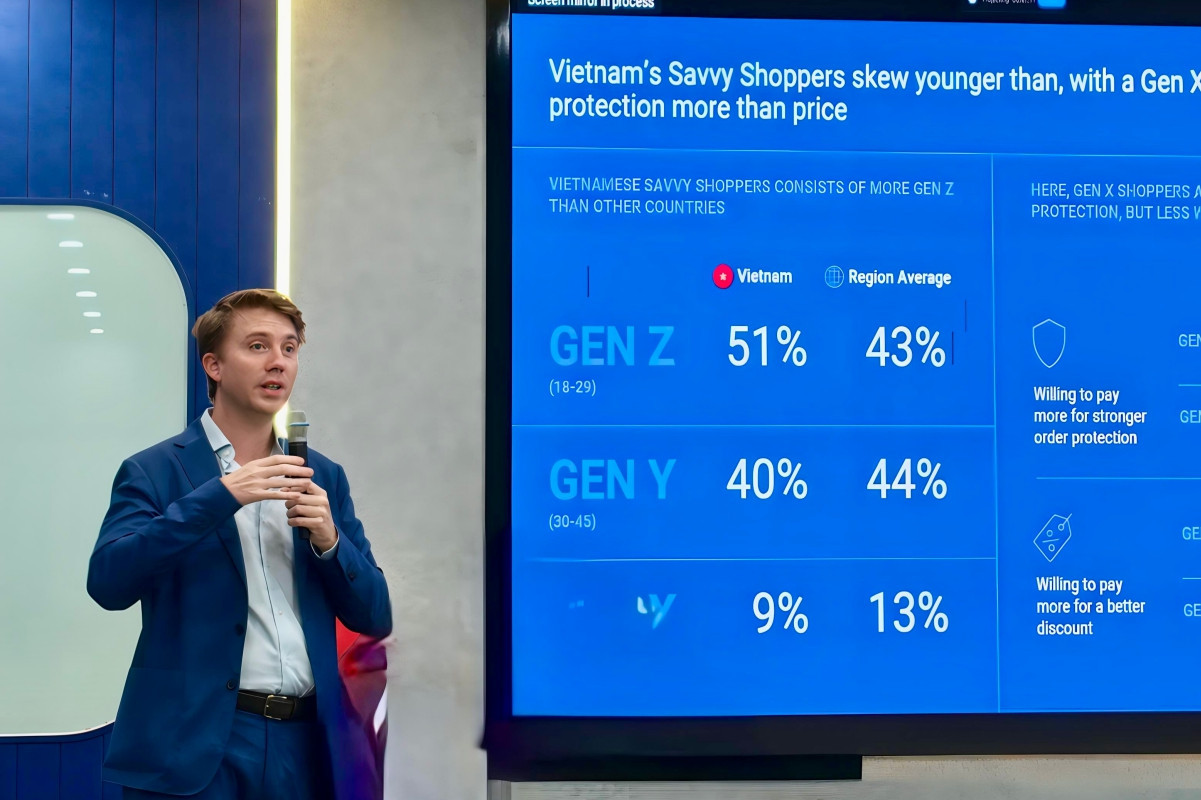
This spending gap is estimated at $2.2 billion annually, with savvy shoppers accounting for nearly one-third of Vietnam's total e-commerce spending.
Another 22% of Vietnamese online shoppers are close to qualifying as savvy consumers, falling short on just one of four criteria: Verification, Value Optimization, Benefits and Protection, and Digital Literacy.
Together, these two groups represent 47% of Vietnam's online shoppers, suggesting that nearly half of the market has already embraced, or is close to embracing, more informed shopping habits. This also points to considerable room for future growth.
The rise of these consumers is reshaping online shopping behavior. They are highly engaged with e-commerce platforms, with 72% shopping several times a week, 59% allocating more than half of their budgets to official brand stores, and 54% willing to pay extra for stronger buyer protection.
Before making a purchase, 91% actively verify products or sellers, 88% research product information, and 86% explore channels outside e-commerce platforms to discover products.
Vietnamese shoppers remain price-conscious. Some 47% are willing to accept longer delivery times in exchange for better deals, while 38% wait for major sales events before buying.
Yet they are far less willing to compromise on trust. Only 12% would accept weaker quality assurance or warranty protection in return for steep discounts. For Vietnam's e-commerce market, competition is increasingly about value and peace of mind rather than simply offering the lowest price.
This more deliberate approach to shopping is also reflected in platform sales. During Lazada's 9.9 mega sale, orders worth more than $100 accounted for 42% of gross merchandise value (GMV), while three out of every four orders came from official stores on LazMall.
LazMall sales surged more than tenfold compared with regular days, helping nearly double the average order value (AOV) across the platform.
These changing habits are forcing e-commerce businesses to rethink their strategies. Deep discounts may deliver a short-term sales boost, but sustainable growth increasingly depends on earning consumer trust, reaching shoppers through the right channels and improving the overall customer experience.
In response, e-commerce platforms are expanding their networks of official brand stores and investing in artificial intelligence (AI), livestream shopping and content creator communities to help consumers make more confident, informed purchasing decisions.
Le My
.svg)
