 Vietnamnet.vn

 Podcast



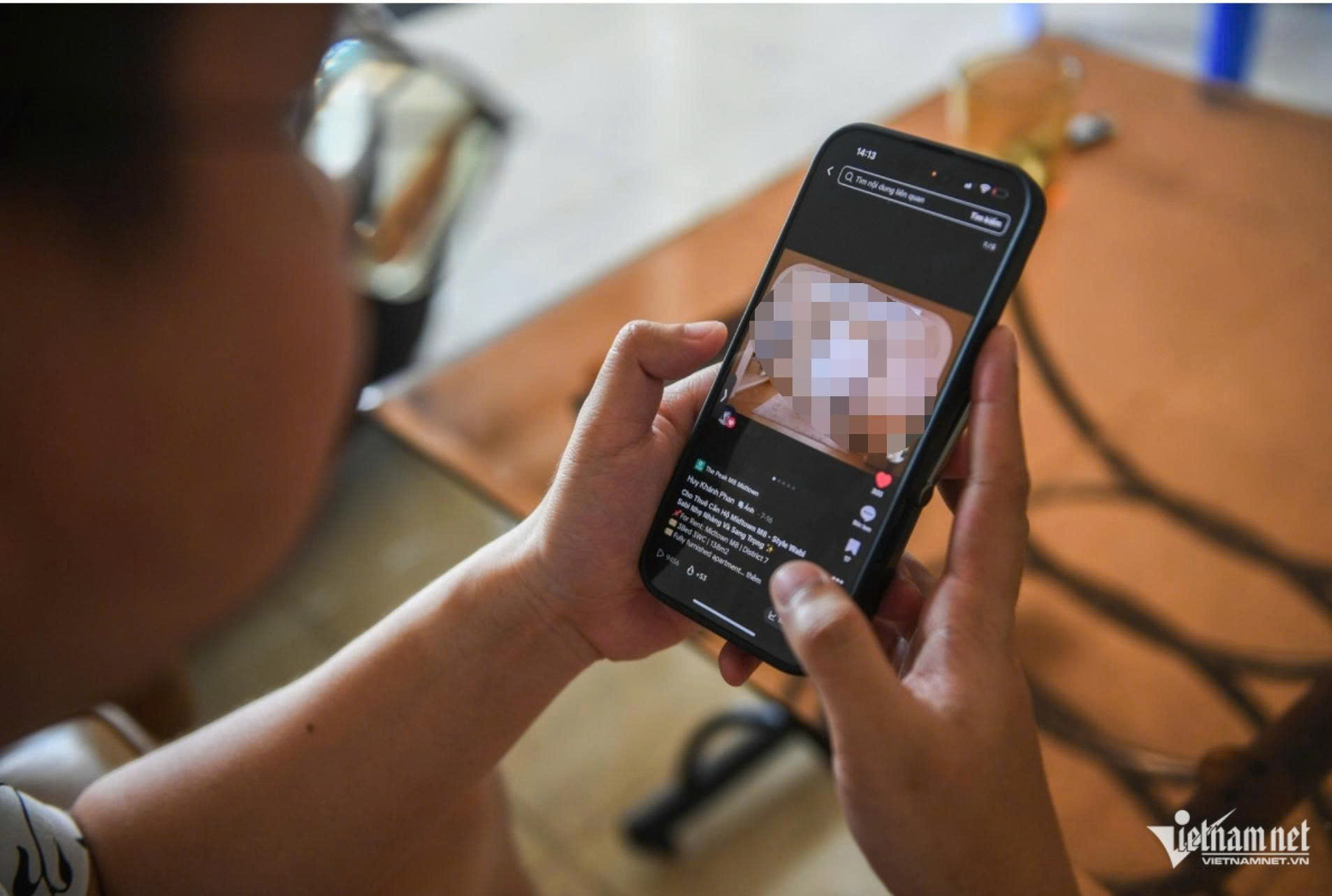
Long, a 9th-grade male student in Hanoi, has always ranked among the top academic performers, "passing every exam taken," which gave his parents peace of mind and pride. Long was bought a personal mobile phone by his parents to proactively maintain contact and search for study-related information.
For the past year, his parents knew Long spent considerable time using his phone, watching short videos and playing games, but they reassured themselves that as long as his academic results did not slip, the phone could be viewed as a way for their child to entertain.
That changed when Long joined a summer camp where teachers required students to limit their phone use. He reacted violently. At one point, Long rushed at a teacher and hit her in an attempt to take back the device.
Dr. Vu Thu Huong, an education expert, helped Long’s family after the incident. According to the expert, his case is one of those showing how dependence on electronic devices can be “masked” by strong academic performance.
After receiving guidance, the family introduced more chores and activities to help Long reduce his screen time. However, whenever he continued to achieve good academic results, the restrictions were gradually relaxed again.
At weekends, Long was allowed to use his phone freely, watching short videos until 2 or 3am before sleeping until noon the next day. The boy became immersed in the world of short videos on social media and kept his phone with him everywhere, from the dining table and living room to his study desk and bedroom. Long barely communicated or shared anything with his parents.
Huong said that in recent years, she has worked with many students showing signs of dependence on electronic devices, particularly short videos. The impact varies from child to child, ranging from poor concentration and reduced ability to absorb knowledge to clear changes in emotions and behavior.
Huong once worked with a sixth-grade boy in Thanh Hoa who was addicted to watching short videos guiding violent gameplay. He could spend eight to 10 hours watching such videos on weekends.
The boy increasingly displayed aggressive behavior when interacting with his peers. He became easily angered, reacted strongly when things did not go his way and made threatening remarks.
At one point, simply because he was unhappy with a friend, he brought out a knife and threatened the other child. It was only then that his parents were “shocked” and realized that something was seriously wrong with their son.
“Many parents fail to notice unusual signs in their children and underestimate the harmful effects of watching short videos. In Long’s case, by the time his parents wanted to help him break free from the world of short videos, his condition had already become severe,” Huong said.
What makes children become immersed in short videos?
Huong said children who spend excessive amounts of time watching short videos and using electronic devices can display a wide range of symptoms.
“They may show signs of instability such as bed-wetting, sleepwalking, sleep talking, uncontrolled speech, facial tics and frequent blinking. Their eyesight may deteriorate, while they may also have difficulty concentrating on studying and communicating, declining memory and a reduced ability to absorb knowledge,” she said.
In more serious cases, children may lose control of their emotions and behavior, becoming irritable, impatient or reacting violently when prevented from using their devices. Some may gradually lose their desire to explore the real world, lack knowledge about nature and society, and become easily drawn into dangerous online trends.
According to Huong, the appeal of short videos is only part of the reason children become “addicted” to them.
She believes children today spend too much time studying but lack chores, community activities, play and real-world experiences. At the same time, their ability to concentrate on studying is limited. When their remaining free time is not filled with appropriate activities, short videos can easily become an attractive option.
“The biggest reason why children are drawn to short videos and programs on their phones is simply that they have lives that are too idle and boring,” she said.
The expert also pointed out that when adults give children phones to keep them quiet, allow them to sit still while eating or simply prevent them from causing disturbances, device use can quickly become a habit. What starts as entertainment gradually becomes something children want to use at all times.
Le My
.svg)
