 Vietnamnet.vn

 Podcast



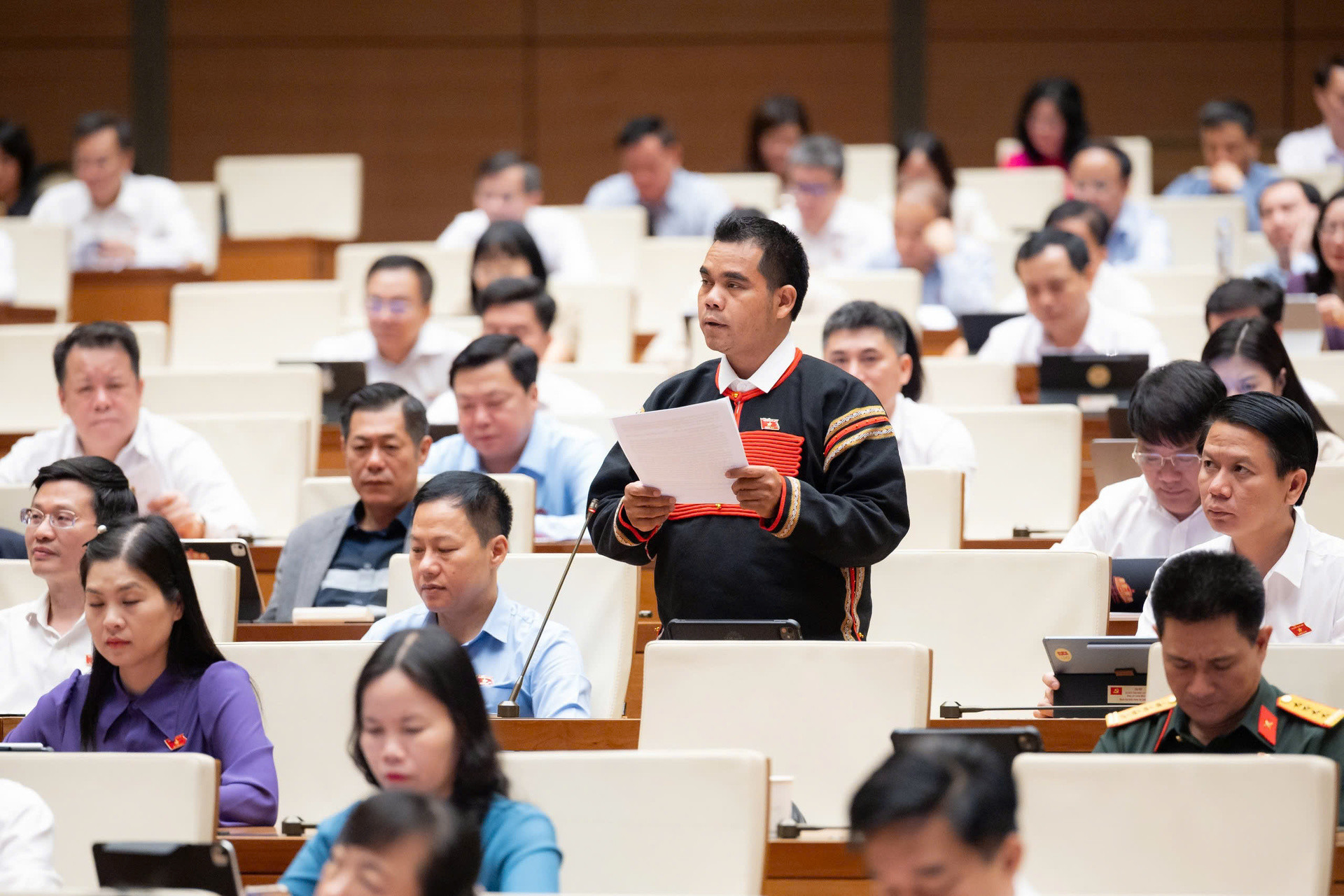
Prior to the National Assembly voting to pass Resolution 28/2026/QH16, during parliamentary debates on policies for developing Vietnamese culture, delegates emphasized the urgent need to unblock resources to conserve and promote ethnic minority cultures.
Delegate Hoang Ngoc Dinh (Tuyen Quang) said the conservation of ethnic minority culture is facing multiple challenges: the languages of certain ethnic groups are gradually seeing fewer users; the contingent of artisans is increasingly aging; and instruction within communities lacks a stable mechanism.
Dinh said that there must be a focus on supporting instruction and practice activities related to folk and traditional culture and art forms, ensuring that intergenerational transmission continues.
“Whichever locality preserves its cultural identity will develop tourism more sustainably; whichever locality conserves and promotes culture within the community will possess its own unique appeal and create livelihoods for citizens,” Dinh said.
This is an assessment grounded in a practical foundation. Currently, numerous villages in ethnic minority and mountainous regions have resolved the problem of sustainable poverty reduction thanks to promoting traditional cultural identity to develop tourism.
Lo Lo Chai village (Lung Cu commune, Tuyen Quang province) has 120 households, consisting mostly of the Lo Lo ethnic minority, one of the nine ethnic groups facing specific difficulties during the 2026–2030 phase.
Ma Doan Khanh, vice chair of the Lung Cu Commune People's Committee, said their unique cultural identity is the “collateral asset” for local villagers to launch startups.
Households engaged in community-based tourism here earn an average income of 16–20 million VND per month, a figure that many families in the lowlands have not yet achieved. From a remote border village with a high poverty rate (over 51 percent in 2018), by the end of 2025, Lo Lo Chai had only four poor households and four near-poor households left.
To keep the gongs resounding, the ‘stomach must be kept warm’
Alongside the resources of the State, traditional culture is being preserved and transmitted by ethnic minority communities. The awareness of protecting ancestral heritage has become an “ideology” across many ethnic minority communities.
The Co Lao ethnic minority in Tan Tien commune (Tuyen Quang) serves as an example. For many years, local residents have treasured and cherished an ancient dress handed down by their ancestors. The dress has been preserved across 16 generations, only being displayed or introduced during important occasions such as worship rituals.
Min Pha Khay, a prestigious individual in Ta Chai village, said preserving the dress is not merely about reminding descendants to remember their ancestors, but is also a way to keep the tailoring and embroidery alive, passing down the techniques and cultural values of their forefathers.
Like the Co Lao people in Tan Tien commune, many traditional cultural identities of ethnic minorities are being preserved within communities, driven by dedicated folk artisans and prestigious individuals.
However, a gap remains in the policies supporting communities and individuals in conserving ethnic minority cultures. National Assembly delegate Duong Mac Kien (Cao Bang) raised the questions: Through what mechanism will communities benefit? How will artisans holding indigenous knowledge receive direct support?
Delegate Y Bhen Kdoh (Dak Lak) recommended policy adjustments. “To keep the gongs resounding, the stomach must be kept warm. Cultural conservation must start with ensuring the livelihoods of the creative subjects.”
Improving policy design and implementation
In recent years, the conservation and promotion of ethnic cultural heritage have been attentively deployed through programs and projects. Cultural values that seemed to have been lost are now not only being restored but are being transmitted to the younger generation.
The Museum of Cultures of Vietnam's Ethnic Groups is one of the units that has had numerous accomplishments in restoring, conserving and promoting the cultural heritage of ethnic minorities.
The deputy director of the museum, Nguyen Canh Phuong, said that in 2021-2025 the unit executed 16 programs and projects, reviving the heritage of ethnic minorities and spreading its traditions into social life.
Sy Hao
.svg)
