 Vietnamnet.vn

 Podcast



For the Co Tu ethnic community, Tâng tung da dá – known as the “dance to the heavens” – is more than just a ceremonial performance. It is a powerful symbol of faith, identity, and vitality. Within the circular rhythm of yin and yang between heaven and earth, they send their prayers for peace and prosperity for their village.
A communal dance deeply rooted in culture
When the harvest is complete and the granaries are full, the Co Tu people in the highlands of Da Nang celebrate with joyous festivals. In the village square, beneath the towering neu pole, the sounds of gongs and drums fill the air. From every stilt house, young men and women join hands, moving in unison to the rhythm of Tâng tung da dá – a revered dance they call the "offering to the sky."
Passed down through generations, Tâng tung da dá is an integral part of the Co Tu cultural fabric, performed at all major ceremonies – from new rice festivals and house-raising to weddings. The dance echoes across the mountains, its drumbeats, gongs, flutes, and haunting cries blending with the breath of the forest.
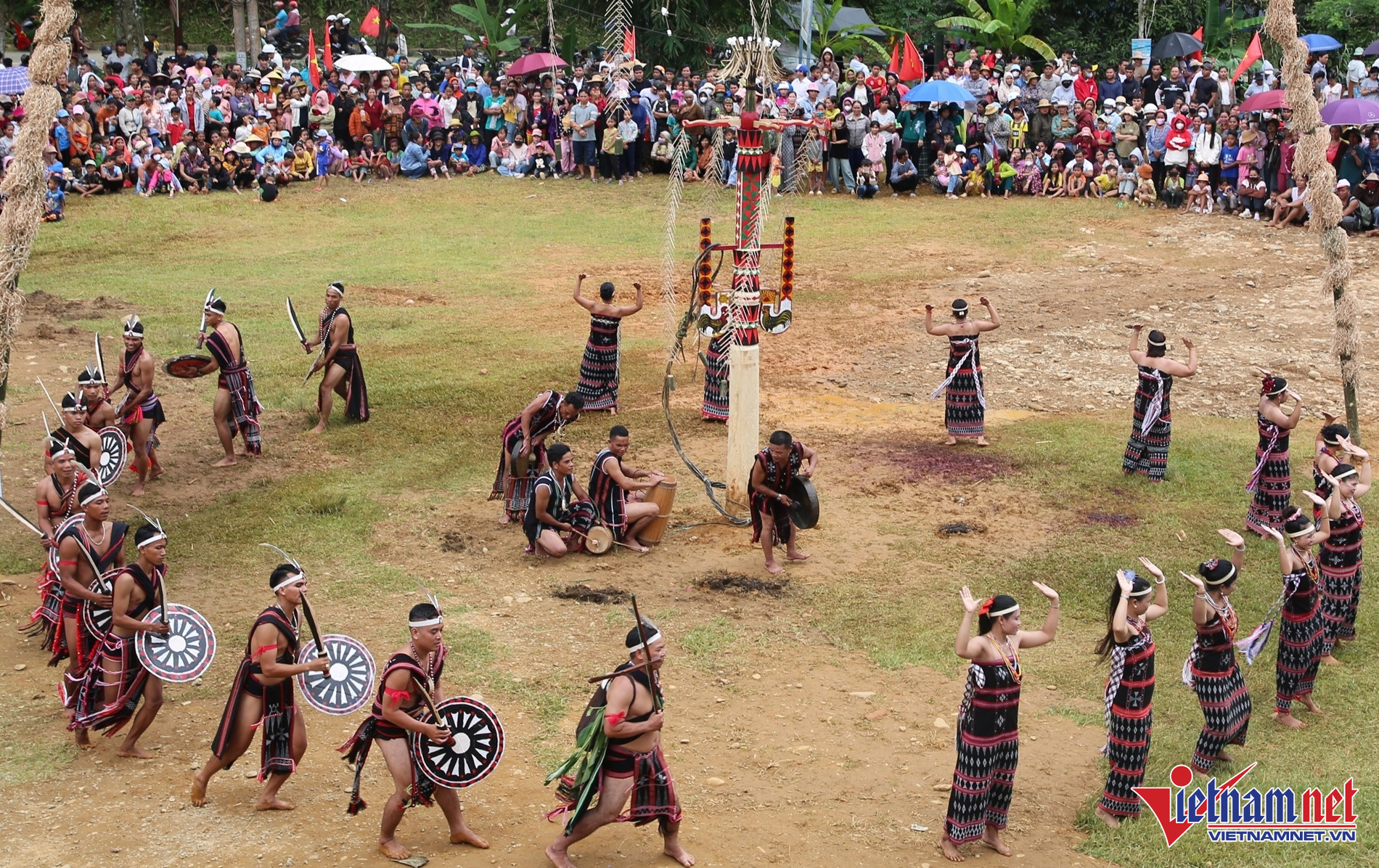
For the Co Tu, Tâng tung da dá is not mere entertainment. It is a sacred ritual intertwined with their spiritual life. In a counterclockwise circle, men and women move in harmony with the rhythms of the forest, offering prayers of gratitude to Giang – the deity of favorable weather and bountiful crops.
The dance’s name reflects yin-yang philosophy and the belief in harmony between heaven, earth, and humankind. Tâng tung, performed by men, symbolizes strength, the will to conquer, and the spirit to protect the village. Da dá, performed by women, conveys grace, unity, and devotion – representing gratitude, loyalty, and love.
Together, the two dances merge into one – like heaven and earth, yin and yang, male and female – turning endlessly in a sacred circle. This spinning motion represents life, unity, and the desire to live in harmony with nature.
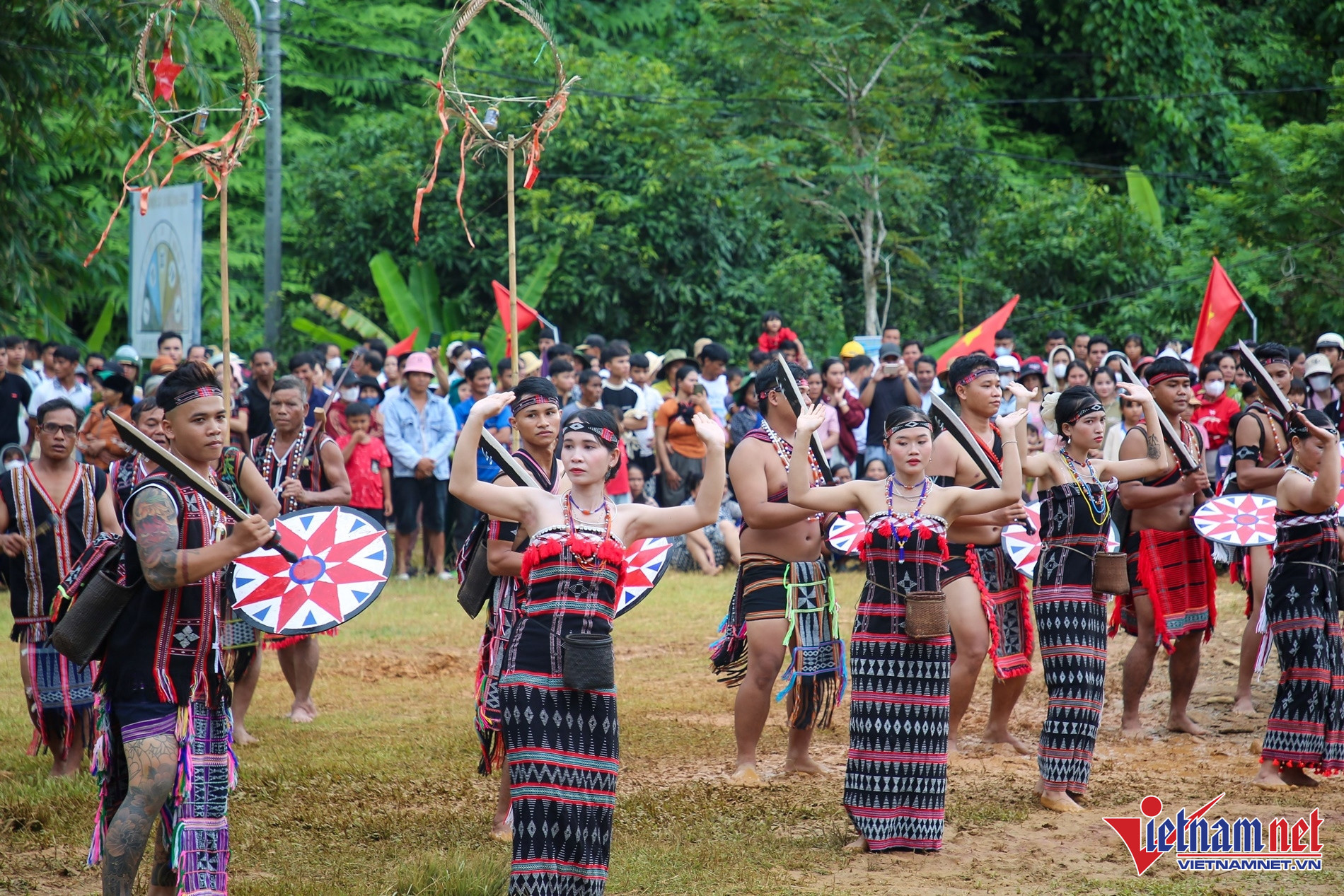
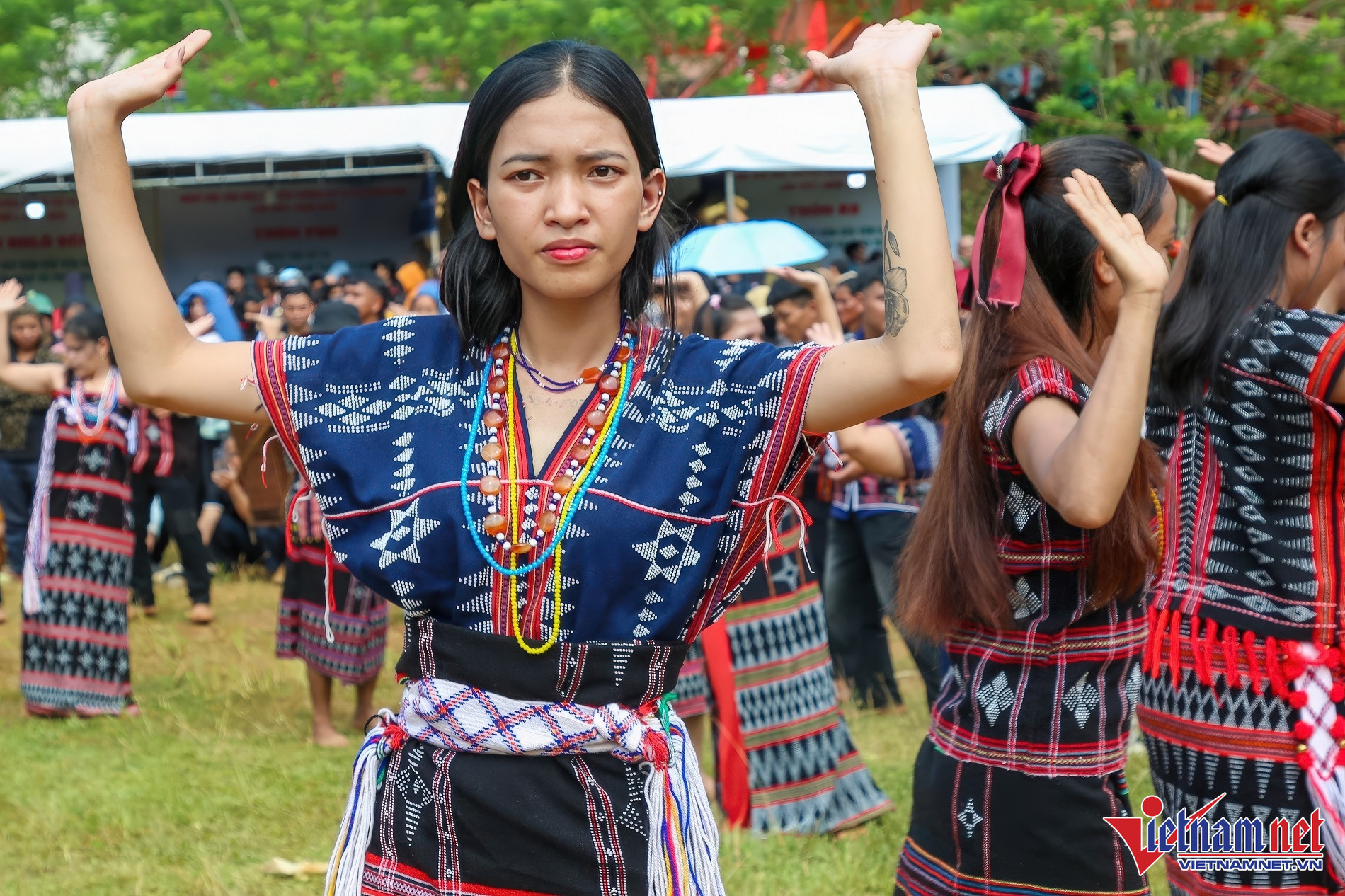
Amid the echoing gongs, Co Tu men wear traditional loincloths and brocade mantles, holding shields or spears, stepping firmly and powerfully. Beside them, women in vibrant brocade skirts, adorned with bead necklaces, gracefully raise their arms to shoulder height, palms turned outward as if welcoming sacred offerings, their eyes steady and their lips smiling.
These flowing movements not only highlight the gentle beauty of highland women, but also serve as a gesture of deep gratitude to the heavens – a ritual in which they offer their very souls to the forest.
Zram Thi Hoa, born in 1974 in Aroch Hamlet, Song Kon Commune, shared: “For the Co Tu, if you can run, you can dance. As a child, I loved watching the older girls dance Tâng tung da dá. When we dance, we’re giving thanks to the heavens for blessing our village with peace and abundance.”
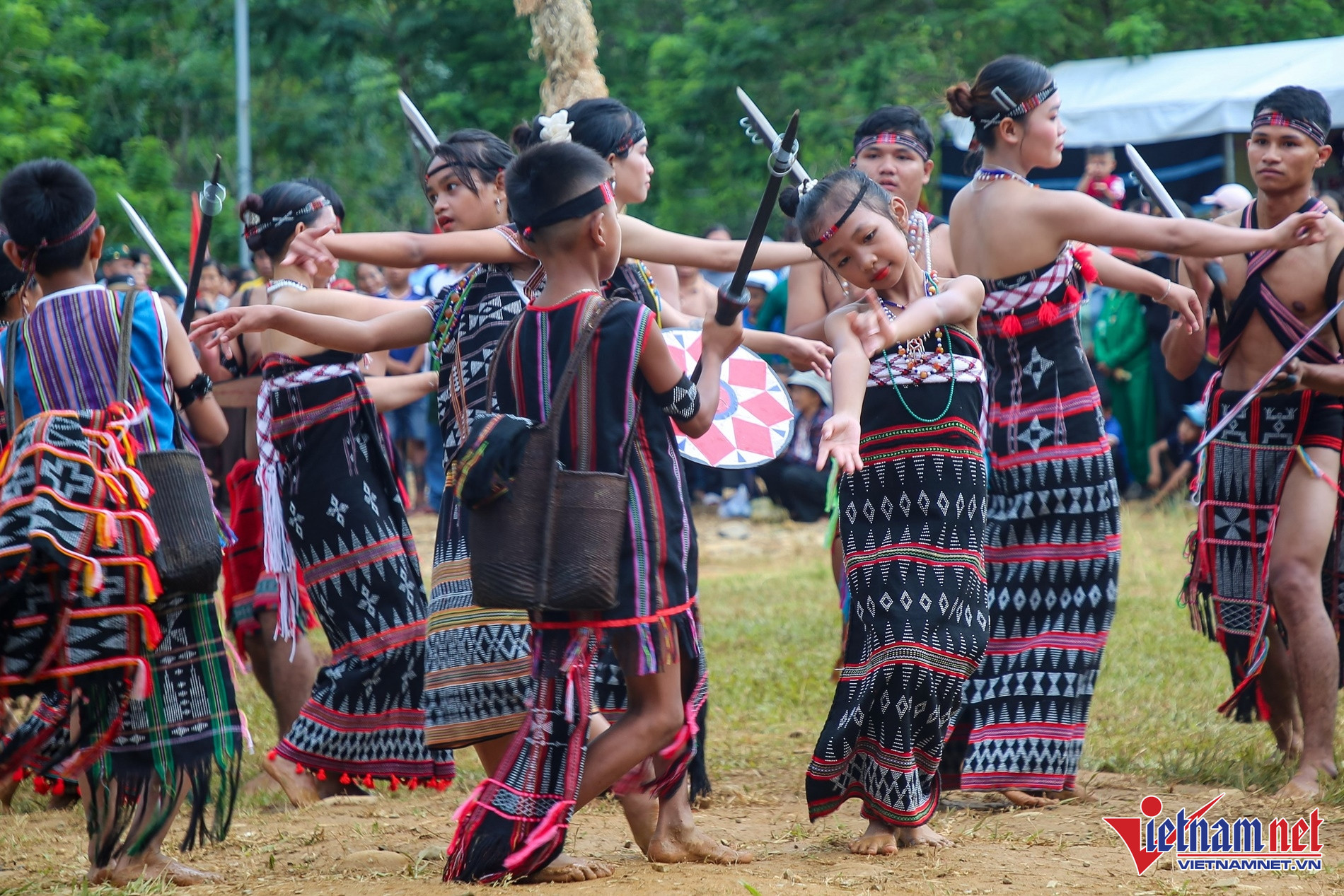
Preserving the soul of heritage in modern times
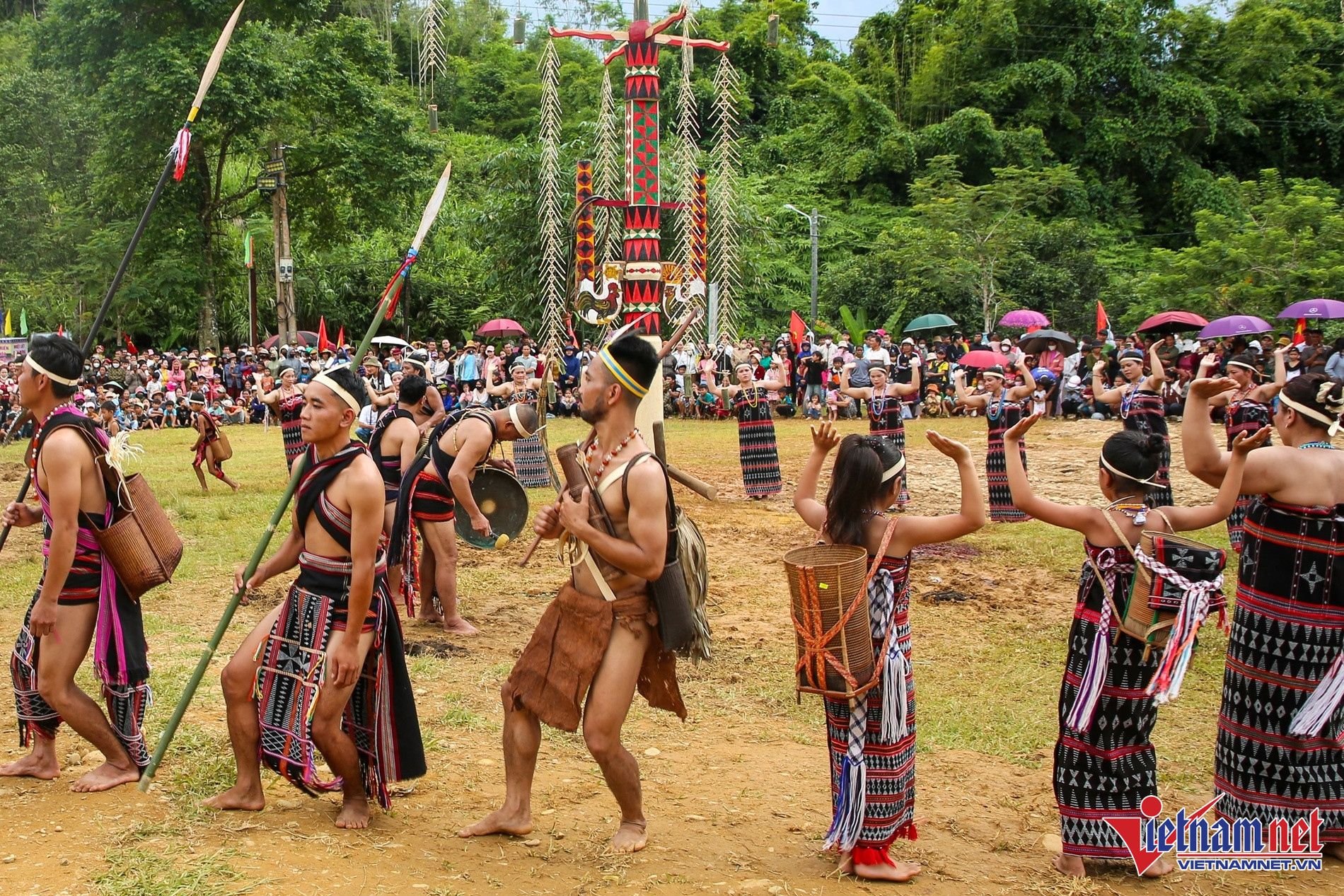
If Tâng tung da dá is the soul of the ritual, then music is its lifeblood. The resounding beats of gongs, drums, and bamboo flutes echo like the voice of the mountains – a sacred call to invite the gods and ancestors to join the celebration.
There is no fixed choreography. Elders begin the dance, and others follow, forming a growing circle guided by the rhythm of the gongs and their own emotions. Each step, each chant is a message to heaven and earth – a plea, a celebration, a prayer for the season.
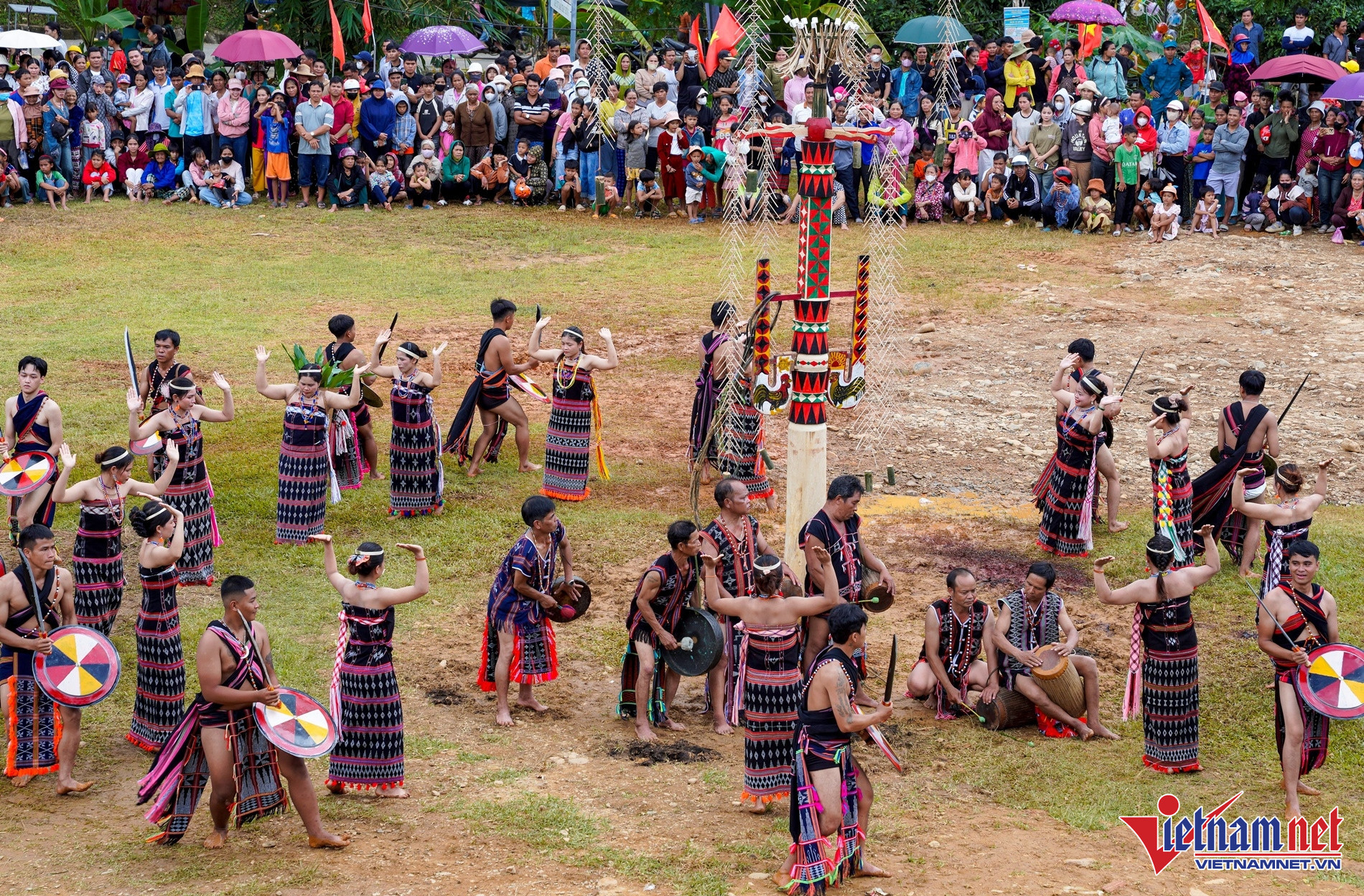
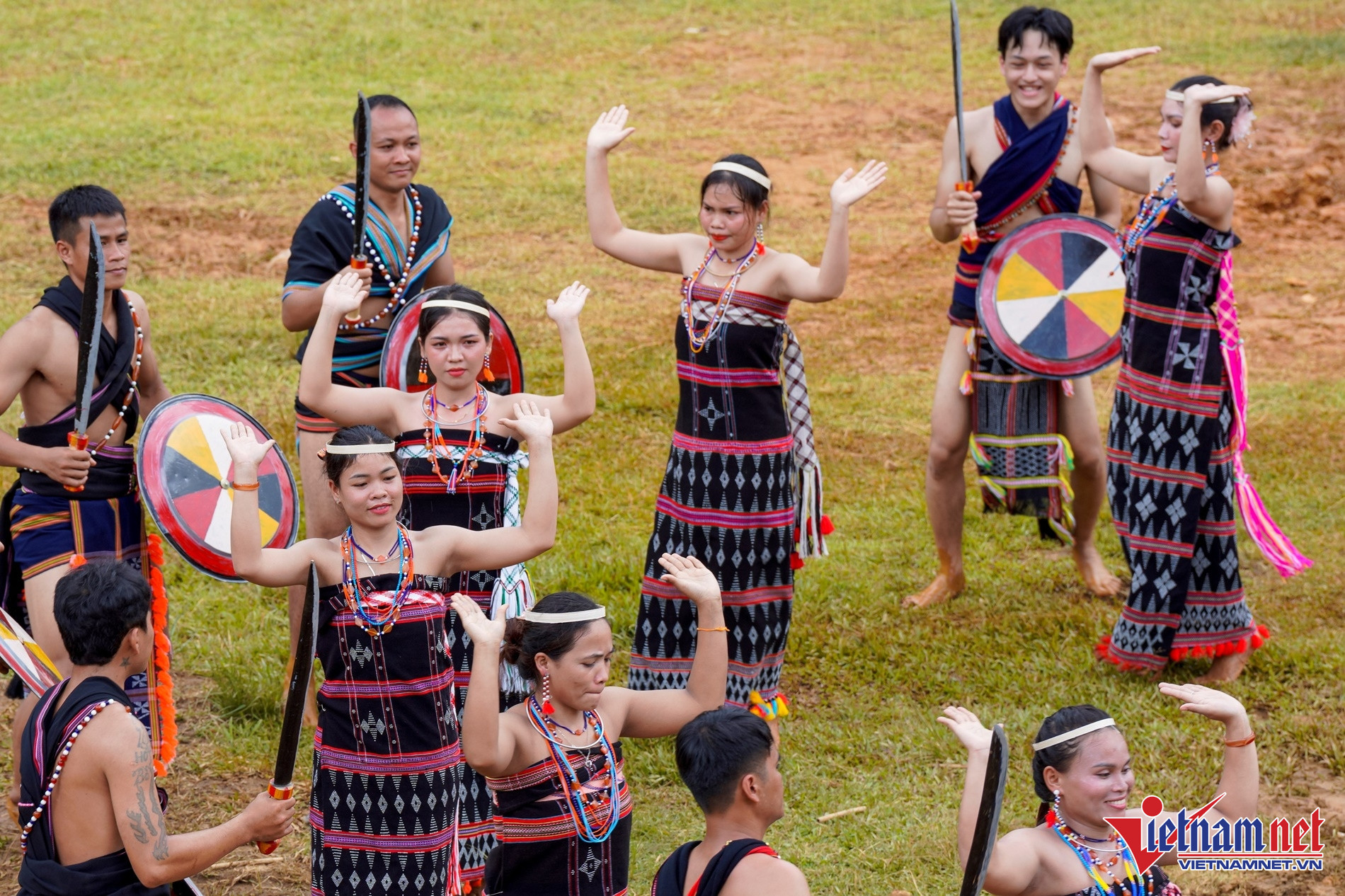
From its humble beginnings in the Gươl house, Tâng tung da dá has become a bridge between generations. As each dance circle ends, the Co Tu people feel spiritually renewed, ready to love, protect, and pass on their culture to their descendants.
Village elder A Lang Chuc, born in 1941 in Ra Lang Hamlet, Song Kon Commune, said: “For the Co Tu, Tâng tung da dá runs in our veins. At any of our festivals, it’s indispensable. Without this ‘dance to the heavens,’ we lose our soul. Our children must continue and preserve this legacy.”
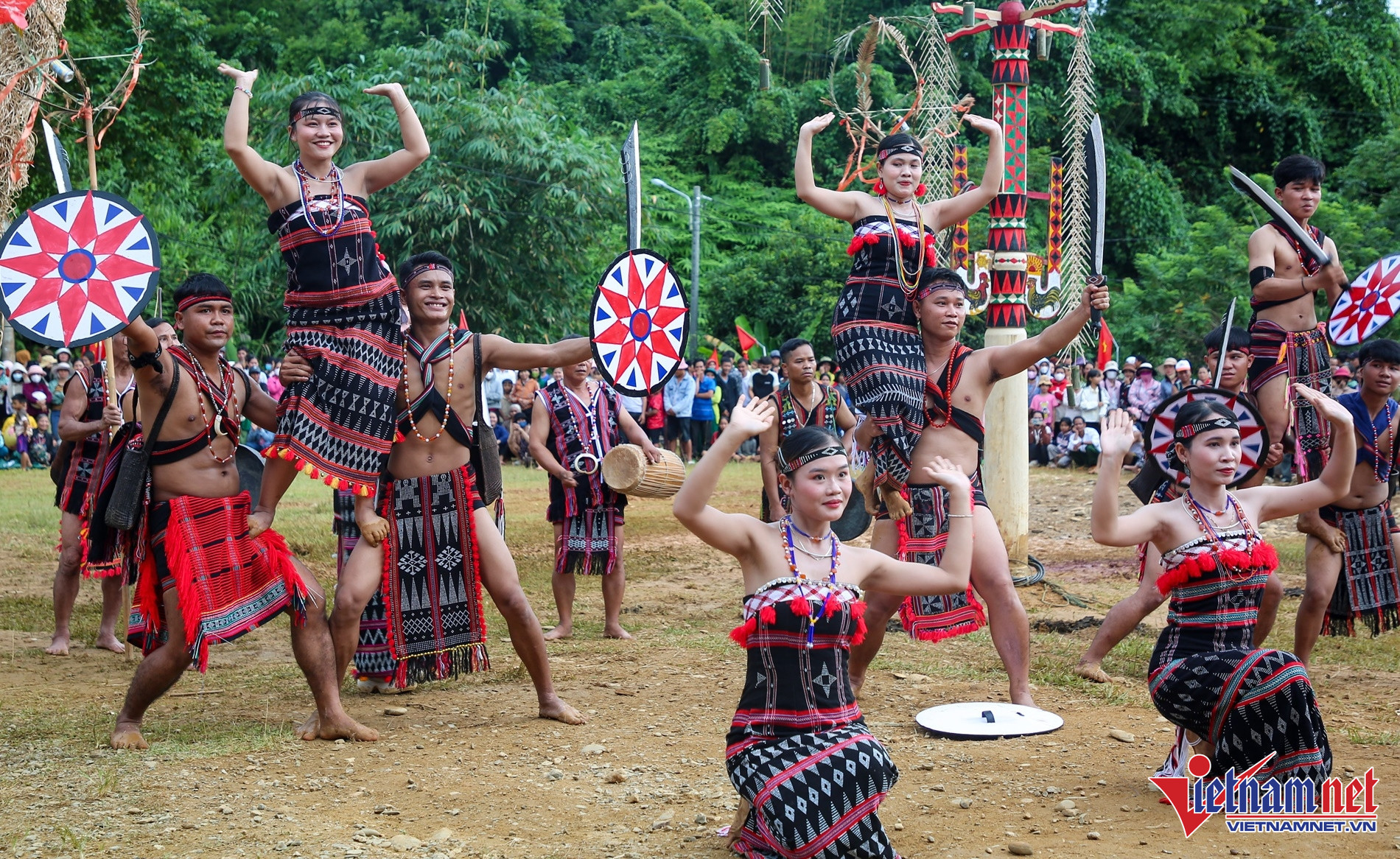
Though modern life has sometimes threatened its continuity, Tâng tung da dá has endured – safeguarded by the deep cultural love of the Co Tu, who protect it like the very essence of their village.
In August 2014, the Ministry of Culture, Sports and Tourism recognized Tâng tung da dá as a national intangible cultural heritage – a testament to the resilient spirit of the Co Tu people in the majestic Truong Son range.
Today, with every festival season, Tâng tung da dá resonates again in Co Tu community villages such as Bho Hoong, Dho Roong, and Ta Lang in Da Nang. Tourists can gather around the Gươl house, drink ruou can (fermented wine), join the dance circle, listen to the gong’s echo, and feel the forest breathe beneath each rhythmic step.
Ha Nam
.svg)
